EV Maintenance vs Combustion Engine: The Core Differences
Electric vehicles and traditional combustion engines require fundamentally different maintenance approaches. EV maintenance vs combustion engine maintenance isn't about choosing between two equally demanding systems; it's about understanding where your vehicle's vulnerabilities actually lie.
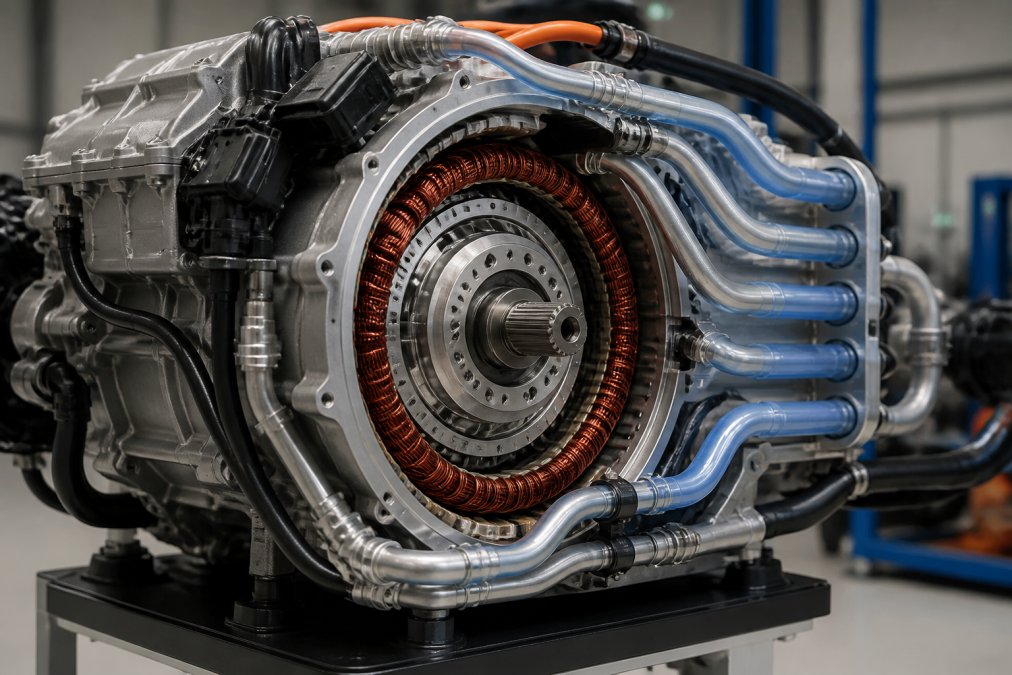
At KMC Electric, we've spent over 25 years in the automotive industry, with EV qualifications since 2016, working with Tesla and other electric vehicles across the Kettering and Northamptonshire regions. The fundamental difference comes down to moving parts. A combustion engine has thousands of components that wear and degrade. An electric motor has one moving part: the rotor. That single change cascades through every maintenance decision you'll make over your vehicle's lifetime.
Key TakeawayElectric vehicles eliminate roughly 80% of the wear components found in combustion engines, but introduce new systems (battery management, thermal conditioning, regenerative braking) that require specialist knowledge to diagnose and maintain properly ([peer-reviewed research](https://pmc.ncbi.nlm.nih.gov/articles/PMC9934249/)).
What Electric Vehicles Actually Need: EV Servicing Schedule UK
An EV servicing schedule UK looks radically different from what combustion engine owners expect. There's no oil to change, no spark plugs to replace, and no transmission fluid to flush. Instead, EV maintenance focuses on systems that don't exist in traditional cars: battery health monitoring, thermal management, and the high-voltage electrical architecture.
Most manufacturers recommend servicing an electric vehicle every 12 months or 10,000 miles, whichever comes first (gov.uk). Rather than replacing consumable fluids and filters, technicians focus on diagnostic checks of the battery management system, coolant condition for the battery thermal loop, brake fluid inspection, and software updates.
The battery pack itself requires no user maintenance. However, independent diagnostics are critical for used vehicles or those nearing warranty expiry. Battery state-of-health verification reveals whether a vehicle has been subjected to rapid charging abuse, extreme temperature exposure, or degradation patterns suggesting imminent failure. This is where KMC Electric's independent battery health assessments become invaluable for buyers in the Midlands considering used electric vehicles.
Brake fluid requires replacing every two years (gov.uk). Cabin air filters should be checked annually. Coolant for the battery thermal management system requires inspection, though replacement intervals are longer than traditional antifreeze. Tyre rotation and alignment checks remain essential; electric vehicles are heavier than petrol equivalents, placing additional stress on suspension and tyres.
Professional illustration showing ev maintenance vs combustion engine
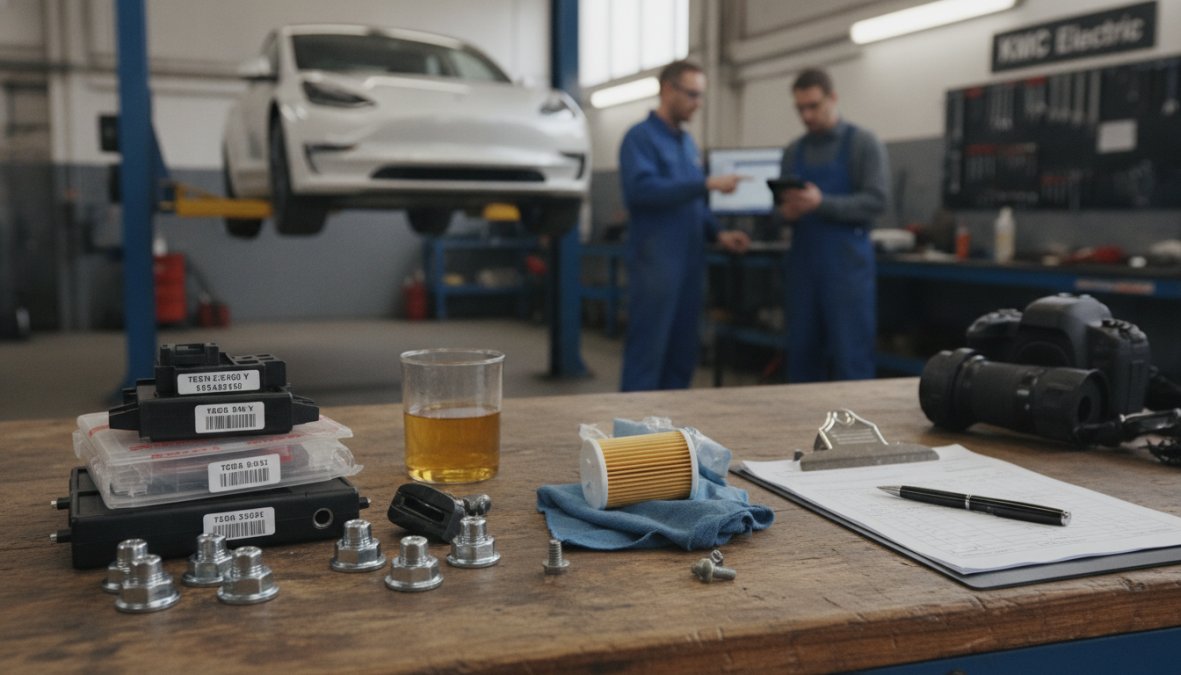
The drivetrain contains a small amount of oil for lubrication, typically lasting the vehicle's lifetime. KMC Electric stocks Tesla drive train parts including drive train oil at £16.99 and oil filters at £15.00 for situations where replacement becomes necessary.
Pro TipIf you're buying a used EV, request a battery health report before committing to purchase. Degradation patterns reveal whether the previous owner charged responsibly or subjected the pack to stress that may shorten its remaining lifespan.
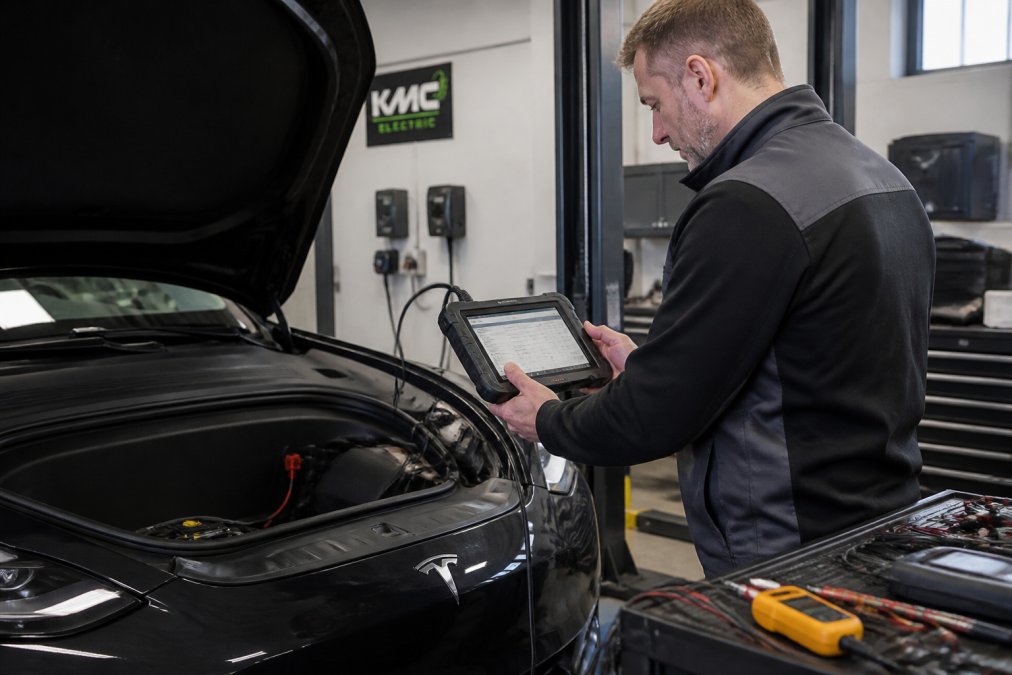
The real maintenance burden for EV owners is staying ahead of potential electrical faults. A fault code in the battery management system, thermal system, or high-voltage architecture can escalate quickly if ignored. This is precisely why independent diagnostics matter more for electric vehicles than combustion cars.
Combustion Engine Maintenance: What Stays the Same
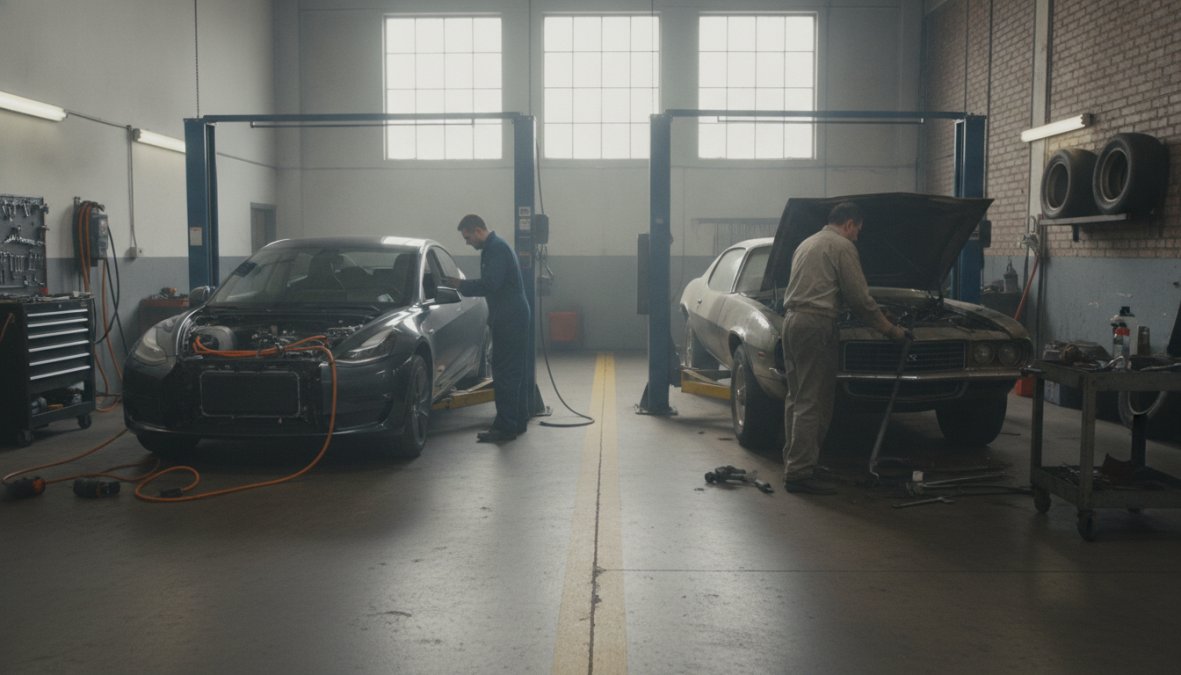
Combustion engines require oil changes, filter replacements, spark plug maintenance, and fluid flushes. An EV maintenance vs combustion engine comparison immediately reveals why combustion servicing remains labour-intensive: the sheer number of moving parts that wear out.
Oil changes are the cornerstone of combustion engine maintenance. Most vehicles require servicing every 10,000 to 15,000 miles. Spark plugs require replacement every 30,000 to 100,000 miles depending on type. Transmission fluid, coolant, power steering fluid, and brake fluid all degrade over time and require periodic replacement.
Timing belts are critical wear components. Failure causes catastrophic engine damage, making preventative replacement essential between 60,000 and 100,000 miles. Exhaust systems corrode and require replacement. Catalytic converters degrade. Fuel filters clog. Oxygen sensors fail. The list of potential maintenance items is extensive because the combustion engine manages controlled explosions, demanding constant attention.
Combustion engines require more frequent brake maintenance. Traditional friction brakes wear predictably, requiring pad replacement every 30,000 to 70,000 miles. Brake fluid absorbs moisture over time, necessitating flushes every two years to prevent corrosion.
Where combustion and electric vehicles converge is in suspension, steering, and chassis components. Tyres wear regardless of powertrain. Shock absorbers, control arms, and ball joints degrade through normal use. These systems are largely independent of powertrain type.
Watch OutA common mistake is assuming that because an EV has fewer moving parts, it requires no specialist knowledge to maintain. The opposite is true: electrical and battery systems require different diagnostic approaches than combustion engines. Attempting repairs without proper training can damage the high-voltage architecture or create safety hazards.
Regenerative Braking Maintenance and What It Means for Your Brakes
Regenerative braking fundamentally changes brake maintenance in electric vehicles. When you lift off the accelerator, the electric motor reverses its function, becoming a generator that converts kinetic energy back into electrical energy stored in the battery. This process slows the vehicle without engaging traditional friction brakes, dramatically reducing brake wear.
Many EV owners drive for 100,000 miles with minimal brake pad wear. Some vehicles never require brake pad replacement during their entire ownership period. This represents thousands of pounds in avoided maintenance compared to combustion vehicles.
However, regenerative braking introduces complexity that combustion vehicles don't have. The system requires calibration between the regenerative motor and traditional friction brakes to ensure smooth deceleration. Fault codes related to regenerative braking can indicate battery management issues, motor controller problems, or sensor failures demanding specialist diagnosis.
Brake fluid still requires attention. Electric vehicles use the same hydraulic brake systems as combustion cars, and brake fluid absorbs moisture promoting corrosion. Routine inspection and replacement on schedule remains essential, even though the brakes themselves wear slowly.
Professional illustration showing ev maintenance vs combustion engine
A fault in the regenerative system doesn't just affect braking performance; it can trigger limp-mode operation or prevent the vehicle from charging efficiently. A technician trained only on combustion vehicles may not recognise that a regenerative braking fault code actually points to a battery management issue rather than a brake system problem. KMC Electric's technicians, with Level 4 Master Technician status in electric vehicles since 2016, understand these interdependencies that many general mechanics miss.
Electric Vehicle MOT Requirements in the UK
The MOT test for electric vehicles follows the same basic framework as combustion cars, but with significant differences in what's tested. The electric vehicle MOT requirements in the UK are defined by the Driver and Vehicle Standards Agency (DVSA), which updated MOT protocols to account for EV-specific systems.
All electric vehicles must pass an annual MOT once they reach three years old. However, the test focuses on different components. Emissions testing is irrelevant; electric vehicles produce zero tailpipe emissions. Instead, MOT testers examine the high-voltage electrical safety systems, checking for visible damage to cables, connectors, and battery casing that might indicate a safety hazard.
Brake testing remains essential, but the procedure accounts for regenerative braking. The MOT checks that both the regenerative system and friction brakes function correctly and that the vehicle can stop within legal distances. Tyre condition, suspension geometry, and steering components are inspected using the same criteria as combustion vehicles.
Lighting systems, seatbelts, and airbags follow the same protocols. The major difference is that MOT testers no longer check exhaust emissions, exhaust system condition, or fuel system integrity.
The DVSA has specific guidance for MOT testers regarding high-voltage systems. Testers are not permitted to work on the battery or high-voltage circuits; they're only checking for visible damage and verifying that safety interlocks function correctly. If an MOT identifies a potential high-voltage fault, the vehicle must be referred to a specialist, exactly the kind of independent diagnostic work that KMC Electric provides across Kettering and Northamptonshire.
Used electric vehicle buyers should always request MOT history before purchase. Consistently passed MOTs suggest responsible maintenance, while gaps in records or failed tests related to electrical systems warrant investigation.
Best ForEV owners planning to keep their vehicles beyond the manufacturer warranty period should arrange independent diagnostics before the warranty expires. This allows time to address emerging issues while warranty coverage might still apply in certain circumstances.
Long-Term Costs: Where EV and Combustion Engine Ownership Diverge
The long-term cost comparison between EV maintenance vs combustion engine ownership reveals where electric vehicles truly save money. Over a vehicle's lifetime, maintenance costs tell a strikingly different story than purchase price alone.
Routine servicing for an electric vehicle costs significantly less than combustion engine servicing. Without oil changes, spark plug replacements, transmission fluid flushes, or timing belt maintenance, the routine work is minimal. However, this advantage only applies if you're working with someone who understands EV systems properly. Independent specialists like KMC Electric provide cost-effective servicing because they focus specifically on electric vehicle systems and avoid unnecessary work.
Where costs diverge significantly is in unexpected repairs. An electric vehicle electrical fault might require specialist diagnostic equipment to identify, and parts availability can be limited for older vehicles.
Battery degradation represents the largest potential cost difference. Most modern EV batteries retain 80-90% capacity after 100,000 miles. However, batteries subjected to rapid charging abuse, extreme temperatures, or poor maintenance can degrade faster. Identifying degradation early through independent battery health verification allows owners to plan accordingly.
Brake maintenance costs favour electric vehicles dramatically. Owners commonly report brake pads lasting 150,000 miles or more, compared to 50,000-70,000 miles in combustion vehicles. Over a 200,000-mile ownership period, this represents substantial savings.
Tyre wear is often slightly higher in electric vehicles due to their additional weight, but the difference is marginal. Suspension and steering component wear follows similar patterns in both powertrains.
The critical financial factor is warranty coverage. Vehicles still under manufacturer warranty should use main dealers for servicing to preserve warranty protection. Once warranty expires, particularly for used vehicle purchases, independent specialists provide dramatically better value. KMC Electric's out-of-warranty repair expertise specifically targets owners seeking cost-effective alternatives after main dealer warranty ends.
Why Independent Diagnostics Matter for Both Powertrains
Both electric vehicles and combustion engines benefit from independent diagnostics, but for different reasons. Combustion vehicles need independent diagnostics to avoid unnecessary work. Electric vehicles need independent diagnostics because main dealers often lack the specialised knowledge to diagnose complex electrical faults correctly.
A fault code in a combustion engine usually points to a specific component: oxygen sensor, mass airflow sensor, or catalytic converter. An electric vehicle fault code might indicate a battery management issue, thermal system problem, motor controller fault, or sensor malfunction, requiring understanding of the entire high-voltage architecture.
Independent specialists have incentives to identify the actual problem and recommend the most cost-effective fix. This distinction becomes critical for vehicles out of warranty or for used vehicle buyers conducting pre-purchase inspections.
KMC Electric's approach to independent diagnostics focuses on identifying faults before they become expensive. A battery management system warning might indicate degradation requiring attention, or it might indicate a sensor fault that's easily corrected. Only proper diagnostic equipment and specialist knowledge distinguish between these scenarios.
For EV owners, independent diagnostics provide access to knowledge that main dealers often can't offer, particularly regarding battery health, thermal system performance, and complex fault code interpretation.
Understanding the differences between EV maintenance vs combustion engine maintenance is about recognising that electric vehicles require different expertise, different diagnostic approaches, and different long-term planning than the combustion vehicles most mechanics were trained on.
If you own an electric vehicle in the Kettering area and need specialist diagnosis, battery health verification, or out-of-warranty repairs, KMC Electric provides independent expertise backed by Level 4 Master Technician status and over 25 years of automotive experience. Our team understands Tesla systems across all models and can identify faults that main dealers often miss. Contact us for a consultation on your vehicle's specific needs.
Frequently Asked Questions
Q: Do electric cars really require less maintenance than petrol cars?
A: Yes, broadly. EVs have far fewer moving parts—no oil changes, spark plugs, or transmission fluid. However, EV maintenance isn't zero. Brake fluid, coolant for the battery pack, and electrical systems still need monitoring. The main saving is the absence of regular engine servicing. A combustion engine requires scheduled oil and filter changes; an EV does not. For out-of-warranty vehicles, independent diagnostics become critical to catch battery or electrical issues early.
Q: What's included in an EV servicing schedule UK?
A: UK EV servicing typically covers brake fluid inspection, coolant top-ups for the thermal management system, cabin air filter replacement, and battery health checks. Unlike combustion engines, there's no engine oil service. Most manufacturers recommend checks every 12 months or 10,000 miles. Battery degradation monitoring is essential, especially for used vehicles. Independent specialists can verify battery state-of-health without relying on dealer estimates.
Q: Do electric vehicles need MOTs in the UK?
A: Yes. Electric vehicles must pass the same MOT as combustion-engine cars once they reach three years old. The test covers brakes, emissions (electric vehicles produce zero), lights, steering, and suspension. EVs are exempt from emissions testing, but all other safety checks apply. Regular MOT compliance is crucial for warranty protection and resale value, particularly for used EV buyers verifying vehicle history.
Q: How does regenerative braking affect brake maintenance?
A: Regenerative braking captures energy when you decelerate, reducing reliance on traditional friction brakes. This means brake pads wear much more slowly on EVs than combustion vehicles. However, the system still requires brake fluid inspection and occasional pad replacement. The hydraulic components must be maintained, and diagnostics can identify if the regenerative system is functioning properly, preventing unexpected brake issues.