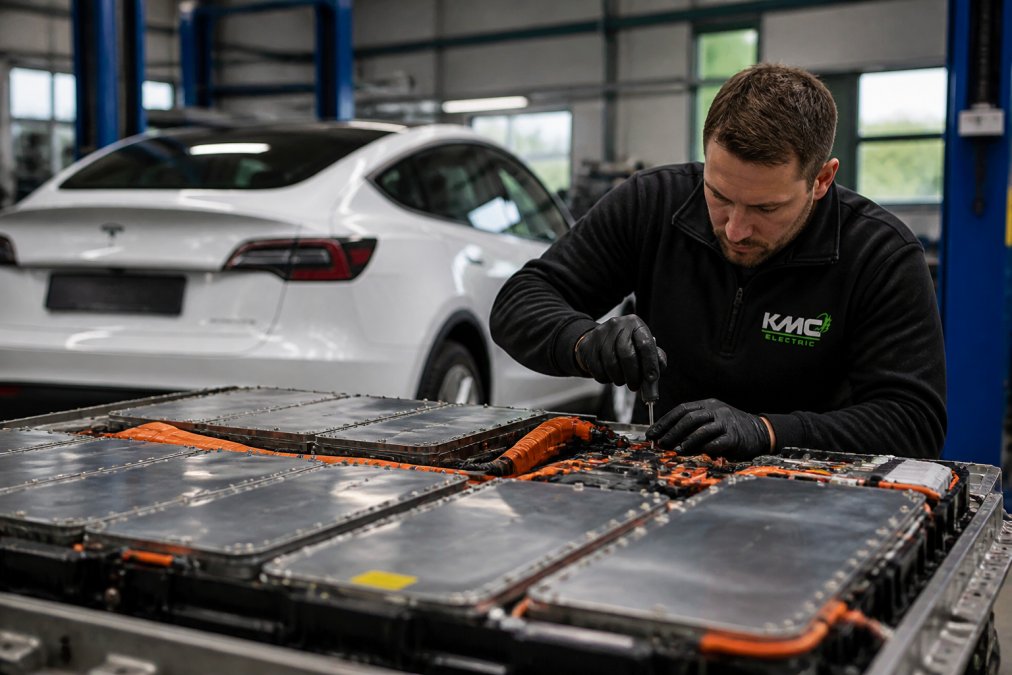
Tesla vehicles rely on sophisticated lithium-ion battery packs that power the electric motor and onboard systems. Unlike traditional petrol engines, these batteries degrade gradually over time and with use. Understanding how your Tesla's battery works is the first step toward recognising when something's going wrong.
The main battery pack stores electrical energy and delivers it to the motor. A separate 12-volt battery handles auxiliary functions like lights, infotainment, and climate control. Both systems can fail independently, though main battery issues are far more serious and costly to address.
Most Tesla owners never experience catastrophic battery failure. Modern Tesla batteries are engineered to last the life of the vehicle under normal conditions. However, manufacturing defects, physical damage, extreme temperatures, and poor charging habits can accelerate degradation. Recognising the early warning signs of Tesla battery failure allows you to address problems before they become expensive repairs.
At KMC Electric in Kettering, we provide professional diagnosis of Tesla battery issues across all models. We aim to help owners identify problems early to potentially avoid larger repair bills.
Early Warning Signs of Tesla Battery Failure
The signs of Tesla battery failure appear gradually in most cases. Your vehicle won't simply stop working. Instead, you'll notice a series of performance changes that, taken together, point to battery degradation or failure.
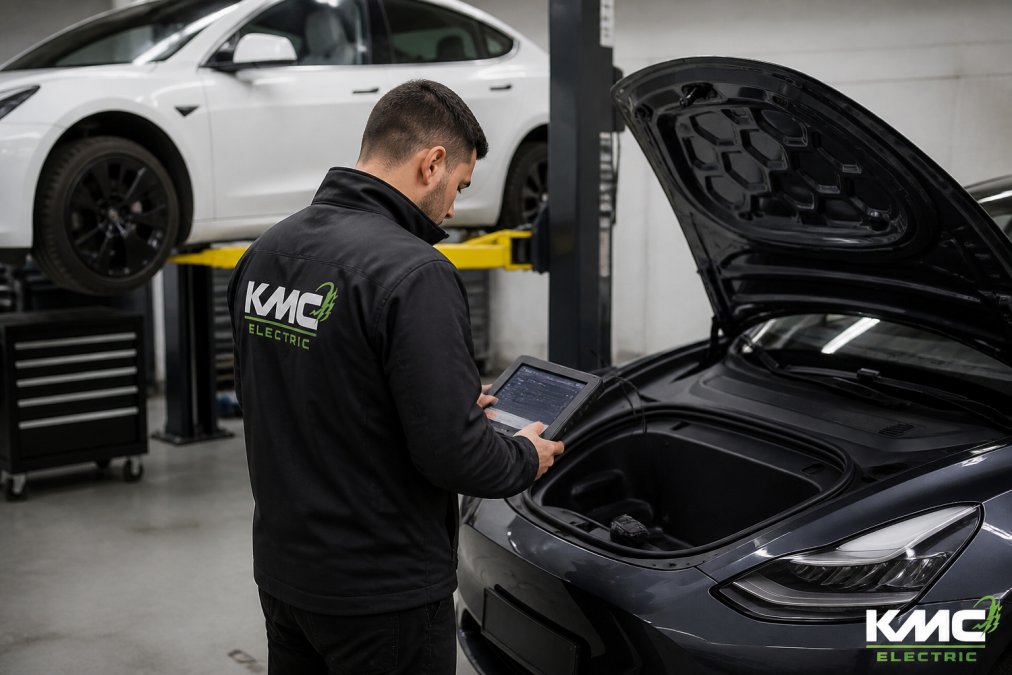
Professional illustration showing Close, Tesla for Tesla battery failure
Reduced Driving Range and Performance
A noticeable drop in driving range is often the first sign something's amiss. If your Tesla used to deliver 300 miles on a full charge and now manages 250 miles under identical conditions, your battery is degrading. This isn't the normal, predictable decline that comes with age. This is accelerated loss.
Pay attention to the difference between seasonal variation and genuine degradation. Cold weather reduces range by 20-40% naturally (fueleconomy.gov). That's normal. But if your summer range has fallen by 30% compared to last year, investigate further.
Performance degradation accompanies range loss. You might notice slower acceleration, reduced top speed, or the vehicle struggling to climb hills. The motor can't access full power because the battery can't deliver it safely. Some owners report the car feeling "sluggish" or "tired" compared to when it was new.
Charging Problems and Slow Charge Times
If your Tesla takes significantly longer to charge than it once did, the battery may be failing. A healthy battery at a Supercharger should reach 80% in 25-35 minutes depending on the model (tesla.com). If you're now taking 45 minutes or more, something's wrong.
Home charging times increasing is another warning sign. A Model 3 that once charged fully overnight on a 7kW home charger but now barely reaches 80% suggests battery cell degradation. The battery's ability to accept charge is diminishing.
Some owners report the vehicle refusing to charge beyond a certain percentage. You might set it to charge to 100% but the car stops at 85% and won't go further. This is a protective mechanism, the battery management system is preventing overcharge on a failing cell.
Dashboard Warning Lights and Error Messages
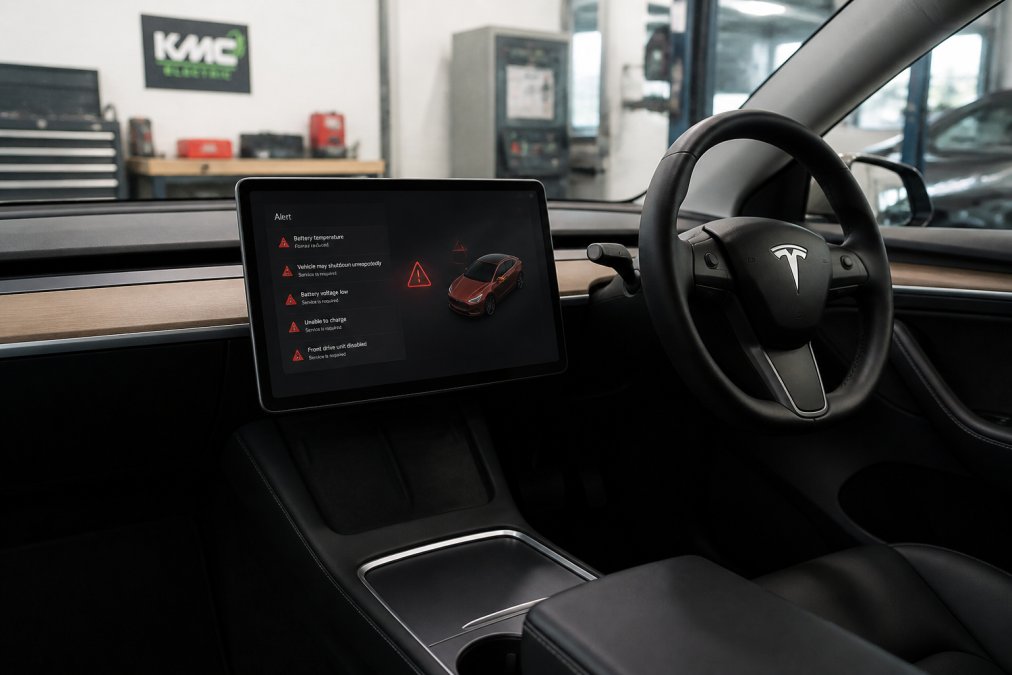
Your Tesla's dashboard will alert you when the battery system detects problems. A "Service Battery Soon" message is the most common warning. This doesn't mean immediate failure, but it means the battery has fallen below Tesla's performance threshold and needs professional assessment.
More serious is the "Battery Management System" error. This indicates the onboard computer has detected a fault in the battery pack itself. You should stop driving and arrange professional diagnosis immediately when this appears.
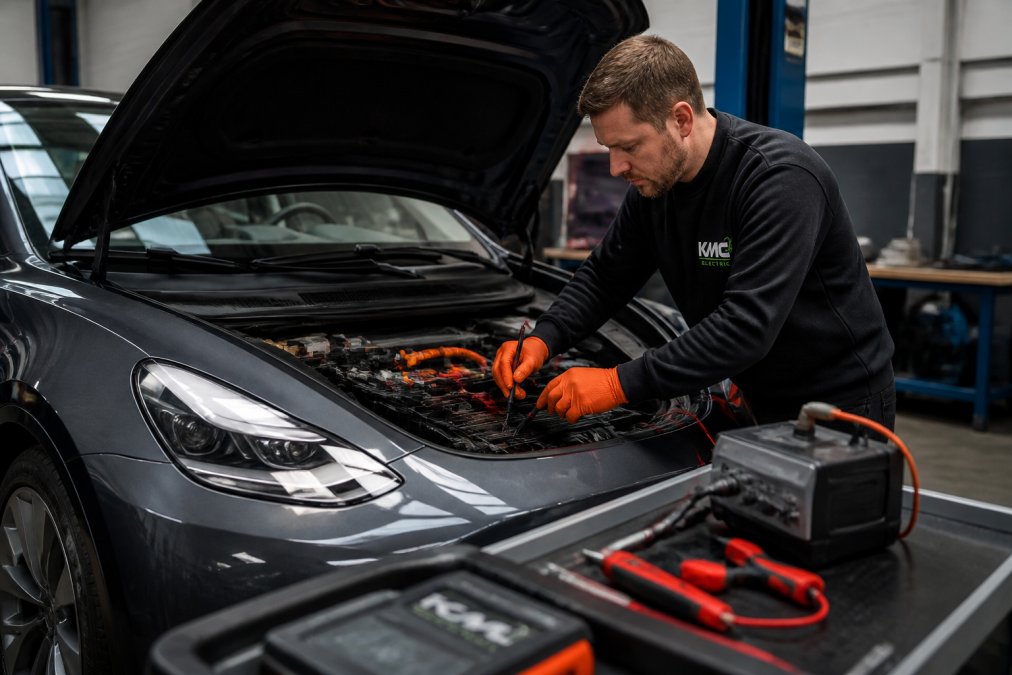
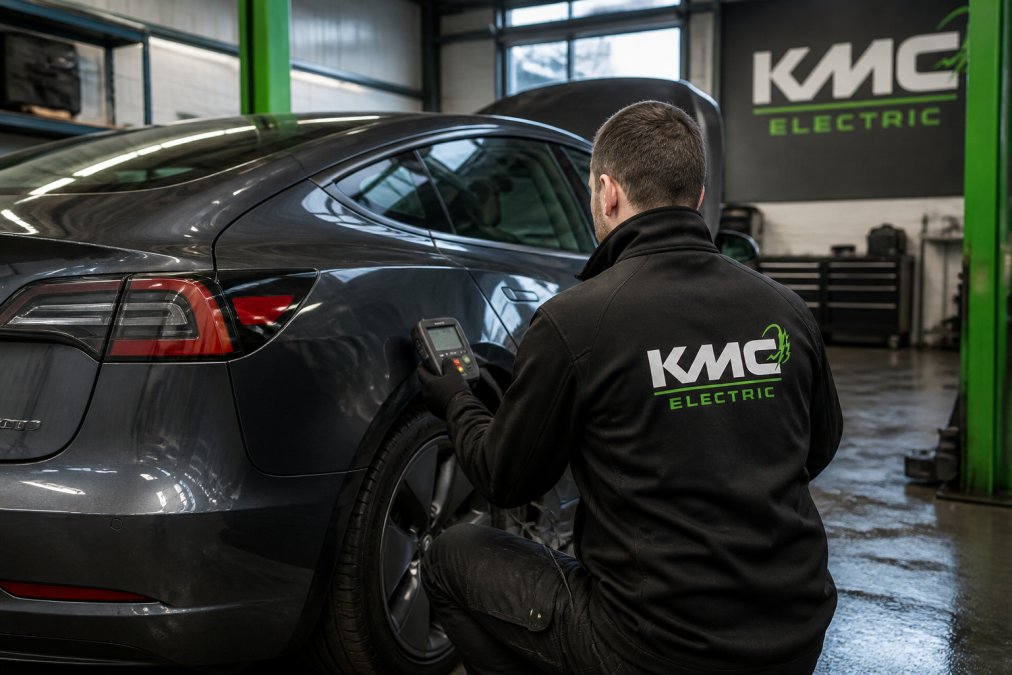
Some owners see cryptic fault codes without clear messages. The vehicle might display "Check Battery" or similar vague warnings. These require professional diagnostics to interpret. At KMC Electric, we use specialist diagnostic equipment to read these codes and understand what's actually failing inside the battery pack.
Tesla Battery Degradation Signs You Cannot Ignore
Battery degradation is inevitable but should be gradual. A Tesla battery typically loses 5-10% of its capacity over the first 5-8 years of ownership (peer-reviewed research). Anything faster than this suggests something's accelerating the decline.
Uneven cell degradation is particularly concerning. If some cells in the battery pack are failing faster than others, the battery management system must work harder to balance the pack. This creates heat, which accelerates further degradation. It's a downward spiral that ends in battery failure.
Physical signs matter too. If you notice the vehicle overheating even in moderate temperatures, or the cooling system running constantly, the battery pack may be struggling. Excessive heat generation during charging or driving indicates cells are working inefficiently.
Some owners report the vehicle shutting down without warning, particularly when the battery is cold. The battery management system is cutting power to protect the pack from damage. This is a critical warning sign that the battery is failing and cannot safely deliver power.
12-Volt Battery Issues vs Main Battery Failure
Not every battery problem is a main pack failure. The 12-volt auxiliary battery can fail independently and cause confusing symptoms that mimic main battery problems.
A failing 12-volt battery causes dashboard warning lights, infotainment glitches, and power loss to accessories. The vehicle might not start, or it might lose power intermittently. However, the main battery pack and motor function normally. You can still drive, though the experience is unpleasant.
Main battery failure affects driving range, acceleration, and charging. The 12-volt system continues working normally. You'll have power to lights and infotainment but can't drive far or fast.
The distinction matters because solutions differ entirely. A 12-volt battery replacement is straightforward and inexpensive. Main battery repair or replacement requires specialist equipment and expertise. Misdiagnosis leads to wasted money on unnecessary repairs.
Professional diagnostics separate these issues quickly. At KMC Electric in Kettering, we test both systems independently to identify which is failing. This prevents you from paying for main battery work when only the 12-volt needs attention.
Tesla Battery Health Check UK: Getting a Professional Assessment
If you suspect signs of Tesla battery failure, professional assessment is essential. A proper battery health check reveals the actual state of your battery pack, not just the symptoms you're experiencing.
Software tools interface for Experienced, Tesla for Tesla battery failure
A comprehensive battery health assessment measures several key parameters. State of health (SOH) shows what percentage of the battery's original capacity remains. A 10-year-old Tesla with 90% SOH is aging normally. One with 60% SOH is degrading rapidly and may need replacement soon.
The assessment also checks individual cell voltages. Healthy cells maintain consistent voltage. Failing cells show lower voltage and can't hold charge. A technician can identify which cells are failing and whether the entire pack needs replacement or if isolated cells can be repaired.
Temperature management is evaluated too. A battery that overheats during charging or normal driving is working inefficiently. The cooling system might be failing, or the cells themselves might be degraded.
For used vehicle buyers in the East Midlands, an independent battery health check before purchase is invaluable. You avoid buying a vehicle with hidden battery problems. Sellers sometimes hide battery issues, and only professional diagnostics reveal them. The cost of assessment is trivial compared to discovering a failed battery after you've bought the car.
KMC Electric provides independent battery health verification for buyers and sellers. We're not affiliated with Tesla, so our assessment is unbiased. We'll tell you honestly whether the battery is healthy, degrading, or failing.
Tesla 12V Battery Replacement Cost and Prevention
The 12-volt battery is the only Tesla battery component you can reasonably replace yourself or have replaced affordably. It's a standard automotive component, not proprietary Tesla technology.
Replacement involves removing the old battery and installing a new one. It takes a technician perhaps 30 minutes. The part itself is inexpensive, far less than main battery work. This is one of the few Tesla repairs where you have genuine cost control.
Prevention is straightforward: keep your vehicle charged. A 12-volt battery discharges slowly when the car is parked. If your Tesla sits unused for weeks, the 12-volt battery drains completely. This damages the battery and shortens its lifespan. Charge your vehicle weekly, even if you're not driving it.
Extreme temperatures shorten 12-volt battery life. Parking in full sun or leaving the car in freezing conditions accelerates degradation. Garaged storage is ideal. If you must park outdoors, at least use a sunshade in summer.
Faulty charging systems also damage the 12-volt battery. If the onboard charger isn't regulating voltage correctly, it overcharges the 12-volt battery and causes failure. Professional diagnostics identify charging system faults before they damage the battery.
What to Do When You Spot Signs of Battery Failure
Discovery of battery problems triggers a decision: repair, replace, or sell the vehicle as-is.
First, get professional diagnostics. You need to know exactly what's failing before making any decision. A vague "battery problem" could be a £500 repair or a £15,000 replacement. Only diagnostics reveal the truth. Contact KMC Electric in Kettering or a qualified independent specialist to assess your vehicle properly.
If the battery is degrading but not yet failed, you have time. A battery at 70% health might last another 2-3 years. You can plan for replacement rather than face an emergency repair. Budget accordingly and monitor the battery monthly to track degradation speed.
If the battery has failed completely, replacement is your only option if you want to keep the vehicle. Out-of-warranty battery replacement is expensive. However, independent specialists often charge less than Tesla dealers because they don't have the same overhead. KMC Electric can advise on realistic costs and timelines for your specific vehicle.
For used vehicle buyers, battery failure discovered during pre-purchase inspection is a negotiation point. Use the diagnostic report to negotiate a lower price. The seller should account for the upcoming battery replacement cost. A vehicle with a failed battery is worth significantly less than one with a healthy battery.
If you're selling a vehicle with a known battery problem, disclose it clearly. Buyers will discover it during any professional inspection. Honesty builds trust and often leads to faster sales, even at a lower price, compared to hiding the issue.
Document all battery-related repairs and diagnostics. Keep records of when you noticed symptoms, what diagnostic work was done, and what repairs were completed. This history is valuable if you sell the vehicle or need to reference past work.
Conclusion
Recognising the early signs of Tesla battery failure puts you in control. Reduced range, slow charging, and dashboard warnings aren't minor inconveniences, they're signals that your battery needs professional assessment. The difference between catching a problem early and discovering it too late often amounts to thousands of pounds.
Battery health is one of the most important factors when buying or selling a used Tesla. An independent professional assessment removes guesswork and protects your investment. Whether you're an existing owner concerned about degradation or a buyer evaluating a used vehicle, professional diagnostics are non-negotiable.
If you're in the Kettering area or anywhere in Northamptonshire and Leicestershire, KMC Electric offers independent battery health verification and professional Tesla diagnostics. With Level 4 Master Technician status in electric vehicles and over 25 years of automotive experience, we identify battery problems accurately and recommend practical solutions. We're not bound by main dealer pricing or warranty limitations, we work with out-of-warranty vehicles and provide cost-effective alternatives to expensive dealership repairs. Submit your vehicle for assessment and get clarity on your battery's true condition.
Frequently Asked Questions
What are the most common symptoms of a failing Tesla battery?
The most obvious sign is a significant drop in driving range—typically a loss of 10% or more per year beyond normal degradation. You may also notice slower charging speeds, the battery icon displaying yellow or red warnings on the dashboard, or the car struggling to maintain power during acceleration. Some owners report the battery management system triggering error codes. If you spot any of these signs of Tesla battery failure, professional diagnostics are essential to confirm the issue before it becomes critical.
How much does a Tesla 12V battery replacement cost in the UK?
A 12-volt auxiliary battery replacement typically costs between £150 and £400 depending on your Tesla model and whether you use a main dealer or independent specialist. The 12V battery powers the vehicle's electronics and is separate from the main propulsion battery. Unlike main battery repairs, 12V replacements are relatively straightforward. Independent specialists often provide this service at lower cost than main dealers, making it an accessible repair for most owners.
Can I get a Tesla battery health check before buying a used car?
Yes. Independent specialists offer pre-purchase battery health assessments that measure the state of health and degradation rate of the main battery pack. This is particularly valuable when buying used, as it reveals the actual condition rather than relying on the seller's claims. A battery health check UK service provides objective data on remaining capacity and helps you make an informed decision. This assessment typically costs significantly less than discovering battery problems after purchase.
Does cold weather in the UK affect Tesla battery performance?
Cold weather temporarily reduces battery efficiency and driving range by 10-25%, but this is normal and reversible—the battery recovers when warmed. However, if you notice permanent range loss even after the car warms up, or if the battery fails to recover performance in mild conditions, this may indicate degradation or a fault. UK winters can mask early battery degradation signs, so monitoring performance across seasons helps identify real problems versus temporary cold-weather effects.