Electric vehicles demand a different breed of expertise than traditional combustion engines. The shift isn't just about swapping petrol for electrons, it's about understanding systems that dealership teams often haven't been trained to diagnose properly. High voltage architecture, battery management systems, and fault codes specific to EVs require specialist knowledge that most franchised networks struggle to develop quickly enough.
Here's where the problem becomes acute: a dealership service manager receives a Tesla fault code they've never seen before. The vehicle is out of warranty, so the owner won't pay main dealer prices. But the manager doesn't have the diagnostic tools or expertise to crack it safely. That's when independent EV diagnostic support for dealerships becomes essential.
Many dealership managers in Kettering and across Northamptonshire face this exact scenario. They've invested in the right equipment for conventional vehicles, but EV diagnostics requires specialist training, manufacturer-specific software, and access to technical resources that take years to build. Bringing in external expertise isn't admitting defeat, it's solving a problem that affects customer satisfaction, workshop throughput, and your reputation.
KMC Electric has worked with dealerships, providing exactly this kind of support. With Level 4 Master Technician status in electric vehicles since 2016 and over 25 years of automotive experience, they understand what dealership teams need: fast, accurate diagnostics that keep vehicles moving and customers happy.
EV Battery Health Check for Dealerships
A battery health assessment isn't a luxury, it's the foundation of every EV transaction and long-term ownership decision. When a used electric vehicle arrives at your dealership, or when a customer with an out-of-warranty vehicle needs peace of mind, a proper EV battery health check for dealerships tells you exactly what you're dealing with.
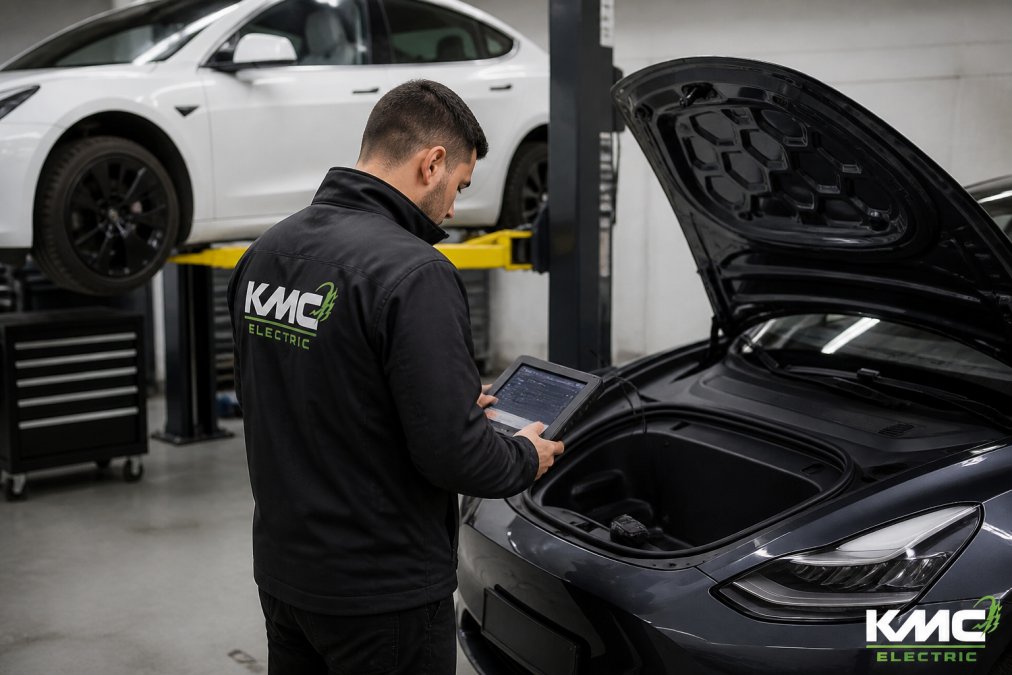
Professional illustration showing Technician for ev diagnostic support for dealerships
Battery degradation follows predictable patterns, but only if you know how to read the data. State of health, charge cycles, thermal history, and cell balance all matter. A battery at 85 per cent state of health behaves completely differently from one at 70 per cent. The difference isn't just technical, it's the difference between a vehicle that will serve the next owner for years and one that might need expensive replacement work within months.
Many dealerships skip this step because they don't have the diagnostic capability in-house. They either guess based on age and mileage, or they rely on main dealer reports that come with inflated repair recommendations. Independent battery assessment changes that equation entirely. You get objective data about actual battery condition, not a sales pitch for a new pack.
The process itself is straightforward but requires the right equipment. Diagnostic software connects to the vehicle's battery management system, pulls historical data, and generates a detailed report showing degradation trends, cell health, and remaining capacity. For dealerships in the East Midlands, this kind of assessment provides the transparency that used EV buyers increasingly demand.
When you can show a prospective buyer an independent battery health report, you're solving their biggest concern before they even ask the question. That transparency builds trust and justifies pricing. For your own inventory, it means you know exactly which vehicles will hold value and which ones need closer attention.
High Voltage System Repair in the East Midlands
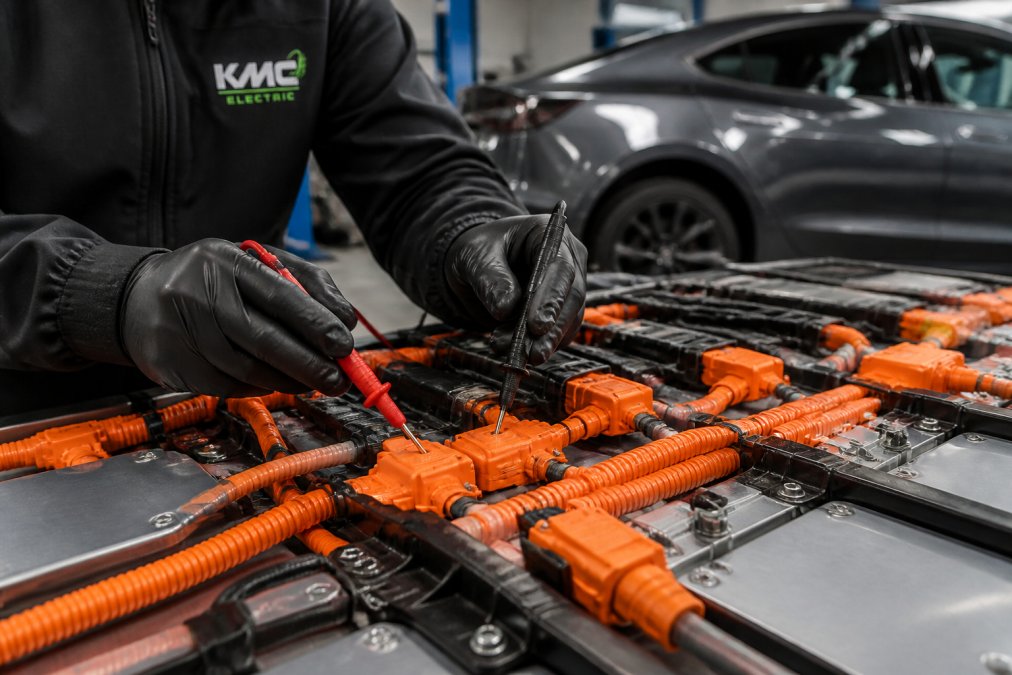
High voltage systems are where EV complexity becomes real. Unlike a conventional 12-volt electrical system, high voltage architecture in electric vehicles carries hundreds of volts at significant amperage. A fault in this system isn't just an inconvenience, it's a safety issue that demands specialist diagnosis and repair.
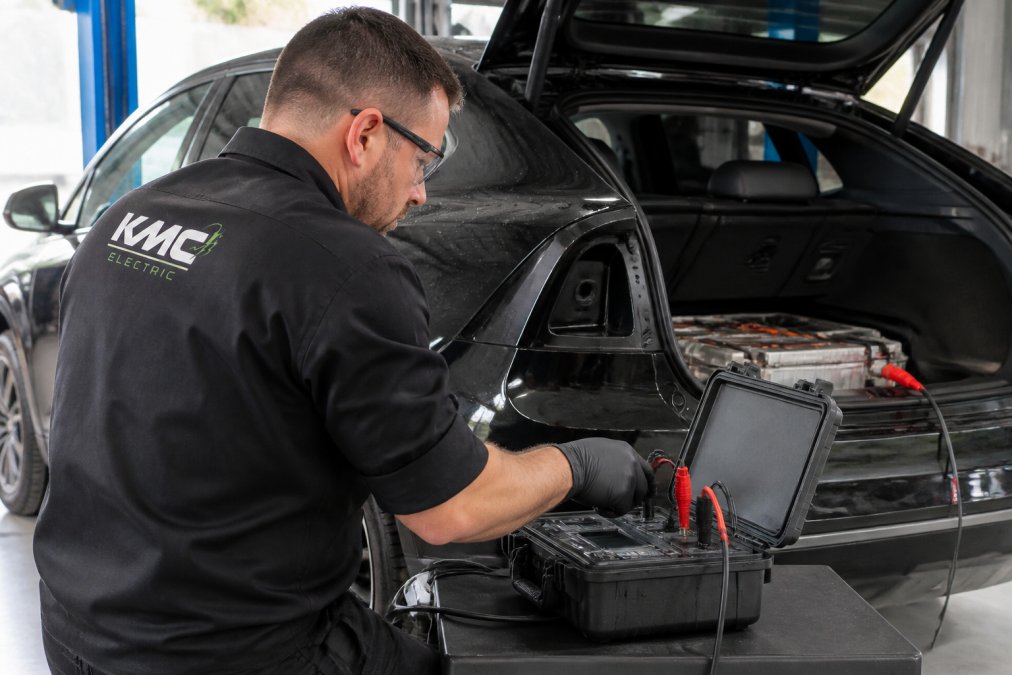
Professional illustration showing Close for ev diagnostic support for dealerships
The challenge for dealerships is that high voltage work requires specific training, safety protocols, and equipment that go well beyond what most independent garages have invested in. Working on these systems means understanding isolation procedures, proper lockout-tagout protocols, and the electrical hazards that come with systems that can deliver lethal current. It's not something to learn on the job.
Common high voltage faults include battery pack issues, charging system failures, inverter problems, and thermal management system breakdowns. Each one produces fault codes that dealership teams need to interpret correctly. Misdiagnosis here is expensive, you might replace a component that wasn't actually faulty, or miss the real problem entirely.
This is where high voltage system repair in the East Midlands becomes a specialist service rather than something every workshop can handle. KMC Electric provides this expertise to dealerships that need it, diagnosing complex high voltage faults and either performing the repair or providing detailed guidance so your team can execute the work safely and correctly.
The benefit for dealerships is obvious: you can handle a broader range of customer vehicles without turning work away. You're not limited to simple maintenance or basic repairs. A customer with a high voltage fault doesn't need to go back to the main dealer and pay premium rates, they can stay with you, and you maintain the relationship.
Electric Vehicle Fault Finding Tools and Techniques
Fault finding in electric vehicles requires tools that most traditional garages simply don't have. A basic code reader won't cut it. You need diagnostic software that understands EV-specific systems, can access manufacturer databases, and can interpret the complex data streams that modern electric vehicles generate constantly.
The toolkit for proper electric vehicle fault finding tools and techniques includes manufacturer-specific software, high voltage test equipment, thermal imaging cameras, and access to technical bulletins that explain what each fault code actually means in the context of that specific vehicle model. Without these tools, you're working blind.
Many dealerships have discovered that investing in full EV diagnostic capability is expensive and time-consuming. The software licensing alone can be substantial, and keeping up with updates as new models arrive is an ongoing cost. That's one reason many dealerships partner with specialists rather than trying to do everything in-house.
The techniques matter as much as the tools. Proper EV diagnostics follows a logical sequence: understand the fault code, check the relevant system's sensor data, test electrical continuity and voltage in the circuit, review thermal data if applicable, and then isolate the faulty component. Each step requires knowledge of how that specific system works and what normal operating parameters look like.
Common faults that dealership teams encounter include battery management system errors, charging port failures, thermal system malfunctions, and motor controller problems. Each one requires a different diagnostic approach. A thermal management fault might involve checking coolant flow, pump operation, and temperature sensor accuracy. A motor controller fault might require oscilloscope measurements and software version verification.
KMC Electric brings this depth of expertise to dealerships that need it, whether you're handling the diagnosis yourself with guidance or bringing in specialist support to crack a particularly stubborn fault. The goal is getting your team capable of handling more work independently while having access to expert support when you need it.
Training and Ongoing Support for Dealership Teams
Building EV capability in your dealership isn't a one-time purchase of equipment, it's an ongoing investment in your team's knowledge. Training matters more than tools. A technician with proper EV training and basic equipment will outperform someone with advanced tools and no background in electric vehicle systems.
The challenge is finding training that's relevant to your specific situation. Generic EV courses cover broad concepts but might not address the particular models your dealership works on most. Hands-on training with real vehicles and real fault scenarios is far more valuable than classroom instruction alone.
Many dealerships benefit from a hybrid approach: formal training to build foundational knowledge, followed by mentoring and support as your team encounters new situations. When your technician faces an unfamiliar fault code on a Tesla Model 3, having access to someone who's diagnosed that exact issue dozens of times makes the difference between a two-hour job and a two-day troubleshooting nightmare.
KMC Electric works with dealership teams to provide both formal training and ongoing technical support. That might mean conducting training sessions on specific vehicle systems, providing remote diagnostic assistance when your team encounters something unfamiliar, or reviewing your team's diagnostic approach to help them develop faster problem-solving skills.
The investment in training pays for itself quickly. A technician who understands EV systems properly will diagnose faults faster, make fewer mistakes, and handle a wider range of work. Your workshop throughput improves, customer satisfaction increases, and your team develops skills that make them more valuable to your business.
Cost-Effective Diagnostics vs Main Dealer Repair
This is the question every dealership manager asks: why would a customer come to us instead of going back to the main dealer? The answer is cost and convenience, but only if you can deliver the same quality of diagnosis without the premium pricing.
Main dealers have advantages: they have manufacturer support, original parts availability, and factory training for their technicians. They also have overhead costs that get passed directly to customers. An independent EV diagnostic support for dealerships offers an alternative. You can diagnose the same fault, then either repair it in-house or guide the customer to the most cost-effective solution. That transparency and value proposition is what keeps customers loyal.
The key is having genuine diagnostic capability, not just guessing. If you're going to charge for diagnosis, you need to deliver accurate results. That's where partnership with specialists like KMC Electric matters. You're not just getting a diagnostic tool, you're getting access to expertise that allows you to deliver professional-grade results without the main dealer overhead.
Many customers with out-of-warranty vehicles will choose an independent dealership over a main dealer if the quality of diagnosis is comparable and the price is significantly lower. Some will choose it even if the price is the same, because they prefer dealing with a local business they trust. Building that trust means delivering accurate diagnostics consistently.
For dealerships in Kettering and across the East Midlands, positioning yourself as a cost-effective alternative to main dealers while maintaining diagnostic quality is a competitive advantage that directly impacts profitability and customer retention.
Conclusion
Electric vehicles are here to stay, and dealerships that can handle EV diagnostics and repair will capture market share from those that can't. The technical knowledge required is substantial, but it's not impossible to build. The key is recognising that EV diagnostic support for dealerships isn't a luxury, it's a necessity for staying competitive.
Whether you're investing in training for your team, acquiring specialist equipment, or partnering with independent experts, the goal is the same: delivering reliable, cost-effective diagnosis and repair for electric vehicles. KMC Electric brings Level 4 Master Technician expertise in EVs, over 25 years of automotive experience, and specialist knowledge of Tesla systems across all models. If your dealership needs support diagnosing complex EV faults, identifying battery health issues, or training your team on high voltage systems, KMC Electric provides exactly the kind of specialist backing that keeps your workshop moving and your customers satisfied.
Frequently Asked Questions
Why do dealerships need external EV diagnostic support?
Franchised dealerships often lack the specialist expertise to diagnose complex Tesla fault codes and high-voltage system issues. Independent EV diagnostic support provides access to Level 4 Master Technician status specialists who understand Tesla systems across all models, enabling dealerships to resolve faults efficiently, identify problems before warranty expiry, and offer customers cost-effective alternatives to main dealer repairs. This expertise extends vehicle service life and builds customer confidence in used EV stock quality.
What does an EV battery health check for dealerships involve?
A professional EV battery health check assesses state-of-health, degradation patterns, and remaining capacity using specialist diagnostic tools. For used vehicle dealerships, this independent verification provides buyers with transparent battery condition data before purchase, reducing post-sale disputes and liability. The check identifies whether a battery is performing within acceptable parameters or showing early signs of degradation that may require future attention, giving both dealers and buyers confidence in the vehicle's long-term viability.
Can independent EV specialists work with franchised dealerships?
Yes. Independent EV diagnostic specialists like KMC Electric work directly with franchised dealership service managers to diagnose complex faults, provide technical expertise on Tesla fault codes, and offer training to in-house teams. This partnership model allows dealerships to expand their diagnostic capability without significant capital investment in specialist equipment or lengthy technician training programmes. Many dealerships use independent specialists for out-of-warranty work and complex diagnostics that fall outside their main dealer scope.
How much does EV diagnostic support cost compared to main dealers?
Independent EV diagnostic support is typically more cost-effective than main dealer diagnostics because specialists focus on practical, real-world solutions rather than manufacturer-mandated repair protocols. Main dealers often charge premium labour rates and may recommend full component replacement where repair is possible. Independent specialists provide transparent pricing, identify faults before they become expensive repairs, and offer flexible support packages tailored to dealership needs, making ongoing diagnostics and training more affordable for both independent and franchised dealers.