Risks of Buying a Used Electric Car: What to Check
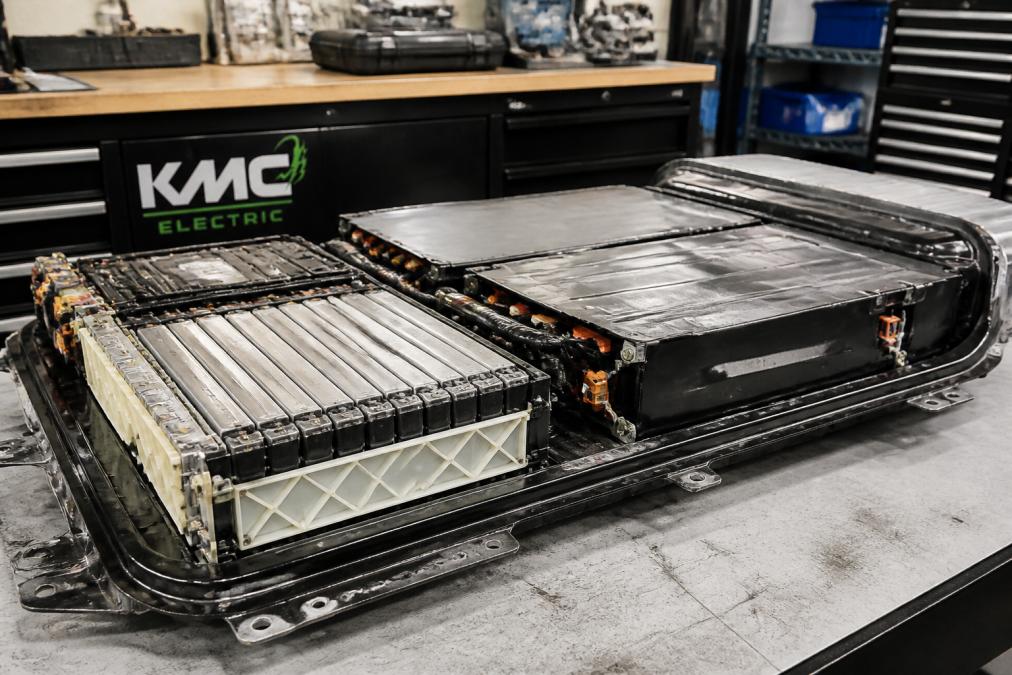
Buying a used electric car carries distinct financial and technical risks that differ fundamentally from purchasing a conventional vehicle. The core concern isn't the motor or transmission, it's the battery. A degraded battery can mean reduced range or a replacement bill that wipes out your savings on the purchase price. This guide from KMC Electric covers the hidden risks of buying a used electric car, what to inspect before committing, and how to protect yourself.
We've spent over 25 years in automotive repair, and our Level 4 Master Technician status in electric vehicles since 2016 has given us direct insight into what goes wrong with second-hand EVs. The risks are real, but they're manageable if you know what to look for.
Battery Degradation: The Core Risk of Buying a Used Electric Car
Battery degradation is the single biggest risk when purchasing a used electric vehicle. Unlike petrol engines, which typically stay reliable for years, EV batteries lose capacity over time through normal use. After 100,000 miles or five years, most EV batteries have lost between 10-20% of their original capacity.
The problem: sellers often don't disclose the true state of the battery. Dealerships may claim it's "in perfect condition" without diagnostic evidence. Private sellers may not even know how degraded their battery is. You could drive away with a car that looks fine but has a battery with only 70% of its original health.
How battery health affects real-world range
State of health (SoH) is the measure of how much capacity your battery retains compared to when it was new. A battery at 100% SoH delivers its full advertised range. At 80% SoH, you'll see roughly 20% less range in real-world driving.
A used Model 3 advertised with 300-mile range might deliver only 240 miles if the battery has degraded to 80% SoH. Cold weather amplifies this problem. In winter conditions, an already-degraded battery loses another 20-40% of its range due to thermal management system demands. A car that barely reaches 200 miles in summer might struggle to manage 120 miles in January.
State of health (SoH) and charging cycles explained
State of health (SoH) is a percentage that tells you how much of the battery's original capacity remains. A battery at 90% SoH is still healthy. Below 80%, degradation becomes noticeable. Below 70%, you're looking at significant range loss.
Charging cycles are one of the primary drivers of degradation. Each time you charge from empty to full, that counts as one cycle. Rapid charging (DC fast charging) ages batteries faster than slow home charging, so a car charged exclusively at motorway stations will have lower SoH than one charged mostly overnight. Temperature management also matters: vehicles stored in hot climates or charged in extreme heat age faster.
Getting an Independent Used Electric Car Battery Health Check
This is where most buyers fail. They rely on the seller's word or a main dealer inspection that isn't thorough. An independent diagnostic scan is the only way to know the true state of the battery before you buy.
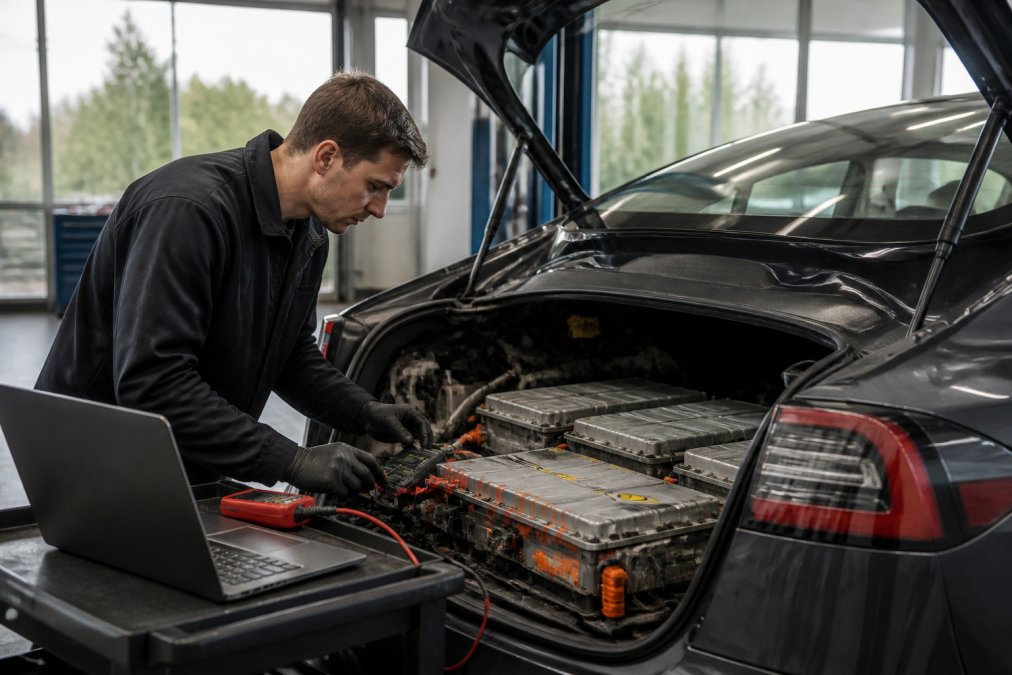
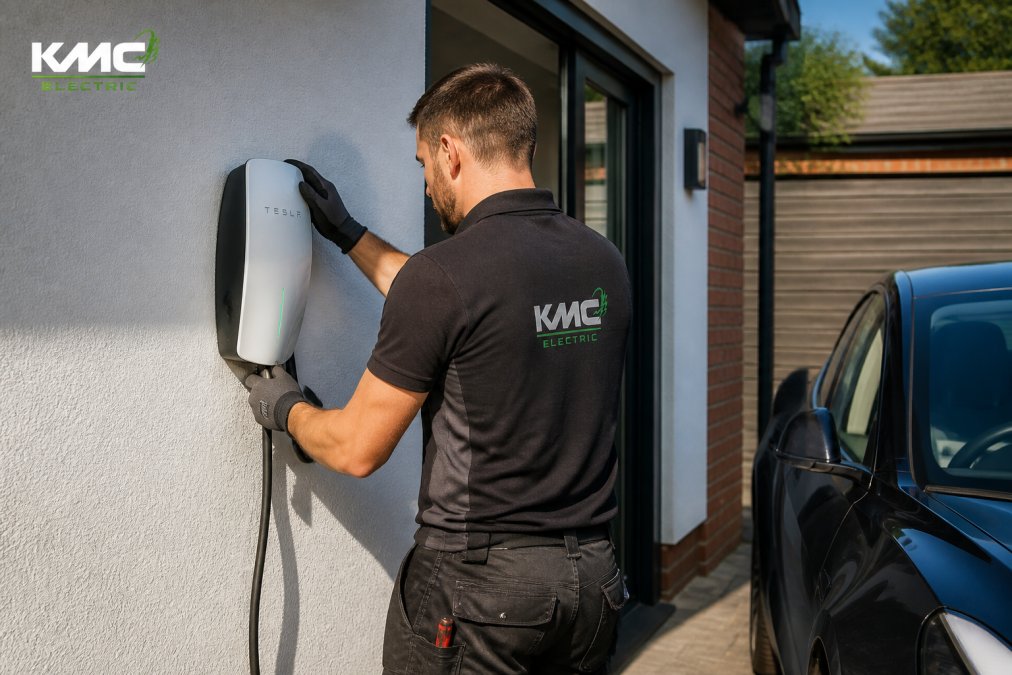
Professional illustration showing Professional, Tesla for risks of buying a used electric car
What a diagnostic scan reveals
A proper battery health check connects specialised equipment directly to the vehicle's onboard computer. This reveals exact state of health percentage, individual cell voltages and resistance, number of charging cycles completed, thermal management system performance, any battery faults or error codes, and remaining warranty coverage.
The scan takes 30-45 minutes and produces a detailed report showing whether the battery is healthy, degraded, or failing. It also flags any software issues that might be masking battery problems.
Why independent verification matters more than dealer claims
Main dealers have a financial incentive to move stock quickly. Their "battery health check" often consists of plugging in a generic diagnostic tool that only reads basic fault codes. If no faults appear, they'll tell you the battery is fine, even if it's at 75% SoH.
An independent specialist like KMC Electric has no incentive to oversell or undersell. Our only goal is to give you accurate data so you can make an informed decision. If a battery is degraded, we'll tell you. If it's healthy, we'll confirm that too. This transparency is especially valuable if you're buying from a private seller.
EV Battery Replacement Cost UK: Understanding Your Financial Exposure
Battery replacement costs vary widely depending on the vehicle and battery size. A used electric car with a degraded battery could face a replacement bill that significantly impacts your total cost of ownership.
The financial exposure is real. If you buy a used EV with 70% SoH and the battery fails within two years, you're facing a major expense. This is why knowing the SoH before purchase is critical. If you're considering a car with 75% SoH, you need to factor potential battery replacement into your decision. That might mean negotiating a lower purchase price or walking away entirely.
The best protection is buying a used EV with SoH above 85%. At that level, the battery should remain healthy for several more years of normal use. Below 80%, the financial risk increases significantly.
Warranty Gaps and Used Electric Car Warranty Coverage
Used EVs often fall outside manufacturer warranty protection, leaving you exposed to major costs.
Manufacturer battery warranties and what they actually cover
Most EV manufacturers offer battery warranties that cover defects in materials and workmanship. The critical detail: these warranties cover defects, not degradation. If your battery gradually loses capacity due to normal use, that's not covered. If the battery suddenly fails due to a manufacturing fault, that's covered.
Read the warranty documentation carefully. Note the exact expiry date and mileage threshold. A car with two years of battery warranty remaining gives you some protection. A car with six months left offers almost none.
Transferability to second owners
Manufacturer warranties typically transfer to the second owner, but with reduced coverage. A battery warranty that covers the first owner for eight years might cover the second owner for five years. Some manufacturers reduce the mileage threshold for second owners as well.
This is another reason to get an independent battery health check. Even if warranty coverage transfers, you want to know the battery's condition now, not wait until it fails and discover you're outside the warranty window.
Software Issues and Hidden Faults in Used EVs
Battery health is only part of the picture. Used EVs can harbour software issues and hardware faults that don't show up in a basic inspection.
Infotainment glitches and software version compatibility
EV infotainment systems are computers on wheels. They receive software updates over-the-air, but older vehicles may be running outdated versions. Outdated software can cause glitches in navigation, climate control, or charging management and may prevent the vehicle from receiving future updates.
A diagnostic scan reveals the current software version and any known issues associated with it. If the vehicle is several versions behind, that's a red flag.
Thermal management system failures
The thermal management system keeps the battery at the right temperature during charging and driving. If it fails, the battery overheats, which accelerates degradation and can trigger charging failures. Thermal management faults are expensive to repair and often aren't obvious until the system actually fails. A diagnostic scan can flag thermal management errors that haven't yet manifested as visible problems.
Charging Infrastructure and Cold Weather Performance
Real-world EV ownership depends on access to reliable charging and realistic expectations about winter range.
Charging port and cable condition
Inspect the charging port physically. Look for corrosion, loose connectors, or signs of damage. A corroded port can prevent proper charging and poses a fire risk. Check the condition of any included charging cable. Cracks in the insulation or damaged connectors are serious safety issues.
Charging hardware compatibility matters too. Confirm the vehicle has the correct onboard charger for your home setup. Older models used different charging standards than current vehicles.
Cold weather range loss and thermal degradation
Winter performance is a legitimate concern for EV owners in the UK. Cold weather reduces range by 20-40% depending on the vehicle and conditions. A car rated for 300 miles might deliver only 180-220 miles in January.
If you're buying a used EV and you live in a climate with cold winters, factor this into your range expectations. A car with 80% SoH will lose even more range in winter. Knowing the true SoH lets you calculate realistic winter range before you buy.
Depreciation and Total Cost of Ownership for Used Electric Cars
The total cost of owning a used EV extends far beyond the purchase price. Depreciation, insurance, and potential battery costs all factor into whether the deal makes financial sense.
How rapid depreciation affects resale value
EV prices have fallen sharply as the market has matured and battery technology has improved. A used EV you buy today might be worth significantly less in three years as newer models with better range and lower prices hit the market.
This rapid depreciation is partly due to battery technology improving faster than expected. Newer batteries hold more charge, cost less to produce, and last longer. Don't expect to recover your investment when you sell. Buy a used EV expecting to lose value, not hold it.
Insurance and tax implications
Insurance for used EVs can be higher than for equivalent petrol cars, depending on the insurer and the vehicle. Road tax is currently free for electric vehicles in the UK, which is a significant saving compared to petrol cars. However, this exemption may change as EV adoption increases.
Battery degradation can also affect insurance claims. If your battery has degraded significantly and you're in an accident, the insurer might argue that the vehicle's value is lower than you claimed, affecting your settlement.
Your Pre-Purchase Inspection Checklist
Before you commit to buying a used electric car, follow this structured approach to identify risks.
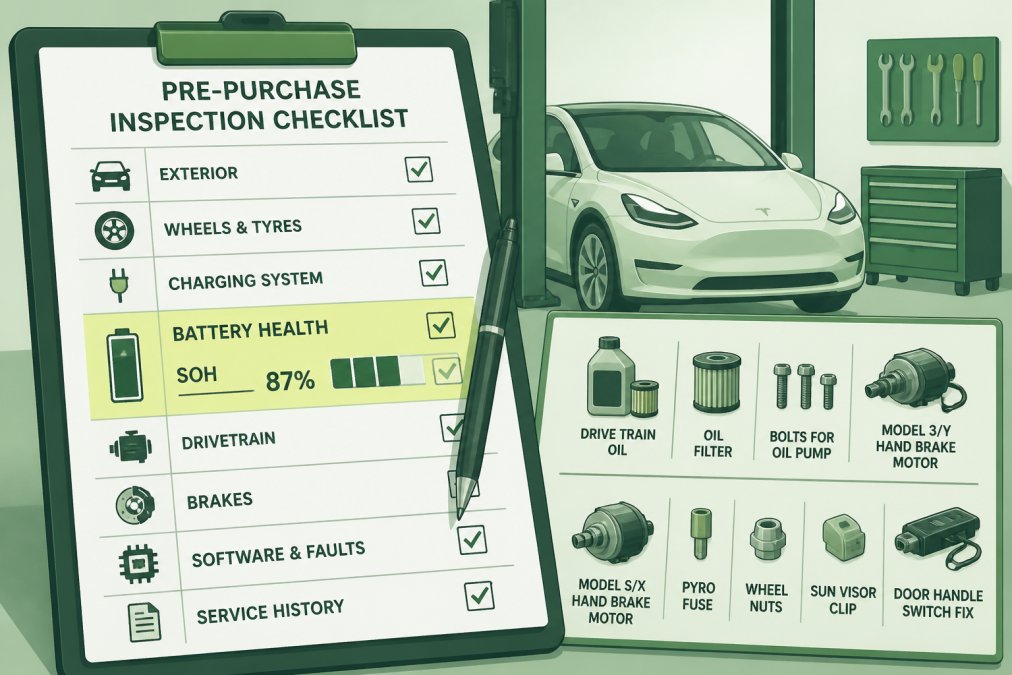
Software tools interface for risks of buying a used electric car
Inspection Item
What to Check
Red Flag
Battery SoH
Diagnostic scan result
Below 80% SoH
Charging cycles
Diagnostic data
Unusually high for mileage
Thermal management
Diagnostic scan for faults
Any thermal errors flagged
Software version
Vehicle system menu
Several versions outdated
Charging port
Physical inspection
Corrosion, loose connectors
Charging cable
Physical inspection
Cracks, damaged insulation
Warranty remaining
Manufacturer documentation
Less than 12 months left
Service history
Maintenance records
Gaps or missing records
Accident history
Vehicle history report
Major damage to battery area
Real-world range
Test drive in current conditions
Significantly below advertised
Vehicle history report and odometer reading verification
Get a full vehicle history report before you buy. This shows accident history, ownership changes, and any recorded faults. A vehicle with a history of major accidents (especially to the battery area) is a higher risk purchase.
Verify the odometer reading matches the vehicle's history. Check the service history. A well-maintained EV will have regular service records. Missing records suggest the previous owner may not have maintained the vehicle properly.
When to commission a professional diagnostic
Commission a professional diagnostic scan before making an offer. This is the single most important step you can take. The scan gives you concrete data to negotiate with.
If the scan reveals SoH below 80%, use that information to negotiate a lower price or walk away. If SoH is above 85%, you can buy with confidence knowing the battery is healthy.
A professional diagnostic also reveals software issues, thermal management faults, and other hidden problems that a visual inspection would miss. KMC Electric offers independent battery health verification and diagnostic scanning for used EV buyers.
Buying a used electric car without understanding these risks is a gamble. Battery degradation, software issues, thermal management failures, and warranty gaps can turn what looks like a bargain into an expensive liability. The good news: all of these risks are manageable if you do the work upfront. Get an independent battery health check, verify the vehicle's history, and understand your warranty coverage. These steps take a few hours and could save you thousands of pounds. For buyers in Kettering and the surrounding area seeking independent verification, professional diagnostics are now accessible and affordable, far cheaper than discovering problems after you've signed the paperwork.
Frequently Asked Questions
How do I check the battery health of a used electric car before buying?
Request a professional diagnostic scan that measures state of health (SoH) and kilowatt-hour (kWh) capacity. An independent specialist can run this test in under an hour, showing real battery degradation versus manufacturer claims. Ask for the vehicle history report and check charging cycles—most EV batteries degrade 2-3% per year in normal use. If the seller won't allow a pre-purchase inspection, that's a red flag.
What is the typical EV battery replacement cost in the UK?
Battery replacement typically costs £8,000 to £15,000 depending on vehicle model and battery size (measured in kWh). Some manufacturers offer refurbished batteries at lower cost. This is why independent battery health verification is critical before purchase—catching degradation early can save thousands. Insurance may not cover battery replacement if it fails outside warranty, so budget accordingly when evaluating total cost of ownership.
Does used electric car warranty coverage transfer to me as the second owner?
Most manufacturer battery warranties cover only the first owner or expire after a set period (typically 5-8 years). As a second owner, you may have limited or no coverage. Check the specific vehicle's warranty documentation before purchase. This is why independent battery health certification is essential—it gives you peace of mind that the battery is in acceptable condition despite limited warranty protection.
Should I worry about mileage when buying a used electric car?
Mileage matters less for EVs than petrol cars because electric motors have fewer moving parts and less wear. However, high mileage combined with poor battery health is a serious concern. A used EV with 100,000 miles but 95% state of health (SoH) is safer than one with 40,000 miles and 70% SoH. Always prioritise battery condition over odometer reading—regenerative braking and thermal management system efficiency tell you more about real wear.