A car diagnostic test is a comprehensive electronic examination of your vehicle's systems using specialized equipment that reads data from your engine control unit (ECU) and other onboard computers. Think of it as a health check-up for your car: just as a doctor uses blood tests to understand what's happening inside your body, automotive technicians use diagnostic tools to examine the electronic systems controlling engine performance, emissions, and more. When your check engine light illuminates or you notice unusual behaviour, a diagnostic test reveals the exact problem rather than forcing you to guess or pay for unnecessary repairs.
How On-Board Diagnostics Work
Every modern vehicle since the mid-1990s contains an on-board diagnostics system (OBD or OBD-II). This system continuously monitors your engine, transmission, emissions controls, and other critical components. The ECU collects data from hundreds of sensors measuring oxygen levels, fuel pressure, coolant temperature, transmission fluid pressure, and brake system status. When a sensor detects a problem, it sends a signal to the ECU, which stores this information as a diagnostic trouble code (DTC). The beauty of OBD-II is that it's standardized across all manufacturers, meaning a technician can use the same diagnostic equipment on a Tesla as on a traditional petrol vehicle.
The Role of the Engine Control Unit
Your engine control unit manages your vehicle's performance in real time, making thousands of adjustments per second to control fuel injection timing, ignition timing, transmission shift points, and emissions systems. For electric vehicles like Tesla models, the ECU role becomes even more critical, with multiple control modules managing battery systems, motor controllers, regenerative braking, and thermal systems. Professional diagnosis for electric vehicles requires technicians with specific EV training to understand these complex integrations.
How Does a Car Diagnostic Test Work?
A professional diagnostic test follows a structured process beginning with an interview about any symptoms you've noticed: strange noises, performance changes, warning lights, or unusual fuel consumption. This conversation provides context that data alone cannot.
Reading Live Data Streams
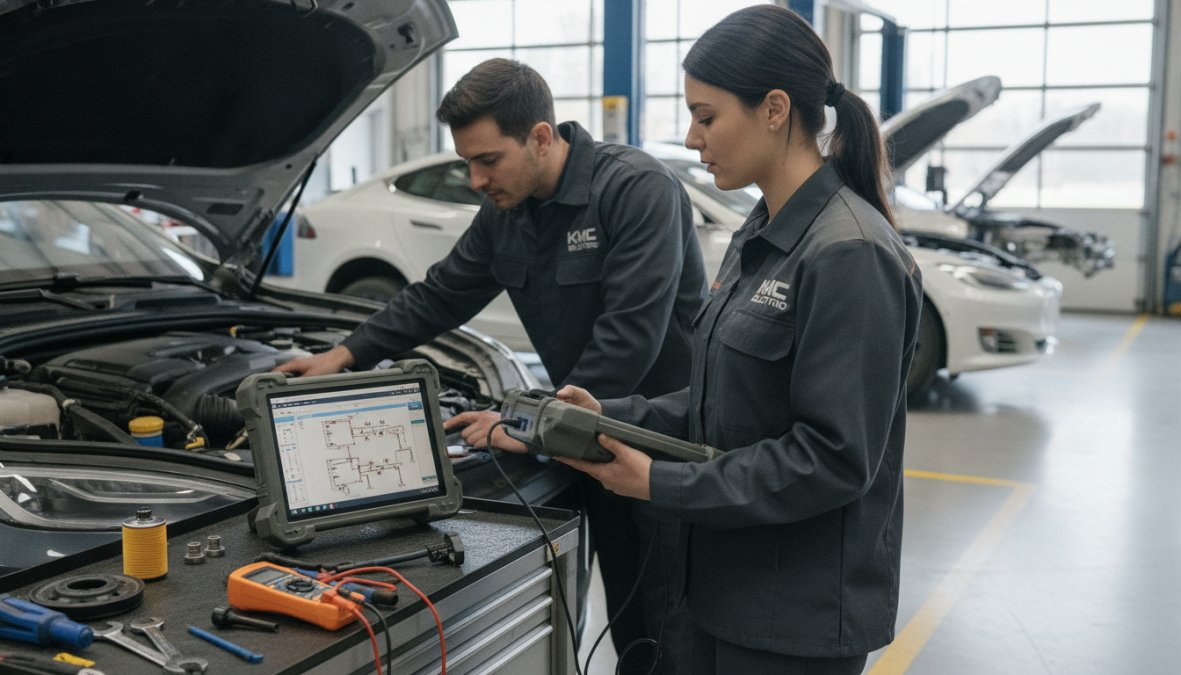
Once the diagnostic scan tool connects to your vehicle's OBD-II port (located under the dashboard on the driver's side), the technician accesses live data streams showing real-time sensor readings as your vehicle operates. A skilled technician watches parameters change in response to different driving conditions, revving the engine to check transmission response, accelerating hard to check for misfires, or monitoring idle quality. This dynamic analysis reveals problems that static code reading would miss. For example, a fault code might indicate a faulty oxygen sensor, but live data might show the sensor is functioning correctly and the real problem is a vacuum leak causing incorrect readings.
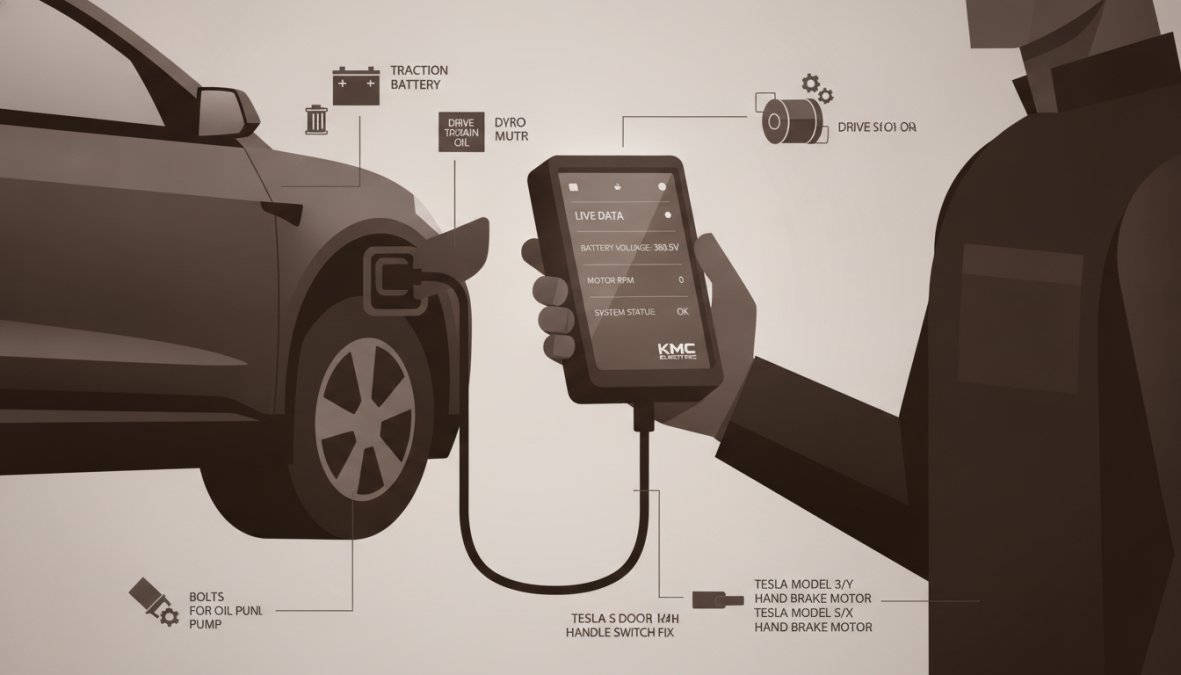
Automotive technician holding a diagnostic scan tool connected to a vehicle's OBD-II port, with the technician's hand visible and the scan tool screen displaying live data streams
Interpreting Fault Codes and the Malfunction Indicator Lamp
Diagnostic trouble codes are expressed as four-character alphanumeric codes. The first character indicates the system: P for powertrain, B for body, C for chassis, U for network/undefined. The remaining characters narrow down the specific fault. P0420 indicates a catalyst system efficiency problem, while P0300 means random/multiple cylinder misfires.
The malfunction indicator lamp (MIL), commonly called the check engine light, illuminates when the ECU detects a problem serious enough to warrant attention. Contrary to popular belief, this doesn't always mean your vehicle is unsafe to drive. Some codes indicate minor issues like a loose fuel cap, whilst others suggest serious problems like a failing catalytic converter.
Pro TipA blinking check engine light indicates an active, ongoing misfire that can damage your catalytic converter. Drive immediately to a service centre. A steady check engine light typically indicates a stored code and is less urgent, but should still be diagnosed within a few days.
What Components Does a Diagnostic Test Check?
A comprehensive diagnostic test examines multiple vehicle systems simultaneously. Modern vehicles contain 20-30 control modules, each managing different functions.
Powertrain and Emissions Systems
The powertrain system includes your engine, transmission, and all components that deliver power to the wheels. Diagnostics focus on fuel delivery, ignition timing, cylinder compression, and transmission operation. The emissions system, catalytic converter, oxygen sensors, particulate filters, and exhaust gas recirculation valves, receives particular scrutiny because emissions failures trigger the check engine light most frequently. For petrol engines, diagnostics check fuel pressure, injector operation, and spark plug firing. For diesel engines, the focus shifts to fuel injection pressure and diesel particulate filter regeneration cycles. For electric vehicles, diagnostics examine battery state of charge, cell voltage balance, thermal management, and motor controller function.
Transmission, Brakes, and Electrical Systems
Modern automatic transmissions contain their own control modules with dedicated diagnostic protocols verifying shift timing, transmission fluid pressure, torque converter operation, and solenoid function. Brake system diagnostics examine anti-lock brake (ABS) sensor function, brake fluid pressure sensors, and electronic brake distribution. Electrical system diagnostics verify battery voltage, charging system output, and individual circuit operation.
Watch OutIf your vehicle's ABS light and brake warning light are both illuminated, do not ignore this. A diagnostic test is essential before driving further. These lights together can indicate brake system failure, which is a safety-critical issue.
Understanding Diagnostic Trouble Codes and MIL Indicators
Diagnostic trouble codes follow a standardized structure, but understanding what they mean requires professional knowledge. The same code can have different causes depending on your vehicle's year, make, model, and engine type.
Pending vs. Stored Codes: What's the Difference?
A pending code appears when the ECU has detected an anomaly once or twice but hasn't confirmed a persistent problem. The system will monitor the condition for several drive cycles. If the problem doesn't recur, the pending code clears automatically. If the problem persists, the code becomes stored.
A stored code means the ECU has detected the same problem across multiple drive cycles and has confirmed a fault. Stored codes trigger the malfunction indicator lamp. Understanding this distinction is crucial because it tells you whether you're dealing with an intermittent glitch or a genuine problem requiring repair.
Common Trouble Codes Explained
P0101 (Mass Air Flow Sensor Range/Performance): Your engine's air intake sensor is providing inconsistent readings, causing poor fuel economy and rough idling. The sensor is often dirty rather than faulty.
P0420 (Catalyst System Efficiency Below Threshold): Your catalytic converter isn't converting exhaust pollutants efficiently. This can indicate either a failing catalytic converter or an upstream oxygen sensor providing incorrect data.
P0300 (Random/Multiple Cylinder Misfires): One or more cylinders isn't firing properly, indicating a failing spark plug, faulty fuel injector, compression problem, or ignition coil failure.
P0128 (Coolant Thermostat Operation): Your engine's coolant isn't reaching proper operating temperature. The thermostat itself is often the culprit.
P0171 (System Too Lean): Your engine is running with too little fuel relative to air, indicating either a fuel system problem or a vacuum leak.
Car Diagnostic Test Cost: What to Expect
The cost of a diagnostic test varies significantly based on whether you choose a professional service centre or attempt a DIY approach with consumer equipment.
Professional vs. DIY Diagnostic Tools
A professional diagnostic test at an independent specialist typically costs between £60 and £150, depending on your vehicle's complexity. This investment gives you access to professional-grade equipment, technician expertise, and a comprehensive report explaining what's wrong and what repairs are needed.
Consumer-grade OBD2 scanners range from £20 to £200. A basic scanner reads and clears codes, useful if you want to know why your check engine light is on. However, these tools cannot access live data streams, cannot perform system-specific tests, and cannot diagnose intermittent problems.
Diagnostic Option
Cost
Capabilities
Best For
Professional diagnostic test
£60-£150
Full system analysis, live data, expert interpretation
Persistent problems, warranty concerns, EV systems
Consumer OBD2 scanner
£20-£200
Code reading and clearing only
Basic troubleshooting, checking for obvious issues
Dealership diagnostics
£100-£250+
Manufacturer-specific tools, but limited independence
In-warranty vehicles, manufacturer recalls
The apparent savings of a consumer scanner often evaporate when you misdiagnose a problem and replace the wrong component. Paying £100 for professional diagnosis that prevents an unnecessary £400 repair represents genuine savings.
Key TakeawayThe cost of a professional diagnostic test is negligible compared to the cost of replacing the wrong part. A technician's expertise prevents expensive guesswork.
How Long Does a Car Diagnostic Test Take?
A basic diagnostic scan takes 15-30 minutes. A comprehensive professional diagnostic including live data analysis, system-specific tests, and thorough interpretation typically requires 1-2 hours. The timeline depends on whether your vehicle has multiple stored codes, if the problem is intermittent, or if your vehicle is an electric model requiring specialist knowledge.
Using an OBD2 Scanner for Cars: Professional vs. Consumer Tools
An OBD2 scanner connects to your vehicle's diagnostic port and retrieves information stored in the ECU. The differences between consumer and professional scanners are substantial.
What Consumer-Grade Scanners Can and Cannot Do
A consumer OBD2 scanner can read and clear diagnostic trouble codes and display a generic description. Some higher-end models display a few live data parameters like engine RPM, vehicle speed, and coolant temperature. Consumer scanners cannot access manufacturer-specific codes, perform active tests, diagnose intermittent faults, or access deeper layers of vehicle data where many problems hide.
Why Professional Diagnostic Equipment Differs
Professional diagnostic equipment accesses the complete data set from your vehicle's control modules. A professional scanner displays 50+ live data parameters simultaneously and can command the vehicle to perform tests: actuate the fuel pump relay, cycle the cooling fan, trigger fuel injectors, or run the oxygen sensor heater.
For electric vehicles, professional diagnostic equipment is essential. Tesla vehicles contain proprietary systems that consumer scanners cannot access. Battery management system data, motor controller diagnostics, thermal system operation, and regenerative braking calibration all require professional equipment.
Pro TipIf you own an electric vehicle like a Tesla, do not attempt diagnosis with consumer equipment. Professional diagnosis from a technician with EV training is non-negotiable.
Is a Diagnostic Test Necessary for Used Car Inspection?
When purchasing a used vehicle, a pre-purchase diagnostic test is one of the most valuable investments you can make. It reveals hidden problems that a visual inspection alone will never catch. The test reveals stored and pending codes, shows the vehicle's service history through control modules, and identifies emerging problems before they become catastrophic failures. A £100 diagnostic test that reveals a failing transmission can save you from purchasing a vehicle with £5,000 in hidden damage.
Battery Health Verification for Electric Vehicles
For electric vehicles, a diagnostic test includes comprehensive battery health analysis. The battery is the most expensive component in an EV, often costing £8,000-£15,000 to replace. A diagnostic test reveals the battery's state of health, indicating how much of its original capacity remains. A Tesla battery degraded to 85% of original capacity still functions perfectly for daily driving but is worth significantly less than one at 95% capacity.
Summary Table: Diagnostic Test Overview
Aspect
Details
What it measures
Engine, transmission, emissions, electrical systems via control module data
Key tool used
OBD-II scanner (consumer or professional grade)
Time required
15-30 minutes for basic reading; 1-2 hours for comprehensive analysis
Professional cost
£60-£150 for independent specialists; £100-£250+ for dealerships
Best for
Check engine light diagnosis, used car inspection, EV battery verification
DIY viability
Limited, consumer scanners read codes but cannot diagnose root causes
Diagnostic testing transforms guesswork into certainty. Rather than replacing components hoping one will solve your problem, you identify the actual fault and address it directly. Professional diagnostic services represent the most cost-effective way to maintain vehicle health and avoid expensive repairs. The difference between a proper diagnostic and a quick code read is the difference between solving your problem and creating new ones. Whether you're troubleshooting a check engine light, inspecting a used vehicle, or ensuring your electric vehicle's battery remains healthy, a professional diagnostic test is an investment that pays for itself many times over.
Frequently Asked Questions
What does a car diagnostic test actually check?
A car diagnostic test uses OBD-II (on-board diagnostics) technology to scan your vehicle's control modules and electronic systems. It reads fault codes from the engine control unit (ECU), transmission, emissions systems, and other components. The scan tool retrieves both stored codes (past faults) and pending codes (intermittent issues), providing a vehicle health report that identifies component failures, timing issues, and sensor data anomalies affecting performance and fuel efficiency.
Can I perform a car diagnostic test myself with a consumer OBD2 scanner?
Consumer-grade OBD2 scanners can read basic fault codes and clear the malfunction indicator lamp (MIL), making them useful for identifying when a problem exists. However, professional diagnostic tools access deeper live data streams, module-specific information, and manufacturer-specific trouble codes that consumer tools cannot retrieve. For comprehensive system analysis and accurate troubleshooting, especially with electric vehicles or complex powertrain issues, professional automotive technicians with advanced scan tools provide far more detailed diagnostics.
How much does a car diagnostic test cost, and is it worth it?
Diagnostic costs vary depending on complexity and the technician's experience level. Professional diagnostics help avoid costly unnecessary repairs by identifying the actual fault before work begins. For used car purchases, diagnostics verify vehicle condition and catch hidden issues before warranty expiry. For electric vehicles, independent battery health verification through diagnostic testing is invaluable when buying or selling. The cost of a diagnostic test is typically far less than repairing the wrong component based on guesswork.
What is the difference between pending and stored diagnostic trouble codes?
Stored codes represent confirmed faults that have occurred multiple times and triggered the malfunction indicator lamp (MIL). These are consistent, repeatable problems requiring immediate attention. Pending codes indicate intermittent issues detected once or twice but not yet confirmed as persistent faults. Pending codes may clear themselves if the problem doesn't recur, but they're valuable warning signs. Understanding this distinction helps prioritise repairs and prevents unnecessary work on transient sensor glitches versus genuine component failures.
For comprehensive vehicle diagnostics covering everything from traditional petrol engines to complex EV systems, [EXTERNAL_LINK: contact KMC Electric for professional diagnosis in Kettering | kmcelectric.co.uk]. Our independent battery health verification and specialist Tesla knowledge ensure you get transparent, cost-effective solutions rather than unnecessary repairs. Submit your inquiry today and discover why vehicle owners throughout Northamptonshire trust us with their diagnostic needs.