Tesla Repair Cost vs Dealer: What Owners Need to Know
Understanding tesla repair cost vs dealer options is essential for any Tesla owner planning their maintenance budget. The difference between dealer service and independent repair shops can range from modest to substantial, depending on the specific issue and your vehicle's warranty status. This guide breaks down real costs, hidden expenses, and the practical trade-offs you'll face when your Tesla needs work.
The fundamental tension in Tesla ownership is this: authorised service centres offer factory-backed guarantees and genuine parts, but they're expensive. Independent specialists provide cost-effective alternatives with deep technical knowledge, yet some owners worry about warranty implications. The reality is more nuanced, and understanding the actual numbers helps you make decisions that protect both your vehicle and your wallet.
Dealer Service Costs: The Official Route
Tesla service centres operate under strict manufacturer protocols, ensuring consistency but also premium pricing. You're paying for factory-trained technicians, genuine OEM parts, and the peace of mind that your warranty remains intact.
Diagnostic fees and labour rates at Tesla service centres
A Tesla service centre diagnostic typically costs between £150 and £350, depending on complexity. Labour rates at Tesla service centres in the UK average £120 to £180 per hour, significantly higher than independent shops. A simple repair like replacing a cabin air filter might take 30 minutes (£60-£90 in labour alone), while more involved work can easily accumulate 4-8 hours of labour. For a hand brake motor replacement, you're looking at roughly 2-3 hours of labour plus parts, totalling £400-£600 at a dealer.
Many Tesla owners report 4-8 week delays for non-urgent repairs, which affects your decision-making. A repair that costs £450 at a dealer might seem unreasonable when facing an eight-week wait, but if you can't access an independent option, you're trapped.
OEM parts availability and pricing
Tesla OEM parts carry a premium. A hand brake motor costs around £60 when sourced independently, but a dealer will charge £120-£180 for the same component, plus fitting. Door handle switch fixes run £38 at independent specialists but can exceed £150 at dealerships when labour is included.
Dealers maintain priority access to stock, which can be valuable if you need a rare component. However, if you're willing to wait or source parts yourself, independent shops can often deliver the same repair at 40-60% of dealer cost.
Pro TipBefore accepting a dealer quote, ask specifically what parts are included and whether they're genuine Tesla OEM or aftermarket equivalents.
Independent Tesla specialists have proliferated over the past five years, driven by owner frustration with dealer wait times and pricing. The best independent shops, particularly those with Level 4 Master Technician credentials in electric vehicles, offer genuine alternatives to dealer service.
How independent technicians reduce repair expenses
Independent shops reduce costs through several mechanisms. They negotiate directly with parts suppliers, bypassing dealer markup. They operate with lower overhead than franchised service centres. Many have invested in diagnostic tools like Tesla Toolbox 3 and LOKI PRO, allowing deep system analysis without manufacturer support.
Labour rates at independent specialists typically range from £60 to £100 per hour, roughly half the dealer rate. This doesn't mean lower quality; many independent technicians are former dealer employees or have equivalent training. A diagnostic that costs £300 at a dealer might cost £80-£120 at an independent shop, and that savings often extends to the repair itself.
The trade-off is warranty coverage. Repairs performed at independent shops don't extend your vehicle's manufacturer warranty, though they may include the shop's own warranty (typically 12 months on parts and labour). If your Tesla is still under manufacturer warranty, an independent repair could technically void coverage for that specific system, though Tesla's warranty practices have become more lenient in recent years. Ensure your independent shop provides detailed invoices and work records.
Aftermarket parts vs OEM: cost implications
Aftermarket parts for Tesla vehicles are increasingly high-quality and significantly cheaper than OEM equivalents. A third-party door handle switch might cost £25-£35, compared to £80-£120 for a genuine Tesla part. For items like brake fluid, cabin air filters, and electrical connectors, aftermarket parts are generally safe and reliable. For battery-related parts and drivetrain components, many independent technicians recommend OEM parts despite the cost.
The real savings come from bundling: an independent shop might replace your cabin air filter, rotate tyres, and perform brake fluid checks for £150-£200 total, whereas a dealer would charge £400-£500 for the same work.
Component
Dealer Cost (Parts + Labour)
Independent Cost (OEM Parts)
Independent Cost (Aftermarket)
Hand Brake Motor
£400-£600
£200-£280
£150-£220
Door Handle Switch
£200-£300
£100-£150
£70-£100
Cabin Air Filter
£120-£180
£50-£80
£35-£60
Brake Fluid Service
£150-£250
£80-£120
£60-£90
Average Tesla Maintenance Cost Per Year: Budget Planning
Annual maintenance costs for a Tesla vary based on age, mileage, and warranty status. A new Model 3 or Model Y in the first three years might require only scheduled maintenance, totalling £300-£500 annually. An out-of-warranty Tesla can easily cost £1,000-£2,500 per year if unexpected repairs arise.
Preventative maintenance schedules and expenses
Tesla's official maintenance schedule is remarkably sparse compared to internal combustion engine vehicles. However, preventative maintenance still matters. Tyre rotations every 10,000 miles (roughly £60-£100), brake fluid replacement every two years (£80-£150), and cabin air filter changes annually (£40-£100) are the core items.
Battery health monitoring is increasingly important as vehicles age. Many owners use tools like Scan My Tesla to monitor cell voltages and battery management system data independently, identifying potential issues before they become catastrophic. A proactive battery diagnostic at an independent shop costs £100-£200 and can catch problems early.
For vehicles approaching 100,000 miles, expect additional costs: brake pad inspection, coolant checks for the battery thermal management system, and drivetrain inspections. These preventative checks typically cost £150-£300.
Key TakeawayPreventative maintenance on a Tesla costs roughly 60-70% less than traditional petrol vehicles over the first five years, but neglecting scheduled checks can result in expensive emergency repairs.
Year-on-year cost variations by model and age
A Model 3 in years 1-3 under warranty averages £200-£400 annually in scheduled maintenance. Years 4-6 runs £400-£800. Beyond year 6 or 80,000 miles, costs become unpredictable. Some vehicles cruise through with minimal issues; others face hand brake motor failures or electrical faults costing £400-£1,500 per incident.
Model S and Model X vehicles tend to cost slightly more due to their larger size and more complex systems. Regional variations also matter. Labour rates in London and the South East are 15-25% higher than in Northamptonshire or other Midlands areas.
Tesla Out of Warranty Repair Costs: Planning Ahead
Once your Tesla exits the manufacturer's warranty period (typically 8 years or 100,000 miles for the battery, 3 years or 60,000 miles for general components), repair costs become your responsibility entirely. This is where the dealer vs. independent decision becomes most acute.
Common post-warranty repairs and realistic pricing
Hand brake motor failures are among the most common post-warranty repairs. At a dealer, expect £400-£600. At independent shops, the same repair using OEM parts typically costs £200-£280, with aftermarket alternatives running £150-£220.
Door handle switches fail frequently on older Model 3 and Model Y vehicles. Dealer cost: £200-£350. Independent cost with OEM parts: £100-£150. With aftermarket parts: £70-£100.
Electrical faults require diagnostic work. A dealer diagnostic costs £300-£400. An independent shop charges £80-£150 for the same diagnostic. If the issue is software-related, the fix might be free or cost only a software reset fee (£50-£100). If hardware replacement is needed, costs vary widely: £200-£2,000 depending on the component.
Pyro fuse replacements cost roughly £40 for the part alone at independent suppliers, plus £100-£150 in labour. A dealer charges £300-£500 for the same work.
Extended warranty and repair protection options
Extended warranties for Tesla vehicles are offered by both Tesla and third-party providers. Tesla's extended coverage typically costs £1,500-£3,000 for an additional 4-6 years and covers major components like the battery and drivetrain. Third-party extended warranties are sometimes cheaper but often have higher deductibles and more exclusions.
A practical middle ground: skip the extended warranty and set aside £1,500-£2,000 in a dedicated repair fund. Most Tesla owners won't need major repairs in years 4-6, so this reserve often goes unused.
Watch OutExtended warranties sold by third-party retailers sometimes require repairs at franchised dealers only, which means you lose the cost advantage of independent shops. Always verify the warranty's repair network before purchasing.
Tesla Certified Body Shop vs Dealer: Collision Repair Comparison
Collision repairs introduce a different cost dynamic because insurance often covers the bill. However, your choice of repair facility still affects your out-of-pocket expenses, repair quality, and timeline.
Insurance claim processes and approved repair networks
Most insurance companies maintain a network of approved repair shops, which may or may not include Tesla dealerships. Tesla-certified body shops are authorised by Tesla to perform structural and panel repairs while maintaining warranty integrity. However, they're not always the cheapest option.
Independent body shops can often perform the same repair for 10-20% less, but if they're not on your insurer's approved list, you may need to pay upfront and claim reimbursement. After an accident, get quotes from both a Tesla-certified body shop and a reputable independent shop. Provide both quotes to your insurer. Many insurers will match a lower independent quote if the shop is competent and insured.
Quality guarantees and warranty coverage for collision work
Tesla-certified body shops provide a warranty on collision repairs, typically 3 years or 36,000 miles, covering workmanship and parts. Independent body shops offer varying warranties, some provide 12 months, others 3 years. Always ask and get it in writing.
For minor cosmetic damage, the cost difference between certified and independent shops is often negligible (5-10%). For structural repairs or major panel replacement, certified shops may cost 15-25% more but offer stronger guarantees and faster resolution if issues arise.
Regional Labour Rate Variance and Its Impact on Repair Bills
Labour costs for Tesla repairs vary significantly across the UK. London and the South East command premium rates, often £150-£200 per hour at independent shops and £180-£220 at dealers. The Midlands typically runs 15-25% lower. A four-hour repair costing £600 in Kettering might cost £800-£900 in London.
When seeking repairs, get quotes from shops within 30 miles of your location. This captures local labour rate advantages while maintaining reasonable travel distance. For major work, it's worth travelling further for a known specialist if the cost savings exceed fuel and inconvenience.
Common Tesla Repair Issues and Real-World Costs
Certain failures recur across Tesla's model range, and understanding typical costs helps you budget and recognise when a quote seems unreasonable.
Hand brake motor failures, door handle switches, and electrical faults
Hand brake motor failures typically manifest as a warning light and reduced braking feel. The motor itself costs £60, but labour to remove the rear wheel, access the brake assembly, and install the replacement adds £150-£200. Total at an independent shop: £210-£260. At a dealer: £400-£600.
Door handle switches fail when the motor that retracts the handle wears out. The part costs £38-£50; labour is roughly 1-1.5 hours (£100-£200 depending on location and shop). Independent total: £138-£250. Dealer total: £250-£400.
Electrical faults are harder to generalise because causes vary widely. A battery management system warning light might be triggered by a loose connector (diagnostic fee only), a failed cell voltage sensor (£200-£400 in parts and labour), or a software issue (free to £100). Always insist on a thorough diagnostic before authorising repairs.
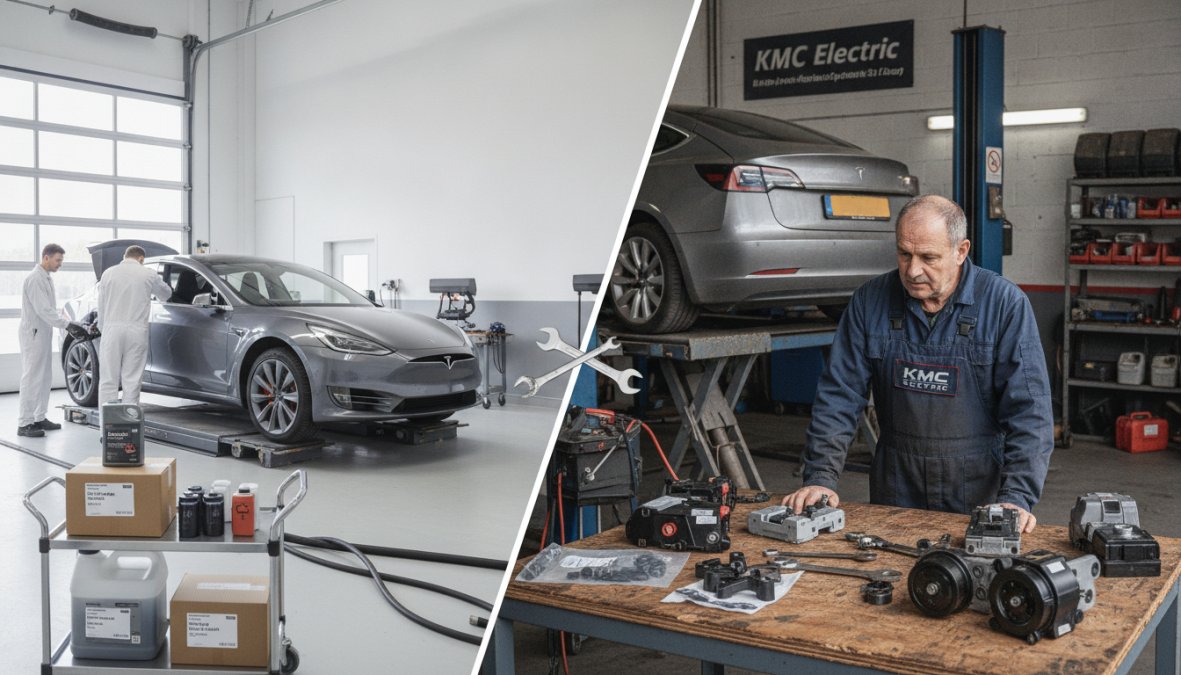
A qualified technician inspecting a Tesla's brake system and electrical components in a professional workshop environment with diagnostic equipment visible on the workbench
Battery health diagnostics and drivetrain concerns
Battery health diagnostics are increasingly important as Teslas age. A comprehensive battery diagnostic at an independent shop costs £100-£200 and provides detailed information about cell voltages, state of health, and potential degradation. This data is invaluable when buying or selling a used Tesla.
Drivetrain problems require specialist diagnosis. A motor or inverter fault might be a software issue (free or £50-£100 to reset) or a hardware failure (£1,500-£4,000 depending on the component). At a dealer, a drivetrain diagnostic costs £300-£500. At an independent specialist, it costs £150-£250.
Issue
Independent Shop (OEM Parts)
Dealer
Potential Savings
Hand Brake Motor
£210-£260
£400-£600
£140-£390
Door Handle Switch
£138-£250
£250-£400
£112-£262
Battery Diagnostic
£100-£200
£300-£500
£100-£400
Drivetrain Diagnostic
£150-£250
£300-£500
£50-£350
Cabin Air Filter
£50-£80
£120-£180
£40-£130
Understanding tesla repair cost vs dealer options helps you make decisions that align with your priorities, whether that's warranty certainty, cost savings, or convenience. Independent specialists can deliver comparable quality at 40-60% of dealer costs, but the trade-off is warranty coverage and potentially longer waits for parts. If your Tesla is out of warranty and you're comfortable with independent shops, the savings are substantial. For most owners, the practical answer is hybrid: use dealers for warranty-critical work and major diagnostics, then transition to independent specialists for routine maintenance and post-warranty repairs. Whether you're planning maintenance or responding to an unexpected fault, getting multiple quotes and understanding what each includes is the smartest investment you can make.
Frequently Asked Questions
Can independent mechanics work on Tesla vehicles without voiding the warranty?
Independent repair shops can service Teslas, but warranty coverage depends on the specific repair. Factory warranty typically covers manufacturer defects regardless of where service occurs, provided the work doesn't directly cause the issue. However, using non-certified technicians for warranty-covered repairs may complicate claims. Independent specialists with proper Tesla qualifications and diagnostic tools, like those at KMC Electric, can perform repairs safely whilst maintaining transparency about warranty implications for each job.
Is it worth paying the premium for Tesla dealer service versus independent repair?
Dealer service guarantees OEM parts, factory-trained technicians, and warranty protection during the coverage period, essential for new vehicles. Post-warranty, independent certified shops offer comparable expertise at lower labour rates. For routine maintenance and out-of-warranty repairs, independent specialists reduce costs by 25-35% whilst maintaining quality. The choice depends on warranty status, repair complexity, and whether you prioritise brand assurance over cost savings. Battery health verification and fault diagnostics through independent shops provide valuable peace of mind before purchasing.
What are typical Tesla repair costs for common issues like hand brake motor or door handle failures?
Hand brake motor replacement typically costs £400-£800 at dealers; independent shops charge £300-£550 with quality aftermarket or refurbished parts. Door handle switch repairs range £250-£600 depending on model (Model 3/Y vs Model S/X). Diagnostic fees vary: dealers charge £100-£150, whilst independent specialists often include diagnostics in repair quotes. Parts availability and labour rates affect final costs significantly. Independent technicians can source quality alternatives, like KMC Electric's hand brake motors at £60, reducing overall expenses whilst maintaining reliability.