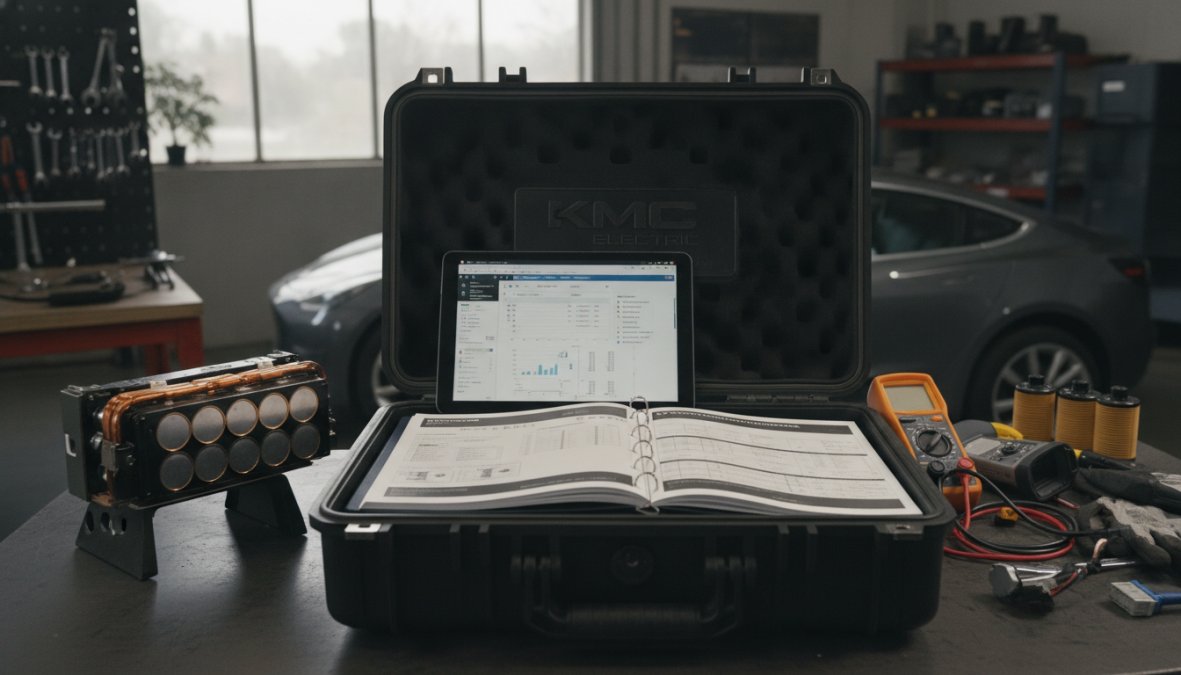
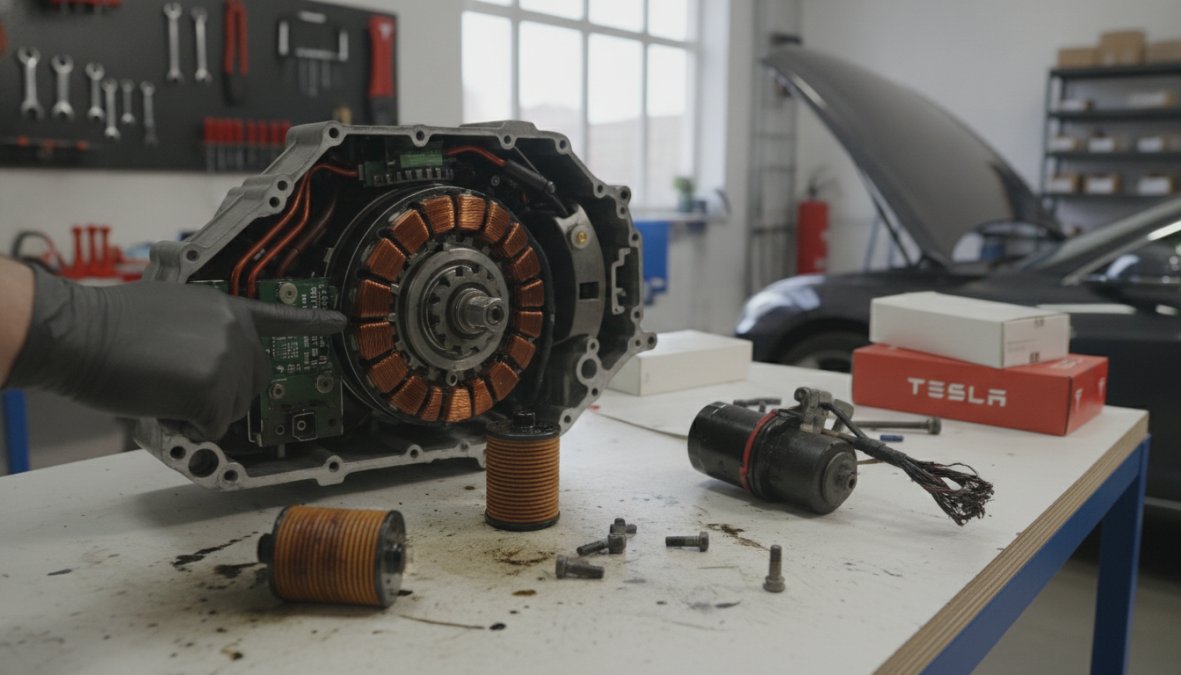
What Is Electric Vehicle Battery Testing and Why It Matters
Understanding electric vehicle battery testing is essential for any EV owner in the UK, whether buying used or maintaining your current vehicle. At KMC Electric, we've spent over a decade helping owners navigate battery diagnostics and replacement planning. Battery testing reveals the actual health of your vehicle's most expensive component, information that can save thousands of pounds in unexpected repairs or poor purchasing decisions.
The battery in your electric vehicle degrades gradually over time, losing capacity and power output with each charge cycle. State of Health (SoH) measurements quantify this degradation, typically expressed as a percentage of the battery's original capacity. A battery at 80% SoH still functions but delivers less range and may struggle with fast charging.
Pro TipMost EV owners wait until problems appear before testing their battery. Early testing catches issues while warranty coverage might still apply or before replacement becomes unavoidable.
Understanding State of Health (SoH) and Battery Degradation
State of Health represents the battery's current capacity relative to its original specification. A new battery starts at 100% SoH. As you charge and discharge, chemical reactions within the cells gradually reduce this figure. Most manufacturers guarantee that batteries maintain at least 70-80% SoH over the warranty period, typically 8 years or 100,000 miles.
Degradation isn't linear. Early in a battery's life, SoH drops slowly, then often accelerates after several years. Testing reveals not just current SoH but also the degradation rate, helping you anticipate when replacement might become necessary. Different battery chemistries degrade at different rates. Lithium Iron Phosphate (LFP) batteries, increasingly common in newer EVs, tend to degrade more slowly than traditional Nickel Manganese Cobalt (NMC) cells.
Performance, Safety, and Environmental Testing
Battery testing encompasses three distinct categories. Performance testing measures the battery's ability to deliver power and accept charge, directly affecting your vehicle's range and acceleration. Safety testing examines the Battery Management System (BMS) and thermal management systems, ensuring they prevent dangerous conditions like thermal runaway. Environmental and cycle life testing simulates long-term use patterns to predict battery longevity.
How to Check EV Battery Health in the UK
Battery health assessment ranges from simple DIY checks using basic tools to comprehensive professional diagnostics. Your choice depends on your budget, technical comfort, and how detailed the information needs to be.
DIY Battery Health Diagnostics with OBD2 Scanners
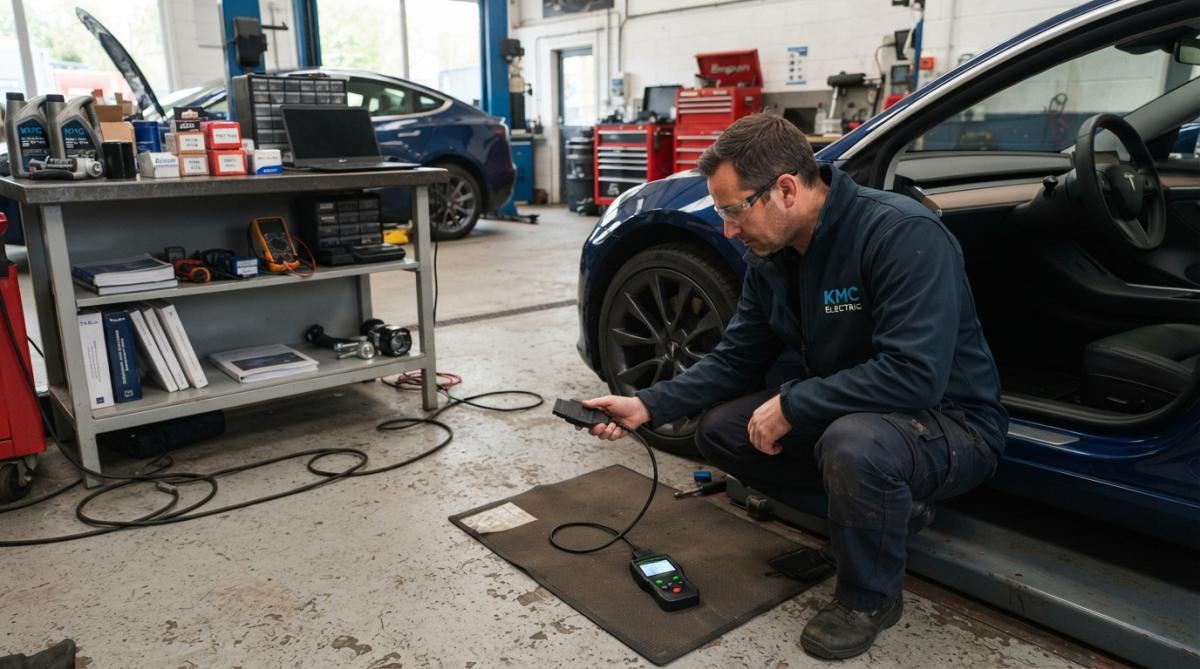
An OBD2 (On-Board Diagnostic) scanner connects to your vehicle's diagnostic port and reads fault codes and live data. For EVs, this includes battery-related parameters. A basic OBD2 scanner costs between £20 and £100, making it an affordable starting point for battery health investigation.
To perform a DIY battery health check, locate your vehicle's OBD2 port (typically under the steering column), connect the scanner, turn the ignition to "On", navigate to the battery menu, and record the State of Health percentage and voltage readings.
Watch OutOBD2 scanners can't detect degradation that hasn't yet triggered a fault code. A battery showing 85% SoH on a professional test might still read "normal" on an OBD2 scanner. This is why professional testing matters for buying or selling used vehicles.
Step-by-step visual guide for technician and using and obd concepts for battery testing cost
Professional Battery Testing Services
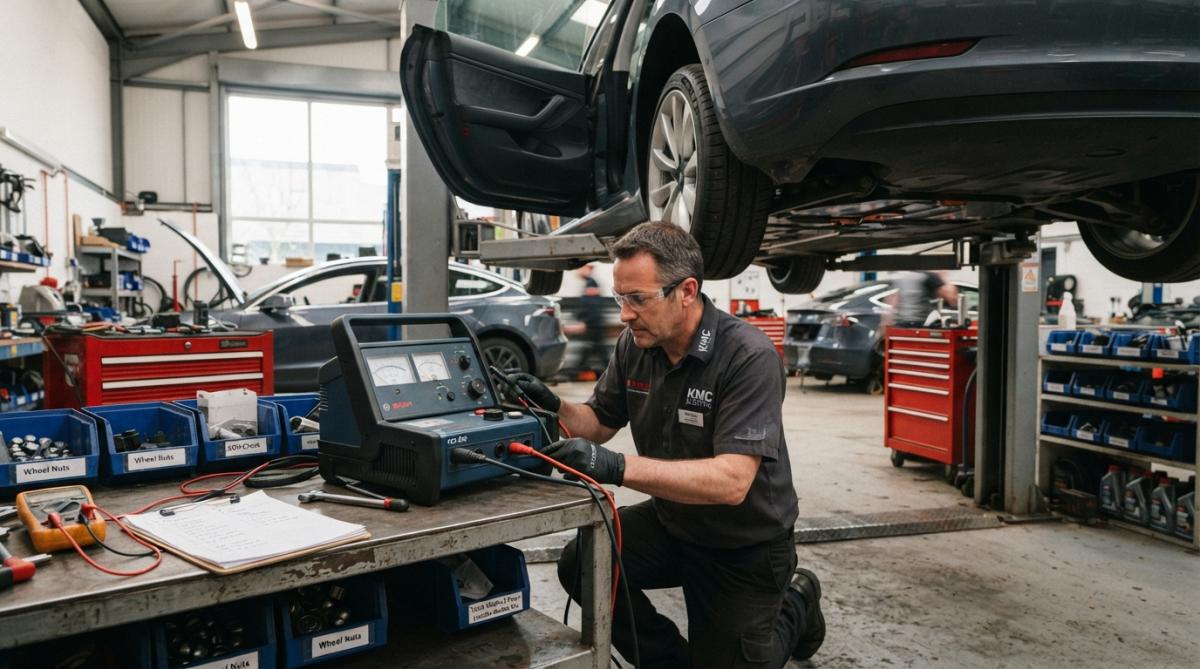
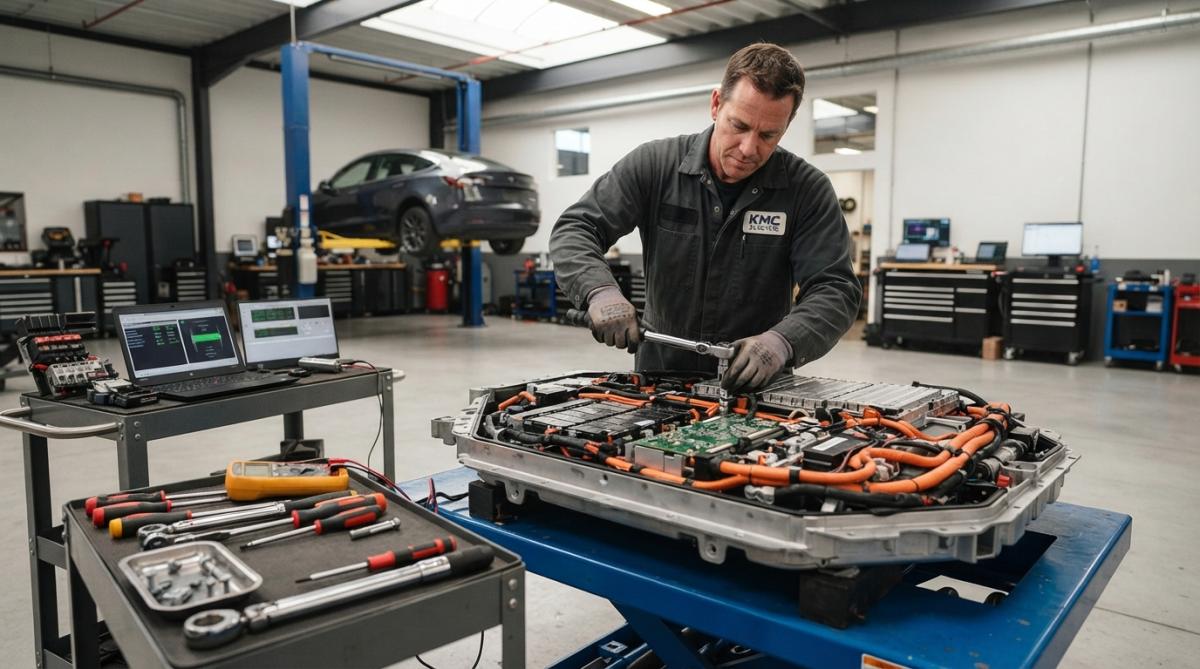
Professional testing uses specialised equipment that measures battery characteristics at the cell, module, and pack levels. Cell-level testing examines individual battery cells using electrochemical impedance spectroscopy, revealing which cells are degrading fastest. Module-level testing assesses groups of cells to identify whether degradation is uniform or concentrated in specific areas. Pack-level testing evaluates the entire battery system, including the BMS, thermal management, and safety systems.
Professional testing services in Kettering and across Northamptonshire vary in scope and depth. KMC Electric offers independent battery health verification particularly valuable when buying or selling used EVs. Unlike main dealer diagnostics, which may minimise battery issues to facilitate sales, independent testing gives you the information you need to negotiate fairly and plan long-term costs accurately.
The testing process typically takes 1-3 hours, depending on the depth of analysis. Results include detailed reports showing current SoH, degradation rate, estimated remaining lifespan, and any identified faults.
EV Battery Warranty UK: Coverage and Testing Implications
Understanding your battery warranty is crucial for managing replacement costs. Most EV batteries in the UK come with manufacturer warranties covering 8 years or 100,000 miles, whichever comes first. Some manufacturers offer extended coverage to 10 years or 150,000 miles.
Warranties typically guarantee that the battery maintains at least 70-80% of its original capacity. If degradation exceeds this threshold before the warranty expires, the manufacturer covers replacement costs. However, warranties don't cover damage from accidents, extreme weather, or improper charging habits.
Testing becomes particularly important near the end of your warranty period. If your battery shows degradation approaching the warranty threshold, you may be able to claim replacement under warranty. After the warranty expires, you bear the full cost of any replacement. For out-of-warranty vehicles, professional testing helps you understand whether replacement is imminent or whether your battery has years of useful life remaining.
Cost of EV Battery Replacement UK: What You Need to Know
Battery replacement is the largest potential expense in EV ownership. Understanding the factors that influence cost helps you budget effectively and make informed decisions about vehicle maintenance.
Factors That Influence Battery Replacement Costs
Battery capacity is the primary cost driver. A larger battery (measured in kilowatt-hours or kWh) costs significantly more to replace than a smaller one. Vehicle model and manufacturer affects both parts costs and labour charges. Some manufacturers use proprietary battery designs that cost more to source. Battery chemistry influences pricing, with LFP batteries potentially costing differently than NMC batteries depending on current supply and manufacturing capacity.
Warranty and age determine whether you're eligible for manufacturer coverage. In-warranty replacement costs nothing to the owner. Out-of-warranty replacement becomes a significant expense. Labour costs vary between main dealers and independent specialists. In the Kettering area, independent specialists like KMC Electric often provide cost-effective alternatives to main dealer pricing while maintaining high technical standards.
Key TakeawayTesting early allows you to plan financially and potentially claim warranty coverage before it expires.
Mobile EV Battery Testing UK: Convenience and Pricing
Mobile testing services bring diagnostic equipment to your location, eliminating the need to visit a workshop. This convenience appeals to busy owners and those unable to travel long distances.
Most services provide results within 24-48 hours of the test. The advantage of mobile testing is convenience; the technician comes to you. The disadvantage is that mobile equipment is less extensive than workshop-based systems. For owners in Kettering and Northamptonshire, mobile testing offers a practical option when you need quick assessment without workshop downtime. However, if you're considering battery replacement or need detailed diagnostics, workshop-based testing often provides more comprehensive information.
Types of EV Battery Tests: Performance, Safety, and Cycle Life Analysis
Different testing approaches reveal different aspects of battery condition. Understanding which test addresses your specific concern helps you choose the right service.
Cell-Level, Module-Level, and Pack-Level Testing
Cell-level testing uses electrochemical impedance spectroscopy and other advanced techniques to measure individual cell characteristics, revealing internal resistance, capacitance, and degradation patterns. Module-level testing groups cells into manageable units and tests them together, revealing whether degradation is uniform across the battery or concentrated in specific modules. Pack-level testing evaluates the complete battery system including the BMS, thermal management, and safety systems, providing the most useful information for most owners.
Thermal Management and Electrochemical Testing
Thermal management systems keep the battery within safe operating temperatures. Testing these systems reveals whether cooling or heating functions work properly. Electrochemical testing measures the battery's ability to store and deliver energy at the chemical level, with advanced equipment creating a computational model that predicts future behaviour and estimates remaining useful life.
Battery Degradation Factors: What Affects Your EV's Health
Battery degradation isn't inevitable at a fixed rate. Your driving habits, climate, and charging practices significantly influence how quickly your battery ages.
Charging Habits, Temperature, and Cycle Life Impact
Fast charging accelerates degradation compared to slower charging. Charging to 100% regularly stresses the battery more than charging to 80%. Many EV manufacturers recommend limiting regular charging to 80% and reserving 100% charges for long trips. Temperature extremes degrade batteries faster than moderate conditions. Cold weather reduces range and increases internal resistance. Heat accelerates chemical reactions that degrade cells.
Cycle life refers to complete charge-discharge cycles, with each cycle causing some degradation. Storage conditions matter when vehicles aren't in use. Storing an EV with a fully charged battery in hot conditions accelerates degradation. Driving patterns influence cycle depth, with city driving causing less degradation per mile than highway driving.
Pro TipYou can't stop battery degradation, but you can slow it significantly. Avoid fast charging when unnecessary, limit regular charging to 80%, and keep your vehicle in moderate temperatures when possible. These habits can extend battery lifespan by 2-3 years or more.
Buying a Used EV: Why Battery Testing Matters Before Purchase
The battery is the most expensive component in any used EV. Before purchasing, you must know its actual health. A vehicle that appears cheap may have a severely degraded battery requiring imminent replacement.
Assessing Battery Health for Resale Value and Long-Term Costs
Professional battery testing before purchase reveals the true cost of ownership. Testing also protects your resale value. When you eventually sell your used EV, potential buyers will demand testing. Having documented battery health from the time of purchase demonstrates transparency and builds buyer confidence.
For used EV purchases in Kettering and across the UK, independent battery testing from specialists like KMC Electric provides unbiased assessment. When reviewing test results for a used EV, look for current State of Health percentage, degradation rate, estimated remaining lifespan, any fault codes or warning signs, and comparison to the vehicle's age and mileage.
A battery at 85% SoH with slow degradation may have 8+ years of useful life. A battery at 75% SoH with rapid degradation may need replacement within 2-3 years. The context matters as much as the absolute number.
The UK market for EV battery testing includes main dealers, independent specialists, and mobile testing services. Each option has distinct advantages and limitations.
Main dealers offer testing through manufacturer-approved technicians using official diagnostic equipment. They understand vehicle-specific systems thoroughly but typically charge premium labour rates. Independent specialists like KMC Electric provide transparent testing without manufacturer bias. With Level 4 Master Technician status in electric vehicles and EV qualifications since 2016, independent specialists combine deep technical knowledge with cost-consciousness. Mobile testing services bring diagnostic equipment to your location, suiting busy owners, though mobile equipment may be less comprehensive than workshop-based systems.
When choosing a testing provider, consider technician qualifications and experience with your vehicle type, depth of testing available, report detail and clarity, cost and turnaround time, and whether they offer recommendations without pressure to replace.
Long-Term Cost of EV Ownership: Battery Testing's Role in Planning
Battery testing informs broader cost planning for EV ownership. Understanding your battery's trajectory allows you to budget for eventual replacement and make informed decisions about vehicle retention or sale.
Most EV owners keep vehicles for 5-8 years. During this period, battery degradation is usually gradual and manageable. However, testing reveals whether your specific vehicle will degrade faster or slower than average. A vehicle with a battery at 90% SoH and slow degradation rate might never require replacement during your ownership. A vehicle at 75% SoH with rapid degradation might need replacement within 3-4 years.
For long-term planning, factor in current State of Health percentage, estimated degradation rate, your expected ownership duration, likelihood of warranty coverage, and estimated replacement cost when necessary. Testing also helps you decide whether to keep a vehicle long-term or sell before battery replacement becomes necessary.
Environmental Impact and Recycling: Battery Testing's Broader Significance
Battery testing connects to environmental responsibility and circular economy principles. Understanding battery health influences recycling decisions and environmental impact.
When batteries reach end-of-life, recycling recovers valuable materials including lithium, cobalt, and nickel. Testing identifies batteries suitable for recycling versus those that might be repurposed for stationary energy storage. A battery at 70% SoH may no longer suit vehicle use due to insufficient range, but it can function effectively in home or grid storage applications.
According to Department for Energy Security and Net Zero guidance on EV battery recycling, understanding battery condition throughout the vehicle lifecycle is essential for managing environmental impact and resource recovery.
Last Updated: July 24, 2026
The decision to test your EV's battery isn't just about avoiding unexpected repair costs; it's about understanding one of the most critical components in your vehicle and making informed decisions about maintenance, purchase, and long-term ownership.
Whether you're buying a used EV, planning long-term ownership costs, or simply want to understand your vehicle's condition, professional battery testing provides clarity that DIY diagnostics can't match. For EV owners across Kettering and Northamptonshire, KMC Electric offers independent battery health verification with transparent reporting and practical recommendations. With over 25 years of automotive experience and Level 4 Master Technician status in electric vehicles, we help owners extend vehicle service life and identify potential faults before they become expensive problems. Contact KMC Electric today to schedule comprehensive battery testing and take control of your EV ownership costs.
Frequently Asked Questions
How much does an EV battery health check cost in the UK?
EV battery health check costs vary depending on the testing method and provider. Mobile battery testing services typically charge between £100–£300 for a comprehensive health assessment. Professional diagnostic testing through specialist garages may range higher based on the depth of analysis required. Independent specialists like KMC Electric offer transparent pricing for battery diagnostics, providing detailed State of Health (SoH) reports to help you understand your vehicle's true condition before purchasing a used EV or making repair decisions.
What is included in an electric vehicle battery test?
A comprehensive battery test typically includes State of Health (SoH) measurement, capacity analysis, voltage checks, thermal management assessment, and cycle life evaluation. Tests may also examine the battery management system (BMS) performance and identify any degradation in lithium-ion or LFP cells. Professional testing uses diagnostic tools and data acquisition systems to provide detailed reports on energy density, power output, and whether the battery meets manufacturer specifications. Some services include certification documentation useful for resale purposes.
Can I test my EV battery at home in the UK?
Yes, you can perform basic battery health checks at home using an OBD2 scanner, which connects to your vehicle's diagnostic port and reads battery management system data. However, this DIY approach provides limited information compared to professional testing. For a thorough assessment of State of Health, degradation patterns, and detailed diagnostics, professional mobile EV battery testing or specialist garage services are recommended. This is especially important when buying a used EV, as professional testing provides independent verification and detailed reports that protect your investment.
Does EV battery testing affect my warranty in the UK?
Independent battery testing does not void your manufacturer's warranty. In fact, conducting testing before warranty expiry can help identify potential faults early, allowing you to claim repairs under warranty coverage. Testing through independent specialists like KMC Electric provides documentation that supports warranty claims. However, always check your specific warranty terms. If your vehicle is out of warranty, testing becomes even more valuable for understanding repair costs and planning maintenance. Professional diagnostics help you catch issues before they become expensive battery replacement situations.