Why Dealerships Need Specialist EV Diagnostic Tools
Electric vehicles demand a fundamentally different diagnostic approach than traditional petrol or diesel engines. High-voltage systems, battery management architecture, and integrated software mean conventional workshop equipment cannot identify EV-specific faults. Dealership service managers across Northamptonshire and the East Midlands face a critical challenge: EV faults often present as cryptic diagnostic trouble codes that generic scan tools cannot interpret.
High-voltage battery systems carry genuine safety risks if handled incorrectly. According to [the Institution of Mechanical Engineers' EV service(/page/electric-vehicle-servicing) guidance | imecheng.org], proper diagnostic equipment and safety protocols are non-negotiable in EV workshops. Modern EV diagnostic platforms now offer battery pack analysis, thermal imaging, firmware updates, and remote diagnostics. For dealerships serious about capturing EV service revenue, investing in the right diagnostic toolkit is no longer optional.
Battery Pack Analysis and State of Health Testing
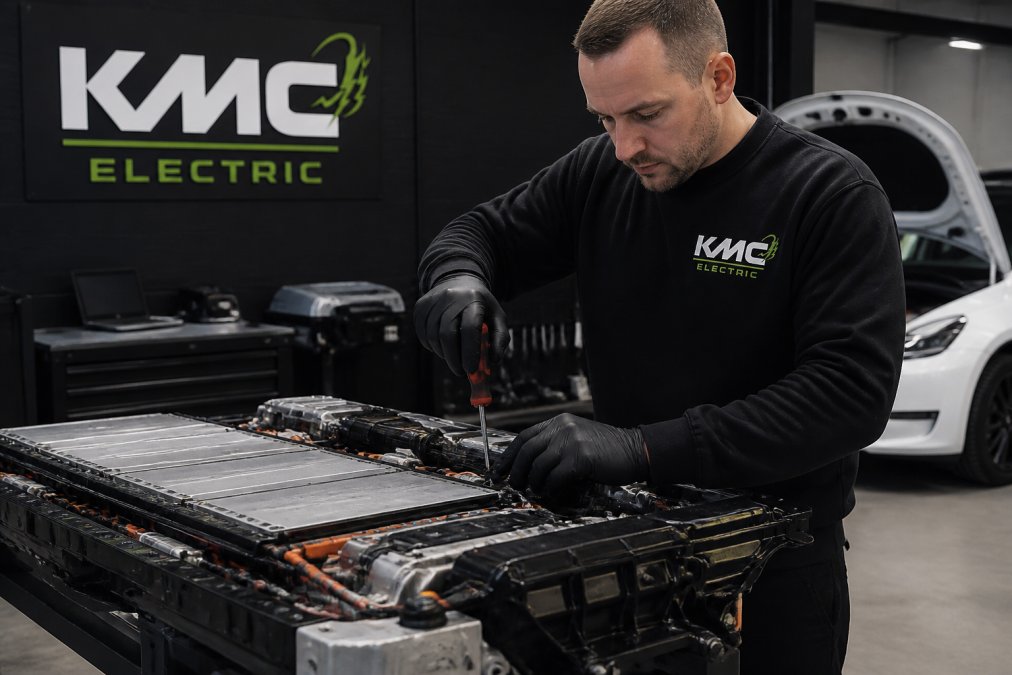
Battery pack diagnostics sit at the heart of EV servicing. State of Health (SoH) testing measures the battery's current capacity relative to its original specification. A battery at 85% SoH is significantly different from one at 65% SoH, one is a viable vehicle with normal residual value, the other approaches the point where battery replacement becomes economically necessary.
Modern diagnostic tools like the Autel MaxiSys Ultra EV and Launch X-431 can read individual cell voltages within the battery pack, revealing whether cell imbalance is developing and whether the battery management system is functioning correctly. Tools that can only read overall pack voltage are essentially useless for serious battery diagnostics.
For dealerships, battery diagnostics create a new revenue stream. A technician with proper equipment can complete a comprehensive battery health check in 30-45 minutes and generate a professional report that customers will pay for, particularly those selling used EVs privately or dealerships buying stock.
Pro TipBattery SOH testing is most valuable when performed on vehicles with over 50,000 miles or those approaching warranty expiry. Early identification of degradation allows owners to plan for battery replacement before the vehicle becomes unreliable.
High-Voltage System Safety Equipment for Workshops
Working on high-voltage systems without proper safety equipment is potentially fatal. Voltages in EV battery systems (typically 400V in modern vehicles, up to 800V in performance models) can cause cardiac arrest or severe burns.
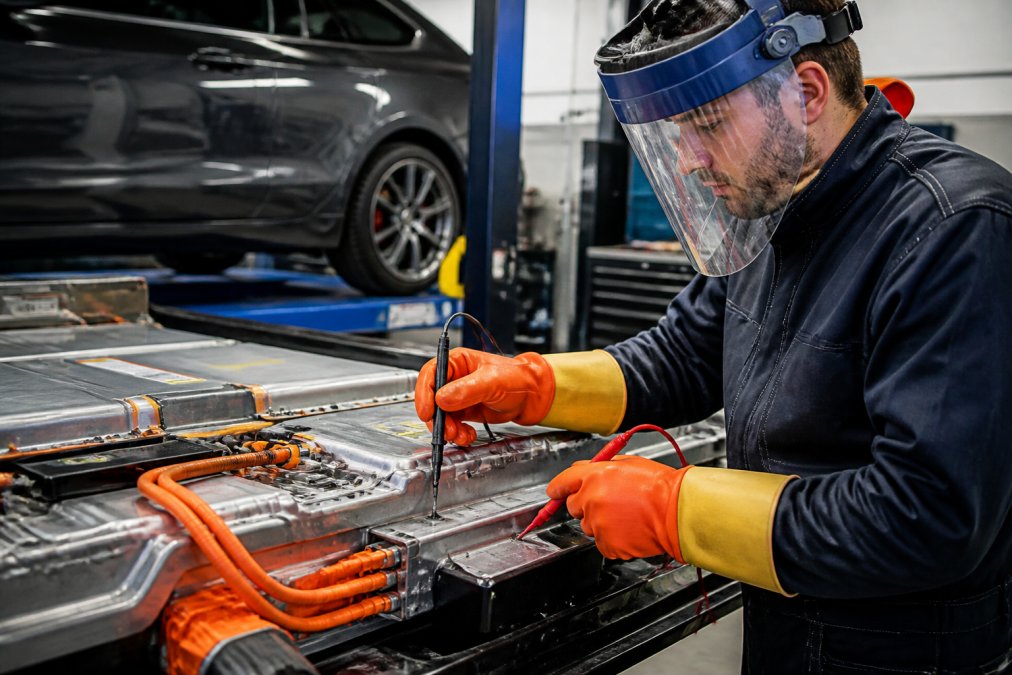
Professional technician in workshop wearing high-voltage safety PPE including insulated gloves and protective equipment, handling diagnostic probes near an EV battery pack with warning labels clearly visible on the equipment
Proper high-voltage safety equipment includes insulated gloves rated to the vehicle's maximum voltage, insulated tools, voltage testers, and insulation resistance testing equipment. The PicoScope 4-Channel EV Kit includes a dedicated insulation tester with PC link capability, essential equipment for verifying that high-voltage systems are safe to work on.
Dealership workshops must demonstrate compliance with the Health and Safety at Work etc. Act 1974 and the Management of Health and Safety at Work Regulations 1999. These regulations place explicit responsibility on employers to ensure that work with dangerous systems is performed safely with appropriate equipment and training. An insurance claim following a high-voltage accident without proper safety equipment will be denied.
Watch OutWorking on high-voltage systems without proper insulation testing equipment risks catastrophic injury. Even when a vehicle is powered down, residual charge can remain in the battery system. Insulation testing equipment verifies that the system is genuinely safe before work begins.
Dealer-Level Diagnostic Capabilities and Remote Diagnostics
The difference between entry-level diagnostic tools and dealer-level platforms is the depth of system access and breadth of vehicle coverage. Entry-level tools read fault codes and live data. Dealer-level tools perform bidirectional control, read manufacturer-specific codes, perform software updates, and access restricted diagnostic modes.
For franchised dealership service managers, dealer-level capabilities are essential for handling warranty work efficiently. Tools like the Bosch KTS 560 and TOPDON Phoenix Smart offer the diagnostic depth needed to handle complex faults without escalation.
Remote diagnostics capability has become increasingly valuable for independent specialists and multi-location dealership groups. Rather than requiring a technician to be physically present, remote diagnostics allows an experienced technician to review live data, vehicle history, and fault codes from a workshop computer. The Hella Gutmann mega macs X supports DoIP (Diagnostics over Internet Protocol), enabling remote diagnostics on modern vehicles using secure, encrypted connections.
Thermal Imaging and Component Activation
Thermal imaging has evolved from a specialist tool to a standard diagnostic capability in modern EV platforms. Thermal cameras detect heat signatures indicating electrical faults, battery cell issues, or cooling system failures that wouldn't show up in conventional diagnostics. A battery cell running hotter than its neighbours indicates internal resistance issues or thermal management problems.
Firmware Updates and Software Analysis
Modern EVs are essentially computers on wheels. Firmware issues, software bugs, and configuration errors account for a significant proportion of fault codes in contemporary electric vehicles. Dealerships that can perform firmware updates in-house avoid expensive and time-consuming escalation to manufacturer service centres. Tools like the Bosch KTS 560 and TOPDON Phoenix Smart support cloud-based programming and firmware updates for a growing range of EV manufacturers.
EV Service Training for Dealership Technicians
Technical competence with diagnostic tools is worthless without proper training in EV systems, safety protocols, and fault diagnosis methodology. A technician with a diagnostic tool but no understanding of high-voltage safety or battery management systems is a liability.
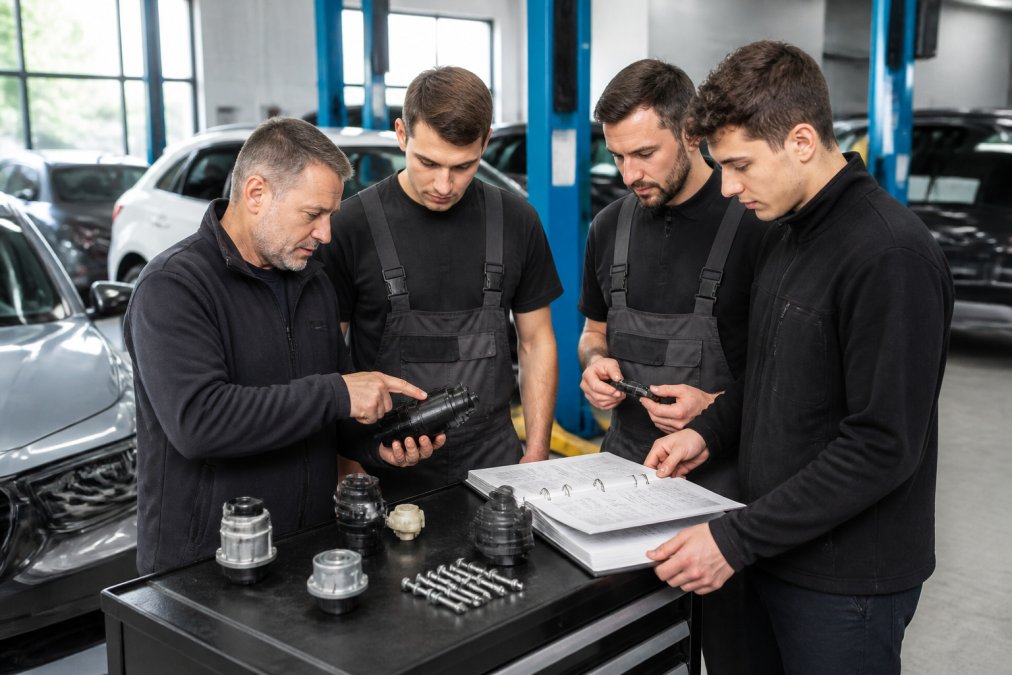
Group of dealership technicians in professional training session examining an EV diagnostic tablet together, reviewing technical documentation and discussing fault codes in a modern workshop setting with natural lighting
Dealership technicians require training in high-voltage safety and lockout procedures, EV architecture and battery management systems, diagnostic methodology specific to electric powertrains, and the specific tools used in the workshop. This training should be formal, documented, and updated regularly.
Many diagnostic tool suppliers, including Autel and Launch, offer training courses and certification programmes. KMC Electric's Level 4 Master Technician status in electric vehicles represents the kind of specialist expertise that dealerships should seek in external support. When in-house expertise is lacking, access to specialist technicians who understand EV systems deeply can accelerate fault diagnosis and prevent costly misdiagnosis.
Key TakeawayTechnician training is often overlooked when dealerships invest in diagnostic equipment. A well-trained technician with a basic tool will outperform an untrained technician with an advanced platform every time.
Regulatory Compliance and Safety Standards in the UK
EV service work in the UK is governed by several regulatory frameworks. The Health and Safety at Work etc. Act 1974 places explicit responsibility on employers to ensure that work with dangerous systems is performed safely. High-voltage battery work falls squarely within this requirement.
The Management of Health and Safety at Work Regulations 1999 require risk assessments for all work involving hazardous systems. For EV battery and high-voltage work, this risk assessment must demonstrate that proper equipment, training, and procedures are in place to prevent injury.
The Electrical Equipment (Safety) Regulations 2016 sets out requirements for electrical safety in workshops. According to the Health and Safety Executive's guidance on electrical safety in workshops, employers must ensure that anyone working with electrical systems has received appropriate training and has access to proper safety equipment. For insurance purposes, many workshop insurers now require evidence of proper EV training, appropriate diagnostic equipment, and documented safety procedures before covering EV service work.
ROI Analysis: Investing in EV Diagnostic Tools
The decision to invest in EV diagnostic tools requires honest analysis of the revenue opportunity and costs involved.
For franchised dealerships handling manufacturer warranty work: Every hour spent diagnosing a fault in-house rather than escalating to a manufacturer service centre generates margin. If proper diagnostic equipment reduces total diagnosis time from 5 hours to 2 hours, the time saving alone justifies the investment. Over 50-100 warranty jobs per year, this represents significant labour cost recovery.
For independent dealerships building EV capability: Revenue comes from capturing service work that currently goes elsewhere. A used EV buyer willing to pay for independent battery verification before purchase is revenue that wouldn't exist without that diagnostic capability.
As EV adoption accelerates across the UK, dealerships without EV diagnostic capability will lose service revenue to competitors who have invested. By 2026, EV service capability is becoming a competitive necessity rather than a differentiator.
Post-Repair Validation and Preventative Maintenance
Completing a repair is not the same as validating that the repair was successful. Post-repair validation using the same diagnostic tool that identified the original fault ensures that the repair actually addressed the problem. This might involve confirming that battery cell voltages are now balanced, that high-voltage system insulation resistance is within specification, or that firmware updates have been properly applied.
For dealerships, this validation step is critical for warranty purposes. Documentation showing that post-repair validation was performed provides evidence that the repair was completed correctly. Preventative maintenance in EVs focuses on monitoring battery health, cooling system performance, and high-voltage system integrity. Many workshops are discovering that EV owners are willing to pay for preventative battery health checks, particularly as vehicles age beyond the manufacturer warranty period.
Best ForDealerships with 30-50+ EV service jobs annually should prioritise dealer-level diagnostic capability. The investment pays for itself quickly and positions the dealership to capture growing EV service revenue.
Comparison of Leading EV Diagnostic Tools for Dealerships
Tool
Best For
Key Strength
Autel MaxiSys Ultra EV
Comprehensive EV diagnostics
Extensive battery analysis and cell-level data
Hella Gutmann mega macs X
Flexible, scalable workshops
Modular design with DoIP support
Launch X-431 EV Upgrade Kit
Existing Launch users
Extends current platform capabilities
PicoScope 4-Channel EV Kit
Advanced waveform analysis
Precise electrical measurements and safety testing
Bosch KTS 560
Multi-brand workshops
Integration with ESI[tronic] 2.0 technical data
TOPDON Phoenix Smart
Modern vehicle coverage
Cloud-based programming and topology mapping
Midtronics GRX-5100
Battery service specialists
Dedicated battery pack service functions
Autel MX900SOH
Cost-effective SOH testing
Fast, non-intrusive battery health checks
The choice between these tools depends on workshop size, current vehicle mix, and the depth of EV diagnostic capability required. A workshop handling primarily ICE vehicles with occasional EV work might start with a dedicated battery SOH tool. A dealership building comprehensive EV capability should prioritise platforms offering full diagnostic depth, firmware update capability, and remote diagnostics support.
For dealerships in the East Midlands and beyond seeking specialist EV support without the full investment in diagnostic equipment, independent specialists like KMC Electric provide an alternative pathway. Rather than building in-house EV expertise from scratch, dealerships can partner with specialists who already have the equipment, training, and experience to handle complex EV faults. This approach works particularly well for franchised dealerships handling occasional warranty work or independent dealerships building their EV reputation.
For dealerships serious about capturing EV service revenue and providing customers with reliable, professional EV servicing, investing in proper diagnostic capability is no longer optional. The combination of the right tools, properly trained technicians, and documented safety procedures creates a competitive advantage that will become increasingly valuable as EV adoption accelerates across the UK.
The question for dealership managers isn't whether to invest in EV diagnostic capability, it's which tools and approach best fits your workshop's size, current workload, and growth plans. For many dealerships, the answer involves a combination of in-house capability for common work and partnerships with specialist providers like KMC Electric for complex diagnostics and battery assessment work.
EV diagnostic capability is rapidly becoming a competitive necessity for dealerships across the UK. Whether you're a franchised dealer handling warranty work or an independent garage building EV expertise, having access to proper diagnostic tools and specialist knowledge ensures that you can diagnose and resolve EV faults reliably and safely. KMC Electric's Level 4 Master Technician expertise in electric vehicles provides dealerships with specialist support for complex EV diagnostics and battery assessment, complementing in-house capability and ensuring that EV customers receive the professional service they deserve. Contact KMC Electric to discuss how specialist EV diagnostic support can enhance your dealership's service offering and expand your revenue opportunities in the rapidly growing EV market.
Frequently Asked Questions
What specific diagnostic tools are required for EV diagnostic work in UK dealerships?
UK dealerships need tools capable of reading high-voltage system data, battery pack state of health (SoH), and diagnostic trouble codes (DTC). Essential tools include oscilloscopes for waveform analysis, multimeters for voltage measurement, insulation testers for safety verification, and scan tools with EV-specific software. Many dealerships combine a primary diagnostic tablet (such as those offering dealer-level capabilities) with specialised modules for battery analysis and thermal imaging. The specific combination depends on the vehicle brands serviced and the complexity of faults encountered.
How does EV battery health diagnostic software differ from standard OBD-II scanners?
Standard OBD-II scanners read basic fault codes and engine data from conventional vehicles. EV battery health diagnostic software goes deeper, accessing cell-level data within the battery pack, calculating state of health (SoH) and state of charge (SOC), and identifying individual module imbalances. This requires direct connection to the high-voltage battery management system via specialised adapters and protocols. The software generates detailed reports on battery degradation, charging efficiency, and remaining useful life, critical information for used vehicle buyers and warranty assessments that OBD-II tools cannot provide.
What training and certification do UK technicians need to use EV diagnostic equipment safely?
The Institute of the Motor Industry (IMI) offers EV-specific qualifications, and many manufacturers provide factory training. Technicians should hold qualifications in high-voltage safety awareness and understand the risks of working with battery systems exceeding 48 volts. Training must cover safe isolation procedures, personal protective equipment (PPE) requirements, and emergency protocols. Many diagnostic tool suppliers, including those offering dealer-level solutions, provide training modules. Independent specialists like KMC Electric, with Level 4 Master Technician status in electric vehicles, can advise dealerships on appropriate training pathways and tool operation.
Can standard workshop diagnostic tools be used for EV battery checks, or do I need specialist equipment?
Standard workshop tools are insufficient for comprehensive EV battery diagnostics. Whilst some multifunctional diagnostic tablets can be upgraded with EV packages, dedicated EV battery health diagnostic software is essential for accurate state of health testing. This software accesses battery management system (BMS) data and calculates degradation metrics that general-purpose scanners cannot reach. For dealerships performing regular EV servicing or pre-purchase inspections, investing in specialist EV diagnostic equipment, or partnering with an independent specialist like KMC Electric for battery assessments, ensures accuracy and customer confidence.