Finding alternatives to high cost Tesla suspension repair is becoming essential for Tesla owners facing out-of-warranty repair bills. At KMC Electric, we've analysed suspension repair pricing across dealership and independent networks in the UK, and the cost disparity is striking. Tesla main dealers charge premium labour rates alongside inflated parts costs, often quoting thousands of pounds for repairs that could be addressed at a fraction of that price elsewhere.
The core issue isn't that Tesla suspension components are inherently expensive to manufacture, it's that main dealership networks apply dealer-level markups to both labour and parts. A simple control arm replacement that might cost £800-1,200 at a main dealer can often be completed for £400-600 at a specialist independent garage. The difference lies in overhead, warranty frameworks, and the dealership's business model rather than the technical complexity of the work itself.
Pro TipMain dealers typically charge £120-180 per labour hour for suspension work, whilst independent specialists average £60-100 per hour. On a 4-hour job, that's a £240-320 saving before parts are even considered.
Understanding why these costs exist helps you evaluate alternatives to high cost Tesla suspension repair more intelligently. Many owners assume they must return to Tesla for any suspension issue, unaware that independent specialists with EV expertise can diagnose and repair the same problems using approved parts and diagnostic equipment.
Common Tesla Suspension Noise Symptoms and When to Act
Recognising suspension issues early prevents minor problems from becoming expensive failures. Most Tesla owners first notice suspension problems through audible clues: clunking, knocking, or rattling sounds that intensify over bumps or during turns.
Clunking and knocking noises
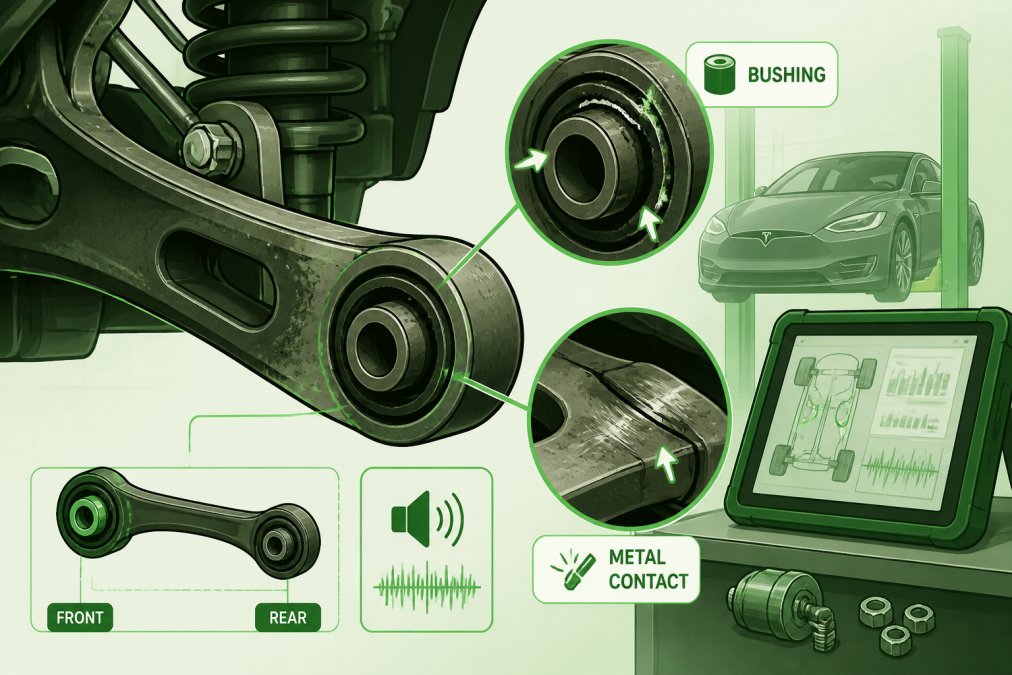
A metallic clunk when driving over potholes typically signals worn bushings or loose ball joints. Control arm bushings degrade from road salt exposure, temperature fluctuations, and constant suspension movement. Once polyurethane or rubber components fail, metal-to-metal contact creates the distinctive clunking sound. Ignoring this symptom leads to misalignment and uneven tyre wear, compounding repair costs.
Air suspension compressor failure produces a whining or grinding sound when the vehicle is powered on or during suspension adjustments, indicating the compressor motor is struggling to maintain pressure. Repair becomes urgent to prevent complete system failure.
Uneven tyre wear and handling changes
Suspension problems frequently announce themselves through tyre wear patterns before audible symptoms emerge. Excessive wear on the inner or outer edge of tyres suggests alignment issues caused by worn suspension components. A Tesla that pulls to one side during braking or feels unstable during cornering indicates suspension geometry has shifted.
Handling changes include a softer, bouncier ride quality or excessive body roll during turns. Some owners report the vehicle feeling "floaty" or less responsive to steering input. Early diagnosis prevents these symptoms from cascading into costlier damage.
Close-up of a Tesla suspension control arm showing visible bushing wear and metal-to-metal contact points in a workshop setting with diagnostic equipment visible
Alternatives to High Cost Tesla Suspension Repair: Your Options
The landscape of alternatives to high cost Tesla suspension repair has expanded significantly as the independent EV specialist network has matured. You now have genuine choices beyond the main dealer, each with distinct cost, reliability, and warranty implications.
Independent specialist diagnostics versus main dealer quotes
Independent specialists like KMC Electric offer diagnostic services that cost a fraction of dealership assessments. A comprehensive suspension diagnostic at an independent garage typically costs £60-120, whilst dealership diagnostics often charge £150-250 and frequently pressure customers into unnecessary repairs.
The diagnostic process is identical regardless of venue: visual inspection, wheel alignment measurement, test drive evaluation, and component stress testing using diagnostic tools. Independent specialists have access to the same diagnostic equipment and Tesla-specific software as dealerships. The difference is transparency; independent garages explain findings without financial incentive to recommend parts replacement where repair is viable.
Key TakeawayObtain diagnostics from an independent specialist before accepting a main dealer quote. This typically saves £100-200 on the diagnostic fee alone and gives you information to negotiate pricing elsewhere.
Repair versus full replacement decisions
A critical decision point in suspension repair is whether to replace a single component or overhaul the entire suspension system. Main dealers often recommend full replacement of suspension assemblies when only one component has failed. Independent specialists typically focus on replacing only the failed component, restoring function without unnecessary expense.
A worn control arm doesn't mean the entire front suspension assembly requires replacement. The bushings, ball joints, and dampers may have years of service life remaining. Replacing only the control arm costs £300-500 at an independent garage versus £1,200-1,800 for a full assembly replacement at a main dealer. However, if multiple components show wear or the vehicle has high mileage, comprehensive suspension refresh may be more cost-effective than staged repairs.
Aftermarket Tesla Suspension Parts UK: Quality and Reliability
The aftermarket suspension parts market for Tesla has matured substantially, offering quality alternatives to original equipment manufacturer (OEM) components. Understanding the differences between OEM and premium aftermarket parts helps you make informed purchasing decisions.
Polyurethane bushings and control arms
Polyurethane bushings offer superior durability compared to factory rubber components. OEM Tesla bushings degrade within 60,000-80,000 miles in UK conditions due to road salt exposure and temperature cycling. Polyurethane alternatives typically last 120,000-150,000 miles, effectively doubling service life.
The trade-off is ride quality. Polyurethane bushings transmit slightly more road noise and vibration compared to softer rubber components. Most drivers find the difference negligible, and the extended service life justifies the minor change in feel. Polyurethane bushings cost 20-30% more than OEM rubber equivalents but deliver significantly better value over the vehicle's lifetime.
Control arms present a similar choice. Aftermarket control arms from reputable manufacturers meet or exceed OEM specifications and typically cost 30-40% less than Tesla parts. The critical factor is sourcing from established suppliers rather than unknown manufacturers. KMC Electric stocks quality control arms from verified suppliers, ensuring you're not compromising on safety or longevity.
Watch OutAvoid extremely cheap control arms from unverified sellers. Substandard control arms may have loose ball joints or poor bushing retention, creating safety hazards. The £50-100 saving on parts isn't worth the risk of suspension failure whilst driving.
Tesla Independent Specialist UK: Finding the Right Technician
Selecting an independent specialist is crucial because suspension work requires specific diagnostic knowledge and genuine parts sourcing. Not all independent garages possess the expertise to diagnose and repair Tesla suspension systems correctly.
What to look for in specialist credentials
Verify that any independent specialist has specific Tesla diagnostic training and access to Tesla-approved diagnostic software. Level 4 Master Technician status in electric vehicles, as held by technicians at KMC Electric, indicates comprehensive training in EV systems including suspension architecture, electrical integration, and diagnostic procedures.
Ask potential specialists whether they've completed manufacturer-approved training courses, how many Tesla vehicles they service annually, and whether they maintain relationships with approved parts suppliers. Request references from previous customers who've had suspension work performed, asking specifically whether the diagnostic findings matched the repair outcome and whether the customer felt the pricing was fair.
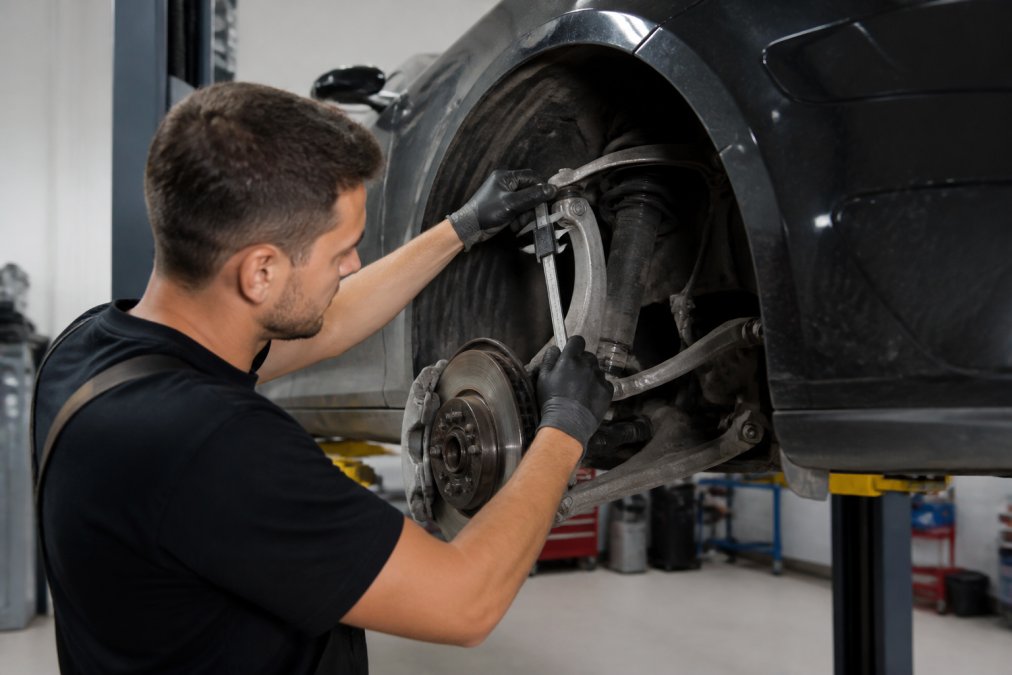
A technician performing a detailed suspension inspection on a Tesla, checking control arm geometry and bushing condition with diagnostic measuring equipment in a modern workshop
Cost savings with independent garages
Independent garages typically charge £60-100 per labour hour versus £120-180 at main dealers. For a 4-hour suspension repair, this represents £240-320 in labour savings. Parts costs are similar between independent specialists and dealerships when using equivalent-quality components, but independent specialists offer greater flexibility to source parts competitively.
Many independent specialists offer diagnostic reports that allow you to understand exactly what requires repair. This transparency enables you to make informed decisions about repair scope and parts quality.
Tesla MOT Failure Suspension: Prevention and Compliance
The MOT suspension test is stringent and frequently identifies wear that owners haven't noticed. Understanding MOT failure points allows you to address issues proactively rather than facing an MOT failure and rushed repairs.
Common MOT suspension failures and UK standards
The MOT suspension test checks for excessive play in ball joints, worn bushings, damper leakage, and steering column security. Examiners measure ball joint play using a prescribed force gauge; play exceeding specified limits results in MOT failure. Worn bushings that allow excessive component movement also trigger failure. Damper fluid leaks, even minor weeping, result in MOT failure because they indicate the damper can no longer control suspension movement effectively.
The MOT test is standardised across all testing stations in the UK, following guidance from the Driver and Vehicle Standards Agency (DVSA).
Pre-MOT checks to avoid costly repairs
Three weeks before MOT, perform basic suspension checks that often identify issues before the formal test. Grasp the tyre at the 12 and 6 o'clock positions and attempt to move it vertically; excessive movement indicates worn dampers or springs. Grasp the tyre at the 3 and 9 o'clock positions and attempt to move it; excessive play indicates worn ball joints or bushings.
Listen for clunking or knocking whilst someone slowly turns the steering wheel side-to-side with the vehicle stationary. Check for damper fluid leakage by inspecting the damper body for wet residue or staining. Inspect visible suspension components for corrosion or obvious damage, as road salt in the UK accelerates corrosion of suspension fasteners.
Address identified issues at least two weeks before MOT. Many independent specialists offer pre-MOT suspension inspections for £80-120, identifying issues early and allowing planned repairs rather than emergency MOT failure interventions.
Best ForTesla owners in Kettering, Northamptonshire with vehicles approaching MOT dates should schedule pre-MOT suspension inspections at independent specialists like KMC Electric, ensuring time for planned repairs rather than last-minute emergency work.
DIY Diagnosis and Safety Thresholds for Tesla Owners
Certain suspension checks are safe and useful for Tesla owners to perform independently. Knowing the boundary between safe DIY diagnosis and work requiring professional attention is essential.
What you can safely check yourself
Visual inspection of suspension components is safe and informative. Lie the vehicle on a level surface and examine the undercarriage with a torch. Look for obvious damage, corrosion, or fluid leakage. Check that fasteners appear secure and that no components are visibly bent or cracked.
Grasp suspension components by hand and attempt to move them; excessive play indicates wear. The ball joint at the end of the control arm should have minimal play when you apply force. Listen to the suspension whilst someone slowly drives the vehicle over rough ground. Clunking or knocking sounds indicate wear. Check tyre wear patterns for clues about suspension health; excessive wear on the inner or outer edge indicates alignment issues caused by suspension geometry changes.
When professional help is essential
Do not attempt to remove suspension components yourself. Control arms, dampers, and springs are under significant load and require proper support equipment to remove safely. Do not attempt to adjust suspension settings or perform wheel alignment independently. Tesla suspension geometry is complex, and improper adjustment can create handling problems or accelerate component wear.
Do not ignore suspension symptoms. If you notice clunking noises, handling changes, or unusual tyre wear, arrange professional diagnosis promptly. Suspension problems worsen progressively, and delayed repair often results in secondary damage that increases final repair costs.
Comparison: Dealership, Independent Specialist, and Aftermarket Solutions
The comparison reveals that independent specialists typically deliver the best value for out-of-warranty Tesla suspension repairs. Labour rates are substantially lower, diagnostic fees are transparent, and parts sourcing is flexible. For vehicles still under manufacturer warranty, dealership repairs may be necessary to preserve warranty coverage, but independent specialists can often perform warranty-covered repairs at lower cost.
Aftermarket parts solutions require careful selection but can extend component service life significantly. Polyurethane bushings, for example, typically last 50% longer than OEM rubber components whilst costing only 20-30% more.
Suspension repairs don't have to drain your budget. By understanding your options and working with independent specialists who prioritise transparent diagnostics, you can extend your Tesla's service life whilst keeping costs manageable. KMC Electric combines over 25 years of automotive expertise with Level 4 Master Technician status in electric vehicles, offering cost-effective suspension diagnosis and repair for Tesla owners across Kettering and the broader Midlands region. Whether you need a pre-MOT inspection, a second opinion on a dealership quote, or comprehensive suspension repair, KMC Electric provides practical, real-world fixes that restore your vehicle's safety and handling without unnecessary expense.
Frequently Asked Questions
What are the most common Tesla suspension failure symptoms I should watch for?
Common signs include clunking or knocking noises from the front or rear when driving over bumps, uneven tyre wear, a sagging appearance on one corner, or the vehicle pulling to one side. Air suspension systems may show warning lights on the dashboard. Many Tesla owners notice these issues between 60,000 and 100,000 miles. If you detect any of these, get a professional diagnostic check from a Tesla independent specialist UK technician to avoid costly misdiagnosis.
How much can I save by using aftermarket Tesla suspension parts UK instead of OEM components?
Aftermarket parts like polyurethane bushings and control arms typically cost significantly less than Tesla main dealer OEM replacements, though exact savings depend on the specific component and your vehicle model. Labour costs at independent specialists are generally lower than dealerships. The trade-off is that aftermarket parts may have a different service life than OEM parts. Professional installation is essential to maintain safety and alignment. Contact KMC Electric for a specific quote on your vehicle's needs.
Will using an independent specialist void my Tesla warranty?
No, provided the independent specialist uses approved parts and follows proper diagnostic procedures. UK consumer law and warranty regulations protect you against blanket warranty denials based solely on using an independent garage. However, Tesla may deny warranty claims if they can prove a repair caused the fault. A reputable Tesla independent specialist UK provider like KMC Electric will document their work and use parts that meet OEM specifications, protecting your warranty position.
What suspension issues cause Tesla MOT failure in the UK?
The MOT test checks for excessive play in suspension joints, worn bushings, damaged dampers, and compromised structural integrity. Common failure points include worn control arm ball joints, deteriorated anti-roll bar links, and damaged coil springs or air suspension components. Pre-MOT inspections by an independent specialist can identify these issues early, preventing costly last-minute repairs. Addressing suspension wear proactively also improves handling safety and tyre longevity.