Understanding Your EV Battery: The Electric Vehicle Battery Life Guide Basics
An electric vehicle battery life guide is essential knowledge for any EV owner looking to protect their investment and maximise battery performance. At KMC Electric, we've spent over a decade helping Kettering and Northamptonshire EV owners understand what happens inside their battery packs and how to keep them healthy. Modern electric vehicles rely on lithium-ion battery technology, which stores and releases electrical energy through chemical reactions inside thousands of individual cells organised into modules and grouped into a battery pack beneath your EV's floor.
How lithium-ion batteries work in electric vehicles
Lithium-ion batteries function through the movement of lithium ions between an anode and cathode, separated by an electrolyte. When you charge, ions move from cathode to anode, storing energy. When you drive, they flow back, releasing energy as electrical current to power your motor. Each charge cycle causes microscopic damage to electrode materials. Over time, the electrolyte breaks down, lithium ions become trapped, and the battery's capacity diminishes. This degradation is inevitable, it's physics. The question is how much and how fast, which depends on charging habits, temperature control, and maintenance.
Pro TipMost EV owners charge to 100% regularly and leave cars plugged in overnight. This is one of the fastest ways to degrade a lithium-ion battery.
State of charge, state of health, and cycle life explained
State of charge (SoC) is the battery's current charge level as a percentage, what your dashboard shows.
State of health (SoH) measures how much of the battery's original capacity remains. A new battery has 100% SoH. After 5 years and 50,000 miles, it might have 90% SoH, meaning it can only hold 90% of its original energy.
Cycle life refers to the number of complete charge cycles a battery can endure before degrading to 70-80% of original capacity. A full discharge-to-charge is one cycle; partial charges count proportionally. Understanding these concepts changes how you think about battery care. You're not trying to keep your battery at 100% SoC; you're trying to slow the decline of its SoH by managing charge cycles carefully.
Average Lifespan of an EV Battery and What Affects It
Most modern EV batteries are warranted for 8 years or 160,000 kilometres, whichever comes first, with a capacity retention guarantee of 70-75%. In reality, many batteries last significantly longer, reaching 90%+ SoH after 10 years of normal use.
Typical battery degradation rates in the UK climate
The UK climate presents particular challenges for EV batteries. Cold winters and damp conditions create stress that accelerates degradation. Cold temperatures reduce the battery's ability to accept charge quickly and decrease available range. Research shows batteries in temperate regions experience roughly 2-3% annual degradation in the first 5 years, with the rate slowing thereafter. In the UK, where winter temperatures regularly drop below 5°C, degradation in the first year can reach 3-5% if the vehicle is charged in cold conditions without thermal management. Most modern EVs have active thermal management systems that heat the battery before charging in winter.
Key TakeawayA Tesla Model 3 charged indoors in a heated garage in Kettering will outlast the same model charged outdoors in winter by 10-15% SoH over five years.
Factors affecting EV battery degradation
Temperature is the heavyweight factor. High heat (above 30°C) and repeated cold exposure (below 5°C) both accelerate chemical reactions, breaking down the electrolyte and increasing internal resistance. Depth of discharge matters significantly, discharging from 100% to 0% creates more stress than discharging from 80% to 20%, which is why the 20-80% charging rule has become standard. Charging speed is another major factor. Fast charging generates heat and forces lithium ions to move rapidly, causing physical damage to electrode structure. Driving style influences battery health too. Aggressive acceleration and high-speed driving generate more heat and require deeper discharges. Age itself is a factor, even unused batteries degrade through calendar ageing as the electrolyte breaks down.
How to Extend EV Battery Life in the UK: Charging Habits That Matter
Charging habits are the single most controllable factor in battery longevity. You have direct control over when you charge, how much you charge, and how fast you charge.
The 20-80% charging rule and optimal charge depth
The 20-80% rule is the most important principle in battery care: charge from 20% to 80% for daily use, and avoid regular charging to 100% or discharging below 10%. Lithium-ion batteries experience the most stress at charge extremes. When fully charged (95-100%), the cathode material is under maximum stress and the electrolyte breaks down faster. The 20-80% window minimises stress whilst providing 100-150 miles of range for typical daily driving. Charging from 20% to 80% typically takes 30-50 minutes on a home wallbox.
Watch OutCharging to 100% daily can reduce your battery's lifespan by 20-30% compared to the 20-80% rule. Over 10 years, this could mean losing 8-12 months of usable battery life.
Many newer EVs include a "conservation mode" or "daily charge limit" setting that automatically stops charging at 80%. Enable it to trade 20% of daily range for years of additional battery health.
Avoiding fast charging stress and trickle charging benefits
Fast DC charging at motorway service stations is convenient but harsh on your battery. Pushing 150-350 kW into a battery in 20-30 minutes generates significant heat and forces the battery management system to work overtime. For occasional long journeys, rapid charging is unavoidable and acceptable. But using rapid chargers for routine charging is counterproductive. Trickle charging using a standard 3-pin household socket at 2-3 kW is the gentlest method available. Most UK EV owners benefit from a 7-11 kW home wallbox as a middle ground: fast enough for overnight charging but gentle enough for long-term battery health.
Regenerative braking and its role in battery longevity
Regenerative braking captures energy normally lost during deceleration and feeds it back into the battery, extending range and reducing mechanical brake wear. However, when the battery is nearly full (above 90% SoC), the battery management system reduces or disables regenerative braking to prevent overcharging. Avoid aggressive braking when your battery is above 85% SoC. Ease off the accelerator earlier, allowing the vehicle to coast and use light regenerative braking instead.
Temperature Management: Protecting Your Battery from Extreme Conditions
Temperature is the battery's worst enemy. It's also the factor most EV owners underestimate because damage happens invisibly inside the battery pack.
Why thermal management systems are critical
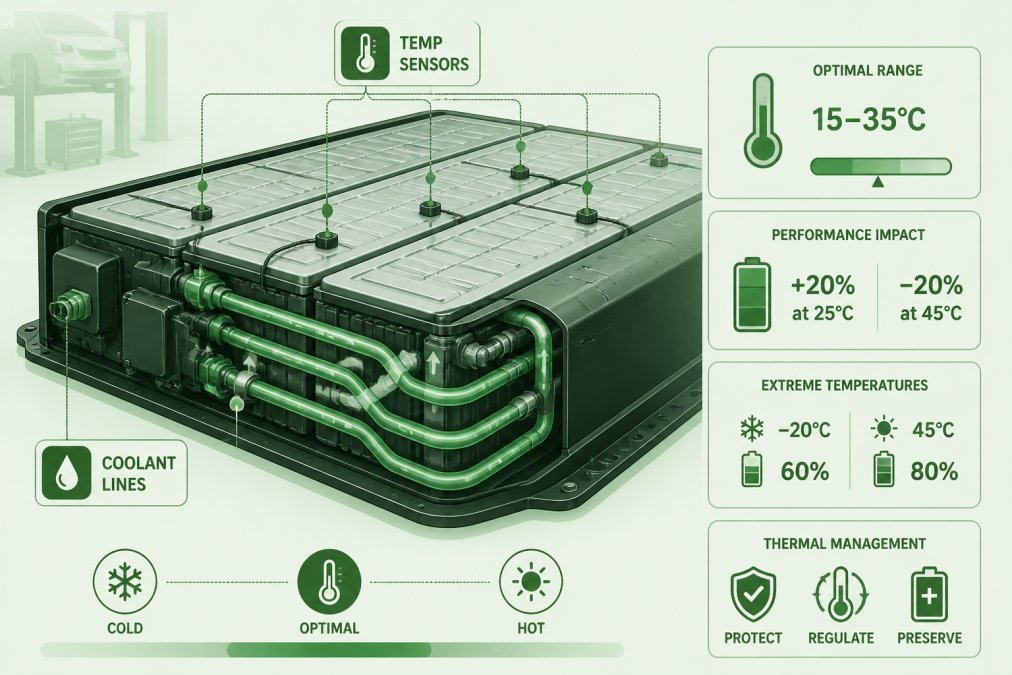
Modern EVs include active thermal management systems, networks of coolant tubes that circulate liquid around the battery pack to regulate temperature. These systems heat the battery before charging in cold conditions and cool it during fast charging or aggressive driving. Thermal management systems are essential infrastructure, not luxury features. A battery without thermal management in a UK winter will degrade 2-3 times faster than one with it. When buying an EV, new or used, check whether it has active thermal management.
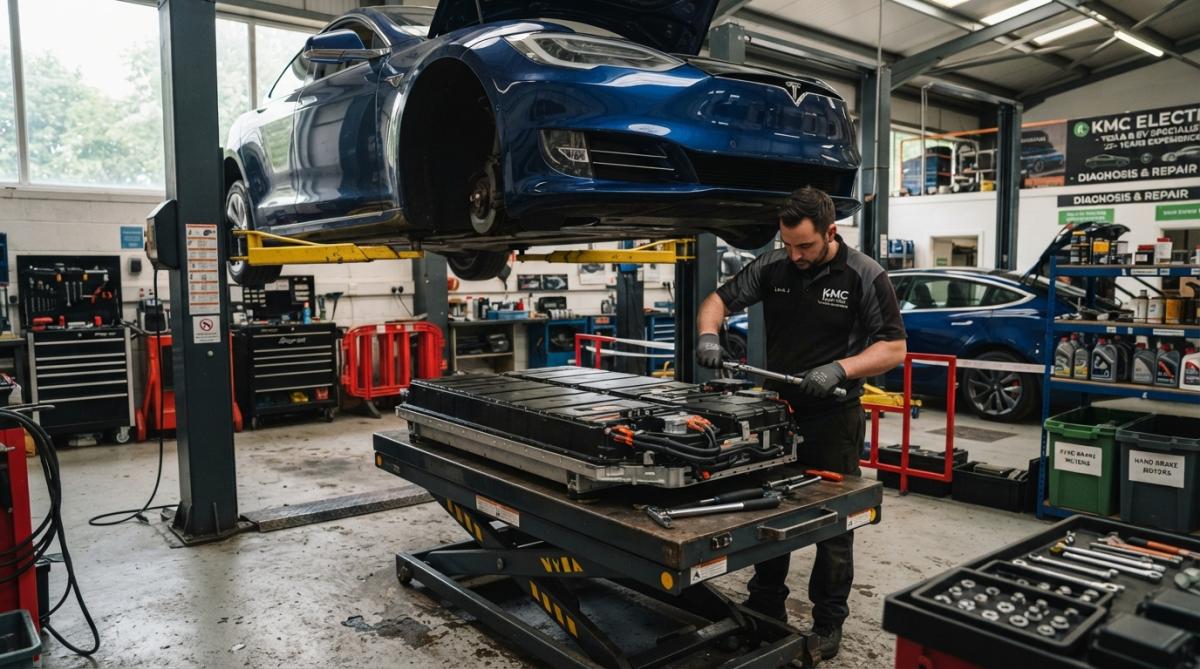
Cross-section of an EV battery pack with thermal cooling system visible, showing coolant channels running through battery modules and temperature sensors mounted on the casing in a technical workshop setting
Cold weather and hot weather battery degradation in UK regions
Cold weather is particularly challenging in the UK. Temperatures below 5°C reduce the battery's ionic conductivity, increasing internal resistance, which generates heat and accelerates degradation. A battery charged outdoors in winter experiences a 15-25% reduction in available range compared to one charged indoors at room temperature. Hot weather is less common in the UK but equally damaging. Temperatures above 35°C accelerate chemical breakdown. The solution for both extremes is the same: use covered parking and charge indoors if possible. For used EV buyers in the Midlands, battery history is critical. At KMC Electric, we perform independent battery health assessments that reveal degradation patterns and estimate remaining lifespan, essential information before buying.
Electric Car Battery Warranty Coverage in the UK
EV battery warranties in the UK are regulated by the Consumer Rights Act 2015 and manufacturer-specific terms. Understanding what's covered is essential, especially as your vehicle ages.
Understanding manufacturer warranty periods and capacity retention guarantees
Most mainstream EV manufacturers in the UK offer battery warranties of 8 years or 160,000 kilometres, whichever comes first. Some offer longer: Tesla guarantees 8 years or 192,000 kilometres, whilst Nissan offers 8 years or 160,000 kilometres. The warranty covers defects in manufacturing and materials, not degradation from normal use. If your battery fails due to a manufacturing fault, the warranty covers replacement. If it degrades from 100% SoH to 70% SoH through normal charging and driving, the warranty does not apply, that's expected ageing. Most warranties include a capacity retention guarantee, typically 70-75%. If your battery drops below this threshold whilst under warranty, the manufacturer will repair or replace it.
What's covered and what isn't: degradation vs defects
A battery that fails to hold charge due to a manufacturing defect is covered. A battery that degrades from 100% to 75% SoH due to 8 years of daily charging is not covered, it's normal wear. Manufacturers examine your battery's degradation pattern and charging history to determine the cause. If you've been charging to 100% daily, fast charging frequently, and exposing the battery to extreme temperatures, the manufacturer will classify the degradation as use-related and deny the warranty claim. Once your warranty expires, typically after 8 years in the UK, you're responsible for any battery repairs or replacements. At KMC Electric, we diagnose battery issues, repair specific modules if necessary, and advise whether replacement is cost-effective.
Cost of EV Battery Replacement in the UK and Prevention Strategies
Battery replacement is expensive. A full battery pack replacement for a mid-range EV typically costs between £8,000 and £15,000, including labour. For premium vehicles, costs can exceed £20,000. This is why battery longevity is critical.
When battery replacement becomes necessary
Battery replacement is necessary when the battery's SoH drops below 60-70%, making the vehicle impractical for daily use, or when the battery develops an unrepairable fault. Before replacing the entire battery, investigate whether specific modules can be repaired. If one module has failed, replacing just that module might cost £2,000-£4,000 instead of £10,000-£15,000. At KMC Electric, we've helped many out-of-warranty EV owners avoid full replacements by identifying and repairing specific faults.
Second-life batteries and recycling options
When a battery reaches end-of-life for automotive use (typically 60-70% SoH), it's not worthless. Second-life applications can extend its useful life by 10+ years. A battery at 70% SoH is perfectly suited for home energy storage, backing up solar panels, or grid stabilisation. If your battery is beyond second-life use, recycling is the final step. Lithium-ion battery recycling recovers 90%+ of the lithium, cobalt, and nickel, valuable materials that reduce the environmental impact of new battery production. The UK has established battery recycling infrastructure through the Battery Regulations 2009, which mandates that producers fund recycling and recovery.
Battery Management Systems and Software Updates: What You Need to Know
Your EV's battery is controlled by a sophisticated Battery Management System (BMS), a network of sensors, processors, and software that monitors every aspect of battery health and performance.
How BMS protects your battery pack
The BMS is the unsung hero of battery longevity. It monitors cell voltage, temperature, and current in real time, adjusting charging speed, thermal management, and power delivery to keep the battery in its optimal operating window. When you plug in to charge, the BMS measures the battery's current temperature and SoC, then determines the safe charging speed. In cold conditions, it reduces charging power to prevent damage. If the battery is warm, it activates cooling fans. The BMS also balances cells, ensuring all cells charge and discharge evenly. Modern BMS systems balance continuously, extending battery life by 10-20% compared to older systems without active balancing. If the BMS detects a fault, it triggers a warning light and may reduce power or disable charging.
Software updates and their impact on battery health
Manufacturers regularly release software updates that improve BMS algorithms, thermal management, and charging strategies. These updates can meaningfully extend battery life by optimising how the BMS manages charge and temperature. Some manufacturers allow owners to adjust charging parameters through software settings: setting a daily charge limit, adjusting charging speed, or enabling conservation mode. For used EV buyers, software version is worth checking. A vehicle running older software may have inferior thermal management compared to the same model running current software.
Signs Your EV Battery Is Failing and When to Seek Diagnostics
Most battery failures develop gradually, with warning signs appearing weeks or months before the battery becomes unusable. Recognising these signs early can save you thousands of pounds.
Range loss, charging issues, and warning lights
Gradual range loss is normal, expect 2-3% annual degradation in the first 5 years. If you notice a sudden 10-15% range loss in a single month, something is wrong. This could indicate a failing cell, a BMS malfunction, or a thermal management issue. Charging issues are another red flag. If your vehicle charges more slowly than usual, the BMS may be reducing charging power due to a detected fault. Battery or high-voltage system warning lights should never be ignored. They indicate the BMS has detected an issue and is protecting the battery by limiting power or charging. Some vehicles display a "battery health" percentage in the infotainment system. If this drops more than 5% in a single month, seek diagnostics.
Watch OutA sudden 20% range loss in a week, combined with a battery warning light, indicates a serious fault. Do not attempt a long journey. Contact a specialist immediately.
Independent battery health assessment for used EV buyers
If you're buying a used EV, an independent battery health assessment is essential. The seller's claims about battery condition are unreliable, and the only way to know the truth is through professional diagnostics. At KMC Electric, we perform comprehensive battery assessments using diagnostic equipment that reads the battery's true state of health, degradation rate, cell voltage balance, and internal resistance. This assessment reveals whether the battery is healthy, degraded within normal parameters, or failing. The assessment typically takes 1-2 hours and costs significantly less than discovering a failed battery after purchase. For used EV buyers in the Midlands, this is essential due diligence. We also estimate remaining battery life based on degradation rate, helping you decide whether the vehicle is a good long-term investment.
Assessment Area
What It Reveals
Why It Matters
Current SoH
Battery's actual capacity as percentage of new
Determines remaining usable range
Degradation Rate
How fast SoH is declining annually
Predicts how long battery will last
Cell Voltage Balance
Whether all cells are degrading evenly
Unbalanced cells indicate BMS or cell faults
Internal Resistance
How much heat battery generates
High resistance indicates advanced degradation
Thermal History
Temperature extremes battery has experienced
Reveals past charging and storage practices
Fault Codes
Any active or historical BMS warnings
Indicates known issues or past repairs
Understanding your EV's battery is the foundation of smart ownership. The decisions you make about charging, temperature management, and maintenance compound over years, determining whether your battery lasts 8 years or 12 years. For EV owners in Kettering and across Northamptonshire, KMC Electric provides the expertise that main dealers often lack. We've spent over a decade diagnosing battery issues, extending vehicle lifespan, and helping used EV buyers make informed decisions. Whether you're managing an out-of-warranty vehicle, buying a used EV, or maximising your current battery's longevity, our Level 4 Master Technician status in electric vehicles ensures you get practical, real-world advice backed by genuine technical expertise. Contact KMC Electric for a battery health assessment or to discuss your vehicle's specific needs.
Frequently Asked Questions
How long do electric car batteries typically last in the UK?
Most EV batteries are designed to last 10-20 years, with many manufacturers guaranteeing 70-80% capacity retention over 8-10 years. In the UK climate, degradation rates are generally slower than in hotter regions, though cold winters can cause temporary range loss. Real-world data shows many Tesla and other premium EVs retain 80-90% capacity after 150,000-200,000 miles. Battery longevity depends heavily on charging habits, temperature exposure, and usage patterns rather than calendar age alone.
What factors affect EV battery degradation most significantly?
The primary degradation factors are charging behaviour (frequent fast charging and deep discharges), extreme temperatures (both hot and cold), high depth of discharge cycles, and battery management system efficiency. In the UK, cold weather causes temporary capacity loss, whilst repeated fast charging stresses the battery chemistry. Thermal management systems help mitigate these effects. Regular shallow charging (20-80% cycles) and moderate temperatures preserve battery health far better than aggressive use patterns or leaving the vehicle in extreme conditions.
How much does an EV battery replacement cost in the UK, and is it covered by warranty?
Battery replacement costs vary significantly depending on vehicle model and capacity. Most manufacturers offer 8-10 year warranties covering defects and excessive degradation (typically guaranteeing 70-80% capacity retention). Out-of-warranty replacements are substantial expenses, which is why independent battery health verification is crucial for used EV buyers. Many dealerships and independent specialists, including KMC Electric, offer pre-purchase battery diagnostics to assess state of health and identify potential issues before they become costly repairs.
What's the difference between the 20-80% charging rule and other charging strategies?
The 20-80% rule means charging from 20% to 80% capacity rather than 0-100%, which significantly reduces stress on battery chemistry and extends longevity. Staying within this range minimises depth of discharge cycles, the primary driver of degradation. Trickle charging (slow, overnight charging) further protects battery health compared to rapid DC charging. For daily use, adopting the 20-80% habit can add years to your battery's effective lifespan. Occasional full charges are acceptable, but making them routine accelerates degradation.
How does temperature affect EV battery performance in the UK?
Cold UK winters reduce battery efficiency and temporary range by 20-40%, though this is reversible once the battery warms up. Extreme heat (above 35°C) causes permanent degradation, which is less common in the UK. Battery management systems actively cool or warm the pack during charging and driving to maintain optimal operating temperatures (typically 20-35°C). Parking in shade, using preconditioning features, and avoiding prolonged exposure to temperature extremes all help preserve battery health. Climate-specific degradation is slower in the UK than in hotter regions, but thermal management remains critical.