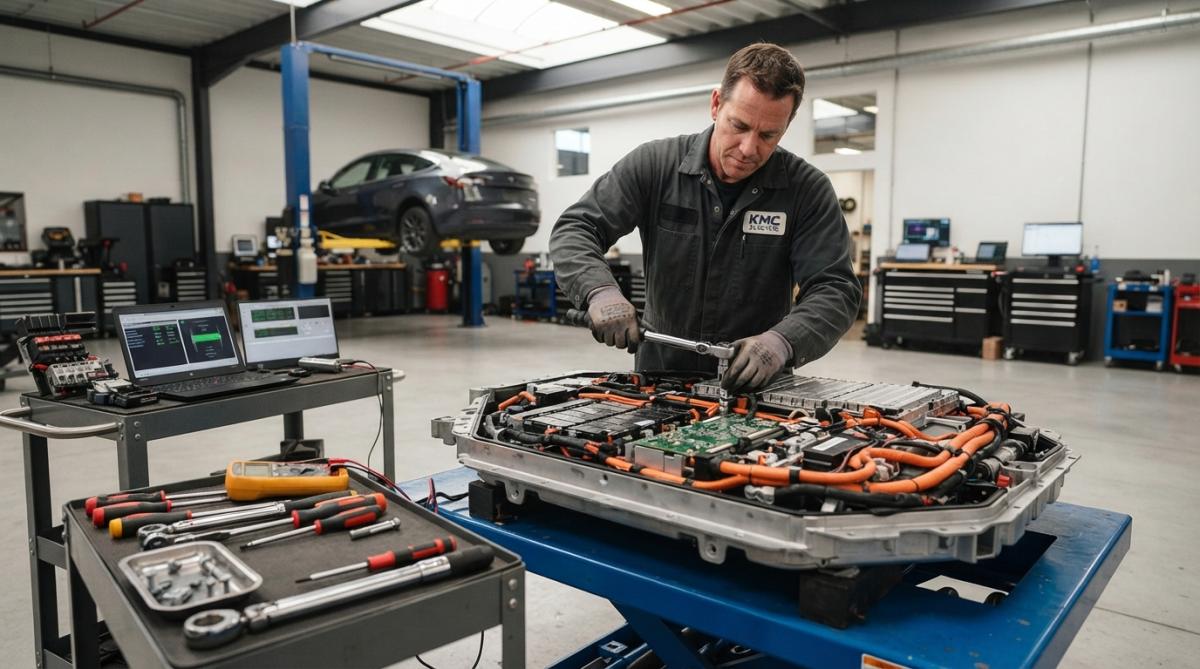
Why Is My EV Battery Losing Range? The Key Factors
When you notice your electric car battery losing range, understanding why it happens and distinguishing between normal fluctuations and genuine degradation is critical for any EV owner. At KMC Electric, we've spent over a decade diagnosing battery concerns for Tesla and hybrid vehicle owners across Northamptonshire. Range loss falls into two distinct categories: temporary and reversible, or permanent degradation. Most owners conflate the two, leading to unnecessary anxiety. This guide walks you through the science behind battery range, the factors you can control, and when to seek professional diagnosis.
Normal vs. Abnormal Range Loss
Your EV's range estimate is a dynamic calculation based on ambient temperature, recent driving patterns, state of charge, and battery chemistry. A 10-15% range reduction in cold weather is normal. A 30% drop over three years is expected degradation. A sudden 40% loss in a week warrants investigation.
A Tesla Model 3 owner in Kettering might see their range drop from 280 miles to 240 miles overnight when winter arrives, that's physics, not battery failure. The same owner seeing a drop to 200 miles after six months of normal use would warrant a state of health check.
Pro TipCheck your [battery's state of](/blog/how-to-check-hybrid-battery-health) charge before comparing range estimates. The BMS recalculates range based on the percentage of battery you're using. A 50% charge will show lower total range than 100%, even if battery health hasn't changed.
Cold Weather EV Range: Impact and Management
Cold weather is the single largest cause of temporary range loss. Lithium-ion batteries lose efficiency in low temperatures because chemical reactions slow down and the electrolyte becomes more viscous, increasing internal resistance. Your battery isn't damaged; it's working harder to deliver the same power.
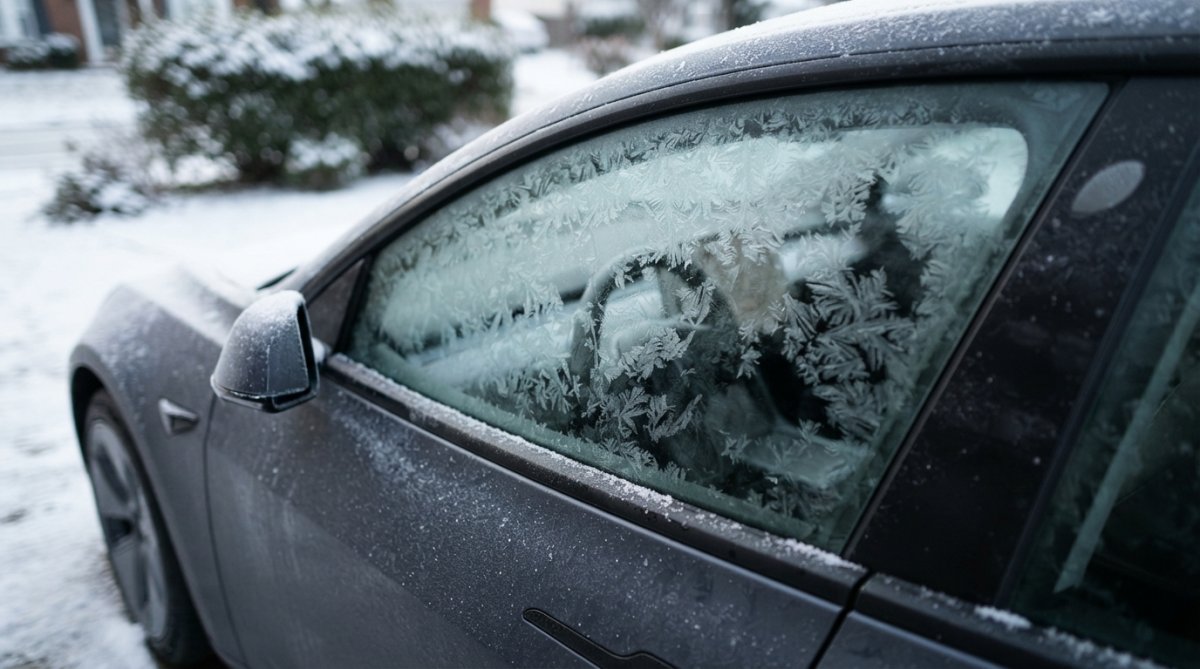
Electric vehicle parked in snowy winter conditions with frost and ice covering the windows and bodywork, emphasising cold weather environment
Expect a 20-30% range reduction when ambient temperature drops below 0°C. At -10°C, some owners report losses of 40% or more. This is reversible. Drive in warmer conditions or allow the battery to warm naturally, and the range returns.
Fast charging a cold battery accelerates degradation and can permanently reduce capacity. Preconditioning, warming the battery before charging, mitigates this risk significantly.
Thermal Management and Cabin Heating
Cabin heating is one of the largest parasitic loads on an EV battery. A traditional petrol car uses waste engine heat almost for free. An EV must generate that heat electrically, drawing directly from the battery pack. Running your cabin heater at full blast in winter can consume 5-10 kW of power. For a 60 kWh battery, that's roughly 8-15% of your total energy budget. Reducing cabin temperature by 2-3°C or using seat heaters instead can extend your range by 10-15% in cold conditions.
Preconditioning and Battery Efficiency
Preconditioning warms your battery and cabin while the car is plugged in, using grid power instead of battery power. Most modern EVs allow you to schedule this through their mobile apps. If you're leaving at 7 a.m. on a -5°C morning, set preconditioning to start at 6:50 a.m. The battery will warm to its optimal operating temperature by departure, recovering 15-20% of the range you'd otherwise lose.
Key TakeawayPreconditioning is the single most effective cold-weather strategy for both immediate range recovery and long-term [battery health](/page/pre-purchase-inspection). It costs nothing beyond grid electricity and can be automated.
Understanding EV Battery Degradation UK Standards
Battery degradation is inevitable. Every charge cycle, fast-charge session, and temperature extreme causes minor chemical changes inside the cells. The question isn't whether your battery will degrade, but how much and how quickly.
UK consumer protection law and manufacturer warranties set clear expectations. Most EV warranties guarantee that the battery retains at least 70% of its original capacity after 8 years or 100,000 miles, whichever comes first. Some manufacturers, including Tesla, guarantee 80% retention over the same period.
State of Health (SoH) and Capacity Loss
State of Health (SoH) is a percentage representing the battery's current capacity relative to its original capacity when new. A battery with 100% SoH has full capacity; 85% SoH means 15% capacity loss.
SoH is calculated by the BMS using internal measurements of voltage, current, and temperature. A Tesla Model 3 with 50,000 miles might show 96% SoH. A Model 3 with 150,000 miles might show 88% SoH. Both are acceptable. A Model 3 with 80,000 miles showing 75% SoH would be concerning.
The rate of degradation varies based on charging habits, depth of discharge, temperature exposure, and age. Fast charging more frequently accelerates degradation. Regularly draining the battery to very low levels causes faster capacity loss.
Warranty Thresholds and What They Mean
EV battery warranties in the UK are typically structured around time and mileage. A Tesla Model 3 warranty, for example, guarantees 80% capacity retention for 8 years and unlimited mileage. If your battery drops to 79% SoH within that period, Tesla will replace or repair it at no cost.
If you're buying a used EV, the remaining warranty is a valuable asset. Independent battery health verification, like the service KMC Electric offers to buyers and sellers in Kettering, is worth the investment before purchasing a used vehicle.
Watch OutIf SoH drops below 80% within the warranty period, you have grounds for a warranty claim. Don't assume degradation is normal without checking the timeline and mileage.
EV Charging Habits and Battery Health: Best Practices
How you charge your EV has a measurable impact on long-term battery health. The difference between optimal and poor charging practices can mean 90% SoH at 100,000 miles versus 80% at the same mileage.
Fast Charging vs. Standard Charging
Fast charging (DC rapid charging) is convenient but harder on the battery than standard charging. You're pushing high current through the battery in a short time, forcing the BMS to work harder managing heat and distributing charge evenly.
Standard charging (AC charging at home, typically 7-11 kW) is gentler, delivering power more slowly and allowing more even absorption with less heat. For daily commuting, use standard home charging. For road trips and occasional urgent top-ups, use rapid chargers. This balanced approach minimises degradation while maintaining practical usability.
Depth of Discharge and Charging Cycles
Depth of discharge (DoD) is the percentage of battery capacity you use before recharging. Deeper discharge cycles cause faster degradation. Most EV manufacturers recommend keeping your battery between 20% and 80% for daily use.
Modern EV batteries are rated for 1,000-2,000 full cycles before reaching 80% capacity. At 300 miles per cycle, that equals 450,000 miles of driving, most owners never reach that threshold. Shallow cycles extend this lifespan significantly.
Charging Strategy
Daily Range Lost
Battery Lifespan Extension
Charge to 100% daily
0 miles
Baseline
Charge to 80% daily
5-10 miles
+15-20% longer
Charge to 60% daily
15-25 miles
+30-40% longer
Mix of 80% and occasional 100%
2-5 miles
+20-25% longer
Pro TipSet your vehicle's charge limit to 80% in the settings menu. Most EVs allow you to configure a default charge limit, so you don't have to manually stop charging at 80% every time. This single change can extend [your battery's](/blog/how-to-check-tesla-battery-health) effective lifespan by several years.
Maximise EV Battery Life: Practical Driving Strategies
How you drive directly impacts energy consumption and battery degradation. Aggressive acceleration, high-speed driving, and poor tyre maintenance all reduce efficiency and increase electrical stress on your battery.
Regenerative Braking and Efficiency
Regenerative braking converts kinetic energy back into electrical energy when you lift off the accelerator or apply the brakes. A skilled EV driver can recover 20-30% of energy through regenerative braking on city driving. To maximise regenerative braking, anticipate traffic and coast to a stop rather than braking hard, use one-pedal driving mode if available, and plan routes to minimise braking.
Tyre Pressure, Aerodynamics, and Rolling Resistance
Underinflated tyres increase rolling resistance, forcing your battery to work harder. A 20% drop in tyre pressure can reduce range by 5-10%. Check your tyre pressure monthly and maintain the manufacturer's recommended PSI.
Aerodynamic drag increases exponentially with speed. Driving at 70 mph instead of 60 mph increases energy consumption by roughly 20%. Remove roof racks when not in use, close windows at motorway speeds, and keep the undercarriage clean. These changes can extend your range by 10-15% on longer journeys.
Key TakeawayTyre pressure and aerodynamics are the easiest efficiency wins. A properly inflated tyre and clean undercarriage can recover 5-10% of lost range without changing driving behaviour.
Software Updates and Battery Range Recalculation
Your EV's range estimate is a dynamic calculation that changes based on real-world driving data. When manufacturers release software updates, they often refine the algorithms that calculate range, which can result in range estimates increasing or decreasing.
A software update that improves range calculation accuracy might show your battery as having less range than before, not because the battery degraded, but because the previous estimate was optimistic. Updates that optimise thermal management or charging efficiency can genuinely improve real-world range.
For EV owners in Kettering or across Northamptonshire, staying current with software updates is one of the easiest ways to maintain battery efficiency. Most modern EVs update automatically when plugged in.
Vampire Drain and Parasitic Load: Hidden Range Loss
When your EV is parked and not charging, it's still consuming power. This parasitic load, often called "vampire drain", can account for 1-3% of battery capacity per day depending on the vehicle and active systems.
The BMS itself draws power to monitor battery health. The onboard computer draws power to maintain network connectivity. Security systems and other always-on systems all contribute to parasitic load. In most cases, vampire drain is negligible, a car parked for a week might lose 5-10% of its charge.
Watch OutVampire drain of more than 3% per day is abnormal and suggests a fault. This can accelerate battery degradation over time if left unaddressed. [Professional diagnosis](/page/tesla-battery-repair) is warranted.
Diagnostic Tools and Independent Battery Health Verification
Understanding your battery's state of health is the first step toward making informed decisions about maintenance, repairs, and vehicle replacement. Most modern EVs display battery health information through the vehicle's onboard display or mobile app. This data is usually accurate to within 2-3%.
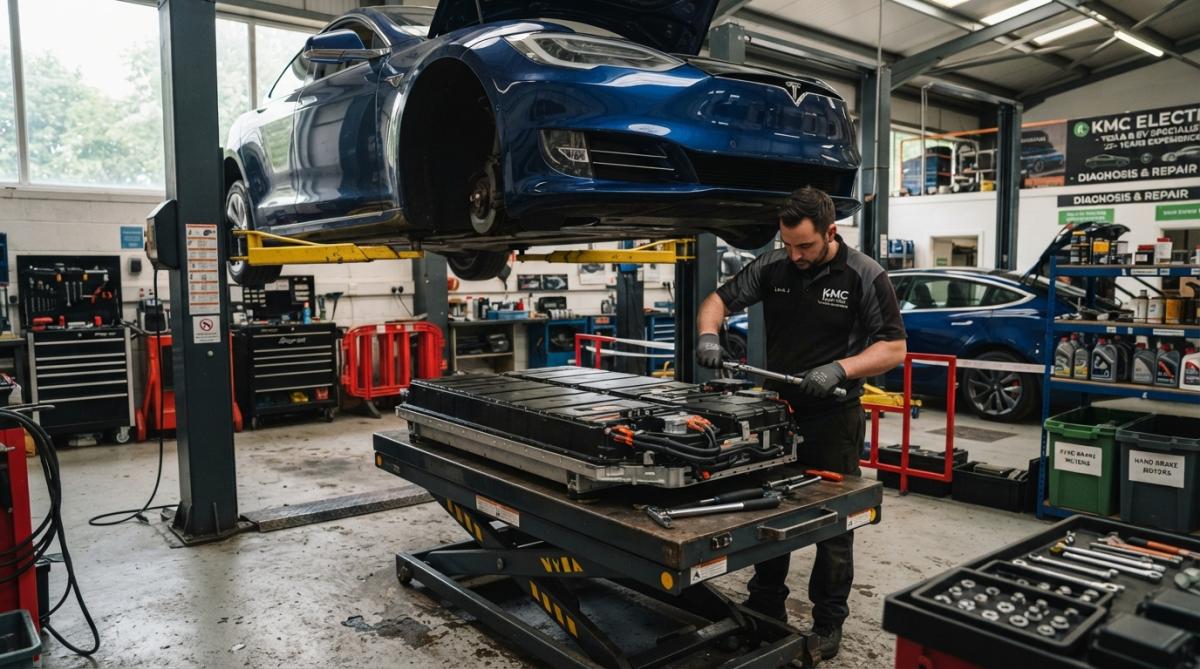
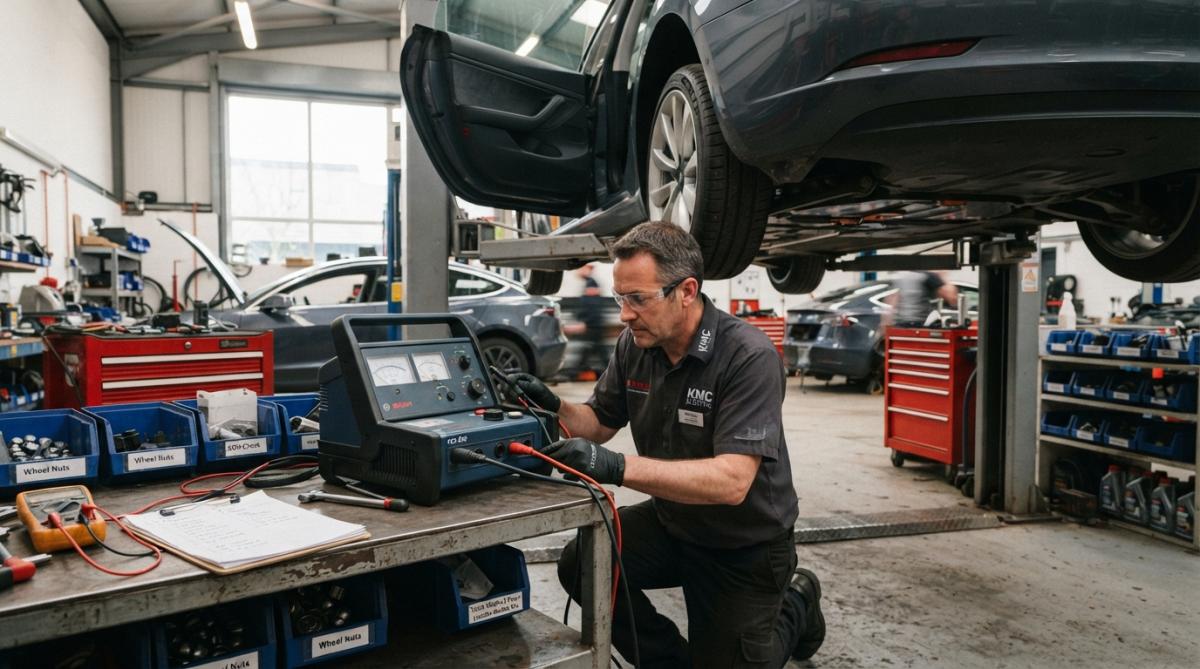
For a more detailed assessment, third-party diagnostic tools or professional diagnostic equipment can provide comprehensive reports measuring voltage, internal resistance, and cell balancing.
If you're buying a used EV, independent battery health verification is invaluable. A professional technician can perform a full diagnostic in 30-45 minutes, measuring state of health, state of charge, cell balancing, and thermal performance.
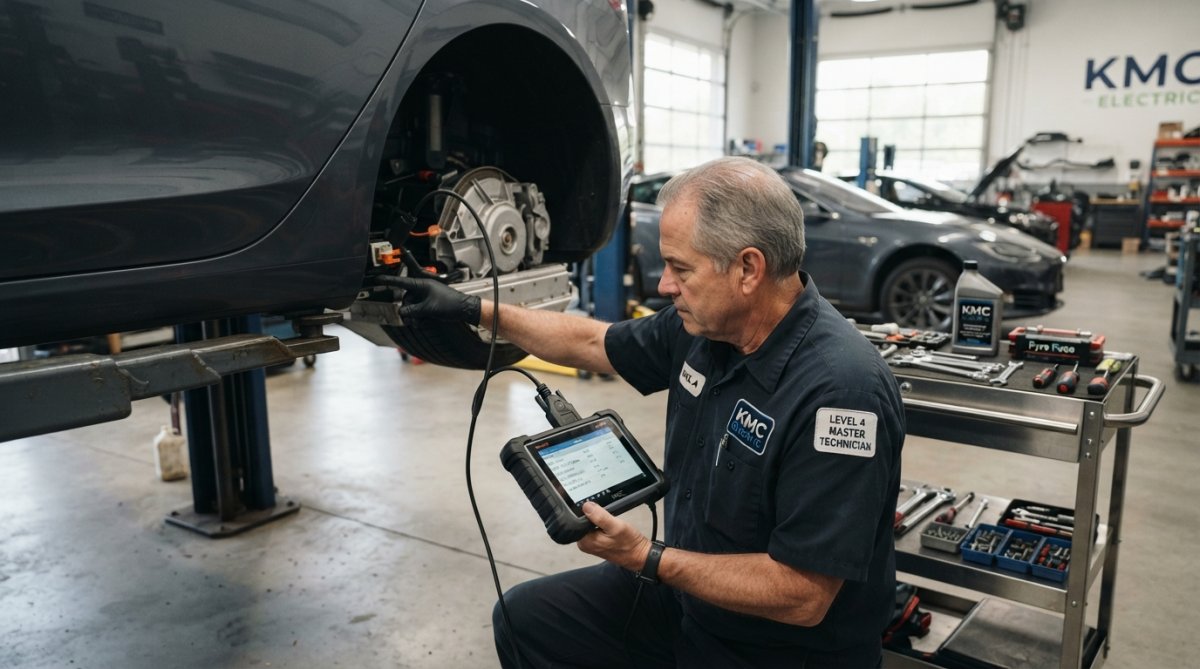
KMC Electric offers independent battery health verification for buyers and sellers across Kettering and Northamptonshire. As a Level 4 Master Technician in electric vehicles with over 25 years of automotive experience, we provide detailed reports that inform purchasing decisions and help owners understand their battery's true condition. This is particularly valuable for out-of-warranty vehicles or those with unusual mileage patterns.
Common Questions About EV Battery Range Loss
How much range loss is normal per year?
Most EV batteries degrade at a rate of 2-3% per year under normal use. After five years, you might expect 85-90% SoH. This is completely normal and within manufacturer warranties.
Can I recover lost range by recalibrating my battery?
Recalibration can sometimes improve range estimates if the BMS has lost calibration. However, it doesn't recover actual capacity. If your battery has genuinely degraded to 85% SoH, recalibration won't restore it to 100%.
Will replacing my cabin filter improve range?
No. A cabin air filter affects air quality inside the vehicle, not battery efficiency.
Is it better to charge overnight or during the day?
From a battery health perspective, there's no meaningful difference between overnight and daytime charging as long as you're using standard AC charging. Both are equally gentle on the battery.
What temperature should I store my EV at?
Moderate temperatures (10-25°C) are ideal for battery storage. Extreme heat accelerates degradation, and extreme cold reduces efficiency. If storing your EV for an extended period, keep it in a temperature-controlled environment and maintain the battery at 50% charge.
Battery range loss is a normal part of EV ownership. Understanding its causes helps you distinguish between expected fluctuations and genuine concerns. Cold weather, charging habits, driving style, and age all play roles in the range you experience at any given moment.
For owners in Kettering and across Northamptonshire concerned about their battery's health or considering a used EV purchase, professional diagnosis provides clarity and confidence. KMC Electric's independent battery health verification, combined with over a decade of EV diagnostic experience, ensures you understand your vehicle's true condition and can make informed decisions about maintenance and long-term ownership.
Frequently Asked Questions
Do electric car batteries lose range over time, and is it normal?
Yes, all lithium-ion batteries experience some degradation over time. Most modern EVs are designed to retain 80-90% of their battery capacity after 8-10 years of typical use. However, battery losing range can be caused by factors beyond actual degradation, cold weather, driving habits, and charging practices significantly affect range perception. If you notice sudden drops rather than gradual decline, a professional battery health check can distinguish between normal degradation and a genuine fault. Independent verification of state of health (SoH) helps you understand whether you're experiencing typical wear or an anomaly.
How much range loss from cold weather EV range should I expect?
Cold weather EV range can drop 20-40% in temperatures below 0°C, depending on your vehicle and driving conditions. This occurs because lithium-ion batteries deliver less power in cold conditions, and cabin heating consumes significant energy. Preconditioning, heating the battery and cabin while plugged in, can recover 10-20% of lost range. Thermal management systems in modern EVs help mitigate this, but cold weather remains a major factor. Range typically recovers as temperatures rise; this is not permanent battery degradation.
What's the difference between battery degradation and temporary range loss?
Battery degradation is permanent capacity loss measured by state of health (SoH), typically 0.5-2% per year under normal conditions. Temporary range loss occurs from cold weather, high parasitic loads (vampire drain), aggressive driving, or rapid charging sessions. You can diagnose the difference by checking your vehicle's battery management system (BMS) data or requesting independent battery health verification. If SoH remains stable but range fluctuates with weather or usage, you're experiencing normal variation. If SoH drops sharply, investigate potential faults before warranty expiry.
Can EV charging habits damage my battery and reduce range?
Yes. Frequent fast charging and consistently charging to 100% accelerates battery degradation compared to moderate charging practices. Keeping your state of charge between 20-80% and using standard charging when possible extends battery longevity. Rapid charging generates heat, which stresses lithium-ion cells; occasional fast charging is fine, but daily use can reduce battery life. Additionally, shallow charging cycles (avoiding complete discharge) minimise stress on the battery management system. Adopting these EV charging habits battery health practices can extend your vehicle's service life significantly.