Brake failure in an electric vehicle isn't just uncomfortable, it's dangerous. The difference between a functioning braking system and one on the edge of failure can be the difference between a safe stop and a collision. If you drive a Tesla or other EV in Kettering or across the Midlands, understanding the warning signs of electric car brake failure is essential for your safety.
Unlike conventional vehicles, electric cars use regenerative braking systems that work alongside traditional friction brakes. This dual system means brake problems can develop differently, and spotting them early matters. At KMC Electric, we've diagnosed hundreds of brake faults across Tesla models and other EVs, and we've seen how quickly small issues escalate when ignored.
This guide covers the seven most critical signs of electric car brake failure you need to watch for, what each one means, and what you should do immediately if you notice them. We'll also cover electric vehicle MOT requirements and brake safety standards you need to know.
1. Soft or Spongy Brake Pedal
A soft or spongy brake pedal is one of the earliest warning signs of brake system trouble. When you press the pedal, it should feel firm and responsive. If it feels mushy, travels too far before the brakes engage, or feels like you're pressing into air, something is wrong.
This sensation typically indicates air in the brake fluid lines or a leak in the hydraulic system. Brake fluid is incompressible, so any air in the lines creates a pocket that compresses instead of transmitting force to the brake calipers. In electric vehicles, where brake modulation is critical for smooth regenerative braking integration, this problem is especially serious.
What to do: Stop driving the vehicle immediately and have it inspected by a specialist. Do not attempt to bleed the brakes yourself unless you have proper training. Book a diagnostic appointment with an independent EV specialist in Kettering or your local area to identify whether the issue is air in the lines, a fluid leak, or a failing brake master cylinder.
Watch OutA soft pedal combined with a brake warning light is a critical safety issue. Do not drive the vehicle beyond the nearest safe location to stop and seek professional help.
2. Brake Warning Light on Dashboard
The brake warning light on your EV's dashboard is a direct communication from the vehicle's onboard diagnostic system. In Tesla vehicles and most modern EVs, this light indicates a problem with the brake system that requires immediate attention.
Modern electric vehicles monitor brake pressure, fluid levels, pad wear, and the integration between regenerative and friction braking. A warning light means one or more of these systems has detected an issue. In some cases, it's a minor sensor problem; in others, it's a genuine safety issue.
What to do: Do not ignore a brake warning light, even if the brakes feel normal. Have the vehicle scanned for fault codes by a technician with EV diagnostic expertise. Fault codes will tell you exactly what the system detected. Some codes point to simple fixes, while others indicate serious problems requiring immediate repair.
Pro TipIf your brake warning light appears, use a diagnostic scanner to pull the fault code before booking a repair. This tells you whether the issue is urgent or can wait a few days. Many independent EV specialists in the Kettering area offer quick diagnostic scans.
3. Reduced Stopping Power or Longer Stopping Distance
Reduced stopping power is when your vehicle takes longer to stop than it should, even with firm pedal pressure. You might notice the car doesn't slow as quickly when approaching traffic lights, or you need to press the brake pedal harder than usual to achieve the same deceleration.
In electric vehicles, this problem often stems from degraded brake pads, contaminated brake fluid, or a fault in the regenerative braking system that shifts too much load onto the friction brakes. If the regenerative system isn't working properly, the traditional friction brakes must do all the work and wear faster.
What to do: Test your stopping distance in a safe location at a consistent speed and note how long it takes to stop. If stopping distance has increased noticeably, book a brake system inspection immediately. Do not rely on regenerative braking alone to slow the vehicle; always test the friction brakes as well.
4. Worn Brake Discs and Pad Wear Indicators
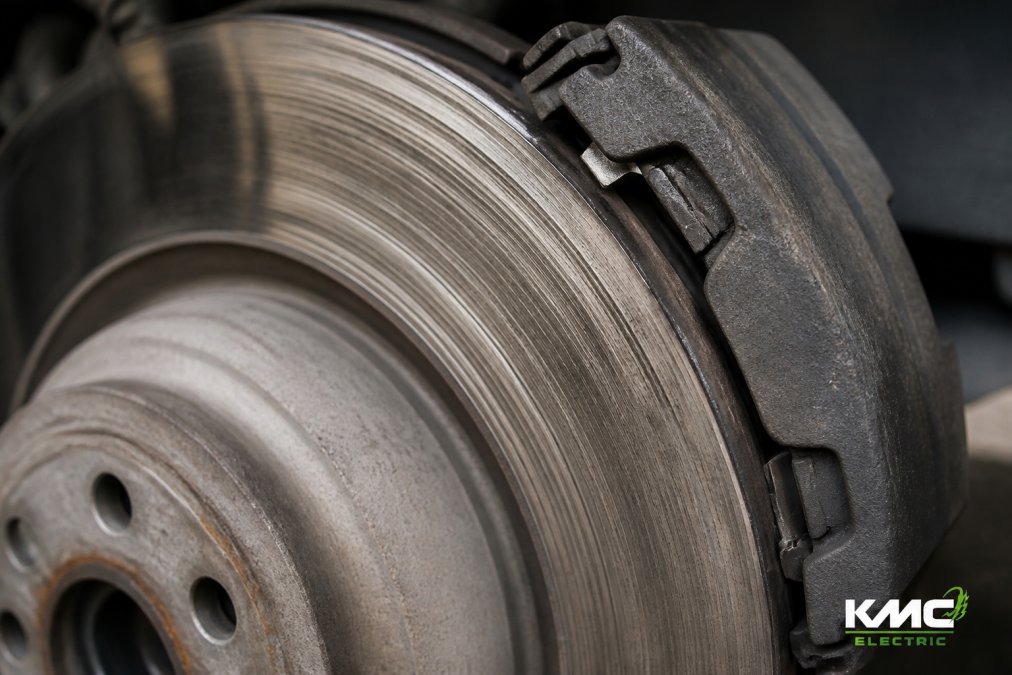
Brake pads and discs wear over time, and electric vehicles often experience different wear patterns than conventional cars because regenerative braking handles much of the deceleration. However, when friction brakes are needed, motorway braking, emergency stops, or descending steep hills, they wear quickly if already compromised.
Most modern EVs have wear indicator sensors embedded in the brake pads. When pads wear down to minimum thickness, the sensor triggers a warning light or audible alert. Brake discs also have a minimum safe thickness; once they fall below this, they must be replaced.
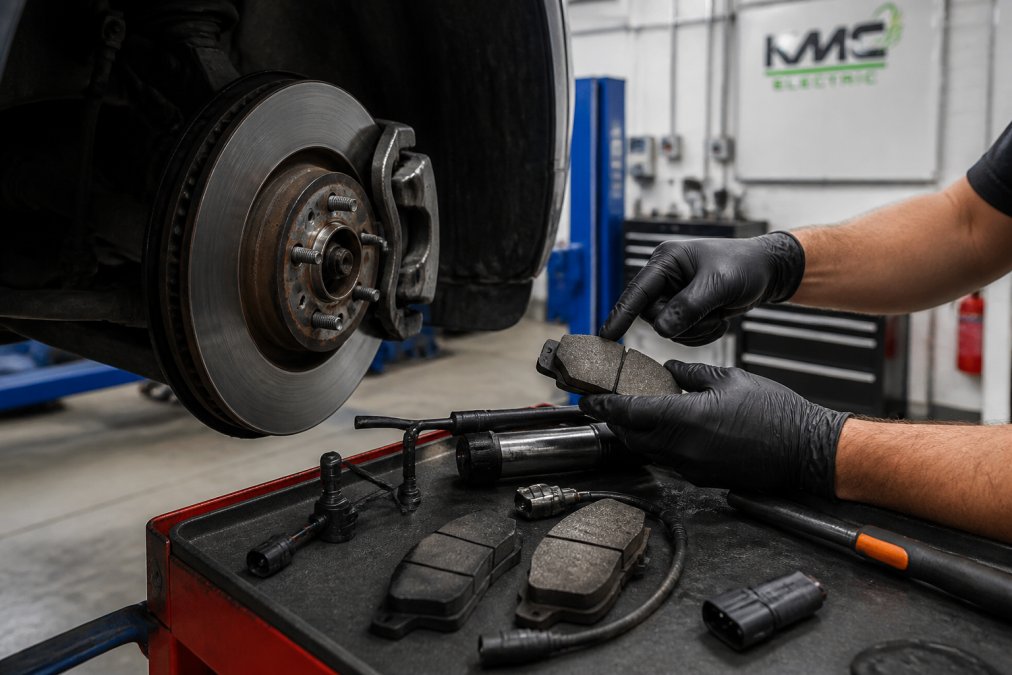
What to do: If you hear a squealing or grinding noise when braking, or if your brake wear indicator light comes on, have the pads and discs inspected immediately. Worn pads should be replaced before they damage the rotors. If discs are worn below the minimum thickness, they must be replaced as a pair to maintain even braking.
Professional illustration showing electric car brake failure
5. Unusual Noises When Braking
Brake noise comes in several forms, and each tells a different story. A high-pitched squeal usually indicates wear indicator sensors making contact with the rotor, signalling that pads need replacement soon. A grinding or scraping sound means metal-on-metal contact, which happens when pads are completely worn through. A clicking or knocking sound may indicate a loose caliper or brake pad that's come loose.
In electric vehicles, unusual braking noises can also signal problems with the regenerative braking system integration. If the transition between regenerative and friction braking isn't smooth, you may hear clunking or creaking.
What to do: Note exactly when the noise occurs and describe it clearly to your technician. A simple squeal is usually just a wear indicator and not urgent, but grinding or metal-on-metal sounds require immediate attention. Do not continue driving with grinding sounds; this damages the rotor and increases repair costs significantly.
Watch OutGrinding noises while braking indicate severe pad wear. Continuing to drive damages the brake disc. Stop driving and get the brakes inspected within 24 hours.
6. Brake Fluid Leaks or Contamination
Brake fluid is essential to the hydraulic braking system. A leak means the system loses pressure, which leads directly to soft pedals, reduced stopping power, and eventual brake failure. Contamination, when water, dirt, or other substances mix with the fluid, degrades the fluid's ability to transmit force and corrodes internal brake components.
Brake fluid naturally absorbs moisture from the air over time, which is why manufacturers recommend fluid flushes every 2-3 years. In electric vehicles, which often sit unused for longer periods, this problem can accelerate. Water in the fluid lowers its boiling point, which can cause brake fade under heavy braking or on long descents.
What to do: Check your brake fluid level monthly by looking at the reservoir under the bonnet. If the level drops between services, you have a leak. Look under the vehicle for wet spots or fluid drips near the wheels. If you spot a leak, do not drive the vehicle; have it towed to a specialist. For contamination, have the fluid tested as part of your regular maintenance.
7. Uneven Braking or Pulling to One Side
Uneven braking means the vehicle pulls to the left or right when you apply the brakes. This happens when one side of the braking system is weaker than the other, perhaps one caliper isn't applying full pressure, one side's pads are more worn, or there's a leak affecting only one wheel circuit.
Pulling during braking is dangerous because it reduces your control, especially in emergency stops or on slippery roads. In electric vehicles, uneven braking also disrupts the regenerative braking system's balance, which relies on smooth, even deceleration across all four wheels.
What to do: Test this in a safe location by braking firmly in a straight line on a flat road. If the vehicle pulls consistently to one side, book a brake inspection immediately. The technician will check brake pressure on each wheel, inspect pad wear, and look for leaks in individual brake circuits.
What to Do If You Spot These Signs
Spotting a brake problem early is the difference between a simple repair and a dangerous failure. If you notice any of the seven signs above, follow these steps:
1. Stop driving the vehicle for long distances. Use it only to reach a repair facility.
2. Get a professional diagnostic. A proper diagnostic scan identifies the exact fault, and a physical inspection confirms whether it's urgent.
3. Have the repair done before the next long journey. Brake problems worsen quickly, especially in electric vehicles where regenerative and friction braking must work together.
4. Use an independent specialist if you're out of warranty. Independent EV specialists in Kettering and across the Midlands offer expertise at competitive rates.
Professional illustration showing Professional for electric car brake failure
KMC Electric offers comprehensive brake diagnostics for Tesla and other electric vehicles. Our technicians can identify brake faults quickly, explain what's happening, and provide cost-effective repair options. We serve EV owners and dealerships across Northamptonshire and the wider Midlands, and we're experienced in the specific brake systems used in modern EVs.
Electric Vehicle MOT Requirements and Brake Safety
In the United Kingdom, electric vehicles must pass the same MOT safety standards as conventional cars, with some EV-specific checks. The brake system is one of the most thoroughly tested components during an MOT.
The MOT test includes:
Brake performance testing on a brake roller, which measures stopping power on each wheel
Brake pad and disc thickness checks to ensure they meet minimum legal requirements
Brake fluid condition assessment to detect contamination or degradation
Brake warning light functionality to confirm the system alerts the driver to faults
Regenerative braking integration checks (for newer EVs) to ensure the system doesn't mask friction brake problems
Electric vehicles must meet the same stopping distance requirements as petrol or diesel vehicles. The legal minimum braking performance is set out in the Road Vehicles (Construction and Use) Regulations 1986, and the MOT tests compliance with these standards.
Key TakeawayYour EV's brakes must meet the same legal safety standards as any other vehicle on UK roads. An MOT failure on brakes means the vehicle is unsafe to drive and must be repaired before it can be used on public roads.
If your electric vehicle fails its MOT on brakes, you have a choice: return to the testing station for a retest after repairs, or take it to an independent specialist. Many EV owners in the Kettering area choose independent specialists because they offer faster turnaround and competitive pricing.
When to Seek Professional Help
Not every brake noise or warning light requires emergency repair, but all of them require professional diagnosis. Here's a rough guide:
Sign
Urgency
Action
Soft or spongy pedal
Critical
Do not drive; seek help immediately
Brake warning light
High
Diagnostic scan within 24 hours
Grinding or metal-on-metal noise
High
Inspection within 24-48 hours
Reduced stopping power
High
Inspection within 48 hours
Squealing noise
Medium
Inspection within 1-2 weeks
Fluid leak
Critical
Do not drive; seek help immediately
Pulling to one side
High
Inspection within 48 hours
Early diagnosis prevents small problems from becoming expensive ones.
Summary: Protect Your Safety and Your Wallet
Brake failure in an electric vehicle is rare if you stay alert to warning signs and address them promptly. The seven signs covered in this guide, soft pedals, warning lights, reduced stopping power, worn pads and discs, unusual noises, fluid leaks, and uneven braking, are your vehicle's way of telling you something needs attention.
Electric vehicles rely on the seamless integration of regenerative and friction braking. When one part fails, the entire system is compromised. That's why independent diagnosis is so valuable: a specialist can see how all the parts work together and identify the root cause, not just the symptom.
If you're an EV owner in Kettering, Northamptonshire, or the wider East Midlands region, and you've noticed any of these brake warning signs, don't wait for the problem to get worse. Contact KMC Electric for a professional brake diagnostic. With over 25 years of automotive experience and Level 4 Master Technician status in electric vehicles since 2016, our team understands Tesla and other EV brake systems inside and out. We'll identify what's wrong, explain your options, and get you back on the road safely and affordably.
Frequently Asked Questions
Can I fail my MOT due to electric car brake failure?
Yes. Under UK MOT regulations, brake systems on electric vehicles must meet the same safety standards as conventional cars. Failed brake discs, worn pads, soft pedals, or warning lights will result in an MOT failure. Early detection of electric car brake failure signs helps you address issues before your test and ensures you remain roadworthy and compliant with legal requirements.
How often should I have my EV brakes checked in the UK?
Most manufacturers recommend brake inspections every 12 months or 12,000 miles, whichever comes first. Electric vehicles may experience slower brake wear due to regenerative braking, but regular checks remain essential. If you notice any of the seven signs of electric car brake failure, have your brakes inspected immediately rather than waiting for your scheduled service.
What's the difference between regenerative braking and traditional braking on an EV?
Regenerative braking captures energy when you lift off the accelerator, slowing the car and returning power to the battery. This reduces wear on friction brakes significantly. However, your EV still has mechanical brakes for emergency stops and hill descent. If regenerative braking isn't working properly, your friction brakes do more work, accelerating wear. Worn brake discs and reduced stopping power can indicate a regenerative system fault.
Why do electric car brakes rust more often than petrol car brakes?
Electric vehicles use friction brakes less frequently due to regenerative braking, meaning brake discs and calipers sit unused for longer periods. Moisture accumulates on unused metal surfaces, causing rust and corrosion. This corrosion can affect brake performance and is a common reason for brake warning lights. Regular short brake applications and professional inspection help prevent rust-related failures.