Why EV Suspensions Face Unique Stress at 50,000 Miles
Electric vehicles demand far more from their suspension systems than conventional petrol cars. The culprit is weight. A typical Tesla Model 3 weighs around 1,600 kg, but the battery pack alone accounts for 400 kg of that mass, distributed low and centrally. This fundamentally changes how suspension components experience stress.
Add instant torque delivery and regenerative braking into the equation, and you're looking at forces that traditional suspension geometry wasn't designed to handle. When you press the accelerator in an EV, maximum torque arrives immediately, not gradually as in an internal combustion engine. The suspension must absorb that shock through control arms, bushings, and struts. Regenerative braking reverses the load path constantly, creating a different type of stress cycle than conventional friction braking.
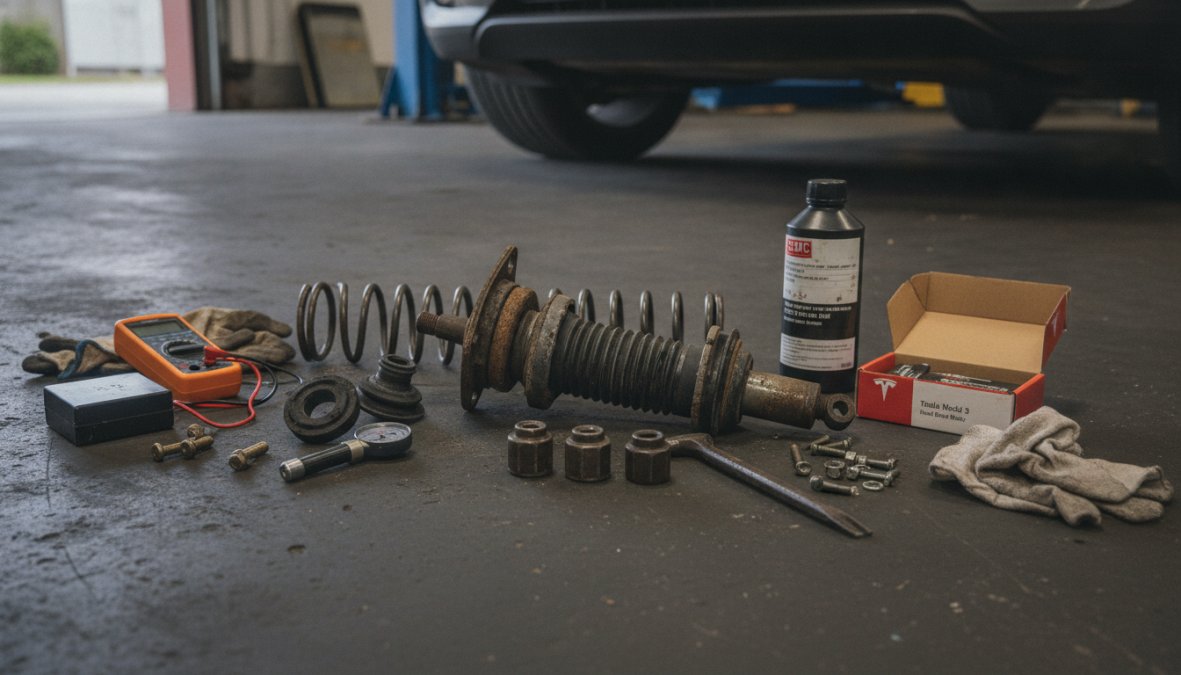
By 50,000 miles, these cumulative forces have typically degraded critical components. Bushings crack under the repeated torque cycles. Control arms bend subtly. Struts lose damping efficiency. The problem compounds because EV owners often don't realise suspension maintenance is more critical than in traditional cars, not less.
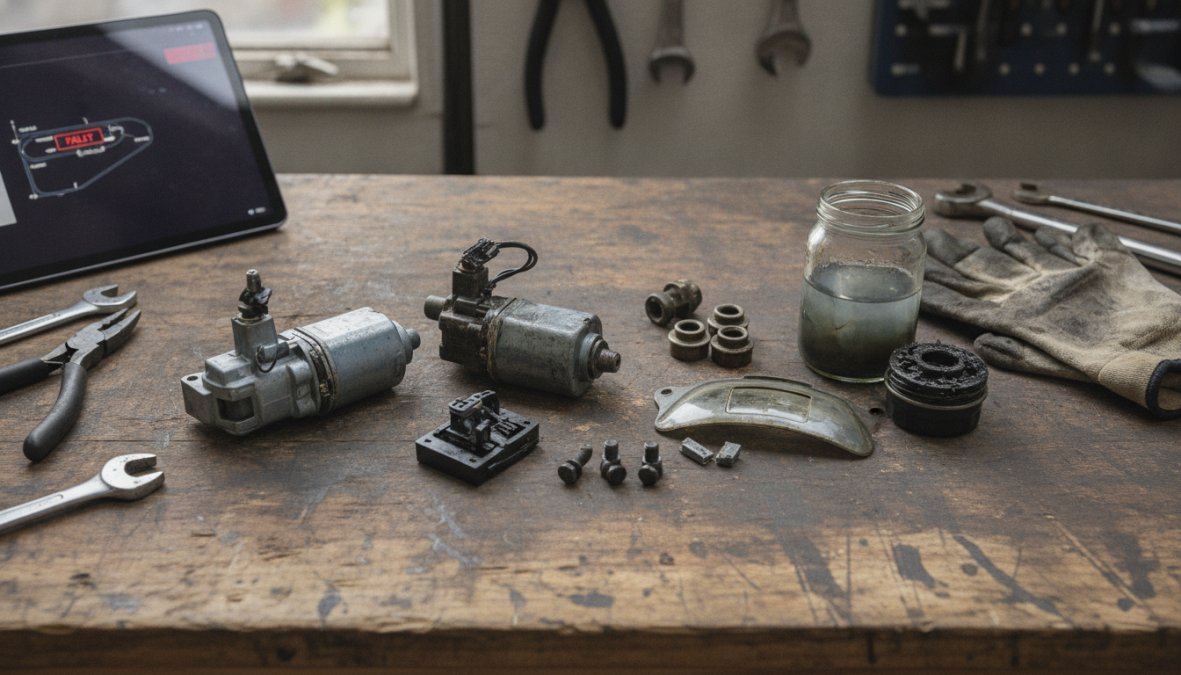
Bushings are rubber or polyurethane components that isolate metal-to-metal connections throughout the suspension. In an EV, they experience higher stress because the instant torque delivery creates sharper, more violent load reversals than petrol engines generate.
Control arms connect the wheel hub to the chassis, and they work in constant tension with bushings. When a bushing degrades, the control arm loses its isolation and begins to flex excessively. The symptoms appear gradually: a slight knock when turning, increased road noise, or a vague feeling in the steering.
Many EV owners mistake these early signs for normal wear, but they're actually red flags. Once a bushing cracks, the deterioration accelerates. Metal-to-metal contact begins, and the control arm itself can become damaged within weeks. At 50,000 miles, inspection often reveals cracks in bushings that a petrol car wouldn't show until 80,000 or 100,000 miles.
The repair approach matters significantly. Main dealers typically recommend replacing entire control arm assemblies, an expensive fix. Independent specialists like KMC Electric often repair individual components, replacing just the bushing and inspecting the arm itself for damage. This practical approach extends vehicle life without the dealer price tag.
Powerflex polyurethane bushings are a popular upgrade for EV owners. Polyurethane is more durable than factory rubber and reduces flex under the high torque loads that EVs generate. However, installation requires specialist tools and knowledge, it's not a DIY job for most owners.
2. Strut and Damper Degradation
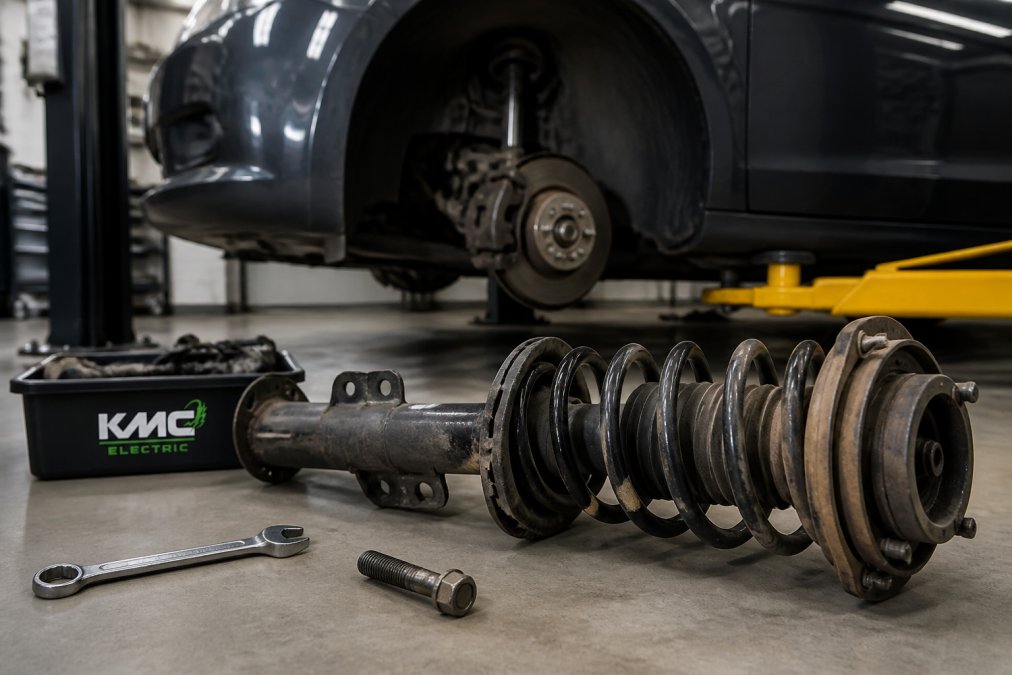
Struts and dampers do the same job: they absorb the energy created when the suspension compresses and rebounds. In an EV, they work harder because the vehicle is heavier and the torque delivery is more aggressive.
A strut contains a piston that moves through oil inside a sealed cylinder. As the piston moves, it creates resistance, that's the damping effect. Over time, the internal seals wear, the oil degrades, and the damping force decreases. The first sign is usually a softer, bouncier ride. The car takes longer to settle after bumps. On motorways, you might notice more body roll in corners.
At 50,000 miles, struts typically lose 30-40% of their original damping efficiency in an EV, compared to maybe 20% in a petrol car. This happens because the heavier mass and the constant regenerative braking cycles stress the internal components more severely.
Replacing struts is straightforward in principle but labour-intensive. A single strut assembly for a Tesla Model 3 requires removing the wheel, brake components, and suspension arm, roughly 2-3 hours per corner. The part itself is available from aftermarket suppliers, but quality varies. OEM replacements are more reliable but significantly more expensive.
One overlooked issue: strut top mounts. These are the bearings that allow the strut to rotate as you turn the steering wheel. In an EV, the constant torque load stresses these mounts more than in traditional cars. If a top mount fails, you'll hear a clunking noise when turning sharply, and the steering will feel less responsive. Inspection often reveals this before the strut itself needs replacement.
3. Ball Joint Failure and Steering Linkage Issues
Ball joints connect the control arms to the steering knuckle (the component that holds the wheel). They're essentially spherical bearings that allow movement in multiple directions. In an EV, they experience higher loads because of the vehicle's weight and the aggressive torque delivery.
A failing ball joint produces a clicking or popping sound when turning, especially at low speeds. The steering may feel loose or unresponsive. In severe cases, the wheel can become unstable, creating a safety hazard. Ball joint failure is one of the few suspension issues that genuinely requires immediate attention, it can affect vehicle control.
The steering linkage includes several components: tie rods, drag links, and steering rack boots. All of these can degrade faster in an EV. Tie rods can bend if the vehicle hits a pothole at speed, and the heavier mass of an EV means the impact force is greater. Steering rack boots (rubber covers that protect the steering mechanism) crack more easily under the constant stress of regenerative braking cycles.
Inspection at 50,000 miles should include a thorough steering linkage check. Many MOT failures for EVs involve steering or suspension components that were never properly inspected during the vehicle's first years of ownership.
4. Tire Wear Patterns as a Diagnostic Tool
Your tires tell a story about your suspension health. Uneven wear patterns are often the first visible sign that something is wrong underneath.
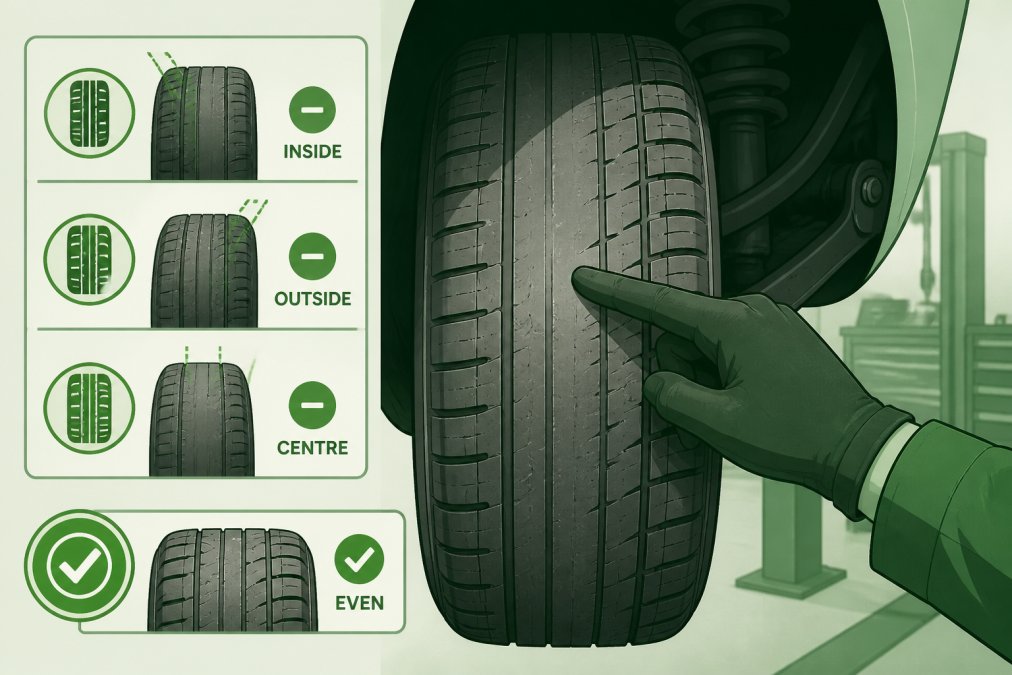
Excessive inner edge wear on the front tires suggests the wheel is tilting inward, a sign of worn control arm bushings or a bent control arm. Excessive outer edge wear suggests the opposite: the wheel is tilting outward, often caused by worn struts or springs. Wear across the entire tire surface suggests alignment issues, which can be caused by suspension damage or simply incorrect wheel alignment.
In an EV, tire wear accelerates because of the weight and the torque. A Tesla Model 3 owner might expect tire replacement at 40,000 miles, whereas a comparable petrol car might get 60,000 miles. This isn't just about the rubber, it's a symptom of the suspension working harder.
Diagonal wear patterns (one corner more than the opposite) are particularly telling. This usually indicates unequal suspension stiffness, perhaps one strut is significantly more worn than the others, or one bushing has cracked while the others are still serviceable. Addressing the underlying suspension issue often stops the abnormal tire wear immediately.
Many EV owners focus on tire tread depth and pressure but ignore wear patterns. A mechanic inspecting your vehicle should photograph the tire wear and use it to guide their suspension inspection. It's a free diagnostic tool that's often overlooked.
How to Check EV Suspension Health Before MOT Failure
A thorough suspension inspection takes 45 minutes to an hour and should be performed by someone with EV-specific knowledge. Here's what a proper check involves.
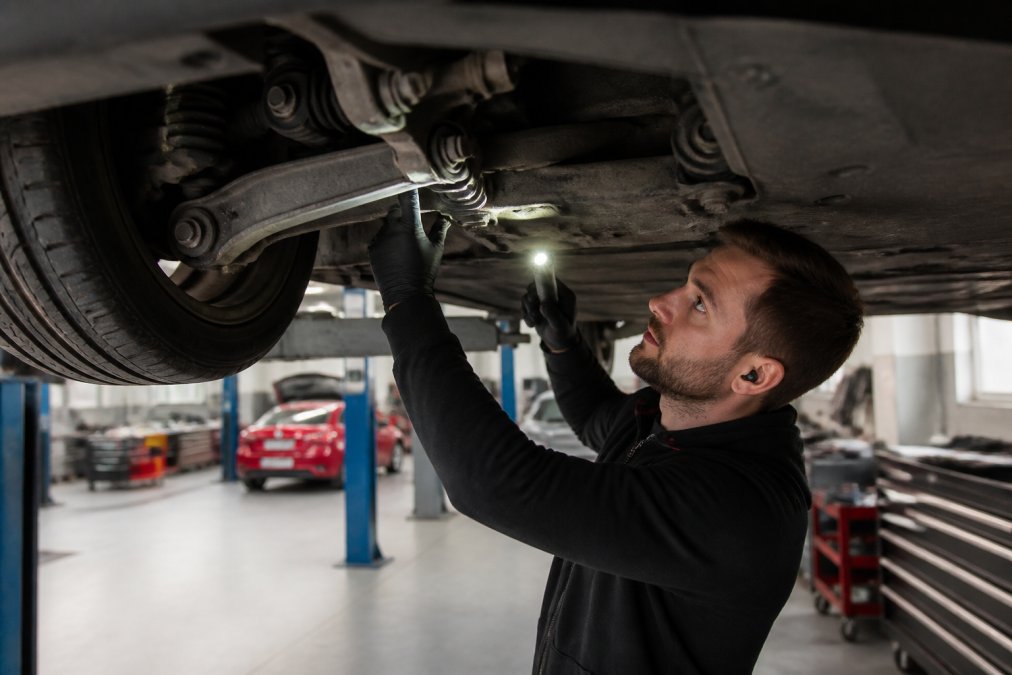
Professional technician performing visual suspension inspection under electric vehicle on lift, examining control arms and bushings with torch light in modern workshop
Visual inspection under the vehicle. The technician raises the car on a lift and examines every suspension component for cracks, bending, or corrosion. Bushings should be intact with no visible splits. Control arms should be straight. Strut bodies should show no leaks or damage. This takes 20 minutes and reveals most problems.
Movement and play testing. With the car on the lift, the technician grasps the wheel and attempts to move it in various directions. Excessive play (movement where there shouldn't be any) indicates worn ball joints, bushings, or strut top mounts. A well-maintained suspension should feel solid and tight. This test takes 10 minutes per wheel.
Bounce test. The technician pushes down on each corner of the car and counts how many times it bounces before settling. A healthy suspension should bounce once or twice and settle. Multiple bounces indicate worn struts. This is a quick, effective test that takes 5 minutes.
Wheel alignment check. The car should be driven onto an alignment rack to measure toe, camber, and caster angles. Misalignment can indicate bent control arms or worn suspension bushings. Modern alignment racks also measure wheel balance and tire condition. This takes 15 minutes.
Steering system inspection. The technician checks for play in the steering wheel and tests the responsiveness of the steering at different speeds. Excessive play suggests worn tie rods or steering rack issues. This takes 5 minutes.
Many EV owners attempt DIY visual inspections, which can identify obvious problems like cracked bushings or leaking struts. However, the movement testing and alignment checks require specialist equipment. This is where professional inspection becomes essential.
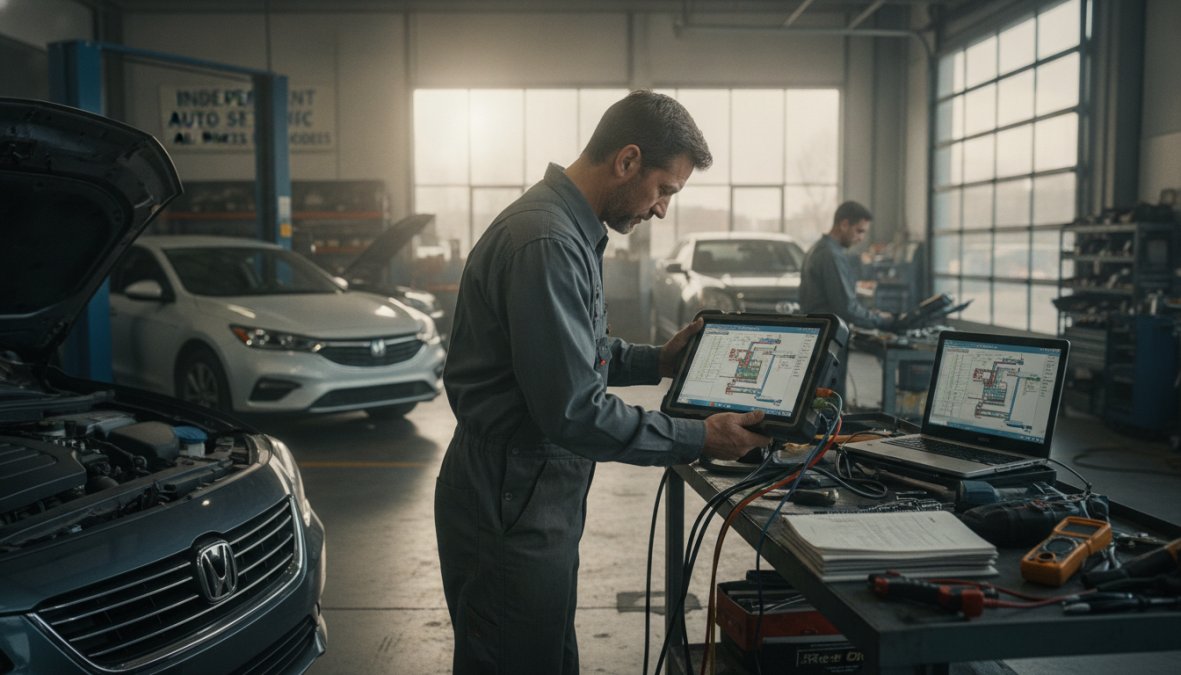
KMC Electric offers comprehensive EV suspension diagnostics for owners in Kettering and Northamptonshire. The team uses EV-specific knowledge to identify issues that generic mechanics might miss, particularly problems related to the unique weight distribution and torque characteristics of electric vehicles.
Electric Car MOT Suspension Failure: What Inspectors Look For
The UK MOT test includes specific suspension checks that catch many EVs at 50,000 miles. Understanding what inspectors look for helps you identify problems before the test.
Excessive play in steering or suspension. The MOT tester checks for movement in the steering wheel, ball joints, and control arm connections. Any excessive play results in a failure. This is a common failure point for EVs at this mileage.
Damaged or missing components. Broken strut top mounts, cracked bushings, or bent control arms are immediate failures. The tester performs a visual inspection and a physical check for damage.
Leaking or damaged shock absorbers. If a strut leaks oil, it fails the MOT. Visible damage to the strut body also results in failure.
Uneven or excessive tire wear. The tester measures tread depth and looks for wear patterns. Uneven wear that suggests suspension problems can trigger a failure, particularly if the inner or outer edge is below 1.6 mm (the legal minimum).
Wheel alignment issues. If the car pulls to one side or the steering feels unresponsive, the tester will recommend an alignment check. Severe misalignment can result in an MOT failure.
Underbody corrosion. The tester inspects the undercarriage for rust or corrosion affecting suspension components. This is less common in newer EVs but can occur in coastal areas or where salt is used on roads.
EV owners often underestimate MOT risk because they assume electric vehicles are newer and better maintained than older petrol cars. In reality, the unique stresses on EV suspension mean failures are common at higher mileage. Many owners don't discover suspension problems until the MOT reveals them.
Proactive inspection at 40,000 miles, before the MOT, allows time to address issues without the pressure of a failed test. Independent specialists in Kettering and the surrounding area can perform this inspection and advise on necessary repairs.
Preventing Major Suspension Damage: A 50,000-Mile Inspection Checklist
Use this checklist to guide your 50,000-mile suspension inspection. Work through each item and note any issues for discussion with your technician.
Close-up of worn vehicle tire tread showing uneven wear patterns and damage, with mechanic's hand pointing to the wear area under workshop lighting
Inspection Point
What to Check
Normal Condition
Red Flag
Bushings
Cracks or splits in rubber
Intact, no visible damage
Visible cracks, splits, or hardening
Control arms
Straightness and cracks
Straight, no bending
Bent, cracked, or corroded
Struts
Leaks and physical damage
Dry, no visible damage
Oil leaks, dents, or corrosion
Ball joints
Play and movement
Tight, minimal play
Clicking sounds, excessive movement
Tie rods
Straightness and boots
Straight, rubber boots intact
Bent, torn boots, or leaks
Top mounts
Cracks and wear
Intact, no visible damage
Cracked or missing rubber
Wheel alignment
Toe, camber, caster angles
Within manufacturer specs
Outside spec, pulling to one side
Tire wear
Tread depth and pattern
Even wear, 3+ mm tread
Uneven wear, bald spots, <1.6 mm
Suspension springs
Cracks or sagging
Intact, level ride height
Cracked, sagging, uneven height
Underbody
Corrosion and damage
Clean, no visible rust
Rust, corrosion, missing components
Bushings and control arms. Inspect for cracks, bending, or corrosion. If any bushing shows visible cracking, replacement is needed soon. Control arms should be straight, even slight bending affects alignment and tire wear.
Struts and dampers. Look for oil leaks around the strut body. A small amount of oil on the exterior is normal, but active dripping indicates seal failure. Press down on each corner of the car and count the bounces, more than two suggests worn struts.
Ball joints and steering linkage. Grasp the wheel at 3 and 9 o'clock and attempt to move it. Any play indicates worn ball joints. Check tie rods for bending and steering rack boots for tears.
Tire condition. Measure tread depth at multiple points across each tire. Look for uneven wear patterns. Inner edge wear suggests bushing or control arm issues. Outer edge wear suggests strut problems.
Wheel alignment. This requires professional equipment, but you can perform a basic check by driving in a straight line on a quiet road with hands off the wheel. The car should track straight. If it pulls to one side, alignment is needed.
Underbody inspection. Look for rust or corrosion on suspension components, particularly in coastal areas or regions where salt is used on roads. Corrosion accelerates component failure.
Many of these checks can be performed during a regular service, but they're often skipped by generic mechanics unfamiliar with EV-specific concerns. Specialists in Kettering like KMC Electric prioritise suspension diagnostics because they understand the unique demands on EV suspension systems.
EV Suspension Repair Costs UK and Component Replacement
Understanding typical repair costs helps you prioritise maintenance and budget for out-of-warranty work. Costs vary by component, vehicle model, and whether you choose component repair or full assembly replacement.
Independent specialists often quote lower labour rates than main dealers, and they're more likely to repair individual components rather than replace entire assemblies. This approach can reduce costs compared to dealer pricing.
For out-of-warranty vehicles, the repair cost difference between specialists and dealers is significant. Independent battery diagnostics through specialists like KMC Electric help identify degradation early, potentially avoiding expensive repairs by catching issues before they become critical.
EV suspension problems don't announce themselves with dramatic failures, they develop gradually through accumulated stress. By 50,000 miles, most electric vehicles show some signs of wear that petrol cars wouldn't exhibit until significantly higher mileage. The weight of the battery, the instant torque delivery, and the constant regenerative braking cycles create a harsher environment for suspension components.
Proactive inspection before MOT failure saves money and prevents safety issues. Addressing worn bushings, struts, and ball joints early extends vehicle life and maintains handling and safety. For owners in Kettering, Northamptonshire, and the surrounding East Midlands region, independent EV specialists offer cost-effective diagnostics and repairs that identify problems before they become expensive failures. KMC Electric's Tesla suspension specialist service provides the technical expertise needed to keep out-of-warranty vehicles running reliably, with practical repairs that extend service life without the main dealer price tag.
Frequently Asked Questions
Do EV suspensions wear out faster than petrol car suspensions?
Yes. EVs typically weigh 20-30% more than equivalent petrol vehicles due to battery packs. This extra curb weight increases stress on suspension components like bushings, control arms, and dampers. Combined with instant torque delivery and regenerative braking cycles, EV suspensions experience accelerated wear. Most EV owners report noticeable suspension issues between 40,000 and 80,000 miles, whereas traditional vehicles often reach 100,000+ miles before similar problems emerge.
What are the most common signs of suspension failure in an EV after 50,000 miles?
Watch for clunking noises from the front or rear when driving over bumps, excessive body roll during cornering, uneven tyre wear patterns, steering pulling to one side, and a rough or bouncy ride. Vibration through the steering wheel or seat also indicates worn dampers or ball joints. These symptoms suggest bushings, control arms, struts, or dampers are failing. Have a specialist inspect your vehicle if you notice any of these, delaying repairs risks MOT failure and safety issues.
Can a standard UK garage repair EV suspension, or do I need a specialist?
Standard garages can replace basic components like coil springs or shock absorbers if they have the right parts and tools. However, EV-specific suspension diagnosis requires specialist knowledge. Air suspension systems on Tesla Model S and Model X, regenerative braking geometry, and battery pack clearance make DIY or general garage work risky. An independent EV specialist like KMC Electric can diagnose faults accurately and recommend cost-effective repairs rather than unnecessary full replacements.
How much does EV suspension repair typically cost in the UK?
Costs vary widely depending on which components fail. A single bushing replacement might cost under £200, while strut or damper replacement ranges from £400 to £1,000 per axle. Air suspension compressor replacement on Tesla Model S or X can exceed £2,000. Battery pack underbody corrosion inspection and remedial work adds further cost. Rather than guessing, contact KMC Electric for a diagnostic assessment, they provide transparent quotes based on your vehicle's actual condition, often identifying cost-effective repair options over costly replacements.
Will my EV's warranty cover suspension repairs at 50,000 miles?
Most manufacturer warranties cover suspension defects for 3 years or 60,000 miles, whichever comes first. If your vehicle is nearing this limit, suspension issues may still qualify for warranty work, but only if the fault is manufacturing defect, not wear and tear. Check your warranty documents. If you're out of warranty or unsure, an independent specialist can verify whether the fault is covered, saving you from unnecessary main dealer costs.