10 Common Faults in Out of Warranty Tesla: A Complete Guide
Last Updated: July 18, 2026
When your Tesla's manufacturer warranty expires, repair costs can escalate dramatically. Understanding the 10 common faults in out of warranty Tesla vehicles helps you anticipate problems before they become expensive emergencies. At KMC Electric, we've spent over 25 years diagnosing and fixing electric vehicles and tracked which faults emerge most frequently once factory warranty lapses. A single out-of-warranty repair, like a battery coolant leak or MCU failure, can cost thousands of pounds. But many faults can be caught early, managed affordably, or prevented with proper maintenance.
Why Out-of-Warranty Repairs Matter
Your Tesla's factory warranty covers most components for eight years or 100,000 miles, whichever comes first. After that threshold, you're responsible for every repair. The real challenge isn't that faults suddenly appear, it's that early warning signs go unnoticed. Many out-of-warranty issues develop gradually. A failing 12V battery weakens over months; an HVAC system loses efficiency progressively. Catching these problems early through proper diagnostics can save thousands.
Pro TipIndependent Tesla specialists often identify faults before they escalate to full failures. A £150 diagnostic session can prevent a £3,000+ repair down the line.
How This Guide Works
This article covers the 10 most common out-of-warranty faults across Tesla Model 3, Model Y, Model S, and Model X vehicles. Each section explains what the fault is, why it happens, typical repair costs, and whether DIY intervention is feasible.
The 12V battery powers your Tesla's auxiliary systems, lights, windows, door locks, infotainment, and the main battery management system. When it fails, the vehicle can become undriveable despite a full high-voltage battery.
Most Tesla owners expect the 12V to last 8-10 years, but many fail between 80,000 and 120,000 miles, particularly in vehicles that sit unused for extended periods. Early warning signs include slow window operation, dim cabin lights, or the vehicle failing to wake from sleep mode. We recommend testing the 12V battery annually once your vehicle passes 80,000 miles. A simple load test costs around £50 and takes 15 minutes.
Replacement typically costs £200-£400 for the battery and labour. The part itself costs £60-£150, but installation requires proper disconnect procedures to protect the vehicle's computer systems. Some owners attempt DIY replacement, which is feasible if you follow proper grounding protocols.
Watch OutDisconnecting the 12V battery without proper procedure can corrupt your vehicle's infotainment system or trigger false fault codes. Always use a battery isolator or disconnect the negative terminal first, then wait 30 seconds before removal.
2. Infotainment Screen and MCU Malfunctions
The infotainment screen, or Media Control Unit (MCU), is the central hub for navigation, climate control, and vehicle settings. When it fails, your Tesla becomes significantly less functional. You lose navigation, cannot adjust climate settings through the touchscreen, and lose visibility of critical vehicle data.
MCU failures typically occur between 100,000 and 150,000 miles. Common symptoms are a black screen that won't respond, random reboots, or severe lag when swiping through menus. The underlying issue is often thermal stress; the MCU generates heat, and over time, solder joints on the circuit board can crack, particularly if exposed to extreme temperatures.
Tesla's repair cost for MCU replacement ranges from £1,500-£2,500, including labour and software recalibration. Independent specialists sometimes offer refurbished MCU units at £800-£1,400 fitted. Before pursuing replacement, ensure the fault isn't software-related. A factory reset or software update occasionally resolves screen issues. Consult a specialist who can run proper diagnostics before committing to a £1,500+ repair.
3. Suspension and Control Arm Issues
Tesla's air suspension system is generally reliable, but control arms, components connecting the wheel hub to the chassis, wear like any vehicle suspension. Once you pass 100,000 miles, control arm wear becomes increasingly common, particularly on Model S and Model X vehicles.
Worn control arms produce clunking noises over bumps, uneven tyre wear, a pulling sensation when turning, or a noticeably softer ride. Replacement typically requires removing the wheel, unbolting the old arm, and installing a new one. Costs range from £400-£800 per arm, depending on whether you use OEM Tesla parts or quality aftermarket alternatives. Most vehicles need both sides replaced simultaneously.
This is not a DIY job; it requires proper suspension geometry tools and alignment equipment afterward. However, regular suspension inspections can extend component life. We recommend a suspension check every 50,000 miles once your vehicle passes 80,000 miles.
Key TakeawayControl arm wear accelerates dramatically after 120,000 miles. Addressing minor wear at 100,000 miles costs £400-£600 per arm. Waiting until failure can mean emergency roadside repairs and potential damage to other suspension components, raising costs to £1,200+.
4. Heat Pump and HVAC System Failures
Tesla's heat pump system recycles waste heat from the battery and drivetrain to warm the cabin, dramatically improving winter efficiency. However, heat pump failures are increasingly common in out-of-warranty vehicles, particularly in colder climates.
The most frequent failure point is the heat pump compressor, which can fail between 80,000 and 120,000 miles. Early signs include reduced heating performance, longer cabin warm-up times, or the climate control system cycling erratically. Heat pump failures often stem from coolant leaks or contamination. Once the compressor fails, replacement is the only option.
Replacement costs typically range from £2,000-£3,500, including labour and system recharge. Some independent specialists offer remanufactured units at £1,200-£1,800 fitted. Annual coolant system inspections can identify small leaks before they cause compressor damage. Early leak detection and repair, typically £200-£500, can prevent catastrophic compressor failure.
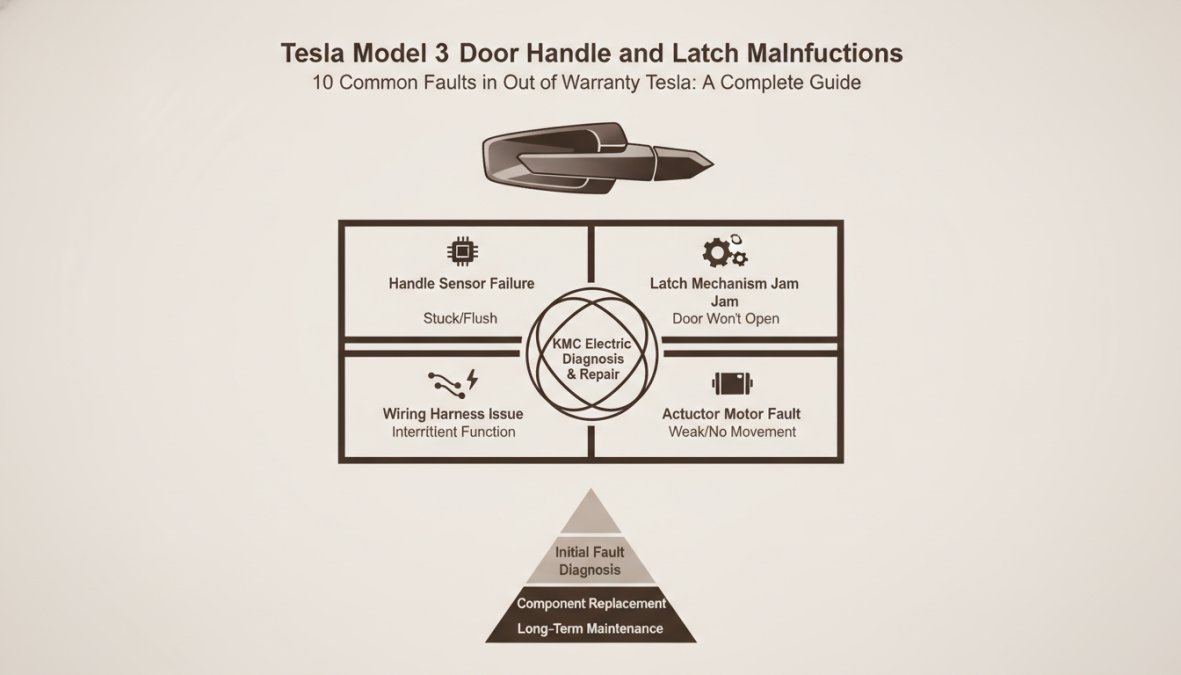
5. Door Handle and Latch Malfunctions
Tesla's motorised door handles are iconic but notoriously fragile. The self-presenting design relies on precise mechanical and electrical coordination. Once you pass 80,000 miles, handle failures become increasingly common.
The most frequent failure is the handle motor burning out or the mechanical linkage breaking. You'll notice the handle won't present, won't retract, or presents but won't unlatch the door. Early warning signs include hesitant presentation, grinding noises when the handle operates, or occasional failure to present.
Replacement typically costs £300-£800 per handle. DIY replacement is feasible if you're mechanically inclined; the handle assembly bolts to the door frame and removal takes 30-45 minutes per handle. However, reassembly requires careful alignment to ensure proper latching and presentation.
Close-up of a Tesla Model 3 door handle mid-presentation against a blurred garage background with natural daylight(/parts/tesla-misc-parts/model-s/door-handle-switch-fix)]
6. Brake System and Handbrake Motor Problems
Tesla's regenerative braking system is efficient and reduces wear on traditional friction brakes. However, the electronic handbrake motor is a common failure point after 100,000 miles.
Handbrake motor failure typically manifests as the parking brake warning light staying illuminated, difficulty engaging or disengaging the brake, or the motor making grinding noises. In some cases, the brake becomes stuck in the engaged or disengaged position. The underlying issue is motor bearing wear or electrical contact corrosion. Once the motor fails, replacement is the only option. Costs typically range from £600-£1,200, including labour and diagnostic verification.
Regular brake system inspections are important. We recommend brake health checks every 50,000 miles once your vehicle passes 80,000 miles. Early identification of motor wear can sometimes allow for preventative replacement before catastrophic failure.
7. Camera and Sensor Calibration Errors
Tesla's camera and sensor suite powers Autopilot, collision avoidance, and parking assistance. Calibration drift, where cameras and ultrasonic sensors gradually lose precise alignment, is increasingly common in vehicles over 100,000 miles.
Symptoms include Autopilot disengaging unexpectedly, collision warnings triggering incorrectly, or parking assistance providing inaccurate distance readings. Calibration drift typically occurs due to minor impacts, hitting a pothole, or aggressive driving over rough terrain. Recalibration costs typically range from £400-£800 and requires specialist diagnostic equipment.
Some issues resolve through a software reboot or recalibration cycle initiated through the vehicle's diagnostics menu. However, persistent calibration errors usually require professional intervention.
Watch OutIgnoring camera calibration errors can compromise Autopilot safety and collision avoidance functionality. Do not attempt to recalibrate sensors yourself; improper calibration can disable critical safety systems.
Preventative Maintenance Schedules for Out-of-Warranty Tesla Vehicles
Once your Tesla passes 80,000 miles, adopting a structured maintenance schedule dramatically reduces the likelihood of catastrophic failures.
Every 10,000 miles (or annually, whichever comes first):
12V battery load test
Brake fluid inspection
Tyre rotation and balance check
Every 50,000 miles:
Comprehensive suspension inspection
Heat pump coolant system check
Camera and sensor calibration verification
Cabin air filter replacement
Every 100,000 miles:
Full brake system inspection
Infotainment system diagnostics
Door handle mechanism lubrication and testing
Battery health assessment
This schedule reflects real-world patterns observed across thousands of out-of-warranty vehicles. Following it can extend component life by 20,000-40,000 miles and catch emerging issues before they require expensive emergency repairs.
Third-Party Warranty and Insurance Options
Tesla's Extended Service Agreement (ESA) is one option, but third-party warranty providers offer alternatives worth considering. According to Tesla's official vehicle protection plans, the ESA covers most Tesla-manufactured parts after the factory warranty expires.
However, third-party providers like Empire Auto Protect's Tesla coverage options offer broader repair networks and sometimes more competitive pricing. These plans typically cover mechanical breakdowns and electrical failures, though exclusions vary by provider.
The key consideration: third-party plans often accept repairs at independent specialists, whereas Tesla's ESA typically requires Tesla Service Center repairs. Independent specialists can often deliver the same quality repairs at 30-50% lower cost than main dealers. Before purchasing any extended warranty, review what's covered and excluded. Most plans exclude wear items and pre-existing conditions.
DIY vs. Professional Repair Feasibility
Some out-of-warranty repairs are genuinely DIY-friendly; others require professional equipment and expertise.
Feasible for confident DIYers:
12V battery replacement (if you follow proper grounding protocols)
Door handle replacement (if you're comfortable with mechanical assembly)
Camera calibration (requires Tesla diagnostic software)
Many repairs fail not because the physical work is difficult, but because improper diagnostics lead to replacing the wrong component. A £150 diagnostic fee often saves £1,000+ in unnecessary parts replacement.
Regional Repair Availability in Kettering and Northamptonshire
Finding qualified independent Tesla specialists in your area significantly affects repair costs and turnaround time. KMC Electric, based in Kettering, offers comprehensive Tesla diagnostics, repair, and maintenance services. With Level 4 Master Technician status in electric vehicles and over 25 years of automotive experience, KMC Electric provides cost-effective alternatives to main dealer repairs.
When choosing a specialist, verify their qualifications. Look for technicians with formal EV training, access to proper diagnostic equipment, and experience across multiple Tesla models.
Summary Table: 10 Common Faults in Out of Warranty Tesla
Fault
Typical Cost
Mileage Risk
Preventable
Specialist Needed
12V Battery
£200-£400
80,000+
Yes
Optional
Infotainment MCU
£1,500-£2,500
100,000+
Partially
Yes
Suspension Control Arms
£800-£1,600
100,000+
Partially
Yes
Heat Pump
£2,000-£3,500
80,000+
Yes
Yes
Door Handle
£300-£800
80,000+
Yes
Optional
Brake/Handbrake Motor
£600-£1,200
100,000+
Partially
Yes
Camera Calibration
£400-£800
60,000+
Partially
Yes
Understanding the 10 common faults in out of warranty Tesla vehicles puts you in control of your ownership experience. Rather than facing surprise repair bills, you can anticipate problems, budget accordingly, and pursue preventative maintenance that extends your vehicle's service life. For comprehensive diagnostics and cost-effective repairs tailored to your vehicle's specific condition, KMC Electric in Kettering offers Level 4 Master Technician expertise and practical real-world fixes that help you avoid the main dealer premium. Contact KMC Electric to discuss your vehicle's maintenance needs and identify potential faults before they become expensive emergencies.
Frequently Asked Questions
What are the most common faults in out of warranty Tesla vehicles?
The most frequent issues include 12V battery failures, infotainment screen malfunctions, suspension control arm wear, heat pump failures, door handle problems, brake system issues, and battery degradation. Model S and Model X tend to experience more suspension and door handle failures, whilst Model 3 and Model Y owners report more 12V battery and infotainment problems. A professional diagnostic assessment can identify which faults are affecting your specific vehicle.
How much does it typically cost to repair Tesla battery degradation out of warranty?
Battery replacement costs vary significantly by model and capacity. A full battery replacement can range from £5,000 to £15,000+ depending on the vehicle. However, many degradation issues can be addressed through diagnostics and software updates before replacement becomes necessary. Independent specialists like KMC Electric can verify battery health and recommend cost-effective solutions. Early detection through preventative diagnostics often prevents expensive repairs.
Can independent repair shops fix out of warranty Tesla issues, or must I use Tesla service centres?
Independent Tesla specialists can absolutely service out-of-warranty vehicles and often provide more cost-effective solutions than Tesla service centres. Qualified independent shops with Master Technician credentials can diagnose and repair most common faults. The key is finding a specialist with proper Tesla training, diagnostic equipment, and experience. Independent mechanics may offer more transparent pricing and flexible scheduling than main dealers.
Should I get a preventative diagnostic before my Tesla warranty expires?
Yes, scheduling a diagnostic inspection before warranty expiry is highly recommended. This identifies potential component failures that might still be covered, allowing you to address them under warranty rather than facing out-of-warranty costs later. A comprehensive diagnostic can reveal early signs of battery degradation, suspension wear, or electrical issues. Catching problems early often costs significantly less than emergency repairs after warranty expiration.
What's the difference between Tesla Extended Service Agreement and third-party warranty options?
Tesla's Extended Service Agreement covers Tesla-manufactured parts after the factory warranty ends, typically costing £50-£150 monthly. Third-party options like Empire Auto Protect offer broader repair network access and may be more affordable for specific models. However, third-party plans have exclusions and may not cover battery or drive unit issues. Independent specialists can help you understand which option best suits your vehicle's age, mileage, and fault history.