Why Electric Cars Need Servicing: Debunking the 'No Maintenance' Myth
The claim that electric cars need no servicing is a persistent myth. At KMC Electric, we've spent over 25 years in the automotive industry, with EV qualifications since 2016, helping Tesla and EV owners understand why electric cars require servicing. Many owners discover this the hard way when faults develop outside warranty.
Electric vehicles contain fewer moving parts than internal combustion engines, but they require servicing because of their high-voltage batteries, thermal management systems, sophisticated electronics, regenerative braking components, and software diagnostics. Ignoring these needs risks breakdowns and costly repairs that early detection could have prevented.
This guide covers everything you need to know about electric car servicing in the UK, from what gets checked during a service to protecting battery health and avoiding costly repairs after warranty expiry. Whether you're a Tesla owner in Kettering seeking independent specialist support or a used EV buyer assessing what to check before purchase, you'll find practical, transparent advice backed by real experience.
Key TakeawayElectric cars need servicing because their systems, battery, cooling, electronics, and regenerative braking, require specialist monitoring to extend vehicle longevity and catch faults before warranty expiry.
Key Components Checked During an Electric Car Service
A professional electric car service goes well beyond an oil change. The focus shifts from engine wear to battery health, thermal management, electrical systems, and software diagnostics.
High-Voltage Battery and Thermal Management System
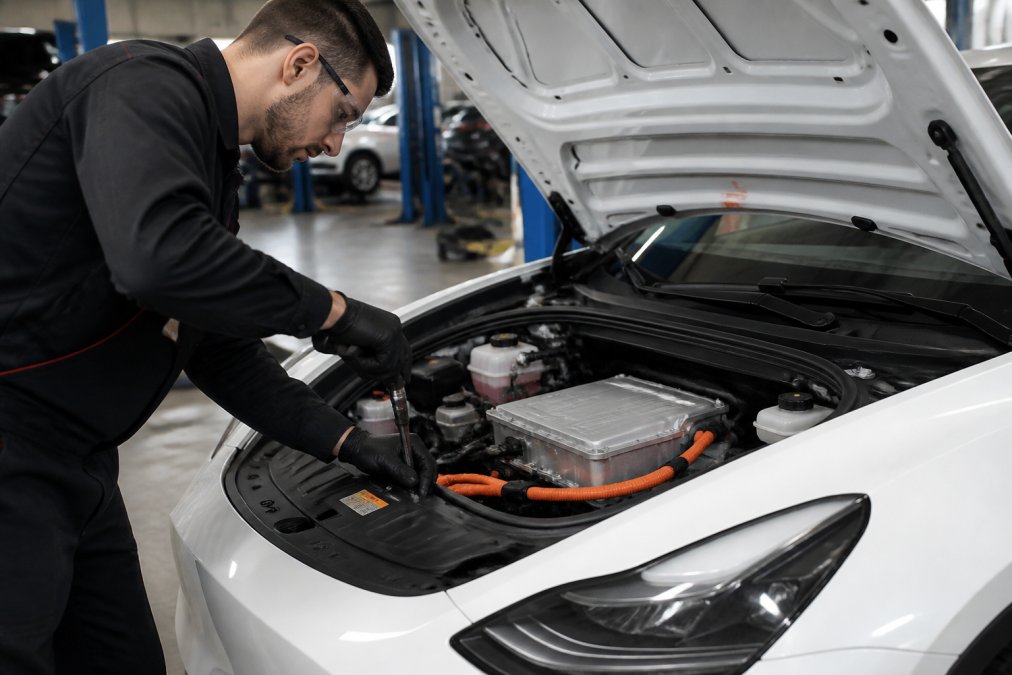
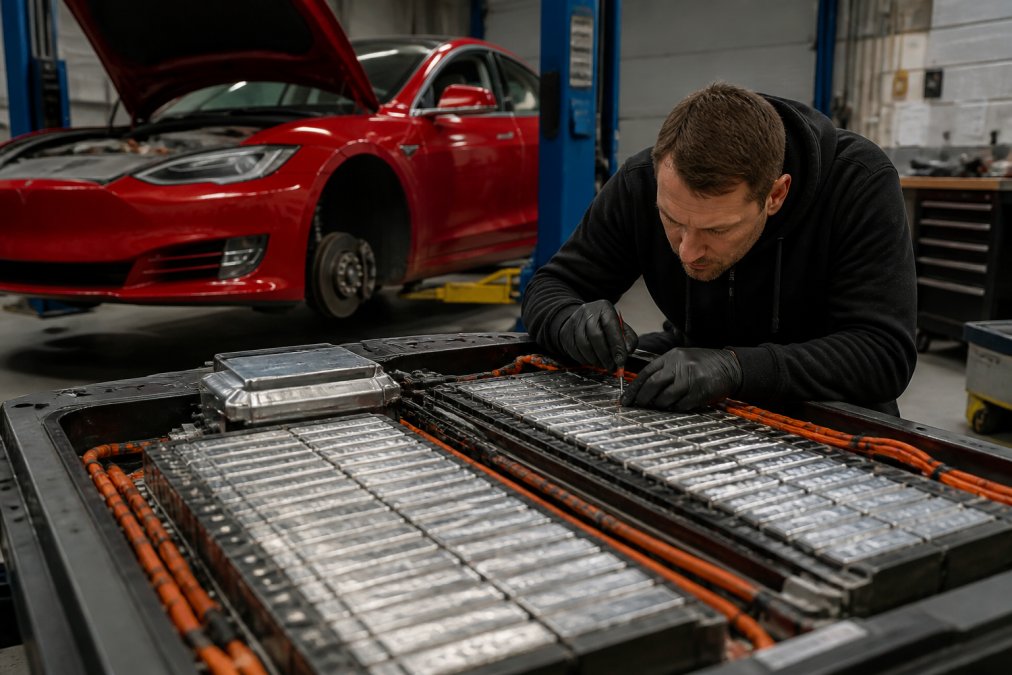
The high-voltage battery is the heart of any electric vehicle. During servicing, technicians examine battery state of health, monitor degradation patterns, and check the thermal management system that keeps it operating within safe temperature ranges. This system uses coolant to regulate battery temperature; excessive heat reduces performance, whilst cold temperatures drop charging efficiency.
A battery health report generated through software diagnostics reveals crucial data: current capacity relative to original capacity, cell balance, and charging pattern anomalies. For vehicles approaching or past manufacturer warranty, this diagnostic is essential. Early detection can sometimes prevent expensive interventions.
The thermal management system requires attention. Coolant levels need checking, and the system's ability to maintain optimal temperatures directly affects battery longevity. Neglecting this accelerates degradation and triggers safety protocols that limit performance.
Electric Motor and Powertrain Health
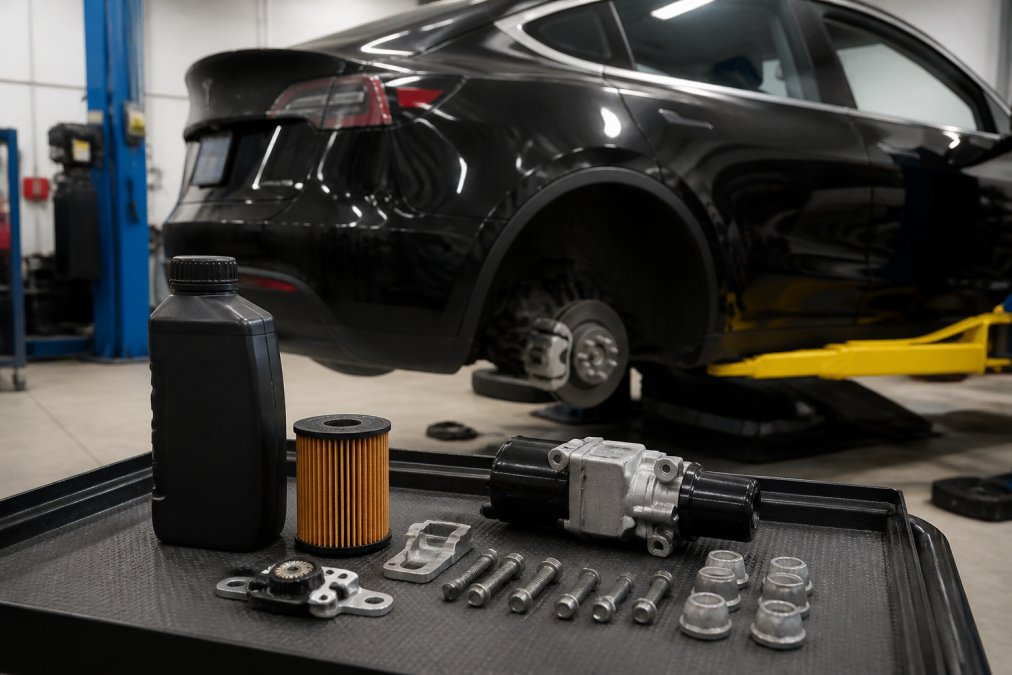
The electric motor is mechanically simpler than a petrol engine but electronically complex. Technicians run diagnostics on the motor controller, inverter, and drivetrain components to detect electrical faults or efficiency losses. The drivetrain oil also requires monitoring and occasional replacement. KMC Electric offers drivetrain oil for £16.99.
Software diagnostics reveal fault codes that might not yet be obvious to the driver. Early detection prevents small efficiency losses from becoming larger problems.
Brake System Maintenance in EVs
Because EVs use regenerative braking, where the motor slows the vehicle and recaptures energy, brake wear is significantly reduced. However, the braking system still requires servicing. Brake fluid needs periodic replacement as it absorbs moisture, and the hand brake motor (a common failure point on Teslas) needs inspection.
Brake pads wear much slower on EVs, but the hand brake system and brake fluid condition require attention. For Tesla Model S and Model X vehicles, the hand brake motor can fail, and early detection during servicing prevents being stranded. KMC Electric stocks replacement hand brake motors for Tesla Model S and Model X for £60.00 to support owners needing this repair outside the main dealer network. KMC Electric also offers hand brake motors for Tesla Model 3 and Model Y for £60.00.
Watch OutBrake fluid in electric vehicles absorbs moisture just like in petrol cars. Ignoring brake fluid condition can lead to brake system failure or corrosion. A simple fluid flush during servicing prevents expensive repairs.
Electric Car Battery Health Check UK: What You Need to Know
Battery health is the single biggest concern for EV owners, particularly those buying used or approaching warranty expiry. Understanding how to assess battery condition is crucial for long-term ownership decisions.
State of Health Monitoring and Degradation
Battery state of health (SoH) is expressed as a percentage of original capacity. A new battery is 100% SoH. After several years and thousands of charge cycles, degradation occurs, this is normal and expected. Most modern EVs degrade at roughly 2-3% per year under normal use, meaning a five-year-old vehicle might have 85-90% SoH.
Software diagnostics provide detailed SoH reports, showing not just the overall figure but cell-level data that reveals whether degradation is even across the pack or concentrated in certain areas. Uneven degradation can indicate thermal management issues or a manufacturing defect that might still be covered under warranty.
Most vehicles remain usable and reliable down to 70-75% SoH. Below that, range loss becomes noticeable and charging times increase. Knowing the figure before you buy a used vehicle or before warranty expires is essential.
Independent Battery Verification Before Buying
When purchasing a used electric vehicle, an independent battery health assessment is invaluable. Main dealers often won't provide detailed SoH data to private buyers, and sellers have little incentive to share unfavourable results.
A professional battery health check involves connecting diagnostic equipment to the vehicle's onboard systems and generating a comprehensive report. This report becomes your negotiating tool; if SoH is lower than expected for the mileage, you either negotiate the price down or walk away. For vehicles with 80,000+ miles, this assessment is particularly important because battery warranty coverage often begins to expire around this point.
KMC Electric provides independent battery verification for buyers and sellers across Northamptonshire and Leicestershire, offering transparent SoH reports that give you confidence in your purchase decision.
Electric Car Maintenance Checklist UK: Essential Service Items
A comprehensive electric car service covers far more than battery diagnostics. Here's what a professional service should include.
Service Item
Frequency
Why It Matters
Battery health diagnostic
Annually or before purchase
Detects degradation and faults early
Thermal management system check
Annually
Maintains optimal battery temperature
Brake fluid replacement
Every 2 years
Prevents moisture absorption and corrosion
Tyre rotation and pressure check
Every 6 months
EVs are heavier; tyres wear faster
Cabin air filter replacement
Annually or 15,000 miles
Maintains air quality and HVAC efficiency
Software diagnostics and updates
Annually
Catches fault codes and applies patches
Suspension and steering inspection
Annually
EVs handle differently due to weight distribution
Coolant levels (thermal system)
Annually
Ensures battery thermal management works
Charging port inspection
Annually
Prevents charging issues and safety hazards
Tyre Wear, Pressure and Rotation
Electric vehicles are heavier than equivalent petrol cars due to battery weight. This extra mass means tyres wear faster and generate more heat. Tyre pressure monitoring becomes critical; underinflated tyres increase rolling resistance, drain battery range, and accelerate wear.
Tyre rotation every 6 months (or 6,000 miles) is recommended for EVs. The front tyres typically wear faster because of regenerative braking concentration, making rotation essential to extend tyre life. Monthly pressure checks are important, as cold weather can drop pressure by 1-2 PSI, affecting range and handling.
Cabin Air Filter and Coolant Levels
The cabin air filter removes dust, pollen, and particulates from incoming air. On electric vehicles, this filter works harder because the HVAC system runs frequently to maintain cabin temperature. Annual replacement keeps air quality high and HVAC efficiency optimal.
Coolant levels in the thermal management system need checking during every service. Low coolant reduces the system's ability to regulate battery temperature, which accelerates degradation. Unlike petrol engines where coolant leaks are obvious, EV thermal system issues can develop silently.
Software Diagnostics and Charging Port Inspection
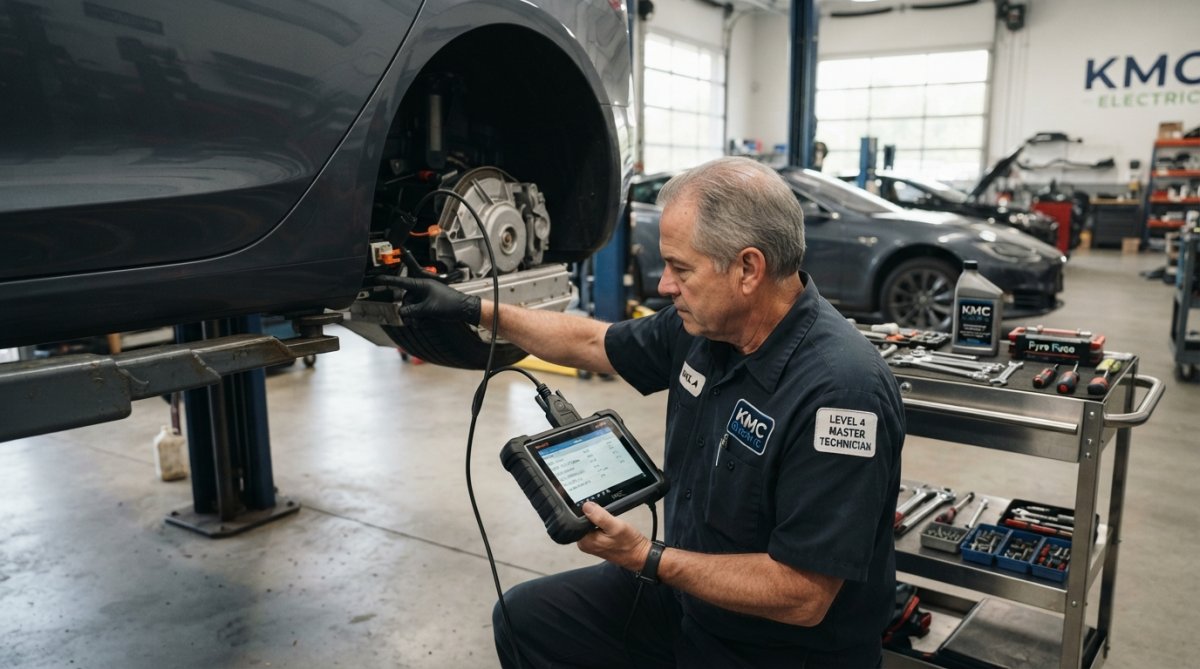
Modern electric vehicles run complex software across multiple systems. Over time, fault codes accumulate. A professional diagnostic scan reads these codes and determines which require immediate attention. Some faults can be resolved with software updates.
The charging port is another often-overlooked item. Corrosion, loose connections, or water ingress can prevent charging or create safety hazards. A visual inspection during servicing catches these issues before they strand you without charge.
Pro TipRequest a full software diagnostic report during every service. Many issues that affect efficiency or performance show up as fault codes before the driver notices anything wrong. Early detection often means a simple fix rather than a major repair.
Cost of Electric Car Servicing UK: Budget Planning and Warranty Compliance
Understanding servicing costs helps you budget for ownership and make informed decisions about warranty coverage and out-of-warranty repairs.
Long-Term Ownership Costs vs Petrol Cars
Electric car servicing is generally cheaper than petrol car servicing because there's no oil change, spark plugs, timing belts, or exhaust system maintenance. However, specialist diagnostics, particularly battery health checks, add cost that petrol owners don't face.
The real financial advantage of EV ownership emerges over the vehicle's lifetime. Fewer moving parts mean fewer things break. Brake wear is dramatically reduced. Where costs diverge is in specialist repairs: early fault detection through diagnostics prevents expensive problems from developing.
For owners in Kettering and surrounding Northamptonshire, independent specialists like KMC Electric offer cost-effective servicing that extends vehicle life and identifies faults before warranty expiry.
Warranty Implications and Out-of-Warranty Options
Most new EVs come with 8-year or 100,000-mile battery warranties, whichever comes first. However, warranty coverage has conditions. Skipping recommended servicing, ignoring fault codes, or using non-approved parts can void coverage. Keeping detailed service records from qualified technicians protects your warranty claim if a fault develops.
Once warranty expires, owners can return to the main dealer or use independent specialists. Independent specialists with EV qualifications offer transparent diagnostics and cost-effective fixes. An independent battery assessment often reveals that a problem can be managed rather than requiring an expensive replacement.
Electric Car MOT UK: Legal Requirements and Safety Inspections
Electric vehicles must pass the same MOT as petrol cars, with EV-specific checks added to the standard test.
The MOT includes a safety inspection of the charging system, battery condition (visual check for damage or corrosion), and electrical safety systems. Vehicles with visible battery damage, loose cables, or charging port issues will fail. Unlike a petrol car's emissions test, the EV MOT focuses on electrical safety and system integrity.
An MOT doesn't include a battery health diagnostic. A vehicle can pass its MOT with a degraded battery as long as there's no visible damage. This is why independent battery health checks are separate from (and more thorough than) MOT requirements.
For owners in Kettering planning long-term EV ownership, combining annual MOT with independent battery diagnostics gives a complete picture of vehicle health and safety.
Key TakeawayAn MOT confirms your EV is safe to drive but doesn't assess battery health or performance. A separate battery diagnostic is essential for understanding long-term viability, especially for used vehicle purchases or vehicles approaching warranty expiry.
DIY vs Professional Service: When to Call a Certified Technician
Some EV owners attempt basic maintenance themselves. Understanding what's safe to DIY and what requires professional expertise prevents costly mistakes.
Safe DIY tasks include tyre pressure checks, cabin air filter replacement, windscreen washer fluid top-ups, and visual inspections for damage.
Anything involving the high-voltage battery, thermal management system, brake fluid, or electrical diagnostics must be handled by qualified technicians. High-voltage systems carry serious shock hazards; residual charge can be lethal even with the vehicle off. Thermal system work requires proper equipment and knowledge of coolant types. Software diagnostics require specialised tools that only qualified technicians possess.
For owners seeking professional support without main dealer costs, independent specialists with Level 4 Master Technician status in electric vehicles (like KMC Electric's team, qualified since 2016) provide expert diagnostics and repairs at competitive rates.
Regional and Climate-Specific Maintenance for UK EV Owners
The UK climate presents specific challenges for electric vehicle maintenance. Cold winters, high humidity, and salt on winter roads all affect EV systems differently than petrol cars.
Cold weather reduces battery efficiency and range by 20-40% compared to summer driving. The thermal management system works harder to maintain optimal battery temperature, which accelerates coolant degradation. Winter servicing should include coolant condition checks and thermal system inspections more frequently than summer schedules.
Salt on winter roads accelerates corrosion of electrical connectors, charging ports, and battery casings. Owners in coastal regions or areas with heavy winter salt treatment should inspect the charging port and underbody more frequently. A simple rinse after winter driving removes salt deposits before they cause corrosion.
Humidity in the UK creates conditions for moisture ingress into electrical systems. Brake fluid absorbs moisture, and charging ports are vulnerable to water damage if seals degrade. Regular inspection and prompt repairs prevent water-related faults that are expensive to diagnose and fix.
For EV owners in Kettering and the East Midlands, seasonal servicing that accounts for these regional factors extends vehicle life significantly. KMC Electric's approach to maintenance incorporates UK climate realities, ensuring vehicles are prepared for winter conditions and protected from corrosion.
Electric cars need servicing because their systems, battery, thermal management, electronics, and regenerative braking, require specialist monitoring and care. The myth of "no maintenance" costs owners thousands in preventative repairs that could have been caught early. Whether you're managing warranty coverage, assessing a used purchase, or planning long-term ownership, professional diagnostics and transparent servicing are investments in your vehicle's longevity and your peace of mind. For Tesla owners and EV buyers in Northamptonshire and Leicestershire, KMC Electric provides independent battery health verification, specialist diagnostics, and cost-effective repairs that extend vehicle service life and identify potential faults before warranty expiry. Contact KMC Electric to schedule a battery health check or diagnostic service and understand exactly what your vehicle needs.
Frequently Asked Questions
Why do electric cars need servicing if they have fewer moving parts?
Although electric cars have fewer moving parts than internal combustion engine vehicles, they still require regular servicing to maintain safety, performance and warranty compliance. High-voltage battery systems, thermal management systems, brake fluid, coolant and software diagnostics all need professional monitoring. Preventative maintenance identifies potential faults before they become expensive repairs, extending vehicle longevity and protecting your investment.
What should be included in an electric car maintenance checklist UK?
A comprehensive electric car maintenance checklist UK should include: high-voltage battery health monitoring, thermal management system checks, brake pad and fluid inspection, tyre rotation and pressure verification, cabin air filter replacement, coolant levels, software diagnostics and charging port inspection. Regular servicing intervals vary by manufacturer, but most EVs benefit from annual checks to ensure optimal safety and performance.
How much does an electric car battery health check cost in the UK?
Battery health check costs vary depending on the provider and vehicle type. Independent specialists can offer competitive rates compared to main dealers, providing state-of-health reports that verify battery degradation and remaining capacity. For used EV buyers, an independent battery verification before purchase is invaluable, catching potential issues early prevents costly repairs later and ensures you understand the true condition of your vehicle.
Do electric cars need an MOT in the UK?
Yes, electric cars require an MOT in the UK just like petrol or diesel vehicles, once they reach three years old. The MOT tests safety-critical systems including brakes, steering, suspension and lights. For EVs, the test also includes checks on the charging port and high-voltage safety systems. Certified technicians must perform these inspections to ensure your vehicle meets UK safety standards.
Will servicing my electric car void the warranty?
No, servicing your electric car with a certified technician will not void the manufacturer's warranty. However, it's important to follow the manufacturer's recommended service intervals and use approved parts where specified. Independent specialists like KMC Electric can provide professional servicing and diagnostics that maintain warranty compliance whilst offering cost-effective alternatives to main dealer networks for out-of-warranty vehicles.