Choosing the right tesla drivetrain bolts for repairs is one of the most overlooked jobs in EV servicing. A single bolt holds the drive unit, the oil pump or the driveshaft in place. When it fails, the damage bill runs into thousands of pounds.
At KMC Electric, we have spent over 25 years in the motor trade and held Level 4 Master Technician status in electric vehicles since 2016. In that time, we have seen how often cheap or worn fasteners cause bigger faults.
Bolts are not glamorous. They are also not optional.
The wrong grade, the wrong length or a stretched thread can lead to vibration, oil leaks and, in bad cases, a drive unit that lets go on the road. This guide shows you how to pick durable fasteners, step by step.
Below, we cover the specs that matter, how to match a bolt to your car, and the mistakes that cost owners the most.
Key TakeawayFastener choice is a safety decision. A bolt that costs a few pounds protects a drive unit worth thousands, so never treat it as a generic part.
Tesla Drive Unit Fastener Specifications
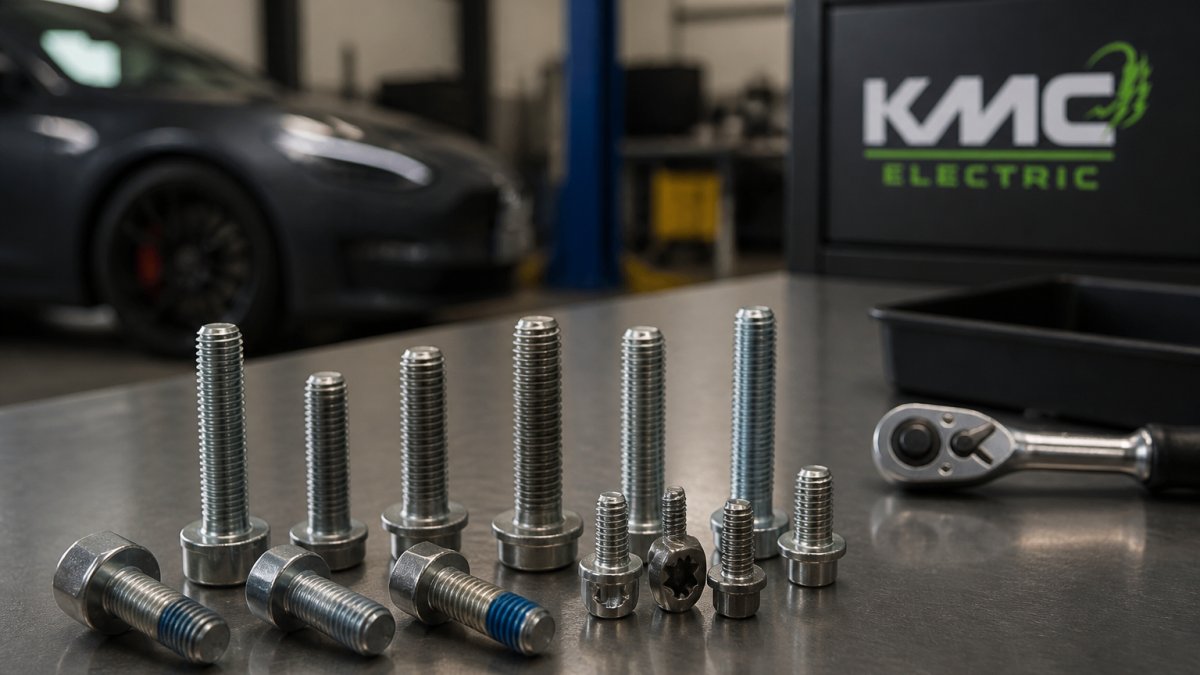
Tesla drive unit fasteners are graded, coated and sized for a specific job. They are not standard hardware-shop bolts.
Most drive unit and oil pump bolts are high-tensile steel, often grade 10.9 or above. They carry a protective coating to resist corrosion. Sizes are usually metric, and thread pitch matters as much as length.
A few things set them apart from ordinary bolts:
Higher tensile strength for torque load
Corrosion-resistant coating for road salt and rain
Correct thread pitch to match the housing
Specified length so the bolt seats without bottoming out
Get any of these wrong and the bolt may hold at first, then fail under heat and vibration.
That is why we always match the part number, not just the size. A bolt that "looks right" can be the wrong grade entirely.
Step 1: Identify the Correct Bolt for Your Tesla
The correct bolt is the one listed for your exact model, year and drivetrain variant. Tesla changed hardware across Model S, Model 3, Model X and Model Y, so you cannot assume a bolt fits because it came off a similar car.
Start with the vehicle identification number. It tells you the build date and variant, which narrows the correct part.
Then confirm the grade, size and coating before you buy. If a supplier cannot tell you the grade, walk away. That is a red flag, not a bargain.
For common jobs, we stock parts such as bolts for the oil pump for Model 3 and Model Y. These are listed at £6.00 and are the correct fitment for that job.
Buying the right bolt first time saves a strip-down later.
Using the Parts Catalogue and VIN
The parts catalogue and your VIN are the two tools that stop you ordering the wrong fastener.
The VIN confirms the exact build. The catalogue then lists the part number, grade and torque figure for that build. Cross-check both before ordering.
If you are unsure, ask a specialist to confirm the part against your VIN. It takes minutes and avoids a return, a delay and a stripped thread.
Tesla Drivetrain Bolt Torque Settings
Torque settings for Tesla drivetrain bolts are model and fastener specific, so always use the figure for your exact part. Guessing here is how threads strip and joints work loose.
Two rules matter more than any single number:
Always use a calibrated torque wrench
Always follow the correct tightening sequence
Torque is not "tight enough". It is a precise stretch that keeps the joint clamped under load. Too little and the bolt backs out. Too much and you stretch or snap it.
Some fasteners are torque-to-yield. That means they stretch once and must be replaced, not reused. If in doubt, fit new bolts.
Watch OutReusing a torque-to-yield bolt can cause it to fail under load. The consequence is a loose joint, oil loss and possible drive unit damage, so replace rather than reuse.
For the exact figure for your car, check the official workshop data or ask a specialist. We confirm torque values against Tesla documentation before every job at our Kettering workshop.
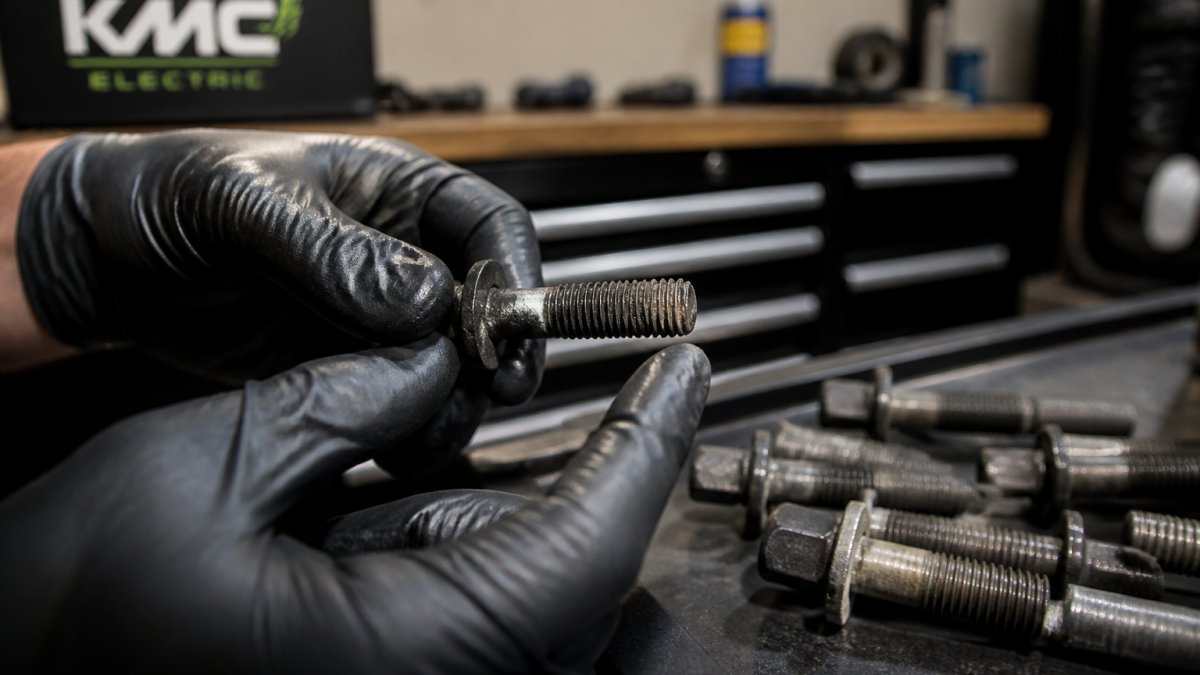
Inspect every bolt before you refit it, and replace anything that shows wear. A bolt is a stressed part, not a reusable clip.
Close-up photograph of a technician's hands holding a used Tesla drivetrain bolt under bright workshop light, pointing out worn threads and surface corrosion
Look for these signs:
Stretched or thinned shank
Rounded or damaged head
Corrosion or pitting on the threads
Flattened or crossed threads
Any sign of previous over-tightening
If a bolt fails any check, bin it. The cost of a new bolt is tiny next to the cost of a failed joint.
Use this quick checklist before refitting:
Grade and part number match the catalogue
Threads are clean and undamaged
No corrosion or pitting
Head is undamaged and takes full torque
Correct washer or seal fitted
Torque figure confirmed for this part
A two-minute check here prevents a two-week repair later.
Tesla Model S Drivetrain Bolt Replacement
Tesla Model S drivetrain bolt replacement follows the same logic as any other model, but the age of early cars makes condition checks essential. Many Model S vehicles are now well out of warranty, so worn fasteners are common.
On higher-mileage cars, heat cycles and road salt take their toll. Bolts that look fine can be corroded below the coating.
Our approach on a Model S is straightforward:
Confirm the exact part against the VIN
Inspect the surrounding housing for damage
Fit new bolts where the spec calls for it
Torque to the correct figure in the correct sequence
We have worked on Model S cars across Northamptonshire, including air suspension faults on a 2019 car that we diagnosed and fixed at short notice. The same care applies to drivetrain fasteners.
If your Model S is nearing the end of its warranty, a check now can catch a problem before it becomes your bill.
Tesla Driveshaft Bolt Replacement
Tesla driveshaft bolt replacement is a job where the fastener grade and torque matter most. The driveshaft spins at speed, so any weakness shows up fast as vibration.
Signs you may need this job:
Vibration that changes with speed
Clunking on acceleration or lift-off
Visible play at the joint
Oil or grease around the coupling
Never reuse a driveshaft bolt that shows wear. Never substitute a lower grade. The loads here are high and constant.
If you notice any of these signs, stop driving and get it checked. A failed driveshaft joint is a safety issue, not just a noise.
For drivers searching for a Tesla specialist near me in the Kettering area, we can inspect the joint and confirm the correct bolts before any work starts.
Common Mistakes to Avoid When Selecting Tesla Drivetrain Bolts
The most common mistakes with Tesla drivetrain bolts come down to guessing instead of checking. Each one is avoidable.
Watch for these:
Buying on size alone. Grade and coating matter as much as length and thread.
Reusing stretch bolts. Torque-to-yield bolts are single-use by design.
Skipping the torque wrench. "Feel" is not a torque figure.
Mixing grades. A weaker bolt in a high-load joint will fail first.
Ignoring corrosion. A rusty bolt is a weak bolt, even if it looks intact.
Sourcing unbranded hardware. If the grade is unknown, the risk is yours.
Pro TipOrder bolts by part number against your VIN, not by sight. It is the single fastest way to avoid a wrong-grade fastener and a repeat strip-down.
Get these right and the repair lasts. Get them wrong and you will be back under the car sooner than you would like.
Drivetrain bolts are small parts with a big job, and getting them wrong is a costly mistake. If you would rather leave it to a specialist, KMC Electric offers independent Tesla and EV diagnosis, repair and long-term maintenance from our base in Kettering, serving owners across Northamptonshire and Leicestershire. We bring over 25 years of automotive experience, Level 4 Master Technician status in EVs since 2016, and a practical, transparent approach that extends the life of your vehicle. Get started with KMC Electric and book a drivetrain inspection with fasteners matched correctly to your car.
Frequently Asked Questions
How do I choose the correct bolts for a Tesla drivetrain repair?
You need to match the bolt's grade, thread pitch, and length to Tesla's specifications for your exact model and drive unit. Always use the VIN to look up the correct part number in the official parts catalogue. For a reliable option, KMC Electric supplies specific bolts like the Bolts for Oil Pump, designed for Model 3 and Y. Never substitute with a generic bolt, as this can lead to failure.
Can Tesla drivetrain bolts be reused after removal?
In most cases, no. Tesla drivetrain bolts are often torque-to-yield, meaning they stretch permanently when tightened to spec. Reusing them can prevent them from holding the correct clamping force, leading to loosening and potential drivetrain damage. Always fit new bolts for critical components like the drive unit and driveshaft. A specialist can confirm if a specific bolt is reusable.
Can the wrong drivetrain bolt cause vibration or damage?
Yes, fitting an incorrect bolt can absolutely cause problems. A bolt with the wrong length, thread, or strength grade may not tighten properly, leading to a loose connection. This can result in noticeable vibration, unusual noises, and accelerated wear on the drivetrain components. In severe cases, it could cause a catastrophic failure. Always verify the part number before installation.
When should a Tesla drivetrain bolt be inspected by an EV specialist?
You should have drivetrain bolts inspected if you notice new vibrations, clunking noises during acceleration or deceleration, or if the vehicle has been involved in an impact. For out-of-warranty vehicles, it's wise to have a specialist like KMC Electric check critical fasteners during routine servicing. They can identify potential issues before they become major, expensive repairs.