Hybrid vs Electric Vehicle Maintenance Costs in Northampton: What You'll Actually Pay
The assumption that electric cars are always cheaper to run than hybrids is only half right when you look at hybrid vs electric vehicle maintenance costs Northampton drivers actually face. When drivers compare hybrid vs electric vehicle maintenance costs in Northampton, the gap is narrower than the headlines suggest, and it shifts depending on the car's age, mileage and how it is driven. At KMC Electric, we diagnose and repair both types daily, and the pattern we see is consistent: EVs win on routine servicing, hybrids win on nothing much, and both can deliver a nasty surprise if you skip checks.
EV maintenance is the routine servicing of an electric vehicle: brake fluid, coolant, tyres, cabin filters and software checks, with no engine oil, spark plugs or exhaust system to replace. Hybrid maintenance covers all of that plus the petrol side of the car.
Below, we break down what each type really costs to look after, which bills catch owners out, and where to find electric car servicing in Northampton that does not involve a main dealer.
Why the Cost Gap Isn't as Wide as You Think
The common claim is that EVs need almost no maintenance. That is true of the powertrain and misleading everywhere else.
Brakes: EVs use regenerative braking, so pads last longer. But calipers and discs still corrode, especially on low-mileage cars.
Tyres: Heavier batteries and instant torque wear tyres faster. Many EV owners replace tyres sooner than they expect.
Suspension: Air suspension and control arms on larger EVs are common failure points once out of warranty.
Cooling systems: Battery and motor coolant still needs checking and eventually replacing.
A hybrid adds an engine, so it carries oil, filters, coolant, spark plugs and an exhaust. That is more parts to service, but those parts are cheap and familiar. The EV's expensive parts are the ones nobody wants to talk about: the battery and the drive unit.
Key TakeawayThe real cost difference is not routine servicing. It is what happens when something major fails. Budget for the routine, but plan for the big-ticket item.
EV Maintenance Costs UK: What Electric Owners Really Spend
EV maintenance costs in the UK are dominated by wear items rather than engine work. There is no oil change, no timing belt and no exhaust to replace, which removes a chunk of the traditional service bill.
Routine Servicing and Wear Items
A typical EV service covers brake fluid, coolant level, cabin filter, tyre condition, suspension inspection and a diagnostic scan. Independent specialists usually charge less than franchised dealers for the same work, and the job takes less time because there is less to dismantle.
Wear items to budget for:
Tyres, often the single biggest ongoing cost
Brake discs and pads, particularly on cars that do few motorway miles
Wiper blades and cabin filters
12V auxiliary battery, which fails quietly and causes odd faults
The Costs That Catch People Out
The bills that surprise EV owners are rarely routine. They are things like a failed drive unit, a leaking air suspension strut, a stuck charge port, or a heater matrix that stops working in winter. None of these are engine problems, so the "EVs need no maintenance" line gives owners false confidence.
Regular diagnostic checks catch these early. That is the whole point of an independent inspection: finding a fault before it becomes a recovery truck and a large invoice.
Watch OutSkipping an annual check because the car "feels fine" is the most expensive mistake we see. Small faults on EVs rarely announce themselves until they fail completely.
Hybrid Car Maintenance Costs UK: More Parts, More to Look After
Hybrid car maintenance costs in the UK look closer to a conventional petrol car than an EV. You are servicing two systems, not one, and that means more items on the schedule.
Engine, Coolant and Exhaust Systems
A hybrid still needs engine oil and filters, spark plugs, an exhaust system, and two separate cooling circuits: one for the engine, one for the battery and inverter. Brakes last longer thanks to regenerative braking, but the engine side of the car ages exactly like a petrol car.
What this means in practice:
More service items, but each one is inexpensive
Engine faults are well understood by any competent garage
Battery packs in older hybrids degrade gradually and can be tested
Cooling system faults are the most common hybrid-specific issue
The trade-off is straightforward when weighing hybrid vs electric vehicle maintenance costs Northampton owners pay. Hybrids cost more to service than EVs, but their failures tend to be cheaper and more predictable. For a high-mileage driver, that predictability has real value.
Electric Car Battery Health Check: The Cost That Matters Most
An electric car battery health check is an independent assessment of a battery's state of health, measured against its original capacity. It tells you how much range the pack has actually lost, rather than what the dashboard estimates.
This is the single most valuable check you can buy, whether you own the car or are about to.
Why an Independent Assessment Beats Guesswork
A dashboard range figure is a guess based on recent driving. It is not a measurement of battery capacity. An independent assessment reads the actual data from the vehicle and reports the true state of health.
That matters in three situations:
Buying used. A car showing 80,000 miles might have a healthy pack or a tired one. You cannot tell by driving it around the block.
Approaching warranty expiry. If capacity has dropped more than the warranty threshold allows, you want evidence on record before cover ends.
Selling. A verified report answers buyer questions before they are asked.
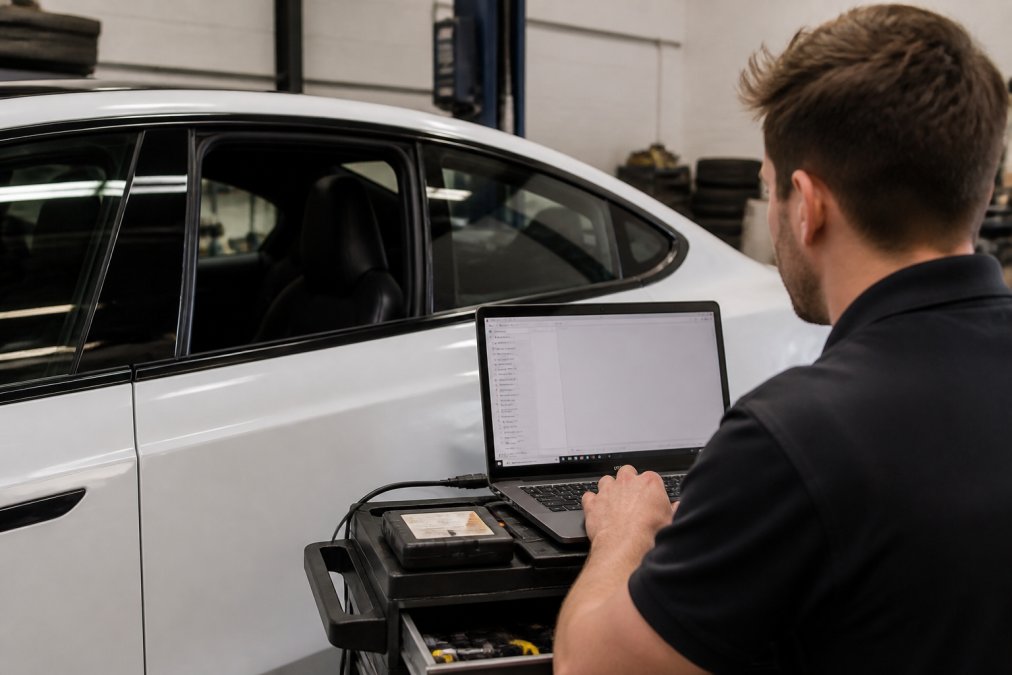
Technician using a diagnostic laptop to check an electric vehicle battery in a clean professional workshop.
At KMC Electric, independent battery health verification is one of our core services, and it is the check we would insist on before buying any used EV in the Midlands.
Pro TipAsk for the state of health as a percentage of original capacity, not a range estimate. A range figure changes with the weather; capacity does not.
What Affects Your Maintenance Bill: Age, Mileage and Driving Habits
No two cars cost the same to run. Four factors drive almost all of the variation.
Age. Rubber, coolant and suspension components degrade with time regardless of mileage. A five-year-old car with low mileage can need more suspension work than a three-year-old with high mileage.
Mileage. Tyres, brakes and suspension wear with distance. High-mileage EVs go through tyres noticeably faster than their petrol equivalents.
Driving habits. Frequent rapid acceleration, heavy loads and short stop-start journeys all increase wear. Short journeys are especially hard on hybrids, which never fully warm the engine.
Charging habits. Regular rapid charging at high states of charge puts more stress on a battery than slower charging. It will not destroy a pack, but it shows up in long-term health data.
If you want a realistic picture of your own car, get it inspected rather than estimated. GOV.UK guidance on vehicle tax and MOT requirements confirms that MOT testing applies to electric vehicles just as it does to petrol and hybrid cars, so annual checks are already part of ownership.
Electric Car Servicing in Northampton: Your Local Options
Electric car servicing in Northampton comes down to two choices: a franchised main dealer, or an independent specialist. Both are legitimate. They suit different owners.
Main dealers have manufacturer software and warranty authority. They are the right call for work covered under a new-car warranty.
Independent specialists suit owners whose cars are out of warranty, or who want a second opinion before committing to a large repair. The advantages are straightforward:
Lower labour rates than franchised dealers
Direct access to the technician doing the work
Practical fixes rather than whole-unit replacement
Independent battery reports for buying and selling
For drivers in Kettering and across Northamptonshire, KMC Electric offers exactly that: diagnosis, repair and long-term maintenance for Tesla and other electric and hybrid vehicles. We hold Level 4 Master Technician status in electric vehicles, have been EV-qualified since 2016, and bring over 25 years of automotive experience to every job. If you have been searching for EV servicing near me and want a straight answer rather than a sales pitch, that is what we do.
We also work with franchised dealership service departments that need technical support on complex fault codes they cannot crack in-house. You can see the parts we stock, including drive train oil and oil filters, on our parts pages.
Making the Right Call on Your Next Vehicle
Both types of car cost money to maintain. The difference is where the money goes. EVs spend less on servicing and more on tyres and the occasional large repair. Hybrids spend more on routine servicing and less on any single failure.
What matters more than the type is the inspection regime. A car that is checked properly every year will cost less to run than one that is only looked at when something breaks. That is true of every vehicle on the road, electric or otherwise.
If your car is approaching the end of its warranty, or you are buying used and want to know what you are actually getting, get it looked at properly. Office for Zero Emission Vehicles information on electric vehicle ownership sets out the wider picture on running an EV in the UK, but only a physical inspection tells you about your specific car.
Choosing between hybrid and electric is the easy part. Knowing what your car will actually cost you over the next three years is harder, and it starts with an honest assessment rather than a brochure. KMC Electric provides independent battery health verification, full diagnostic scans and out-of-warranty repairs for Tesla and other electric and hybrid vehicles across Kettering and Northamptonshire. Our Level 4 Master Technician qualification in EVs, EV credentials since 2016 and more than 25 years in the trade mean you get a practical answer, not a parts list.
Frequently Asked Questions
Are electric cars cheaper to maintain than hybrid cars in the UK?
Generally, yes. Electric vehicles have fewer moving parts, no engine oil, no exhaust system and fewer fluids to replace. Routine servicing is often simpler and less frequent. However, the gap narrows when you factor in battery health checks and potential out-of-warranty battery repairs, which can be significant. For most drivers covering average mileage, electric cars still cost less to maintain year on year, but the difference is not as dramatic as some headlines suggest.
What maintenance does a hybrid car need that an electric car does not?
Hybrids carry both a petrol or diesel engine and an electric motor, so they need everything an engine requires: oil and filter changes, coolant flushes, spark plugs, timing belts and exhaust inspections. They also have regenerative braking and battery systems that need checking. An electric car skips the engine-related items entirely. That said, hybrids often run their engines less, so some wear items last longer than they would in a conventional car.
Can an independent EV specialist maintain a hybrid or electric car?
Yes, provided the specialist holds the right qualifications. Look for technicians with recognised EV training, such as Level 4 Master Technician status, and experience across multiple models. An independent specialist can handle routine servicing, diagnostics, battery health checks and out-of-warranty repairs. This is often more cost-effective than main dealer rates, and you get the same technical expertise without the overheads.
How long do hybrid and electric car batteries last?
Most manufacturers warrant electric and hybrid batteries for eight years or 100,000 miles, whichever comes first. In practice, many batteries last well beyond that. Degradation is gradual rather than sudden, and a battery health check can tell you exactly how much capacity remains. If you are buying used, an independent assessment gives you a clear picture before you commit, rather than relying on the seller's word.