Finding a trustworthy EV mechanic in the Midlands requires specialist knowledge that most general technicians don't possess. Electric vehicles operate on fundamentally different principles than petrol or diesel cars, and the difference between a reliable EV mechanic and an ordinary one often determines whether you'll face unexpected repair bills or keep your vehicle running efficiently for years.
A reliable EV mechanic combines formal qualifications with hands-on experience specific to electric powertrains. They understand battery management systems, high-voltage electrical architecture, and the diagnostic protocols that modern EVs require. This is the ability to diagnose a fault code, trace it to its actual cause, and fix it without replacing expensive components unnecessarily.
Certifications and qualifications that matter
The most credible certification for EV specialists is Level 4 Master Technician status in electric vehicles. This qualification demonstrates that a technician has completed rigorous training in EV systems and passed comprehensive assessments, representing the highest level of technical competency recognised across the UK automotive industry.
Look for evidence that your mechanic has held EV qualifications for several years. A technician who obtained Level 4 Master Technician EV qualifications in 2016 has accumulated significant practical experience diagnosing and repairing electric vehicles, understanding battery technology evolution, software updates, and common failure patterns across multiple vehicle generations.
Beyond formal certifications, check whether the mechanic has manufacturer-specific training. Tesla training programmes teach technicians the specific architecture of Tesla vehicles across all models, meaning they understand how different models' battery management and thermal systems differ.
Experience with your vehicle type
Not all EV mechanics work on all electric vehicles equally well. Some specialise in Tesla models, others in Nissan Leaf or BMW i3 systems. A reliable mechanic will be transparent about which vehicles they have the most experience with.
Ask how many vehicles of your specific make and model they've serviced. A mechanic who has worked on similar vehicles will diagnose problems faster and more accurately than one tackling your model for the first time. They'll recognise patterns, understand which components tend to fail at certain mileage intervals, and know which fault codes are genuinely serious.
Experience also means understanding your vehicle's software. Tesla vehicles receive over-the-air updates that can change how systems behave. A mechanic who stays current with these updates knows whether a warning light indicates a real fault or a software anomaly that the next update will resolve.
Level 4 Master Technician EV Qualifications Explained
A Level 4 Master Technician EV qualification represents the pinnacle of technical competency in electric vehicle repair and diagnostics. This certification confirms that a technician has demonstrated expert-level knowledge across all aspects of EV systems, from battery chemistry to high-voltage electrical safety protocols.
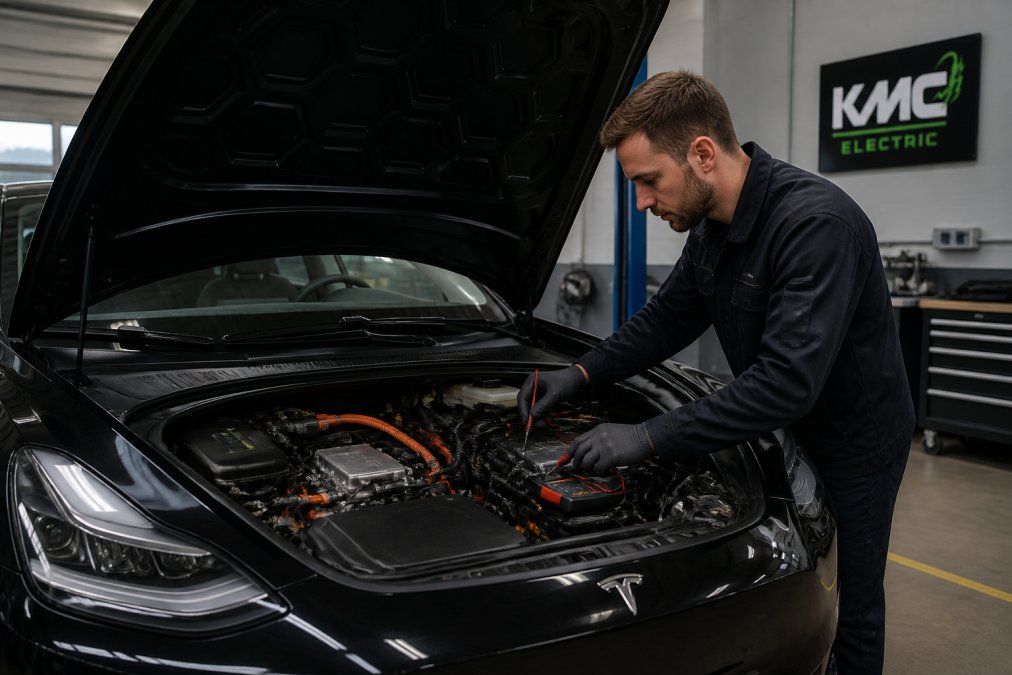
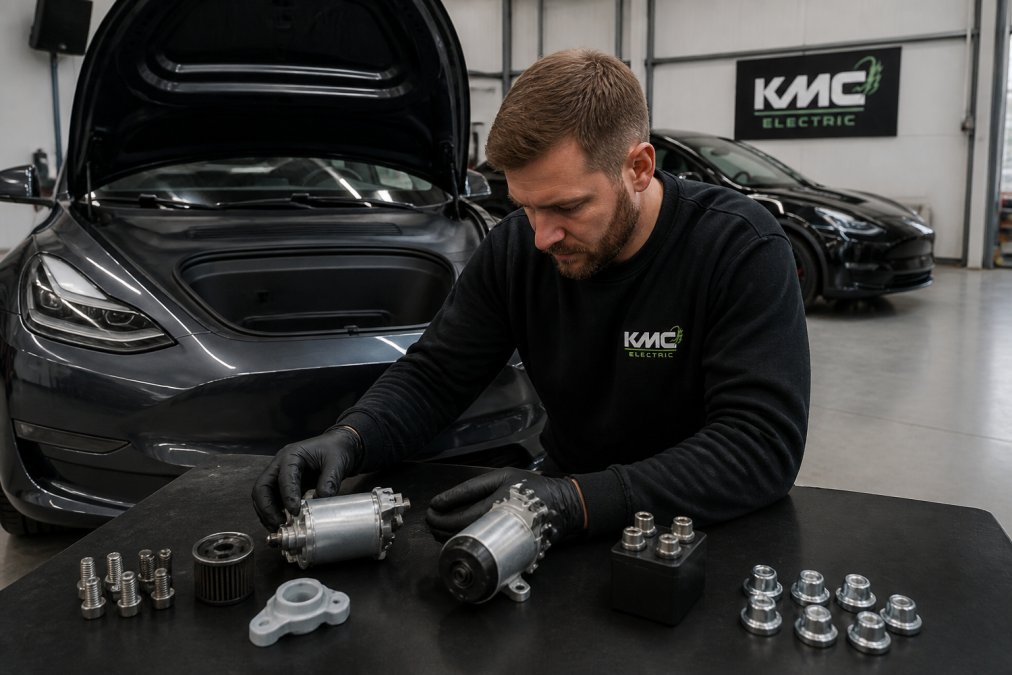
Professional illustration showing Professional EV, Tesla for reliable EV mechanics
Achieving Level 4 status requires extensive training beyond what general mechanics receive. The qualification covers battery management systems, how cells are monitored, balanced, and protected. It includes high-voltage electrical safety, which is critical because EV batteries operate at voltages that can cause serious injury if handled incorrectly. Technicians must understand thermal management systems, regenerative braking, onboard chargers, and the diagnostic software used to communicate with vehicle systems.
The assessment process is rigorous. Candidates must pass written examinations, complete practical assessments diagnosing and repairing actual vehicles, and demonstrate competency in using manufacturer diagnostic tools. This reflects genuine, tested expertise.
When you choose a mechanic with Level 4 Master Technician EV qualifications, you're selecting someone who understands not just how to fix your vehicle, but why components fail and how to prevent future problems. They can distinguish between a fault requiring component replacement and one that's a software configuration issue, directly affecting your repair costs and vehicle reliability.
Electric Vehicle Diagnostic Services in the Midlands
Electric vehicle diagnostic services go far deeper than traditional car diagnostics. An EV specialist uses sophisticated equipment to interrogate battery systems, thermal management, high-voltage distribution, and software configurations, revealing the actual health of your vehicle's systems rather than just the symptoms.
A fault code might indicate a battery management system error, but the underlying cause could be a loose connector, a software glitch, or genuine battery degradation. A reliable diagnostic service will identify which it is, saving you from unnecessary repairs.
What diagnostics reveal about your vehicle
Battery state-of-health is the most important diagnostic measure, showing how much capacity your battery retains compared to when it was new. A battery at 95% state-of-health performs nearly as well as a new vehicle, whilst one at 75% suggests significant degradation affecting range reliability and resale value (peer-reviewed research).
Thermal management diagnostics show whether your vehicle's cooling and heating systems function properly. EVs rely on precise temperature control to maintain battery performance and longevity. If thermal management is failing, your battery will degrade faster and your vehicle may reduce power output during hot weather.
High-voltage system diagnostics check the integrity of the electrical architecture, including main contactors, isolation monitoring systems, and charging components. A problem might cause reduced charging speed, unexpected power loss, or warning lights.
Software diagnostics reveal whether your vehicle's firmware is up to date and functioning correctly. Modern EVs receive regular software updates that improve efficiency and fix bugs (gov.uk). Diagnostics identify if a vehicle has missed updates or if software corruption is causing intermittent faults.
When to book a diagnostic check
Book a diagnostic check before purchasing a used electric vehicle. This reveals the true condition of the battery, identifies hidden faults, and gives you objective information to negotiate the price or walk away from a bad deal.
Book diagnostics if your vehicle is approaching the end of its manufacturer warranty. A diagnostic check before warranty expiry can identify whether you're eligible for warranty work and help you understand what maintenance you'll need to budget for afterwards.
Book diagnostics if you notice any warning lights, reduced range, slower charging, or unusual behaviour. Early diagnosis of EV faults often means simpler, cheaper fixes.
EV Battery Health Check in Kettering: Why It Matters
An EV battery health check is a comprehensive assessment of your battery's condition, capacity, and degradation trajectory. For anyone buying a used electric vehicle or managing an out-of-warranty vehicle, this check is essential information.
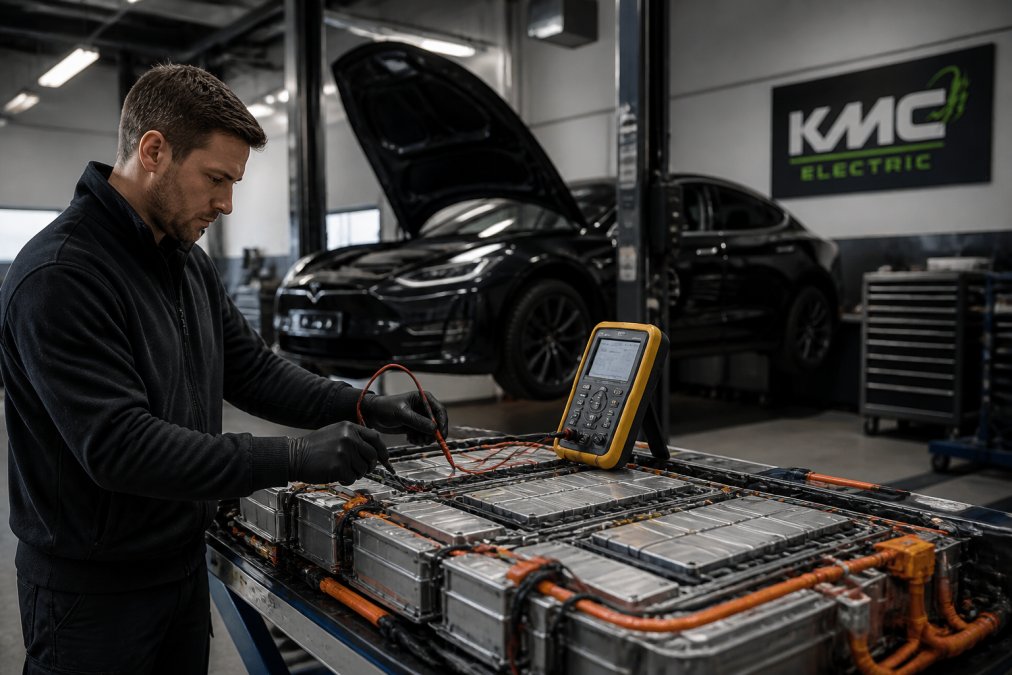
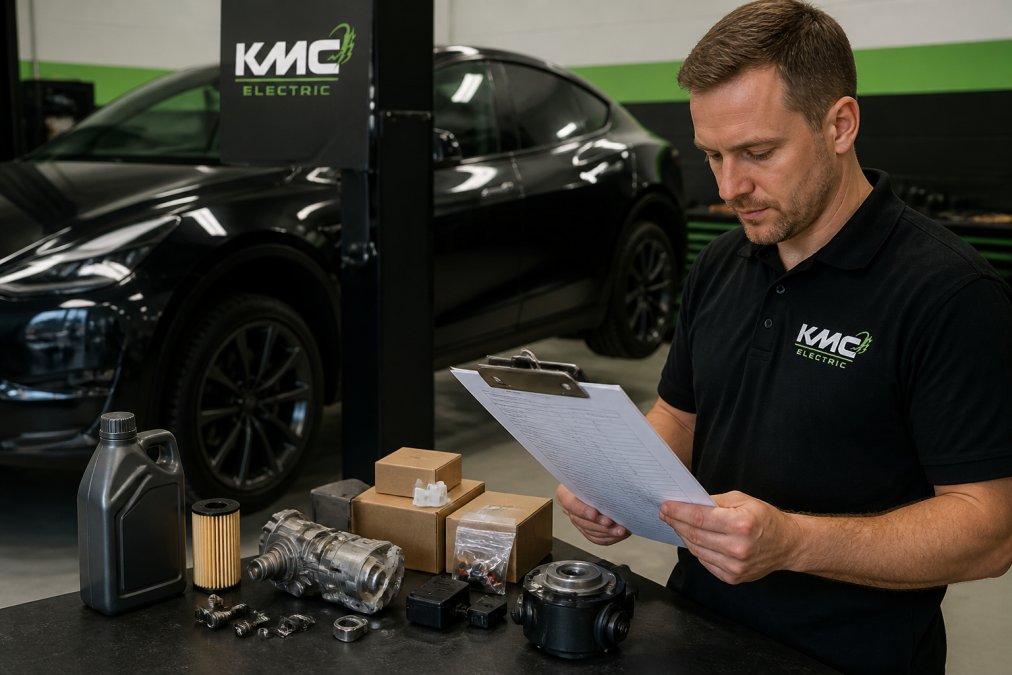
Professional illustration showing Technician for reliable EV mechanics
A battery health check measures state-of-health, state-of-charge, cell voltage balance, temperature performance, and charging efficiency. It identifies whether all battery cells are ageing evenly or whether some cells are degrading faster. It reveals whether the battery management system is functioning correctly or if calibration issues are affecting performance.
In Kettering and across the Midlands, battery health checks have become essential for used EV transactions. A vehicle with an 85% state-of-health battery is fundamentally different from one at 70% state-of-health, even if both are the same model and age. The difference affects range, charging speed, resale value, and long-term reliability.
Battery degradation and what it means for resale
Battery degradation is the inevitable consequence of EV ownership. Every charge cycle, fast-charge session, and extreme temperature exposure causes minor damage to battery cells (peer-reviewed research). Over time, this accumulates into measurable capacity loss.
Most modern EV batteries degrade slowly. Understanding your battery's degradation trajectory tells you how many years of useful life remain.
For resale value, battery health is often more important than mileage. Potential buyers will ask about battery condition first, and a battery health check report gives you objective evidence to support your asking price.
If you're buying a used vehicle, battery degradation directly affects your purchase decision. A vehicle with 80,000 miles and 85% battery health might be excellent value, whilst the same vehicle with 80% battery health suggests either aggressive use or a manufacturing defect.
Questions to Ask Before Choosing an EV Mechanic
Before committing to a mechanic, ask specific questions that reveal their actual expertise and approach to your vehicle.
Ask what Level 4 Master Technician EV qualifications they hold and when they obtained them. Ask how many vehicles of your specific make and model they've serviced. If you own a Tesla, ask about manufacturer training and experience with your specific model.
Ask what diagnostic equipment they use. Modern EV diagnostics require specialised tools and manufacturer-specific software. Ask how they approach fault diagnosis and whether they'll explain their diagnostic process and why they're recommending particular repairs.
Ask about their approach to out-of-warranty repairs. If your vehicle is no longer covered by manufacturer warranty, you need a mechanic who understands cost-effective solutions. Ask whether they work with independent dealerships and fleet operators, as mechanics servicing business customers typically maintain higher standards.
Independent Specialists vs Main Dealers
The choice between an independent EV specialist and a main dealer affects cost, convenience, and the type of service you receive.
Main dealers have manufacturer training and access to official parts. For vehicles still under warranty, main dealers are often the only option for warranty-covered work. However, they typically charge higher labour rates and may recommend more expensive repairs than necessary.
Independent EV specialists operate differently. They have Level 4 Master Technician qualifications and deep expertise in specific vehicle types, developed over years of specialisation. They focus on cost-effective repairs that extend vehicle life. An independent specialist can often diagnose and fix problems that main dealers struggle with, particularly for out-of-warranty vehicles or complex fault codes.
Independent specialists also offer flexibility with timing, transparent pricing before work begins, and often faster appointment availability. For routine maintenance and out-of-warranty repairs, they're typically significantly cheaper than main dealers.
For used vehicle buyers in the Midlands, an independent battery health check from a specialist provides objective, unbiased information. An independent specialist has no incentive to downplay battery degradation or hide faults, as their reputation depends on accurate diagnostics.
Finding a reliable EV mechanic in the Midlands requires looking beyond convenience and price. You need a mechanic with genuine Level 4 Master Technician EV qualifications, proven experience with your specific vehicle type, and a transparent approach to diagnosis and repair. For out-of-warranty vehicles, battery health checks, and complex fault diagnosis, independent specialists often deliver better value and more thorough service than main dealers. KMC Electric combines automotive experience with Level 4 Master Technician status in electric vehicles, offering specialist knowledge of Tesla systems and independent battery health verification for buyers and owners across the Midlands. Get in touch with KMC Electric for a professional diagnostic assessment and discover how specialist expertise protects your vehicle investment.
Frequently Asked Questions
Q: What qualifications should a reliable EV mechanic have?
A: Look for technicians with dedicated EV training and certifications. Level 4 Master Technician status in electric vehicles demonstrates advanced expertise. Experience specific to your vehicle type—whether Tesla, Nissan Leaf, or other models—matters significantly. Ask how long they've worked with EVs and whether they hold current qualifications from recognised automotive bodies. Independent specialists with over 25 years of general automotive experience often combine deep EV knowledge with practical problem-solving.
Q: How do I know if a garage is qualified to work on my Tesla?
A: Request evidence of EV-specific training and ask about their experience with your model year. Reliable mechanics will explain their diagnostic process and what equipment they use. Check whether they offer independent battery health checks and can interpret fault codes without relying on main dealer networks. A qualified specialist will answer technical questions confidently and outline exactly how they'll approach your vehicle's issues.
Q: Why would I choose an independent EV specialist over a main dealer?
A: Independent specialists often provide cost-effective alternatives to main dealer repairs, particularly for out-of-warranty vehicles. They can identify faults before they become expensive problems and offer transparent, real-world solutions tailored to your needs. Many independent technicians have deeper expertise in specific systems and can work across multiple EV brands, whereas main dealers focus on their own marques. For battery health verification before buying a used EV, independent assessment offers unbiased verification that protects your investment.
Q: What should I expect from an EV battery health check?
A: A thorough battery health assessment measures state-of-charge, degradation levels, and identifies any cell imbalances or thermal issues. This is essential when buying a used electric vehicle, as battery condition directly affects range, performance, and resale value. The check should include a detailed report explaining battery capacity relative to original specifications and any recommendations for maintenance or repair. Independent battery verification provides peace of mind that you're not inheriting hidden battery problems.