Why Service History Matters for Used Electric Vehicles
A comprehensive service history is your first line of defence when buying a used electric vehicle. It reveals whether the previous owner maintained the car properly, directly impacting battery health, warranty coverage, and long-term reliability.
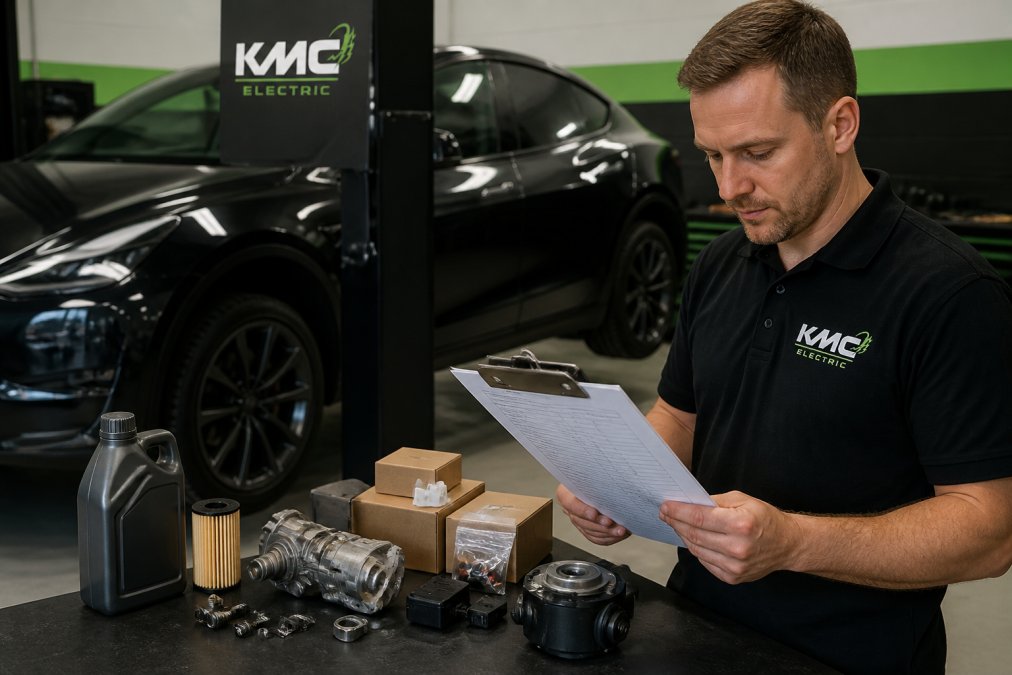
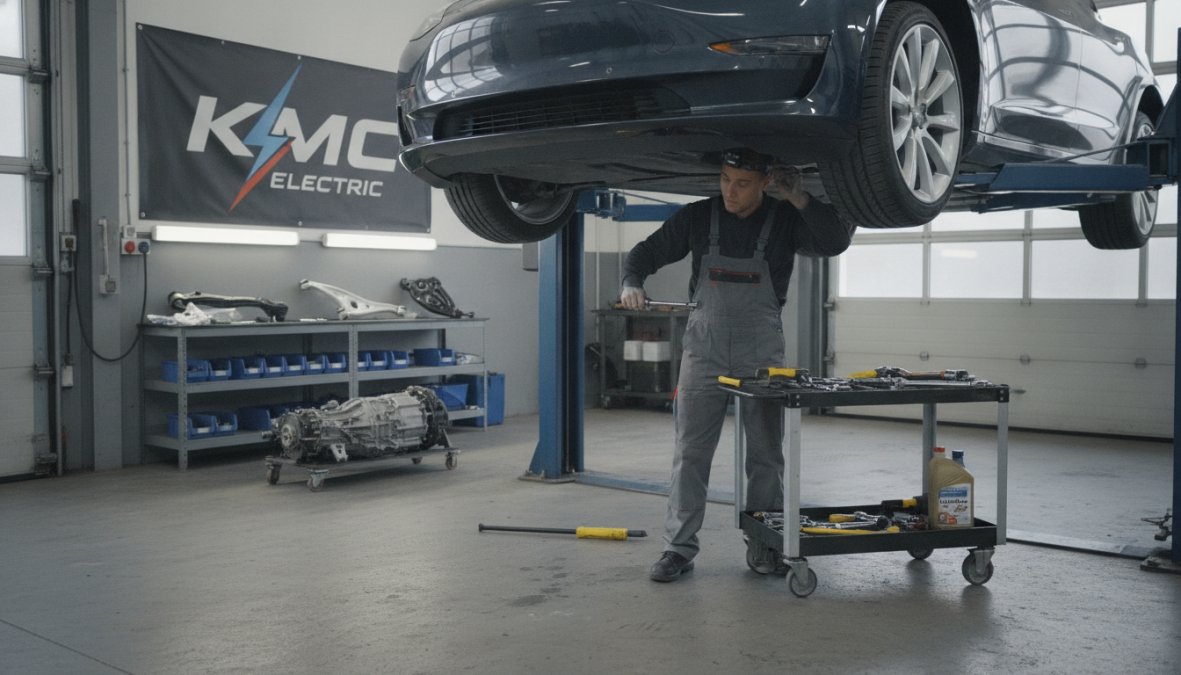
Professional illustration showing Professional for used EV service history
Electric vehicles degrade differently than petrol cars. Their batteries lose capacity over time, and maintenance patterns show whether that degradation was managed or ignored. Gaps in the service record, especially around battery diagnostics or software updates, are red flags. Out-of-warranty battery repairs can be substantial, making a full maintenance history essential before purchase.
Obtaining a DVLA Vehicle History Check
Start with the official DVLA (Driver and Vehicle Licensing Agency) vehicle history check for the legal ownership record and any recorded incidents.
Visit the DVLA vehicle check service and enter the vehicle registration number and V5C reference. The check returns registered keeper history, MOT test results, recorded accidents, outstanding finance, and theft records.
MOT history is particularly valuable for electric vehicles, flagging electrical system faults identified during testing. However, the DVLA check alone won't show full service history, it won't reveal whether the car received regular maintenance at a main dealer or was neglected. That's where digital service records come in.
Accessing Digital Service Records and Logbooks
Modern electric vehicles store service records digitally. Each manufacturer's system works differently, but accessing these portals reveals maintenance intervals, software updates, battery diagnostics, and thermal management events.
Manufacturer-Specific Digital Portals
Tesla vehicles are most transparent. Ask the seller to grant temporary access to their Tesla app. Navigate to the Service section to review service appointment dates, software update history with version numbers, battery diagnostics results including state of health readings, warranty claim history, and Supercharging patterns.
Hyundai and Kia EVs (Ioniq 5, EV6, Niro EV) use the Hyundai/Kia Connect app. Check the Maintenance tab for service completion dates, battery health status as a percentage, software version and last update date, and any diagnostic trouble codes.
Volkswagen ID. models store records in the Volkswagen We app, showing maintenance intervals completed, battery condition reports, software version and update logs, and warranty status.
BMW i-Series and Mini Electric vehicles use the BMW ConnectedDrive portal, providing complete service history with technician notes, battery health status, software version and security patch history, and warranty claim records.
What to Look for in Digital Records
Software update frequency. A vehicle receiving updates every 3-6 months suggests active manufacturer support for battery management. No updates in 18+ months indicates either disabled automatic updates or extended parking periods.
Battery diagnostics timestamps. Regular diagnostics (annually or every 20,000 miles) show proactive battery monitoring. Diagnostics appearing only once or twice suggest the owner didn't prioritise battery health. Frequent diagnostics in the final six months before sale may indicate emerging issues.
Thermal management service entries. Look for entries mentioning battery thermal management system, coolant flush, or battery temperature regulation. Missing thermal management maintenance is a red flag, as overheating accelerates battery degradation.
Charging pattern metadata. Some records (particularly Tesla) show charging frequency and fast-charging usage. Daily charging to 80% indicates conservative ownership; frequent fast-charging to 100% suggests accelerated degradation.
Interpreting Gaps and Inconsistencies
A 24+ month gap in the digital service record suggests the vehicle wasn't serviced or was serviced at an unapproved workshop. For vehicles under warranty, this may void battery coverage.
If the seller claims servicing but the digital record is incomplete, request the physical service logbook or invoices. Cross-reference dates and work performed. If records don't align, the maintenance history is unreliable.
When Digital Records Are Unavailable
Older EV models (pre-2018) may lack digital service records. Request the physical service logbook and check that service stamps appear at correct intervals (typically every 12 months or 16,000 km), the workshop name and date are legible, no pages are missing, and the final entry is recent. If the physical logbook is missing entirely, assume the worst and factor potential repair costs into your offer.
Performing a Used Electric Car Battery Health Check
The battery is the most expensive component of any electric vehicle. Understanding its current state of health is essential before purchase.
What Battery State of Health Tells You
Battery state of health (SoH) is a percentage measure of the battery's current capacity relative to its original capacity. A new EV battery is at 100% SoH. As the battery ages through charge and discharge cycles, capacity gradually decreases. A battery at 80% SoH has lost 20% of its original range.
Most manufacturers guarantee the battery will retain at least 70-80% of its original capacity within the warranty period (typically 8 years or 160,000 km). However, degradation rates vary. A battery reaching 85% SoH after three years of heavy use degrades faster than one reaching 85% SoH after five years of moderate use.
To check battery state of health, you need a diagnostic scan from an independent EV specialist. At KMC Electric in Kettering, we use specialist diagnostic equipment to pull real-time battery data from the vehicle's on-board diagnostics system, revealing current state of health percentage, actual usable capacity in kilowatt-hours, individual cell voltages and temperatures, charge cycle count, and maximum charging and discharging rates.
This data tells you far more than the odometer. A car with 40,000 miles might have been charged nightly (high cycle count, faster degradation) or weekly (low cycle count, slower degradation). The diagnostic scan shows which scenario applies.
Red Flags in Battery Degradation Records
Multiple entries for "battery diagnostics" or "battery fault codes" without clear resolution suggest underlying issues. Look for service records mentioning repeated battery thermal management warnings, software updates addressing battery performance, charging system faults, reduced range warnings, or battery balancing procedures.
A single instance might be normal; multiple instances suggest the battery was already degrading. Also check whether the vehicle was charged properly. Regular fast-charging to 100% or draining to near-zero accelerates battery degradation compared to conservative charging habits.
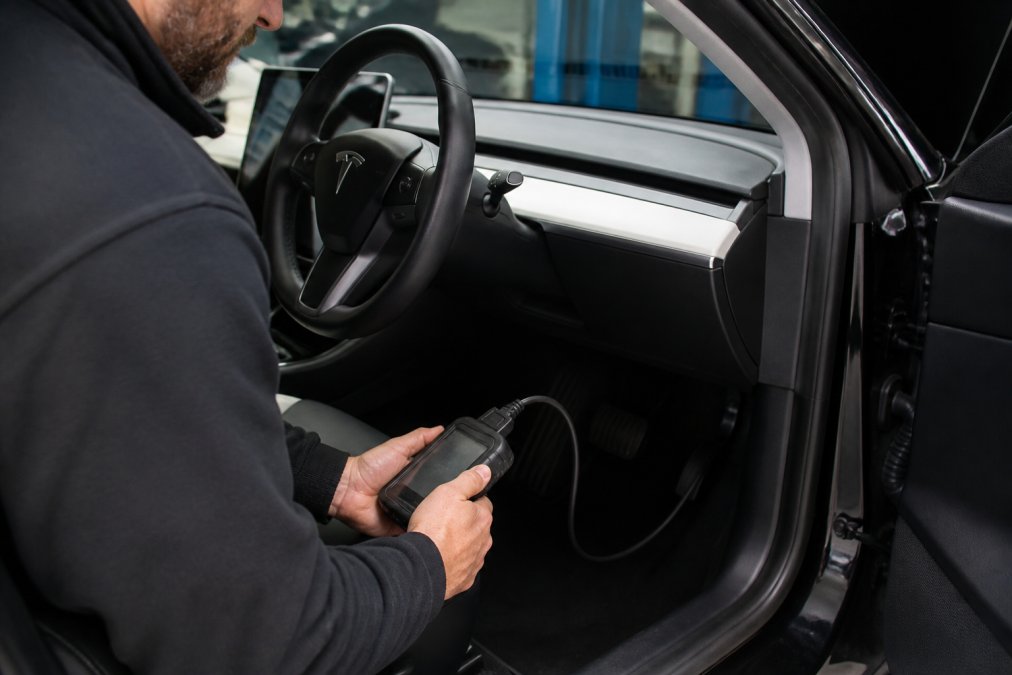
Professional technician holding a diagnostic scanner connected to an electric vehicle's on-board diagnostics port in a well-lit workshop, with the vehicle's dashboard visible in the background
Verifying Maintenance Against Electric Vehicle Maintenance Schedule
Electric vehicles have simpler maintenance schedules than petrol cars, no oil changes, spark plugs, or timing belts, but gaps in the record are telling. EV-specific components fail in unique ways, and the service history should reflect whether these systems were monitored.
Standard EV Maintenance Intervals
The typical used EV service history should show annual health checks (every 12 months or 16,000 km) including battery diagnostics, brake fluid replacement (every 2 years), coolant flush for the battery thermal management system (every 2-3 years), cabin air filter replacement (every 12-24 months), software updates (multiple times over the vehicle's life), and tyre rotation and wear checks (every 10,000-15,000 km).
If the service history is missing any of these, ask why. Brake fluid degradation is invisible but critical. Coolant degradation directly impacts battery longevity.
Check the service history for entries related to heat pump systems, power electronics and inverter, suspension bushings and dampers, thermal management system faults, and 12-volt auxiliary battery maintenance.
Heat pump systems. Modern EVs use heat pumps to warm the cabin and battery in cold weather. Service records should show heat pump diagnostics, replacement, refrigerant top-ups, or system flushing. A failed heat pump can significantly reduces winter range.
Power electronics and inverter. The inverter converts DC power from the battery to AC power for the motor. Service records mentioning inverter diagnostics, software updates, high-voltage system faults, or charging system faults suggest it was being monitored.
Suspension bushings and dampers. EV batteries add significant weight, accelerating bushing wear. Service records should show suspension inspections and bushing or damper service. Worn bushings cause clunking noises and poor handling.
Thermal management system faults. Service records should show coolant flushes, thermal management diagnostics, or entries mentioning battery temperature warnings. Multiple thermal management warnings suggest the cooling system is struggling and may indicate an impending coolant pump or valve failure.
12-volt auxiliary battery. Service records should show 12-volt battery replacement (typically every 3-5 years) and charging system diagnostics.
Red Flags in Service Records
Repeated entries for the same fault suggest the root cause wasn't properly diagnosed or fixed.
Missing thermal management maintenance on vehicles over 3 years old means the cooling system hasn't been proactively maintained. Budget for a coolant flush as part of post-purchase maintenance.
Software version significantly behind current may mean missing critical battery-management updates or security patches.
No suspension or bushing work on vehicles over 80,000 miles is unusual and suggests either light use or skipped maintenance.
Pre-Warranty Expiry Diagnostics
For vehicles nearing the end of their manufacturer warranty (typically 8 years or 160,000 km), check whether the owner booked a comprehensive battery health check before warranty coverage ended. Responsible owners often do this to identify issues while still covered. If the vehicle is now out of warranty with no pre-expiry diagnostic, you're buying without a recent baseline of the battery's condition.
Conducting a Physical Inspection and Diagnostic Scan
The service history is only part of the picture. You also need a physical inspection and full diagnostic scan to confirm that paperwork matches the vehicle's actual condition.
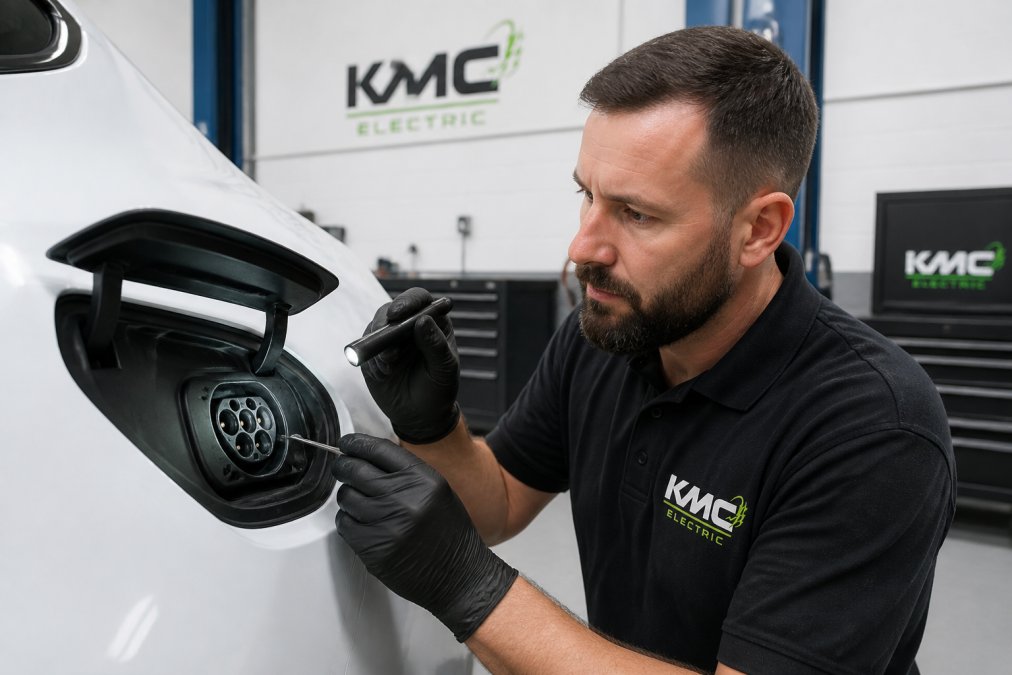
During physical inspection, check tyre condition and wear patterns, brake pad thickness, visible corrosion or damage to the charging port, battery pack underside for signs of impact or leakage, coolant condition, and all warning lights on the dashboard.
The diagnostic scan pulls fault codes from every system: the battery management system, thermal management system, powertrain control module, and infotainment system. Some fault codes are harmless; others indicate real problems. A fault code related to high-voltage isolation suggests potential safety issues. A code related to thermal management suggests the battery cooling system isn't working properly, accelerating degradation.
This is specialist work. A general mechanic's diagnostic scanner won't pull the detailed EV-specific data you need. At KMC Electric, our Level 4 Master Technician status in electric vehicles means we can interpret these codes and advise whether they represent minor issues or serious concerns.
Common Red Flags and Missing Records
Missing service records entirely. You have no way of knowing what maintenance was performed. For a vehicle over five years old with no service history, assume the worst.
Gaps longer than 24 months between services. This suggests the owner either neglected the vehicle or took it to an unapproved workshop that didn't report the work.
Multiple rapid ownership changes. Check the DVLA records for the ownership timeline. Frequent owner changes often correlate with mechanical problems.
Software version significantly behind current. Check what software version the vehicle is running. If it's more than 2-3 versions behind the current release, the vehicle may have been parked for extended periods or the owner deliberately avoided updates.
Battery state of health below 80% on a vehicle under five years old. This indicates high mileage, aggressive charging habits, or faster-than-expected degradation.
Warranty claims related to the battery or thermal management system. These suggest the battery was already showing signs of stress. Check whether the issue was fully resolved or whether the vehicle returned for the same fault multiple times.
Checking used EV service history properly requires access to official records, digital logs, and specialist diagnostic equipment. The service history tells you whether the previous owner treated the vehicle as a long-term asset or a short-term experiment. At KMC Electric in Kettering, we've reviewed hundreds of used EV service records and can spot the patterns that predict reliability. If you're buying a used electric vehicle in Northamptonshire or the surrounding area, a pre-purchase battery health check and service history review from an independent specialist will cost far less than discovering problems after you've already committed to the purchase.
Frequently Asked Questions
Can I view my car's service history online?
Some manufacturers, including Tesla, offer digital service records accessible through their owner portal or mobile app. You can log in with your vehicle credentials to see maintenance performed at authorised dealers. However, independent service work may not appear in these systems. For a complete picture, request the physical service logbook from the seller and cross-reference it with any digital records available. A diagnostic scan at an independent specialist can also reveal service intervals and maintenance history stored in the vehicle's on-board diagnostics system.
How do I check battery health when buying a used electric car?
Request a professional battery state of health assessment from an independent EV specialist before purchase. They will use diagnostic equipment to measure battery capacity, degradation rate, and charging cycles. Compare the current state of health against manufacturer guidelines for that model and age. Check the vehicle's charging history through the infotainment system if available. Review service records for any battery-related work or warranty claims. A battery health check typically reveals whether the battery is performing within expected parameters or showing signs of accelerated degradation that could indicate future costs.
What documents should I request when buying a used electric car?
Always request the full service logbook with service stamps from either main dealers or approved specialists. Ask for the vehicle identification number (VIN) to run a DVLA vehicle history check, which shows MOT history and any recorded issues. Request digital service records if the vehicle is from a manufacturer offering online access. Ask about warranty coverage remaining, particularly powertrain warranty on the battery. Request records of any software updates performed, as these affect vehicle performance and battery management. If available, ask for charging cable condition documentation and details of any battery diagnostic reports previously completed by a dealer or specialist.
What are the red flags in a used EV's service history?
Missing service stamps for extended periods suggest neglected maintenance, particularly brake fluid and coolant flushes which are critical on EVs. Gaps in the service logbook or inconsistent odometer readings indicate incomplete records. Repeated visits for the same fault, especially battery-related issues, suggest unresolved problems. A battery showing rapid degradation beyond manufacturer specifications is a major concern. Lack of software updates on newer vehicles indicates the car may have been serviced at non-approved workshops. If MOT history shows advisories related to braking or electrical systems, investigate further. Any evidence of water damage or charging infrastructure problems should trigger a full diagnostic scan before purchase.