Why Tesla Drive Unit Fluid Flush Is Necessary: The Short Answer
Tesla's official position is that the drive unit fluid is a lifetime fill, yet independent specialists routinely find degraded oil in high-mileage cars. The reason why tesla drive unit fluid flush is necessary comes down to physics: the fluid cools and lubricates the gears, bearings and motor internals, and it breaks down with heat cycles and mileage regardless of what the service schedule says. At KMC Electric in Kettering, we see this regularly on out-of-warranty Model S and Model 3 units across Northamptonshire.
Most owners only think about the drive unit when a warning appears. By then, the damage is often done.
Watch OutTreating the drive unit fluid as a permanent fill is the single most expensive assumption a Tesla owner can make. Once the oil loses its lubricating properties, bearing and gear wear accelerates, and a replacement drive unit costs many times more than a scheduled flush.
What the Drive Unit Fluid Actually Does
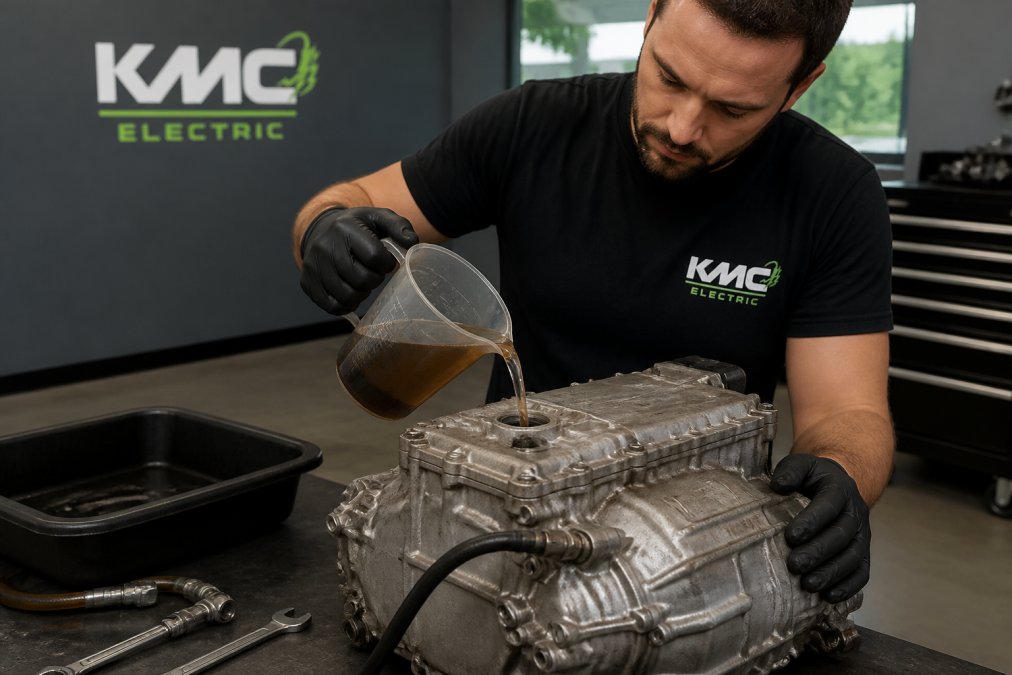
Drive unit fluid is the oil that lubricates and cools the gears, bearings and rotor assembly inside the motor and reduction gear housing. It performs three jobs simultaneously: it reduces friction between metal surfaces, it carries heat away from the rotor and bearings, and it protects internal components from corrosion.
Unlike engine oil, this fluid is not exposed to combustion, so it degrades more slowly. That does not mean it lasts forever.
Heat cycling is the main enemy. Every acceleration and regen event raises the temperature inside the housing, and over tens of thousands of miles the oil's additive package depletes. The fluid darkens, its viscosity changes, and fine metallic particles from normal gear wear accumulate in suspension. Those particles then act as an abrasive.
A common mistake is assuming that because the car is electric, there is nothing to service. The drive unit is a mechanical assembly with gears and bearings, and it needs clean oil the same way any gearbox does.
Tesla Model S Drive Unit Maintenance Schedule Explained
Tesla does not publish a fixed interval for drive unit fluid replacement on most Model S variants, describing it as a lifetime fill. In practice, independent specialists tend to recommend inspection and replacement somewhere in the region of 60,000 to 100,000 miles, depending on how the car is driven.
The Tesla Model S drive unit maintenance schedule matters most for cars that tow, run in stop-start traffic, or see frequent high-performance use. These conditions push the fluid harder than steady motorway cruising.
A practical way to think about it:
Driving pattern
Fluid stress level
Suggested action
Steady motorway miles
Lower
Inspect at higher mileage
Stop-start urban driving
Higher
Inspect earlier, replace if degraded
Towing or track use
Highest
Inspect regularly, replace sooner
If you are unsure where your car sits, an inspection is cheap compared with a failed unit.
Signs of Tesla Drive Unit Failure You Should Not Ignore
The early signs of Tesla drive unit failure are usually subtle and easy to dismiss. A faint whine that rises with speed, a vibration under acceleration, or a light oil weep around the housing are all worth investigating immediately.
Later symptoms are harder to miss: a clunk when you select drive or reverse, metal shavings on a magnetic drain plug, or a warning on the touchscreen. Any of these point to internal wear that a fluid change may still be able to slow, but not reverse.
The thing nobody tells you about drive unit faults is how quickly they escalate. A bearing that starts to rumble can destroy the housing within a few thousand miles.
If you notice a new noise, get it looked at before it becomes a replacement. A diagnostic inspection is a fraction of the cost of a new unit.
Tesla Transmission Fluid Replacement Cost UK: What to Expect
Tesla transmission fluid replacement cost UK varies depending on the model, the fluid required and whether the work is done by a main dealer or an independent specialist. Independent specialists are generally the more cost-effective route for out-of-warranty cars.
At KMC Electric, the parts themselves are modest. Our Tesla drive train oil is £16.99, the oil filter is £15.00, and the bolts for the oil pump are £6.00. The bulk of any bill is labour and the diagnostic time needed to confirm the fluid is actually the problem.
That is the honest answer to "how much does it cost": the parts are cheap, the diagnosis is where the value sits. A specialist who finds the real fault saves you money by not replacing parts that are fine.
Pro TipAsk for the drained fluid to be shown to you. Colour, smell and any metallic shimmer tell you far more about the health of the drive unit than any dashboard warning ever will.
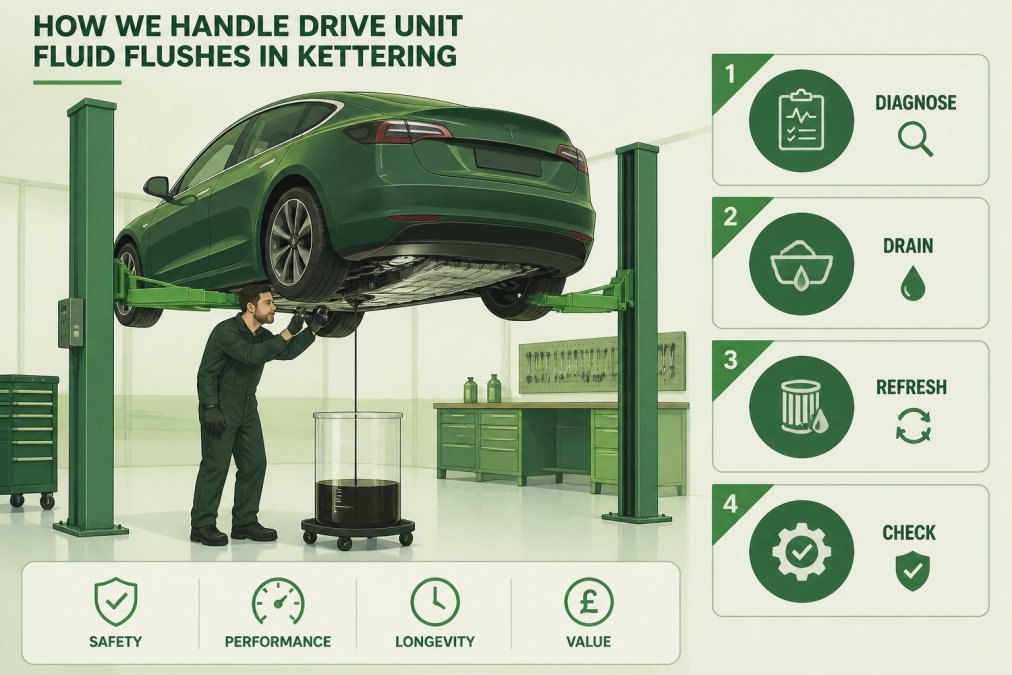
How KMC Electric Handles Drive Unit Fluid Flushes in Kettering
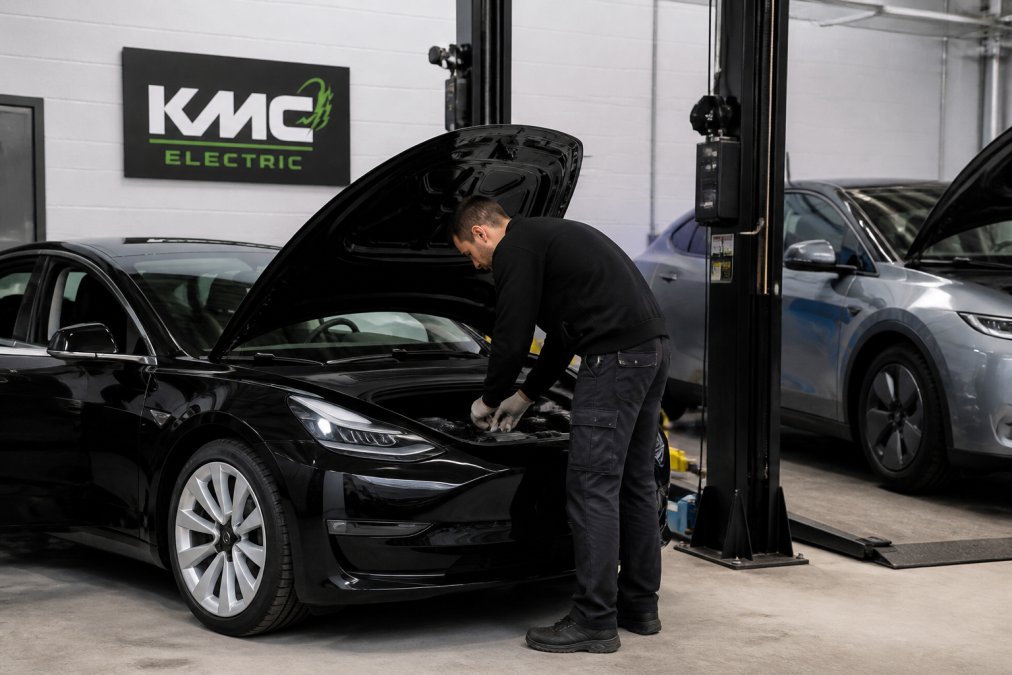
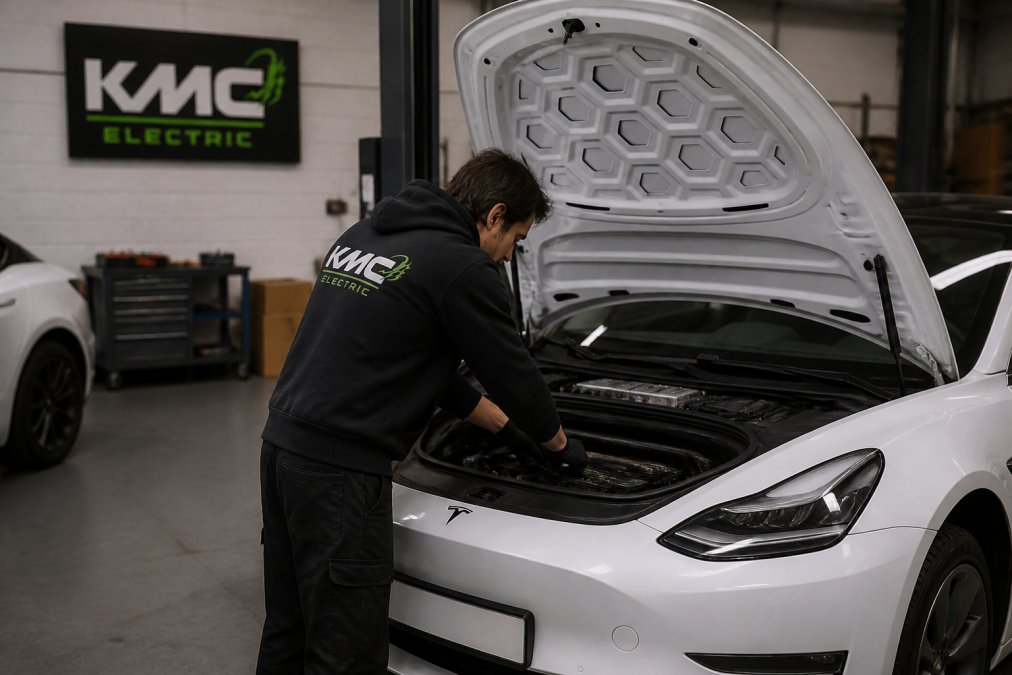
KMC Electric is an independent Tesla and EV specialist based in Kettering, and drive unit fluid work is a routine part of what we do. We start with a diagnostic inspection, not a parts swap.
A clean, well-lit independent workshop in Kettering with a Tesla Model 3 raised on a ramp, a technician in dark overalls inspecting the underside of the drive unit, with drained oil visible in a clear container beside the vehicle
Our process is straightforward. We inspect the unit, check for leaks and noise, sample the fluid, and only recommend a flush if the evidence supports it. With over 25 years of automotive experience and Level 4 Master Technician status in electric vehicles since 2016, we have seen enough drive units to know the difference between normal wear and a problem worth acting on.
We also carry out independent battery health verification, which matters if you are buying or selling a used EV and want to know what you are really getting. For owners near me in the Kettering and wider Northamptonshire area, that means one specialist who can look at the whole car, not just the fault code.
Why Waiting Is the Expensive Option
Deferring a fluid flush does not save money. It moves the cost from a service item to a repair item, and the difference is substantial.
The logic is simple. Clean fluid keeps bearings and gears separated by a thin film of oil. Contaminated fluid lets metal touch metal, and once that starts, the wear is permanent. You cannot flush your way out of a scored bearing.
Catching it early is the whole game. A flush at the right time extends the service life of the drive unit and keeps the car on the road. Ignoring it turns a maintenance task into a replacement.
That is why we push inspection over guesswork. It costs less to look than to assume.
Drive unit wear does not announce itself until it is advanced, and by then your options narrow quickly. If your Tesla is out of warranty or approaching the end of it, an independent inspection from KMC Electric can identify fluid degradation and early faults before they become a major repair. We offer specialist Tesla diagnosis, drive unit fluid flushes, and independent battery health verification from our Kettering workshop, serving owners across Northamptonshire and Leicestershire. Get started with KMC Electric and extend the service life of your electric vehicle.
Frequently Asked Questions
Does a Tesla Model S require a drive unit fluid change?
Yes. Tesla does not list drive unit fluid as a lifetime fill for the Model S, and the fluid degrades with heat cycles and mileage just like any other lubricant. Many owners are told the fluid never needs changing, but that advice applies to the sales pitch, not the engineering. A drive unit fluid flush at sensible intervals protects the gears, bearings and seals inside the unit, and it is far cheaper than replacing a failed drive unit out of warranty.
What are the signs that my Tesla drive unit fluid needs replacing?
Common warning signs include a whine or hum that changes with road speed, a metallic rattle on light throttle, vibration through the floorpan, or a burning smell after a long drive. Dark, gritty or metallic fluid found during an inspection confirms the problem. Early symptoms are easy to miss because the cabin is quiet, so a specialist inspection is the reliable way to catch wear before it becomes a repair bill.
Is a drive unit fluid flush covered under Tesla warranty in the UK?
Coverage depends on your vehicle's age, mileage and the exact terms of your Tesla warranty, and on whether the fluid condition is linked to a manufacturing defect rather than normal wear. Fluid changes are usually classed as maintenance, not a warranty repair. If your car is still under warranty, an independent inspection can document the fault and help you decide whether to claim through Tesla or handle it yourself.
Can KMC Electric perform a drive unit fluid flush in Kettering?
Yes. KMC Electric is an independent Tesla and EV specialist based in Kettering, covering Northamptonshire, Leicestershire and the wider Midlands. The workshop carries drive train oil at £16.99, an oil filter at £15.00 and oil pump bolts at £6.00, and uses Level 4 Master Technician experience to assess the drive unit before any work begins. Submit your vehicle details to book an inspection.