Why Electric Vehicle Service Life Matters for UK Inspections
A well-maintained electric vehicle passes its MOT more easily, holds its value better, and avoids the kind of repair bill that catches owners off guard. To extend the service life of electric vehicles for vehicle inspection services, the work starts long before the test date. This guide from KMC Electric covers the checks, schedules and habits that keep a Tesla or any EV in test-ready condition, based on over 25 years of automotive experience and Level 4 Master Technician status in electric vehicles since 2016.
The MOT test is a legal requirement for most vehicles in Great Britain once they reach three years old, administered under rules set by the Driver and Vehicle Standards Agency (DVSA). An electric vehicle still faces checks on brakes, suspension, steering, lights and tyres, even though it has no exhaust emissions to test. That matters because EV owners often assume a quiet, smooth drivetrain means there is nothing to inspect. In practice, the parts that fail an MOT on an EV are the same mechanical components that fail on any car, plus a few electric-specific items that need specialist attention.
Below, we break down what actually shortens an EV's service life, how to check battery health independently, and how to prepare for inspection day in Kettering, Northamptonshire and across the Midlands.
EV Battery Health Check: The Foundation of Longevity
Battery state-of-health is the single biggest factor in how long an electric vehicle stays economical to run. An EV battery health check is a diagnostic assessment of a battery's capacity, cell balance and degradation rate, measured against its original specification. It tells you how much usable range remains and whether any cells are failing.
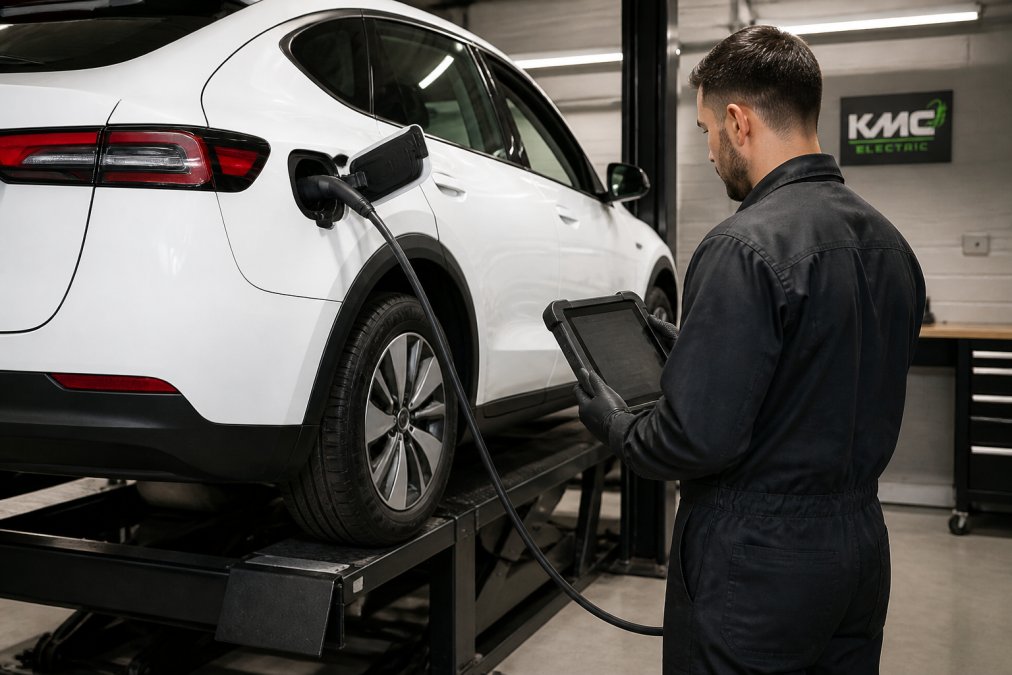
Mechanic using a diagnostic tablet for an electric vehicle service on a car raised in a modern workshop
What an Independent Battery Health Check Involves
A proper check goes beyond reading a dashboard percentage. It typically covers state of health against original capacity, cell voltage balance across the pack, charge and discharge behaviour under load, and any stored fault codes relating to the battery management system. A common mistake is treating a full charge range estimate as proof of battery condition. That figure is calculated by software and can be optimistic.
For buyers, an independent assessment removes the guesswork from a used purchase. For owners, it establishes a baseline so future degradation can be tracked rather than guessed at. KMC Electric provides independent battery health verification for buying and selling, which gives both parties a clear, defensible picture of the pack's condition before money changes hands.
Tesla Maintenance Schedule: Going Beyond Manufacturer Recommendations
A Tesla maintenance schedule is the manufacturer's recommended list of service intervals for a Tesla vehicle, covering items such as brake fluid, cabin filters, coolant and drivetrain components. Following it is sensible. Treating it as the whole story is where owners get caught out.
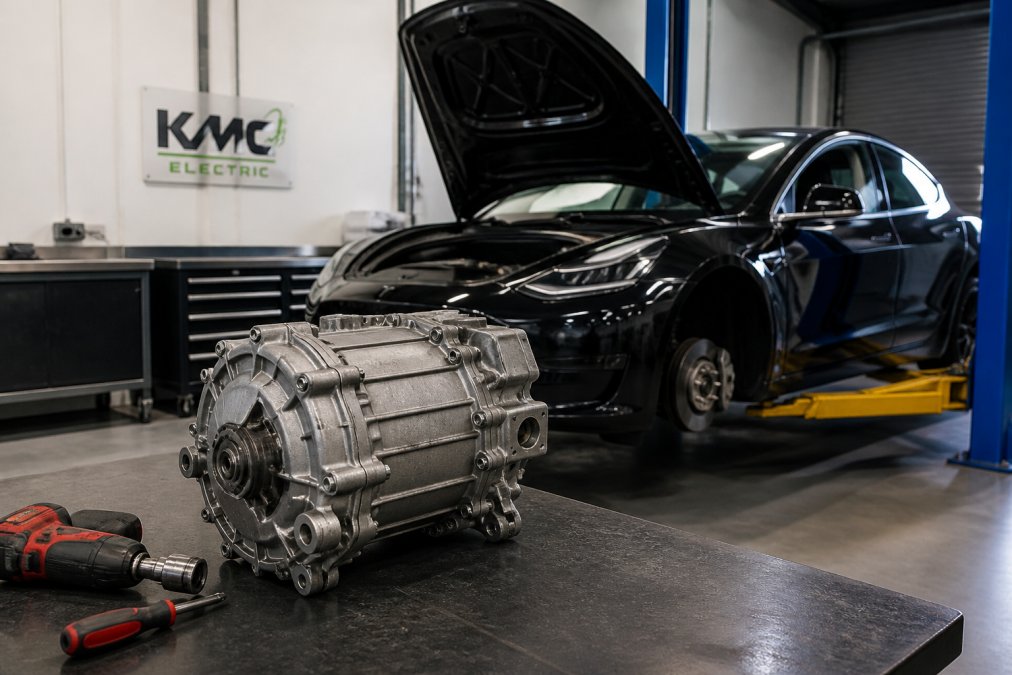
Key Service Intervals for Drive Train and Braking Components
Drivetrain oil and filter: worth inspecting on higher-mileage cars, particularly where the vehicle has done a lot of short trips or towing
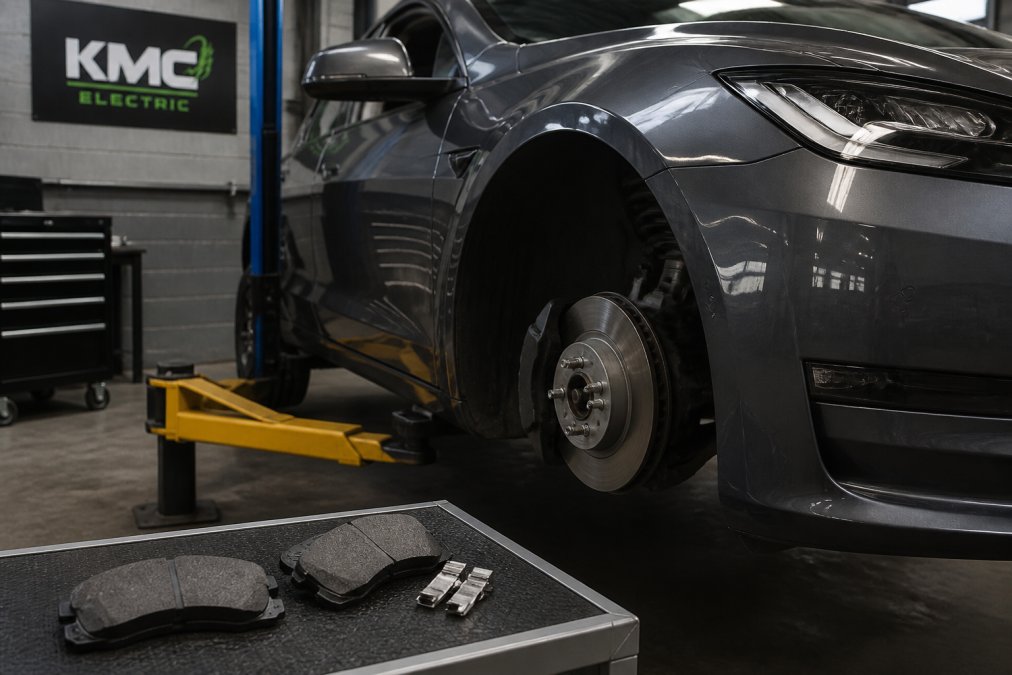
Brake fluid: should be checked on a regular cycle, since EVs use regenerative braking and the friction brakes can sit unused and corrode
Brake calipers and handbrake motors: an area where electric parking brake mechanisms can seize or fail
Coolant and thermal management: critical to battery and motor longevity
What most guides miss is that low mileage is not the same as low wear on an EV. A car that does 4,000 gentle miles a year can still develop corroded brakes and degraded fluids. Genuine Tesla parts such as drive train oil, an oil filter and bolts for the oil pump let a specialist carry out this work properly rather than deferring it.
Pro TipAsk for a drivetrain inspection at the same time as any other service. It takes minutes to check and can flag a failing component long before it becomes a roadside breakdown.
Electric Vehicle Suspension Repair and Inspection Readiness
Electric vehicle suspension repair covers the replacement or refurbishment of the components that control ride height, damping and wheel alignment on an EV. Because electric vehicles are heavier than equivalent petrol or diesel models, their suspension bushes, arms and air springs work harder and can wear sooner.
Common EV Issues That Shorten Service Life and How to Prevent Them
Most premature EV failures trace back to a small number of preventable issues. Knowing them is the difference between a car that reaches 150,000 miles in good order and one that becomes a money pit at 90,000.
Issue
Early Warning Sign
Prevention
Brake caliper seizure
Pulling to one side, uneven pad wear
Regular brake exercise and inspection
Handbrake motor failure
Parking brake warning, failure to release
Prompt diagnosis of fault codes
Drivetrain oil degradation
Whine or vibration under load
Scheduled oil and filter checks
Suspension bush wear
Knocking over bumps, vague steering
Inspection at service intervals
Pyro fuse fault
Isolation warning, car will not start
Specialist fault-code diagnosis
Watch OutIgnoring a parking brake or isolation warning can leave the car unable to move and add significantly to the eventual repair. Faults in this area rarely fix themselves.
Preparing Your Electric Vehicle for Its MOT and Inspection
An MOT for an electric vehicle is largely the same test as for a conventional car, minus the emissions check. The DVSA MOT inspection manual sets out what testers examine, and preparing for those specific points saves re-test hassle.
Check all lights, including indicators and brake lights
Inspect tyres for tread depth and uneven wear, which can point to suspension problems
Test the brakes and handbrake for correct operation
Check windscreen washers, wipers and the horn
Confirm no warning lights are showing on the dash
Clear any stored fault codes that could indicate a genuine issue
Key TakeawayTreat the MOT as a checkpoint, not a deadline. A car that is maintained properly all year passes easily; a car that is only looked at in test week usually has something to fix.
How KMC Electric Supports Long-Term Electric Vehicle Service
Long-term electric vehicle service works best with a specialist who understands the specific systems involved. KMC Electric is an independent Tesla and EV specialist based in Kettering, serving owners and dealerships across Northamptonshire, Leicestershire and the wider Midlands.
Frequently Asked Questions
How often should an electric vehicle undergo a professional inspection in the UK?
For most electric vehicles, an annual inspection is recommended, even if the MOT is not due. This annual check allows specialists to monitor battery health, software updates, and mechanical wear. It helps identify issues early, potentially saving on costly repairs and ensuring the vehicle remains reliable. Regular inspections also provide documentation that can be useful for warranty claims or resale.
What specific components do EV specialists check to extend battery life?
Specialists examine the battery management system, charging habits, and cooling system. They also check for software updates that optimise battery performance. Physical checks include the condition of the charging port and cables. By monitoring these areas, specialists can advise on practices that slow degradation, such as avoiding frequent fast charging and maintaining moderate charge levels.
Does regular maintenance help electric vehicles pass their MOT more easily?
Yes. Regular maintenance ensures that critical systems like brakes, suspension, lights, and steering are in good working order. EVs are subject to the same MOT standards as other vehicles, and issues like worn suspension components or faulty brake motors can lead to failures. Keeping on top of maintenance reduces the risk of unexpected MOT failures and helps extend the vehicle's service life.
What are the common signs of wear in Tesla suspension and steering systems?
Common signs include clunking noises over bumps, uneven tyre wear, steering wheel vibration, and changes in handling. These can indicate worn bushings, ball joints, or dampers. Addressing these early through electric vehicle suspension repair can prevent more extensive damage and maintain ride comfort. Regular inspections by a specialist can catch these issues before they worsen.
How does KMC Electric's diagnostic approach differ from standard main dealer servicing?
KMC Electric focuses on independent, transparent diagnostics using advanced tools to pinpoint faults accurately. With over 25 years of experience and Level 4 Master Technician status in EVs, they offer practical, cost-effective solutions tailored to out-of-warranty vehicles. Unlike main dealers, they provide detailed explanations and options, helping owners make informed decisions about repairs and maintenance.
Can you give me a battery health check before I buy a used electric vehicle?
Yes, KMC Electric offers independent battery health checks for used EV buyers. This service provides a detailed report on the battery's state of health, including capacity, degradation, and any fault codes. It gives you confidence in your purchase and can be used to negotiate the price. It's a cost-effective way to avoid unexpected expenses after buying.
My car is still under warranty for another 6 months. Can you still help?
Absolutely. KMC Electric can perform diagnostics and identify potential faults before your warranty expires. If an issue is found, you can then approach the manufacturer for a warranty repair. This proactive approach ensures you get the most out of your warranty and avoids costly repairs once it ends. They work with many owners in this situation.
Out-of-warranty battery work sounds expensive. What kind of bill am I looking at?
Battery repairs can vary widely depending on the issue. At KMC Electric, we focus on cost-effective solutions, often repairing rather than replacing components. For example, a drive train oil change with oil filter and bolts costs around £38, which can prevent major wear. Early diagnosis through an EV battery health check can help avoid £15,000 replacements by catching problems early.