Common Causes of Electric Car Clicking When Accelerating
A clicking noise when you accelerate usually comes from one of two places: the drivetrain or the suspension. Finding out which one saves you time and money.
If your electric car makes clicking noises when accelerating, you are not alone. This is one of the most common complaints EV owners bring to us at KMC Electric in Kettering. The good news? Most causes are simple to trace.
Here is the key difference. Drivetrain clicks tend to follow the power. They show up when you press the pedal and stop when you lift off. Suspension clicks follow the road instead. They appear over bumps, turns, or uneven surfaces.
That single test tells you where to look first.
Drivetrain and Drive Unit Causes
Drivetrain clicking is the more serious of the two. It points to wear inside parts that spin under load.
The most common culprits are:
Worn constant velocity (CV) joints on the driveshafts
Failing drive unit mounts that let the motor shift under torque
Loose or stretched halfshaft bolts
Low or degraded drive train oil in the reduction gearbox
Worn bearings inside the drive unit itself
Electric motors deliver full torque instantly. That instant push puts far more stress on joints and mounts than a petrol engine ever does. A common mistake is ignoring a light click for months. By the time it becomes a clunk, the damage has usually spread.
Regular oil changes matter more than most owners realise. Tesla's official maintenance guidance recommends specific service intervals for drive unit fluid, and skipping them is one of the fastest ways to wear a gearbox.
Watch OutIgnoring a drivetrain click can turn a small repair into a full drive unit replacement. Once metal fragments circulate in the oil, the damage spreads fast.
Suspension and Chassis Causes
Suspension clicks are usually cheaper to fix but easy to misdiagnose.
Listen for these signs:
Anti-roll bar bushes that have dried out or split
Worn drop links knocking over speed bumps
Worn ball joints or track rod ends
Loose subframe bolts
Failing air suspension struts on models that use them
Air suspension is a common source on the Model S. One of our customers brought in a 2019 Model S with a clicking noise over rough roads. Tim was a pleasure to deal with when I had an issue with the air suspension on my 2019 Model S. He was able to see the car at short notice, thoroughly diagnosed the problem, and offered a cost-effective fix. That is the difference a proper diagnosis makes.
Cold weather makes these clicks louder. Rubber bushes harden in the cold, so a click that fades once the car warms up often points to suspension rather than drivetrain.
Tesla Model S Drive Unit Clicking: What Owners Report
Tesla Model S drive unit clicking is a well-documented issue, particularly on older rear-wheel-drive and dual-motor cars. Owners commonly describe a rhythmic click or tick under acceleration that speeds up with the car.
The pattern is telling. It is often loudest from a standstill, then fades as speed builds. That points to the halfshaft and hub interface, where the splines can wear and develop play.
What most guides miss is that this is rarely a motor failure. It is usually a worn joint, a loose bolt, or degraded fluid. Catching it early keeps the repair small.
Owners also report:
A single click when shifting between drive and reverse
Clicking that worsens on hard acceleration
A tick that disappears when coasting
If any of these sound familiar, get it checked before the noise changes from a click to a clunk.
Electric Car Axle Clicking Symptoms You Should Not Ignore
Electric car axle clicking symptoms are easy to dismiss at first. That is exactly why they matter.
Watch for these warning signs:
Clicking that matches your speed, not the road surface
A clunk when you move from park to drive
Vibration through the steering wheel under load
Grease leaking around a CV boot
A click that gets louder over weeks, not quieter
The last one is the biggest red flag. Wear does not heal. It only gets worse.
Key TakeawayIf the click tracks your speed and appears under acceleration, treat it as a drivetrain issue until proven otherwise. Speed-linked clicks rarely come from the suspension.
How to Diagnose EV Drivetrain Faults at Home
You can narrow down most EV drivetrain faults in your driveway with no special tools. You will not fix them, but you will know what to tell a specialist.
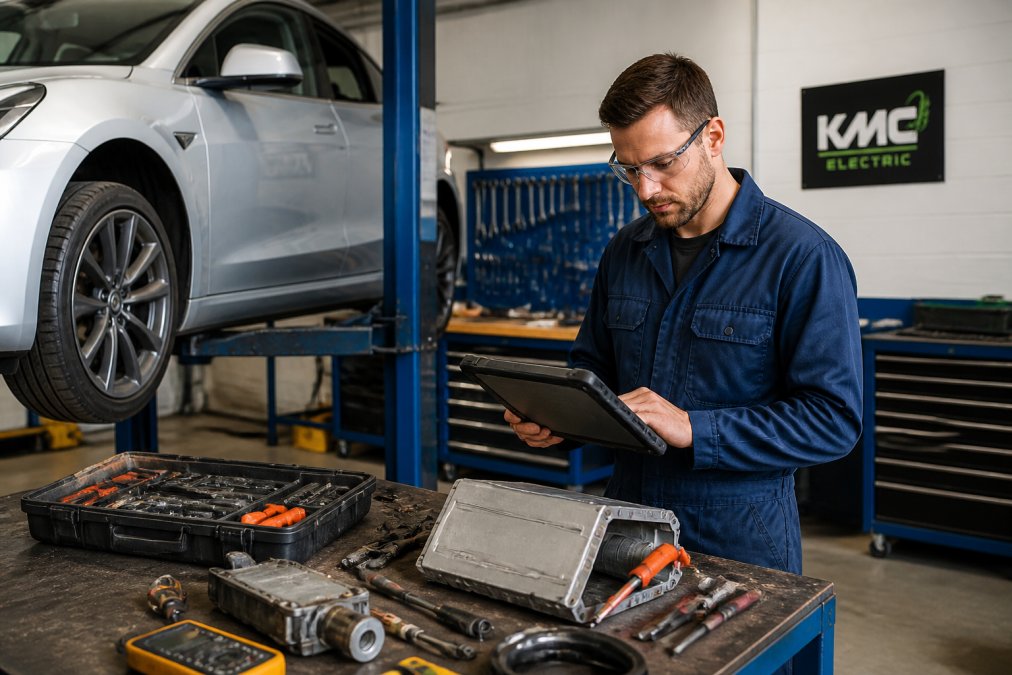
A mechanic in blue overalls using a diagnostic tablet next to an electric car raised on a ramp in a clean UK workshop, with tools visible in the background
Start with a quiet road and the windows down. Sound travels, and where a click comes from matters as much as when it happens.
Step-by-Step Checks Before You Book a Garage
Work through these in order. Each one rules out a cause.
Find the trigger. Accelerate gently from a stop. Note if the click appears under power only.
Test in reverse. A click in both directions points to a joint. A click in one direction points to a mount.
Listen over bumps. If it clicks on rough ground at steady speed, suspect suspension.
Check for play. With the car safely parked and lifted by a professional, a technician can rock the wheel and feel for movement.
Inspect the boots. Look for split CV boots or grease leaks near the wheels.
Note the conditions. Cold, wet, or hard acceleration all change how a worn part behaves.
Symptom
Likely Cause
Urgency
Click under power only
CV joint or halfshaft
Book soon
Click over bumps
Suspension bushes or links
Monitor, then book
Clunk into drive
Drive unit mount
Book soon
Click in both directions
Worn joint
Book soon
Click fades when warm
Rubber bush
Monitor
Do not crawl under a car supported only by a jack. If you need to inspect underneath, use a proper lift or leave it to a specialist.
Pro TipRecord the noise on your phone before you book. A ten-second clip of the exact conditions saves a diagnostic session and helps the technician find the fault faster.
When to See a Specialist About Electric Car Clicking
Book a specialist straight away if any of these apply:
The click has become a clunk
You feel vibration through the floor or steering
The noise appears at speed, not just from a standstill
You see grease around a wheel or under the car
The car pulls to one side under acceleration
EV drivetrains run at high voltage and high torque. This is not a job for a general garage without EV training. UK health and safety guidance on electrical safety sets out why high-voltage systems need trained hands.
Early diagnosis is also cheaper. A worn joint caught now is a small repair. Left alone, it can damage the shaft, the hub, and sometimes the drive unit.
Why Independent EV Specialists in Kettering Can Help
At KMC Electric, we have spent over 25 years in the automotive trade and held Level 4 Master Technician status in electric vehicles since 2016. That matters when a fault is subtle.
We work with Tesla systems across all models, plus other electric and hybrid vehicles. If you are searching for an EV specialist near me in Kettering, we are set up to help.
What we offer:
Full drivetrain and suspension diagnosis
Independent battery health checks for buying or selling
Fault finding before your warranty expires
Practical fixes for out-of-warranty vehicles
Cost-effective repairs as an alternative to main dealer pricing
We serve owners across Kettering, Northamptonshire, and Leicestershire. Whether you drive a Model 3, Model S, or another EV, we can take a look.
Frequently Asked Questions
Is it safe to drive an electric car that makes a clicking noise?
A single faint click over speed bumps is often harmless, but repeated clicking during acceleration suggests wear in the drivetrain or suspension. If the noise gets louder, comes with vibration, or appears alongside warning lights, stop driving and get it checked. Continuing to drive can turn a small fix into an expensive repair.
What causes a clicking sound when accelerating in a Tesla Model S?
Common causes include worn drive unit mounts, failing constant velocity joints, loose suspension components, or low drive train oil. A Tesla Model S drive unit clicking noise often worsens under hard acceleration. A specialist can pinpoint the exact source using diagnostic equipment rather than guesswork.
Do electric cars need regular mechanical inspections for drivetrain noises?
Yes. While EVs have fewer moving parts, drivetrain and suspension components still wear. Regular inspections catch early signs of electric car axle clicking symptoms, low drive train oil, or loose mounts before they become costly failures. Annual checks are especially important once your vehicle is out of warranty.
Where can I get my electric vehicle diagnosed in Kettering?
KMC Electric in Kettering offers independent diagnosis and repair for Tesla and other electric vehicles. With Level 4 Master Technician status and EV qualifications since 2016, they can identify drivetrain faults, verify battery health, and provide cost-effective fixes. Submit your details to book a diagnostic appointment.
A clicking noise under acceleration rarely fixes itself, and it often signals wear that gets worse with every mile. If you want it diagnosed properly, without guesswork or unnecessary repairs, KMC Electric can help. We offer independent Tesla and EV diagnosis, battery health checks, and practical fixes that extend your vehicle's life. Get started with KMC Electric and find out exactly what that click is telling you.