Tesla fault codes are alphanumeric alerts stored in your vehicle's control modules that tell you exactly which system has logged a problem, from the battery management system to the air suspension. Learning how to interpret Tesla fault codes 2026 gives you the same starting point a technician uses, without waiting days for a dealer appointment. At KMC Electric in Kettering, we have diagnosed Tesla systems across every model since earning our EV qualifications in 2016, and the pattern is always the same: owners who read their codes early spend less on repairs.
Tesla's own service documentation acknowledges that its cars need less routine maintenance than combustion vehicles, but "less" is not "none" (Consultation on the Introduction of Electric Vehicle Excise Duty (eVED)). Sensors, coolant pumps, suspension components and battery modules all age, and each one logs a code long before it fails outright.
This guide covers the codes you are most likely to see, how to pull them yourself, and when the reading points to a job for a specialist.
Common 2026 Tesla Error Codes and What They Mean
The most frequent Tesla error codes fall into four groups: battery and charging, thermal management, suspension, and low-voltage 12V faults. Each group has a characteristic prefix that tells you where to look first.
BMS_u029 / BMS_a079 - battery management system limits. Often a sign of cell imbalance or degradation rather than immediate failure.
DI_u014 - drive inverter communication fault. Usually a wiring or connector issue before it is a hardware failure.
THC_d0018 - thermal controller fault. The coolant pump or valve is not responding as expected.
VCFRONT_a192 - low-voltage system warning. Frequently a failing 12V battery on older Model S and Model 3 cars.
RCM_a056 - restraint control module alert. Treat any airbag-related code as safety-critical.
A common mistake is assuming a code name equals a failed part. In practice, one fault often triggers three or four secondary codes as other modules lose communication. Fixing the root cause clears the rest.
How to Diagnose Tesla Fault Codes Without a Dealer
You can read Tesla fault codes without a dealer by entering Service Mode on the touchscreen and pulling the stored alerts yourself. It takes around ten minutes and costs nothing.
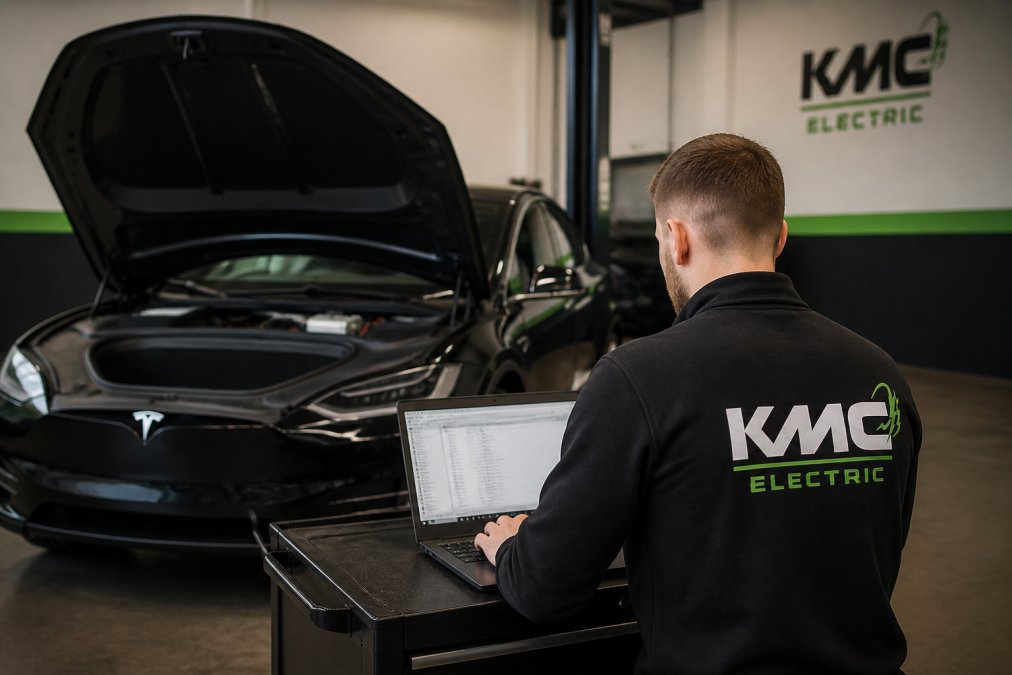
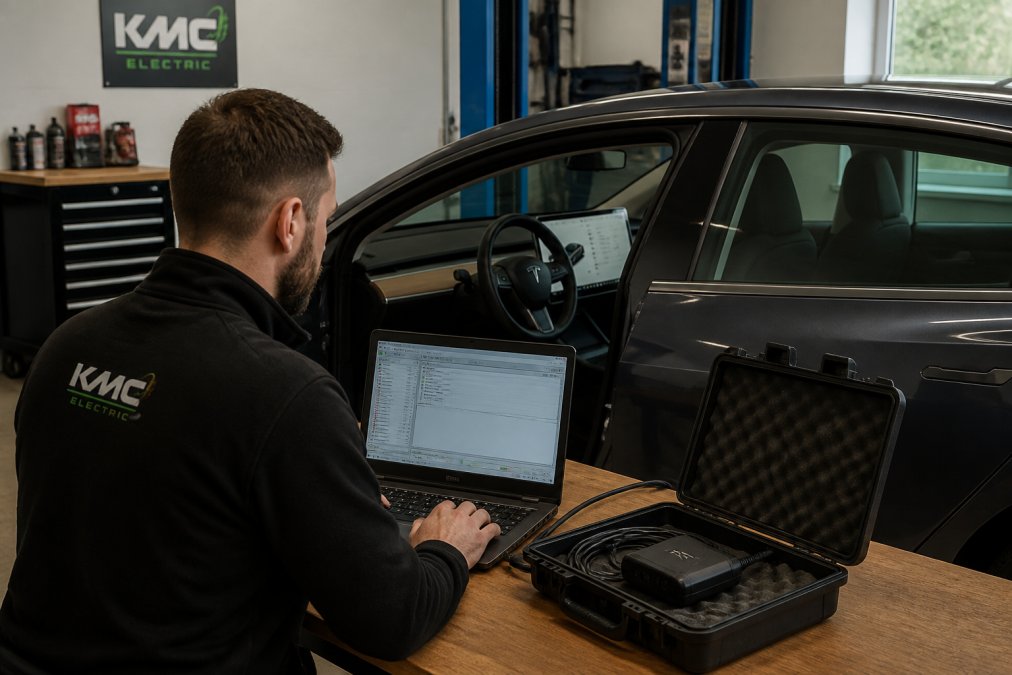
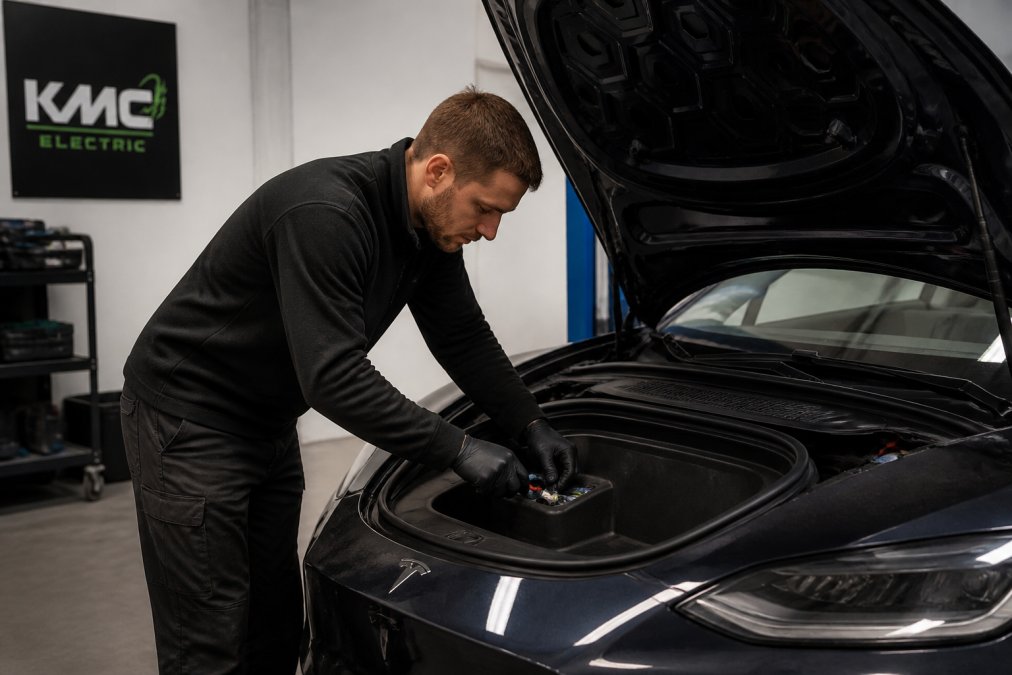
A mechanic in a clean workshop using a laptop connected to a Tesla Model 3, with the car's touchscreen displaying diagnostic information in the background
Step 1: Access Service Mode
Park the car safely, keep it in Park, and tap the Tesla logo at the top of the touchscreen five times. Enter service as the password when prompted. Service Mode is a read-only diagnostic layer, so nothing you do here changes how the car drives.
Step 2: Read and Record the Codes
Open the Alerts section and photograph every code on screen with your phone. Record the exact code, the timestamp, and whether the alert is active or historical. This record is what a specialist needs to quote accurately.
Step 3: Clear Codes and Monitor
Clear the alerts, drive normally for a few days, then re-read. Codes that return immediately point to a live fault. Codes that stay away were likely triggered by a one-off voltage dip or a software glitch.
Watch OutNever clear an airbag, brake or high-voltage code and keep driving to "see if it comes back". Those systems protect you and the battery pack. Book a diagnostic instead.
Tesla Diagnostic Tools for UK Owners
The right tool depends on how deep you need to go. Basic readers show you the code; proper diagnostic platforms show you the live data behind it.
Tool Type
What It Reads
Best For
Limitation
Touchscreen Service Mode
Stored alerts, basic system status
Quick free check at home
No live sensor data
Generic OBD-II reader
Powertrain and emissions codes
Confirming a warning light
Misses Tesla-specific modules
Tesla-capable diagnostic platform
Full module access, live values, battery data
Fault-finding and pre-purchase checks
Needs trained interpretation
For UK owners, a generic OBD-II reader will confirm a warning light but will not reach the battery management or thermal systems where most Tesla faults actually live. A Tesla-capable platform does, but the output only helps if someone can read it properly. That gap is exactly where an independent specialist earns their keep.
When to Call a Specialist: KMC Electric's Approach
Some codes you can live with. Others need a trained eye before they become expensive. As a rule, bring the car in when a code returns after clearing, when two or more systems log faults together, or when the alert relates to the battery, brakes or airbags.
KMC Electric is an independent Tesla and EV specialist based in Kettering, covering Northamptonshire, Leicestershire and the wider Midlands. With over 25 years in the automotive industry and Level 4 Master Technician status in electric vehicles, we diagnose faults the main dealer network often quotes as whole-unit replacements. One customer brought us a 2019 Model S with an air suspension fault; we saw the car at short notice, diagnosed it thoroughly, and offered a cost-effective fix rather than a full replacement.
Pro TipIf your Tesla is nearing the end of its manufacturer warranty, book a diagnostic before it expires. Faults found and documented while the car is still covered can be claimed, and faults found afterwards are yours to fund.
We also work with franchised and independent dealerships that receive Tesla fault codes their own technicians cannot crack, and we provide independent battery health verification for buyers and sellers across the Midlands.
Fault Codes, MOT, and Warranty: What UK Drivers Need to Know
Fault codes themselves do not fail an MOT. What fails an MOT is the underlying defect, and an active warning light for brakes, steering, suspension or airbags is a common reason for refusal under DVSA MOT inspection manual guidance.
Two UK-specific points catch owners out:
Warranty position. Tesla's warranty terms vary by model and age, and fault codes logged during the covered period can support a claim. Keep your photographs and dates.
Pre-purchase checks. A used EV buyer in the Midlands should ask for an independent battery state-of-health verification, not just a code scan. Codes tell you what has already failed; battery data tells you what is about to.
For anything involving high-voltage components, HSE guidance on electrical safety at work is clear that only competent persons should work on live systems. This is not a job for a home toolkit.
Conclusion
Reading your Tesla's fault codes is the single cheapest diagnostic step available to you, and it puts you in a far stronger position when you do need help. The hard part is not pulling the codes; it is knowing which ones matter and what they actually point to.
If a code keeps returning, or you simply want certainty before a warranty expires or a purchase completes, KMC Electric can help. Our team offers professional diagnosis, practical fixes for out-of-warranty vehicles, and independent battery health verification, backed by over 25 years of experience and Level 4 Master Technician status in EVs. Get started with KMC Electric and find out exactly what your Tesla is telling you before it becomes an expensive surprise.
Frequently Asked Questions
Can I clear Tesla fault codes myself in the UK?
Yes, you can clear many fault codes yourself using Service Mode or a compatible OBD tool. However, codes often return if the underlying issue isn't fixed. Clearing codes without addressing the cause can mask serious problems and may affect your warranty. For persistent or safety-related codes, it's best to have a specialist diagnose the root cause.
What does a 'Service Required' alert mean on a 2026 Tesla?
A 'Service Required' alert indicates the car has detected a fault that needs attention. It could be anything from a sensor glitch to a battery management issue. Check the alert details in the UI and note any fault codes. If the alert persists or is accompanied by reduced performance, contact a specialist like KMC Electric for a thorough diagnosis.
Are 2026 Tesla fault codes different from older models?
Yes, Tesla continuously updates its software and hardware. 2026 models may have new codes related to updated battery chemistry, heat pump systems, or advanced driver-assistance features. Always refer to the latest service documentation or use a diagnostic tool that supports 2026 firmware to ensure accurate interpretation.
Do Tesla fault codes automatically trigger an MOT failure?
Not automatically. The MOT test focuses on safety and emissions items. A fault code alone won't fail an MOT unless it causes a visible defect, such as a warning light that indicates a safety system failure. However, unresolved faults can lead to problems during the test, so it's wise to address them beforehand.