Why Tesla Model 3 Tyre Rotation Matters More Than You Think
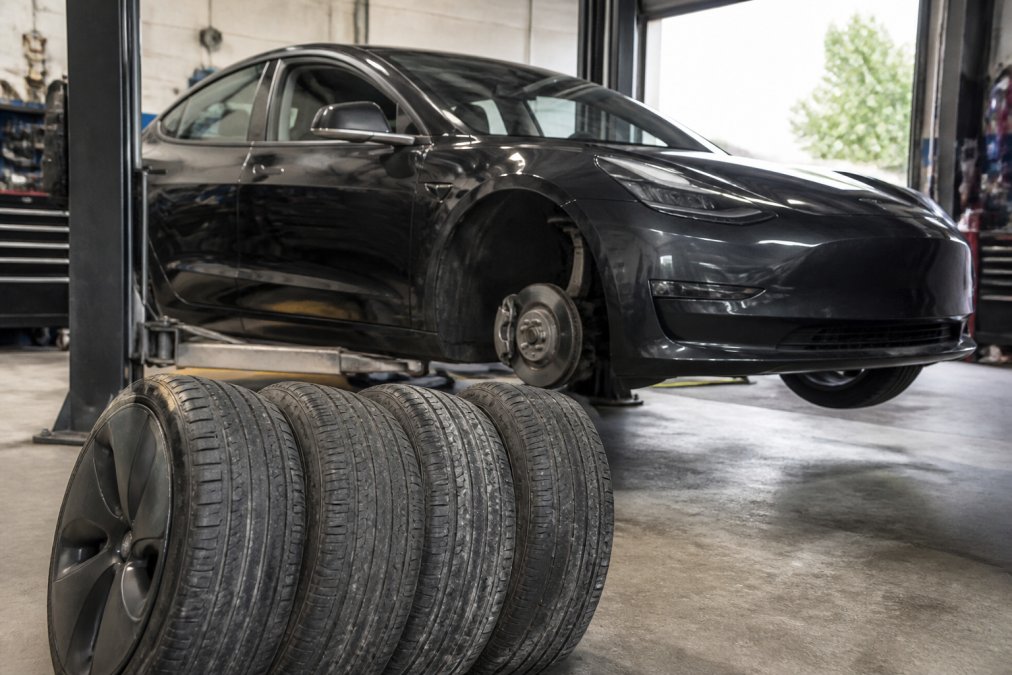
Tesla Model 3 tyre rotation is one of the few routine maintenance tasks that directly protects your biggest running costs. Unlike combustion cars, the Model 3's instant torque and heavy battery pack place unique stress on tyres, and uneven wear can silently shorten their life by thousands of miles. Getting the rotation interval right is the difference between replacing a full set and replacing tyres in pairs, which also matters for the vehicle's stability systems.
The engineering reason is straightforward. The Model 3's regenerative braking does most of the slowing work through the rear axle, while acceleration load sits on the rear wheels too. That combination means rear tyres often wear faster than fronts, a pattern that surprises many owners coming from front-wheel-drive cars. Regular rotation evens out this wear, maintains balanced handling, and keeps the ride quiet. At KMC Electric in Kettering, we see the results of skipped rotations every week, and the fix is far cheaper than premature tyre replacement.
Pro TipBook your rotation in autumn or spring. Swapping tyres when the seasons change means you are also checking pressures and tread before the UK's wettest or hottest driving months, which is when grip matters most.
Tesla Model 3 Tyre Wear Patterns: What to Look For
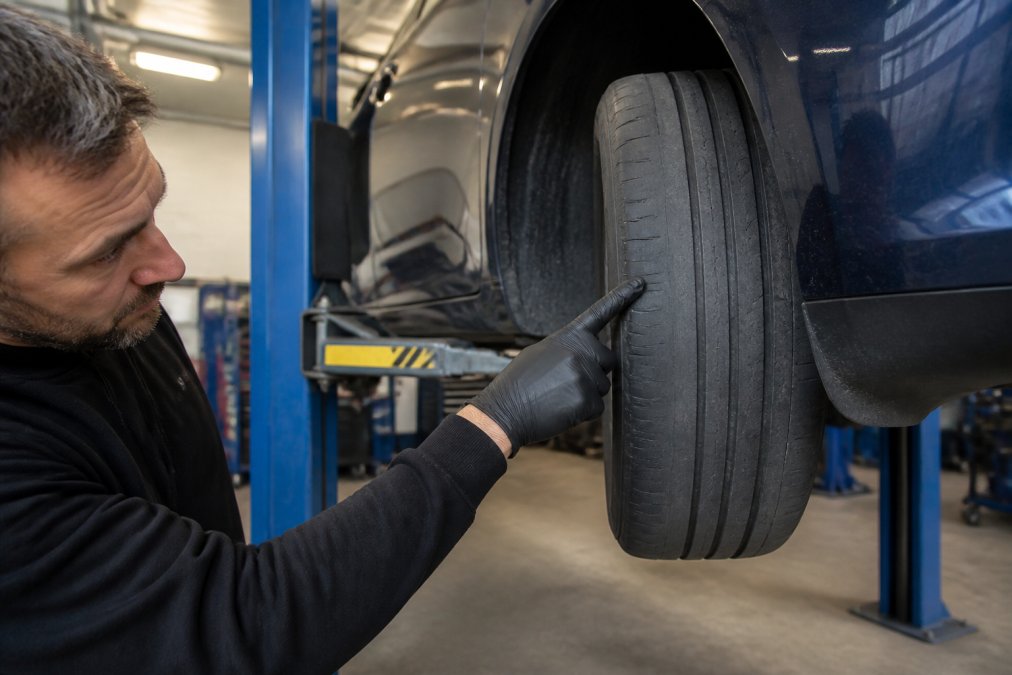
Before you rotate, you need to know what abnormal wear actually looks like. Tesla Model 3 tyre wear patterns fall into a few recognisable categories, and each points to a different underlying problem. Edge wear on both shoulders usually means under-inflation, while a worn centre strip signals over-inflation. Cupping or scalloped edges along the tread block often points to suspension components or a wheel alignment issue rather than tyre pressure.
A technician's gloved hand pointing at uneven tread wear on a Tesla Model 3 tyre, with the car raised on a two-post ramp in a well-lit workshop
One-sided wear is the pattern to take seriously. If the inner or outer edge of a tyre is significantly lower than the rest, the wheel alignment is almost certainly out of specification. This is common after hitting a pothole, a regular hazard on UK roads. Checking tread depth across the tyre with a gauge, not just the outer rib, reveals these issues early. The legal minimum tread depth in the UK is 1.6mm across the central three-quarters of the tread, but for an EV's weight and torque, replacing at 3mm is a sensible safety threshold (gov.uk).
Recommended Tyre Pressure for Tesla Model 3 and How to Check It
Correct tyre pressure is the foundation of even wear, and the recommended tyre pressure for Tesla Model 3 is displayed on the driver's door pillar label. For most Model 3 variants, the figure is around 2.9 bar (42 psi) when cold, but you should always confirm the exact value for your specific model and wheel size. Tesla's guidance is precise because the car's range, ride comfort and tyre longevity all depend on it.
Check pressures when the tyres are cold, ideally before driving more than a mile or two. Use a reliable digital gauge rather than relying on the visual appearance of the tyre, which can look fine when it is significantly low. Set the pressure to the door label figure, not the maximum printed on the tyre sidewall. The car's own tyre pressure monitoring system will flag a drop, but it will not tell you that all four tyres are uniformly low, which is why a monthly manual check is worth building into your routine.
How Often Should You Rotate? The Definitive Frequency Guide
Tesla recommends rotating your Model 3's tyres every 10,000 miles, and that interval is the benchmark you should follow (tesla.com). Some owners rotate at 6,000 miles to be safe, particularly if they drive enthusiastically or cover lots of motorway miles, but 10,000 miles is the figure Tesla states in the owner's manual and is a sensible default for most driving. If you notice uneven wear developing sooner, do not wait for the mileage marker.
The rotation pattern matters too. For most Model 3s with non-directional tyres, the standard pattern is front-to-rear on the same side, keeping each tyre on the same side of the car. If your tyres are directional, indicated by an arrow on the sidewall, they must stay on the same side and simply move front to back. Cross-rotating directional tyres renders them unsafe and damages the tread pattern. When in doubt, ask the technician to check the sidewall markings before they start.
Rotation Scenario
Recommended Interval
Pattern to Use
Standard driving, mixed roads
Every 10,000 miles
Front-to-rear, same side
Heavy motorway use or enthusiastic driving
Every 6,000-7,500 miles
Front-to-rear, same side
Directional tyres fitted
Every 10,000 miles
Front-to-rear only, never cross
Uneven wear spotted early
Rotate immediately
Front-to-rear, then book inspection
DIY vs Professional Rotation: What's Actually Involved?
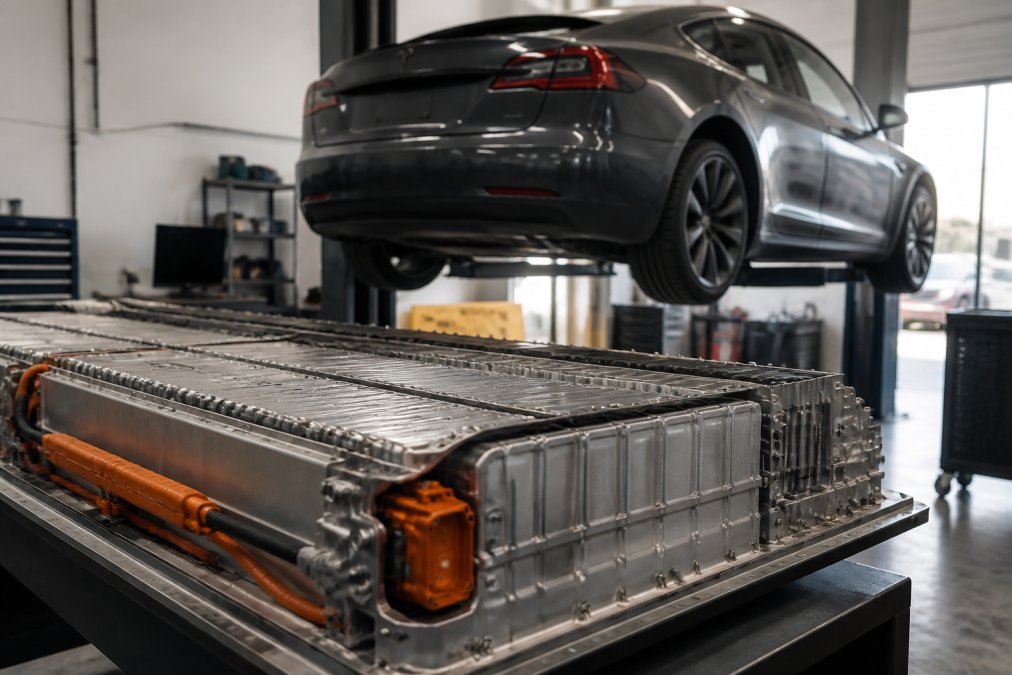
Rotating Model 3 tyres at home is possible if you have the right equipment, but it is not a simple wheel swap. The car must be safely lifted on four jack stands, never just one corner at a time, and the correct jacking points must be used to avoid damaging the battery pack. You also need a torque wrench to tighten the wheel nuts to the manufacturer's specification, typically around 170 Nm for the Model 3.
A professional rotation adds value beyond the physical swap. At KMC Electric, we check the condition of the wheel nuts and replace any that are corroded or damaged, a common issue on UK roads treated with salt in winter. We also inspect the brake components, which are visible once the wheels are off, and confirm the tyre pressures are set correctly on all four corners. For a car with a battery underneath it, the peace of mind from using a jack correctly is worth the modest cost of professional service.
Watch OutNever use a single trolley jack point to lift the Model 3 without axle stands. The battery pack is vulnerable to damage, and a dropped car is dangerous. If you are not confident with the correct jacking procedure, leave it to a professional.
Tesla Wheel Alignment Service Kettering: Why Alignment and Rotation Go Hand in Hand
Tesla wheel alignment service Kettering is something drivers search for when they notice uneven wear that rotation alone cannot fix. Rotation evens out normal wear differences between axles, but alignment corrects the geometric angles that cause tyres to scrub against the road. If your Model 3 pulls to one side, the steering wheel sits off-centre when driving straight, or you have recently hit a pothole, an alignment check is the right next step.
The two services work together. You should rotate your tyres and have the alignment checked at the same time, because fitting freshly rotated tyres to a car with poor alignment simply starts the uneven wear cycle again. A proper alignment check measures the camber, toe and caster angles against the manufacturer's specification and adjusts them precisely. For Model 3 owners in Northamptonshire, combining rotation with an alignment check when needed protects the tyres and the suspension components over the long term. If you are searching for a Tesla wheel alignment service near Kettering, look for a specialist who understands Tesla's specific geometry requirements rather than a general fast-fit centre.
Common Mistakes to Avoid and Signs You Need a Tyre Inspection
The most common mistake is ignoring the early warning signs. A vibration through the steering wheel at motorway speeds, a humming noise that changes with speed, or visible wear on one edge of a tyre are all signals that something needs attention. Waiting until the tyre pressure warning light appears means the problem has already progressed. Another frequent error is replacing only one or two tyres when the others are worn, which upsets the balance and can confuse the vehicle's stability systems.
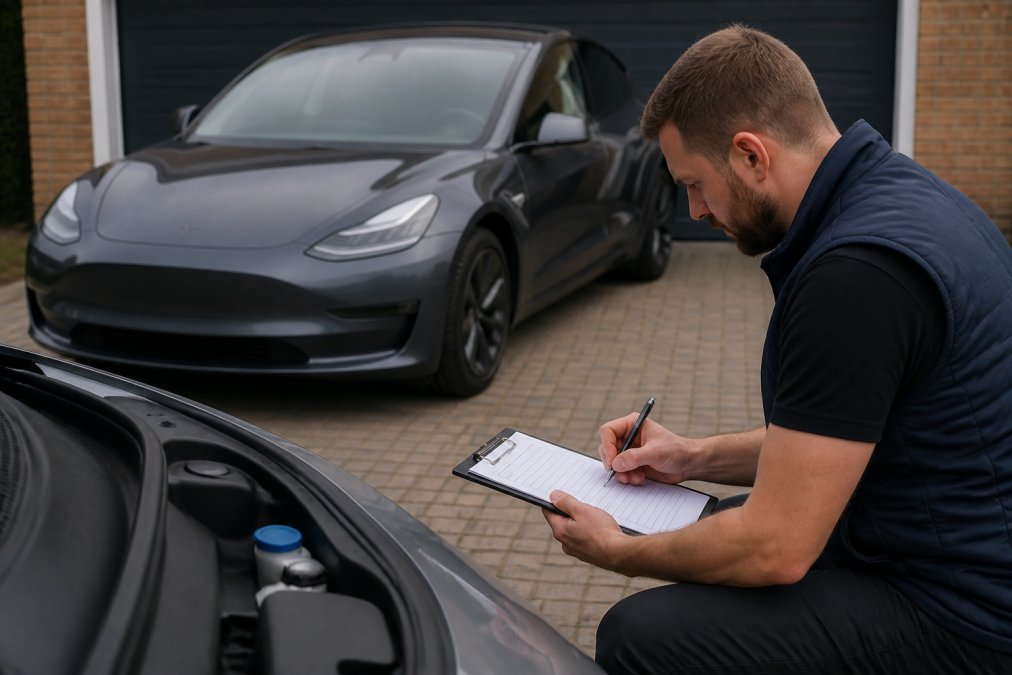
Signs you need a professional tyre inspection include tread depth close to the legal limit, any cuts, bulges or cracks in the sidewall, and uneven wear across the tread that you cannot explain. Bulges and cuts are especially serious on an EV because the extra weight increases the stress on the tyre structure. A thorough inspection covers the full tyre condition, not just tread depth, and should include a check of the valve stems and the condition of the wheel rims. Catching a problem at the inspection stage is always cheaper than dealing with a tyre failure at speed.
Conclusion: Keep Your Model 3 Tyres in Top Shape with KMC Electric
Regular tyre rotation is a small task with an outsized impact on your Model 3's running costs, safety and driving experience. Stick to the 10,000-mile interval, check your pressures monthly, and act on uneven wear before it becomes a replacement bill. Pairing rotation with a proper alignment check when needed keeps the car tracking straight and the tyres wearing evenly.
For Tesla owners in Kettering and across Northamptonshire, KMC Electric provides the specialist knowledge your Model 3 deserves. With over 25 years of automotive experience and Level 4 Master Technician status in electric vehicles since 2016, we understand Tesla systems across all models. Our team can handle your tyre rotation, wheel alignment and full vehicle inspection, identifying potential faults before they become expensive repairs. Tesla's official model information confirms the maintenance requirements, and we apply that knowledge to every car we service.
Frequently Asked Questions
How often does Tesla recommend rotating Model 3 tyres?
Tesla recommends rotating your Model 3's tyres every 10,000 miles, or sooner if you notice uneven wear. This interval is shorter than for many petrol cars because of the instant torque and heavy battery weight. Regular rotation at this frequency helps equalise tread depth across all four corners, extending tyre life and maintaining consistent handling and efficiency.
Why do Tesla Model 3 tyres wear out faster than petrol cars?
The Model 3's instant electric torque puts greater stress on the drive tyres during acceleration, while the heavy battery increases overall load. Regenerative braking also shifts wear patterns, often affecting the rear tyres more. Combined with the car's weight, this means tread can wear quicker than on a comparable petrol saloon. Regular rotation and correct tyre pressure help manage these demands.
Can I rotate my own Tesla Model 3 tyres at home?
Yes, you can, provided you have a trolley jack, axle stands, and a torque wrench. You will need to follow the correct diagonal pattern for directional tyres or swap front-to-rear for non-directional ones. Jacking points are marked on the sill, and you must reset the TPMS after rotation. However, a professional service ensures correct torque, thorough inspection, and can spot early suspension issues.
Is tyre rotation covered under the Tesla warranty in the UK?
No, tyre rotation is classified as routine maintenance and is not covered under Tesla's vehicle warranty. Tyres are wear items, so their replacement and maintenance costs are the owner's responsibility. However, having your rotation and inspections documented by a specialist like KMC Electric can help you maintain the vehicle properly and spot other potential faults before your warranty expires.
Get started with KMC Electric and keep your Model 3 handling at its best with professional tyre rotation and inspection services. UK Government tyre safety guidance sets out the legal requirements we help you stay ahead of.