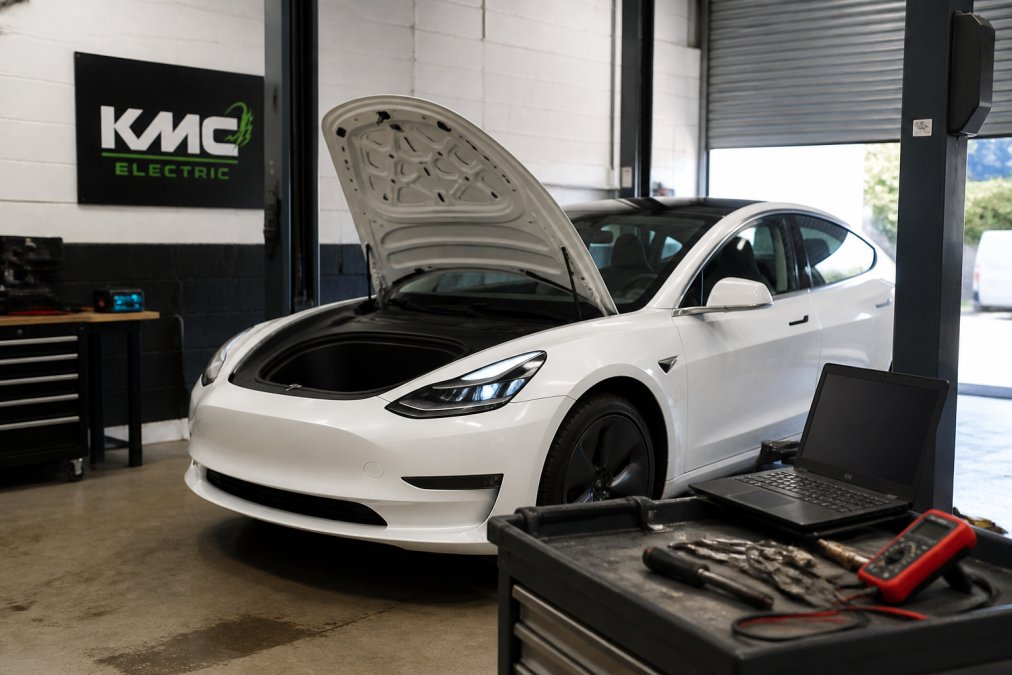
Storing an electric car for three months is not the same as parking a petrol car. The battery, the 12V system, and the tyres all behave differently when left idle. Get it wrong and you can return to a flat auxiliary battery, unevenly aged cells, or flat-spotted tyres. This guide from KMC Electric covers exactly how to safely store electric car for 3 months, whether you're in Kettering, across Northamptonshire, or heading abroad for the winter.
The good news: a little preparation now saves a lot of hassle later. As an independent Tesla and EV specialist, we see the same avoidable problems every spring.
Before you start, gather these items:
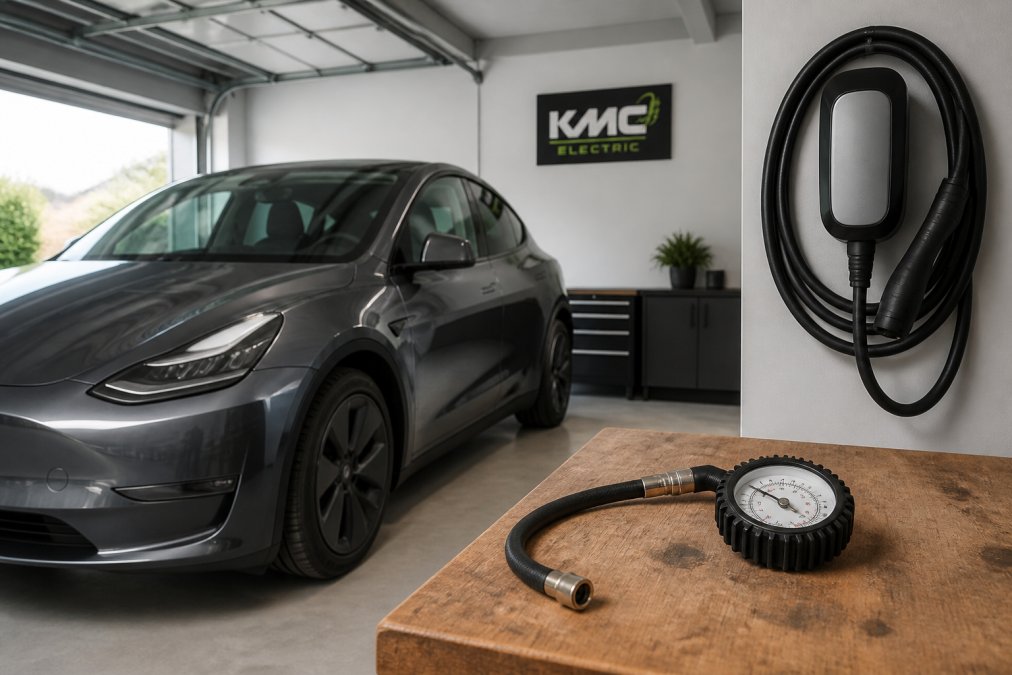
A tyre pressure gauge
A trickle charger or smart charger for the 12V battery
Preparation starts with a thorough clean. Dirt and bird droppings left for months can etch paint and trap moisture against the bodywork. Wash and dry the car fully, then apply a wax or sealant for extra protection.
Next, check and inflate your tyres. Tyres naturally lose pressure over time, and a car sitting still for three months can develop flat spots. Inflate them to the upper end of the recommended range.
Then handle the fluids and interior:
Top up washer fluid with a winter-grade mix
Leave the handbrake off to avoid brake binding
Clean the interior and remove all food, drinks, and valuables
Leave a desiccant bag inside to absorb moisture
Finally, set your charge level. Most manufacturers recommend leaving an EV at around 50% state of charge for long storage, not fully charged and not empty.
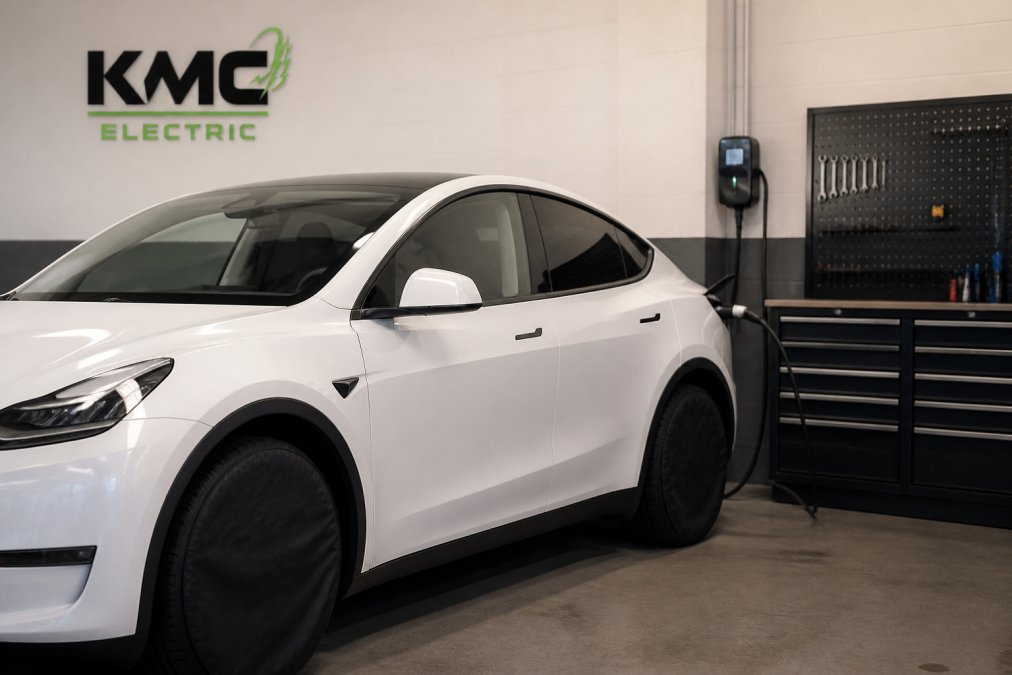
A modern electric car parked in a clean, dry garage, with a charging cable neatly coiled on a wall hook nearby and a tyre pressure gauge resting on a workbench
EV Battery Health and Long-Term Storage
Battery health during long-term storage comes down to one thing: charge level. Leaving a lithium-ion pack at 100% or near 0% for months accelerates chemical ageing. A mid-range charge keeps the cells stable.
Here's what matters most:
Store at roughly 50% state of charge
Avoid extreme temperatures where possible
Don't leave it plugged in and charging the whole time
Check the charge level once a month if you can
If you can't check it in person, a trusted friend or a specialist can monitor it for you. Some EVs let you check charge remotely through an app.
Pro TipIf your EV allows scheduled charging, set it to top up to 50% only, rather than leaving it plugged in at a fixed level. This stops the pack drifting too low over three months.
Tesla Vampire Drain Prevention: What to Turn Off
Tesla vampire drain prevention is about cutting the small, constant power draws that empty the battery while parked. Teslas keep some systems awake even when switched off, and over three months that adds up.
Turn off or reduce these before storage:
Sentry Mode - a major drain; switch it off
Cabin Overheat Protection - disable it
Smart Summon and standby - turn off
Over-the-air updates - pause automatic downloads
App polling - avoid opening the app constantly
A common mistake is leaving Sentry Mode on and returning to a noticeably lower charge. Check your settings menu and disable anything that keeps the car "awake".
12V Battery Maintenance for EVs During Storage
The 12V battery is the one most owners forget, and it's the one most likely to let you down. Even in an EV, the 12V battery powers the computers, locks, and lights. It can go flat during storage, and then the car won't start at all.
Keep it healthy with these steps:
Use a smart trickle charger designed for EVs
Connect it to the 12V battery, not the main pack
Check the charger is compatible with your model
Test the 12V battery before storage if it's over three years old
If you're unsure how to connect a maintainer safely, a specialist can set it up. Getting this wrong can damage sensitive electronics.
Choosing the Right Storage Location and Conditions
The best storage spot is dry, ventilated, and out of direct sunlight. A garage is ideal. If you're storing outdoors, use a breathable cover, not a plastic sheet that traps condensation.
Conditions to aim for:
Stable temperature, away from extreme heat or cold
Low humidity to prevent corrosion
Away from trees that drop sap or attract pests
Secure, so the car isn't disturbed
For owners near me in Kettering, we often recommend a well-ventilated garage over a damp outbuilding. Moisture is the enemy of both paint and electronics.
UK Met Office seasonal weather data for planning storage
KMC Electric Vehicle Inspection Services Before and After Storage
A pre-storage and post-storage inspection catches problems before they become expensive. At KMC Electric, we offer independent battery health checks and full EV diagnostics for Tesla and other electric and hybrid vehicles across Kettering, Northamptonshire, and Leicestershire.
Our team holds Level 4 Master Technician status in electric vehicles, with EV qualifications since 2016 and over 25 years in the automotive industry. We verify battery state of health, check the 12V system, and flag faults before they worsen.
What is the ideal battery percentage for storing an electric car for 3 months?
For a three-month storage period, aim to leave the battery between 50% and 60%. This range minimises the stress on the cells while giving you a buffer against any natural self-discharge. Avoid leaving it at 100% or below 20%, as both extremes can accelerate degradation over time. If your EV allows you to set a charge limit, adjust it to 50% before you park up.
Does leaving an electric car parked for 3 months damage the battery?
No, a three-month period won't damage the battery if you prepare properly. The main risks are leaving it at an extreme state of charge or in very hot or cold conditions. Keep the car between 50% and 60%, park in a shaded or temperature-stable spot, and check the charge level once a month if you can. Following these steps protects the long-term health of your EV battery.
Do I need to disconnect the 12V battery when storing a Tesla?
You don't need to disconnect the 12V battery for a three-month storage period, but you should be aware of how it maintains itself. Tesla vehicles use the main battery to recharge the 12V battery when needed, which contributes to vampire drain. If you're storing for longer than three months, a trickle charger or disconnection might be worth discussing with a specialist. For three months, a healthy 12V battery should hold up fine.
How do I prevent tyre flat spots when storing an EV?
To prevent flat spots, inflate your tyres to the higher end of the recommended pressure range before storage. If possible, move the car slightly every few weeks to change the contact patch, or use tyre cradles designed for long-term storage. Over-inflating by around 0.2 to 0.3 bar is a common practice. Check pressures again before you drive after three months.
Storing an electric car for three months takes planning, but the payoff is a car that starts first time when you return. The biggest risks are a flat 12V battery and a degraded main pack, and both are avoidable with the right preparation. If you'd rather not handle it yourself, KMC Electric offers independent battery health verification, expert Tesla diagnostics, and practical fixes that extend your vehicle's service life. Get started with KMC Electric and store your EV with confidence.