EV Diagnostic Services East Midlands: Complete Guide
Last Updated: July 2, 2026
When an electric vehicle warning light appears, the stakes differ from conventional cars. EVs operate on fundamentally different principles, high-voltage systems, battery management, and regenerative braking, requiring specialist diagnostic knowledge. At KMC Electric, we've spent over a decade helping EV owners in the East Midlands understand what's happening beneath the surface. This guide explains what EV diagnostic services do, why they matter, and how to identify genuine faults before they become expensive problems.
Main dealer diagnostics are expensive, and independent garages often lack the specialist equipment to read EV fault codes properly. Professional EV diagnostic services pinpoint problems accurately and save thousands in unnecessary repairs.
What Are EV Diagnostic Services?
EV diagnostic services are specialist assessments that identify electrical, software, and mechanical faults in electric and hybrid vehicles. Unlike conventional diagnostics focused on engine sensors and fuel systems, EV services address the unique complexity of electric powertrains, battery management systems, inverters, electric motors, and high-voltage wiring.
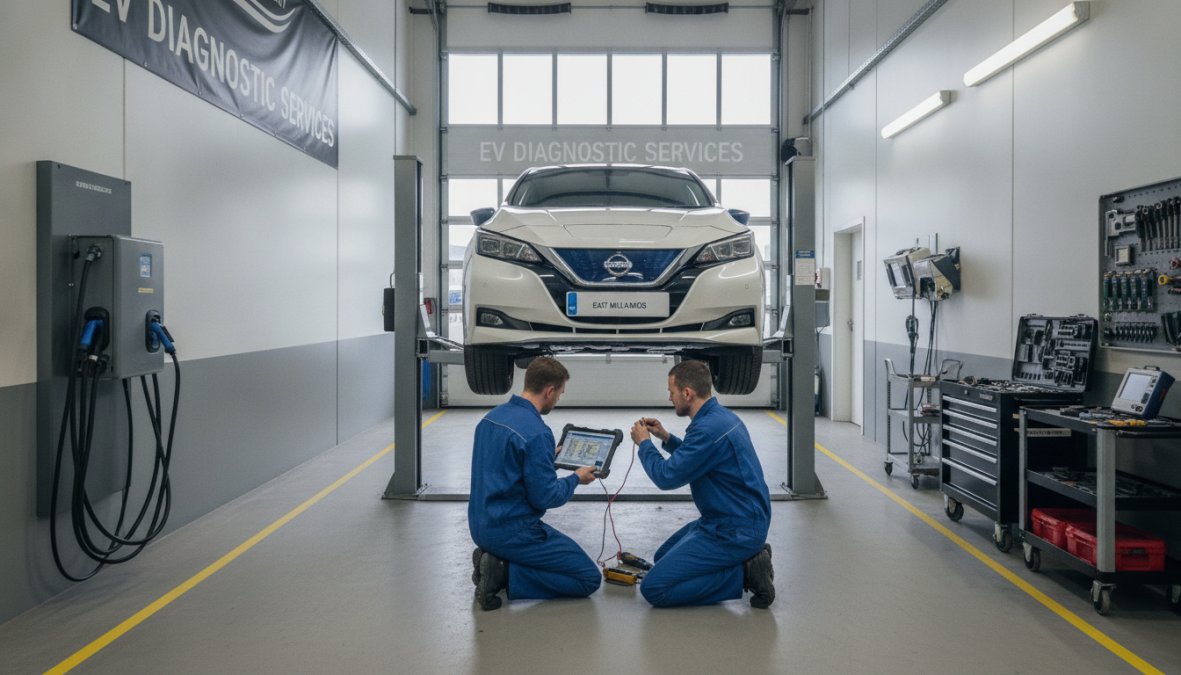
A proper EV diagnostic goes far beyond a standard OBD2 scanner. It involves reading manufacturer-specific fault codes from the battery management system (BMS), analysing high-voltage component performance, checking thermal management systems, and reviewing software logs. The goal is answering one critical question: what's wrong, and is it safe to drive?
Many EV owners don't realise that some warning lights are genuinely serious, a high-voltage isolation fault can indicate a dangerous electrical condition, while others are minor software glitches. A trained EV technician knows the difference and understands which faults require immediate attention.
Pro TipIf your EV's check engine light appears, don't ignore it. Even minor fault codes can affect warranty coverage if left unaddressed. A diagnostic check costs far less than discovering a major fault after warranty expiry.
Why EV Diagnostics Differ From Conventional Car Servicing
Traditional servicing focuses on mechanical wear: oil changes, filter replacements, brake fluid checks. Electric vehicles require none of these. Instead, EV servicing emphasises electrical system health, battery performance, and software integrity.
Conventional diagnostic equipment doesn't work on EVs. A standard OBD2 scanner won't access high-voltage battery systems, inverter diagnostics, or the sophisticated battery management algorithms controlling performance and longevity. EV-trained technicians need dealer-grade diagnostic equipment costing tens of thousands of pounds and requiring specialist training.
Safety is another critical difference. Working on high-voltage systems carries genuine electrical hazards. Only technicians with formal EV qualifications should perform these diagnostics, not those with only conventional car experience.
Key Capabilities of Professional EV Diagnostic Services
Professional EV diagnostic services cover a broad range of assessments. The best independent specialists, particularly those with Level 4 Master Technician status, can diagnose virtually any electrical or software fault in modern EVs and hybrids.
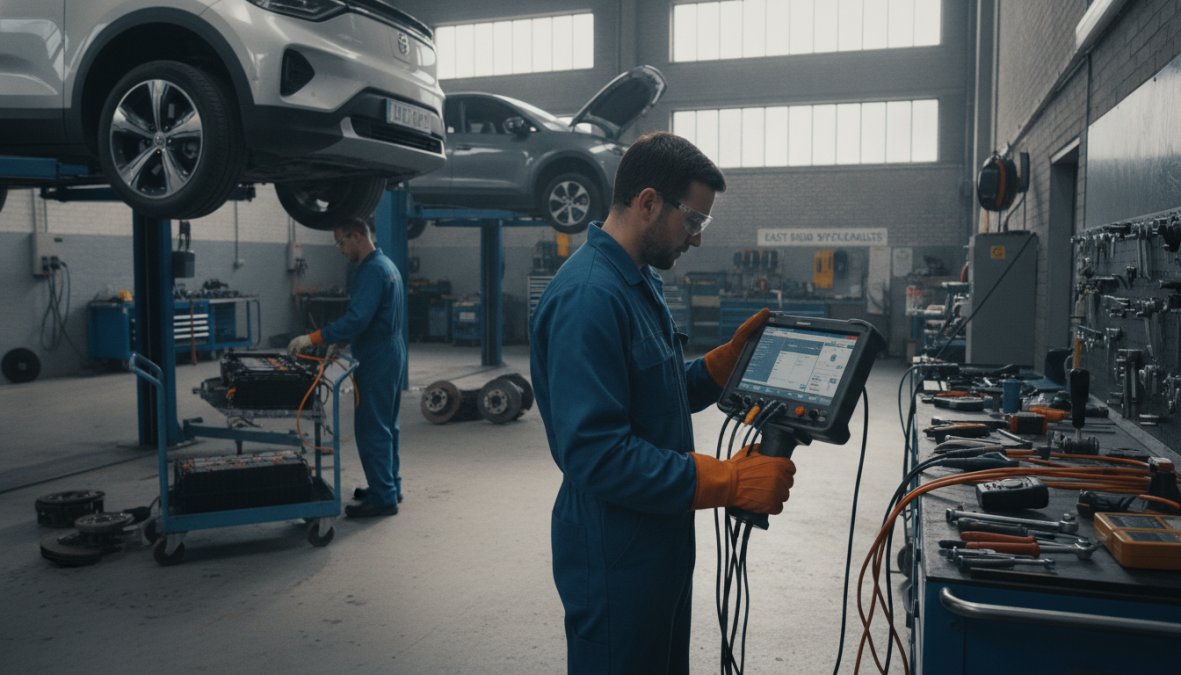
EV technician using specialist diagnostic equipment on Tesla vehicle in modern workshop with professional lighting and diagnostic displays
Core capabilities include real-time battery cell voltage monitoring, thermal management system analysis, inverter performance testing, and electric motor diagnostics. The technician connects to multiple vehicle systems simultaneously, battery management system, onboard charger, DC-DC converter, and thermal cooling loops, revealing faults that single-system diagnostics would miss.
High-Voltage System Testing and Battery Management Systems
The battery management system (BMS) is your EV's brain. It monitors cell voltage, temperature, and state of charge across hundreds of individual cells, balancing them for even wear and maximum lifespan. When the BMS detects anomalies, cell imbalance, temperature spikes, or isolation faults, it logs fault codes.
Professional EV technicians access these logs directly, seeing which cells underperform, whether thermal issues exist in specific battery modules, or whether high-voltage isolation is compromised. This detail is impossible without dealer-grade diagnostic equipment.
High-voltage system testing checks the entire electrical circuit's integrity. Damaged cables, corroded connectors, or faulty contactors all cause intermittent faults. Sophisticated testing equipment identifies these issues without damaging the battery pack or risking electrical shock.
Fault Code Reading and Software Analysis
Every warning light corresponds to a specific fault code stored in the vehicle's computer systems. Standard tools read some codes but often display generic messages that don't explain what's actually wrong.
Professional EV diagnostics read manufacturer-specific fault codes with detailed information. Instead of "battery fault," you might see "cell voltage imbalance in module 4, cells 12-14, temperature elevated." This precision allows informed decisions about whether faults are critical or manageable.
Software analysis identifies whether recent over-the-air updates caused faults or whether reverting to earlier software versions would resolve problems.
Watch OutNever ignore a [high-voltage isolation fault](/page/nissan-leaf-gearbox-bearing-noise-high-voltage-interlock-fault-repair). This indicates a potential electrical hazard and should be diagnosed immediately by a qualified EV technician. Driving with an isolation fault risks damaging the battery pack and creates a safety risk.
Electric Vehicle Battery Health Check East Midlands
Battery health is the single most important factor determining an EV's value and longevity. A battery degraded to 70% of original capacity has significantly reduced range and charging speed. For used EV buyers, an independent battery health check is essential, it's the difference between a reliable purchase and an expensive mistake.
Professional battery health checks measure state of health (SoH), the percentage of original capacity remaining. New EV batteries typically have 100% SoH. After five years of typical use, 90-95% is normal. After ten years, 80-85% is expected. Some batteries degrade faster due to aggressive charging, extreme temperatures, or manufacturing defects.
The diagnostic process charges the battery to full capacity, then discharges it in a controlled manner while measuring actual energy delivered. This real-world test reveals true performance that simple voltage measurements cannot.
Understanding Battery State of Health (SoH) Reports
A comprehensive SoH report includes the SoH percentage, cell-level data, thermal performance, and any underperforming cells. It identifies whether degradation is uniform across all cells (suggesting normal ageing) or concentrated in specific areas (suggesting manufacturing defects, thermal issues, or accident damage).
A good report also projects when the battery will reach 80% SoH, a common threshold for replacement necessity. This helps you plan ahead and make informed decisions about keeping or selling the vehicle.
For EV owners across the East Midlands, independent battery health verification removes uncertainty from used EV purchases and provides concrete condition data. Many used EV buyers now request SoH reports before purchase, it's become an industry standard for transparency.
How Much Does an EV Diagnostic Test Cost?
Cost varies significantly depending on what's tested and how long the diagnostic takes. A basic fault code read might take 30 minutes and cost relatively little, while a comprehensive multi-system diagnostic could take 2-3 hours.
Cost Transparency and What Affects Pricing
Several factors influence EV diagnostic costs. The vehicle's manufacturer matters, Tesla diagnostics require Tesla-specific equipment, while Audi EV diagnostics require different expertise. Fault complexity also matters; simple codes might be identified in minutes, while intermittent electrical faults require extensive testing.
Location affects price. Independent specialists in Kettering and across Northamptonshire typically charge less than main dealers. A Level 4 Master Technician charges more than a Level 2 technician, but you're paying for deeper expertise and ability to handle complex faults.
Many independent EV specialists offer fixed-price diagnostics for common issues, battery health checks, software updates, fault code diagnostics, while charging hourly rates for complex investigations.
Key TakeawayRequest a fixed price before starting a diagnostic, or ask for an hourly rate with estimated duration. Reputable EV specialists will give you clear cost expectations before beginning work.
The real value emerges when comparing diagnostic cost to potential savings. A £150 diagnostic identifying a faulty contactor worth £50 to replace prevents replacing an entire battery pack for thousands of pounds.
Common EV Faults and Diagnostics Explained
Understanding common EV faults helps you recognise warning signs and seek help before minor issues become major problems. Electric vehicles are generally more reliable than conventional cars with fewer moving parts, but they do develop characteristic faults.
Regenerative Braking Issues and Inverter Faults
Regenerative braking captures kinetic energy when you lift off the accelerator, flowing it back into the battery to extend range and reduce brake wear. When regenerative braking fails, you lose that energy recovery and range drops noticeably.
The fault might be caused by an inverter problem. The inverter converts DC power from the battery into AC power for the motor and handles reverse conversion during regenerative braking. Inverter faults are among the most common EV electrical issues, typically triggering fault codes that professional diagnostics identify immediately. Fixes might be software updates, connector cleaning, or inverter replacement.
Cooling System and Electric Motor Diagnostics
Electric motors run cooler than internal combustion engines but still need thermal management. EVs use complex cooling systems circulating coolant through the motor, inverter, battery pack, and sometimes the onboard charger. If the cooling system fails, temperatures rise rapidly and performance degrades.
A cooling system fault might manifest as reduced power output, higher energy consumption, or warning lights. The diagnostic process checks coolant flow, pump function, and thermal sensor readings. Faulty water pumps, blocked coolant lines, or failed thermal sensors all cause cooling issues.
Electric motor diagnostics are less common but serious when they occur. Professional diagnostics measure motor winding resistance, check for internal faults, and determine whether the motor can be repaired or needs replacement.
Fault Type
Typical Symptoms
Diagnostic Approach
Inverter fault
Loss of power, regenerative braking failure
Fault code read, inverter testing
Cooling system fault
Reduced range, high energy consumption
Thermal monitoring, coolant flow test
Battery cell imbalance
Reduced range, slow charging
BMS data analysis, cell voltage monitoring
High-voltage isolation fault
Warning light, potential safety risk
Insulation resistance testing
Software glitch
Intermittent faults, performance changes
Software log review, update testing
EV Maintenance Best Practices and Preventative Diagnostics
The best approach to EV ownership is preventative. Regular servicing and periodic diagnostic checks catch small issues before they become expensive failures. EV maintenance focuses on electrical health rather than mechanical wear.
Regular Servicing Intervals and Safety Inspections
Electric vehicles need far less servicing than conventional cars. There's no oil to change, no spark plugs to replace, no transmission fluid to monitor. But they need periodic checks ensuring electrical systems function correctly and the battery remains healthy.
A comprehensive EV service includes brake fluid inspection, coolant health checks, battery thermal management verification, and high-voltage system safety inspections. Annual safety inspections are recommended, particularly before winter when cold temperatures stress the battery and cooling systems.
Preventative diagnostics are far more cost-effective than reactive repairs. Catching a cooling system issue during routine inspection prevents battery damage. Identifying cell imbalance early allows monitoring and planned battery replacement before unreliability occurs.
Many EV owners schedule diagnostics every 2-3 years even without obvious faults, providing peace of mind and awareness of vehicle condition. This is particularly valuable for used EV buyers tracking battery health degradation over time.
Pro TipBook a battery health check before selling your EV. An independent SoH report dramatically increases buyer confidence and often justifies a higher asking price. Transparency about battery condition is the strongest selling point for used electric vehicles.
Why Choose an Independent EV Specialist in the East Midlands?
Main dealers offer comprehensive expertise but at substantial costs. Independent EV specialists like KMC Electric provide the same technical depth at a fraction of the price, with genuine transparency about what's wrong and what repairs will cost.
Qualified Technicians and Dealer-Grade Diagnostic Equipment
Not all independent garages handle EV diagnostics. Those with Level 4 Master Technician status have invested heavily in training and equipment. They understand high-voltage safety protocols, interpret complex fault codes, and have diagnostic equipment testing multiple vehicle systems simultaneously.
KMC Electric's team brings over 25 years of automotive industry experience with EV qualifications dating to 2016. This established expertise translates into faster diagnostics, more accurate fault identification, and practical solutions.
Dealer-grade diagnostic equipment is essential. Standard OBD2 scanners cannot access EV systems requiring professional equipment costing tens of thousands of pounds. Independent specialists with this equipment diagnose faults that standard garages cannot detect.
Identifying Faults Before Warranty Expiry
Professional EV diagnostics identify warranty-related issues before expiry. Many EV owners don't realise certain faults, if left unaddressed during warranty, cost thousands after expiry.
A battery cell imbalance might be warranty-covered if diagnosed while covered. Ignoring warning signs means facing replacement costs of £5,000-£15,000 after warranty expires. Timely diagnostics during warranty could trigger free battery replacement.
Independent EV specialists help navigate warranty complexities, understanding which faults are covered, which require documentation, and which are best addressed while manufacturer support exists. This knowledge alone saves thousands.
For EV owners in Kettering and across the East Midlands, working with a local independent specialist means having a partner who understands your vehicle's history, has warranty department relationships, and can advocate on your behalf if claims become necessary.
EV diagnostics aren't a luxury, they're essential for understanding your vehicle's true condition and avoiding expensive surprises. Whether buying a used electric vehicle, troubleshooting warning lights, or planning long-term ownership, professional EV diagnostic services provide the clarity needed for informed decisions. At KMC Electric, we combine Level 4 Master Technician expertise with over 25 years of automotive experience to deliver accurate, transparent diagnostics identifying genuine faults and preventing costly mistakes. Get in touch with our team in Kettering to book a comprehensive EV diagnostic and discover exactly what your vehicle needs.
Frequently Asked Questions
What is included in an EV diagnostic check?
A comprehensive EV diagnostic check includes high-voltage system testing, battery management system (BMS) analysis, fault code reading, software review, and performance assessment of the electric motor and inverter. Independent specialists use dealer-grade diagnostic equipment to identify electrical faults, cooling system issues, and regenerative braking problems. Results typically include a detailed report highlighting any faults found and recommendations for repair or monitoring.
How often should I get an electric vehicle battery health check in the East Midlands?
Most EV owners should have a battery health check annually or before purchasing a used electric vehicle. If your vehicle is out-of-warranty or approaching warranty expiry, more frequent checks help identify potential issues early. A professional battery state of health (SoH) report reveals capacity degradation and cell imbalances, giving you peace of mind about your vehicle's condition and resale value.
Can any mechanic perform EV diagnostic services?
No. EV diagnostic services require EV-trained technicians with specialist qualifications. Look for technicians with IMI Level 3 or Level 4 certifications in electric vehicles. Independent specialists with experience in high-voltage systems, battery management systems, and EV-specific software are essential. Standard mechanics lack the training and dealer-grade diagnostic equipment needed for safe, accurate EV diagnostics.
What are common warning signs that my EV needs a diagnostic check?
Watch for dashboard warning lights, reduced range or charging efficiency, unusual cooling fan noise, regenerative braking issues, or error codes displayed on your infotainment system. Slow charging, unexpected power loss, or battery management system alerts also warrant immediate diagnostics. If you're buying a used electric vehicle, an independent battery health check and full diagnostic inspection are essential to identify hidden faults before purchase.