What Electric Car Repair Shop Reviews Northampton Really Tell You
Most electric car repair shop reviews Northampton drivers read online are written by people who cannot tell a diagnostic scan from a guess. That is the uncomfortable truth behind this guide from KMC Electric. We work on Tesla and other electric and hybrid vehicles every week from our base in Kettering, and we see the same pattern: a glowing review often describes a friendly receptionist, while a damning one describes a bill nobody explained.
An electric vehicle repair shop is a workshop that diagnoses, services and repairs battery-electric and hybrid vehicles, including high-voltage systems, battery packs and drive units. That definition matters, because a garage that services petrol cars well may have no high-voltage training at all.
Reviews still have value. You just need to read them for the right signals.
Signals That Separate Useful Reviews From Noise
Reviews that mention a specific fault, a specific fix and a follow-up outcome are worth ten vague five-star ratings. Look for detail: fault codes read, parts replaced, whether the problem returned. Reviews that mention a technician explaining the work before starting it tell you something about transparency.
Reviews that only praise speed or price tell you almost nothing about whether the shop can actually fix a Tesla.
Watch OutA workshop that quotes a battery repair before running a full diagnostic is guessing with your money. Ask what fault codes were read and what the live data showed before you approve any work.
Questions to Ask an EV Repair Shop Before You Book
The most useful question you can ask an EV repair shop is simple: what diagnostic equipment do you use, and what training does the person using it hold? A shop that answers clearly and specifically is usually a shop that knows its limits.
Here are the questions that separate a specialist from a generalist:
What high-voltage qualifications does your technician hold, and when were they gained?
Can you show me live battery data, not just a pass or fail?
Do you work on Tesla models outside the main dealer network regularly?
Will you give me a written report I can use for warranty or resale?
What happens if the fault turns out to be something you cannot fix?
Do you offer a battery health check before I buy a used EV?
If a shop dodges the battery health question, that is your answer. Independent verification is one of the most valuable services a specialist can offer, especially for used EV buyers in the Midlands.
Battery Health, Warranty and Fault History
Ask for state-of-health data in writing, not a verbal reassurance. A proper assessment covers current capacity, cell balance and any stored fault history. If your car is still under manufacturer warranty, an independent report can help you document an issue before the warranty expires, so a fault is on record rather than discovered the week after cover ends.
Tim, a customer of ours, put it plainly after we looked at the air suspension on his 2019 Model S: we saw the car at short notice, diagnosed it thoroughly and offered a cost-effective fix. That is the standard to hold any workshop to.
EV Technician Qualifications UK Buyers Should Check
EV technician qualifications in the UK centre on high-voltage safety and competence. Any technician working on a high-voltage system should hold recognised training, and the strongest signal is a Master Technician with specific EV qualifications rather than a general mechanical certificate.
At KMC Electric, our lead technician holds Level 4 Master Technician status in electric vehicles, gained in 2016, backed by more than 25 years in the automotive industry. That combination matters: high-voltage systems demand safety discipline, and Tesla systems demand model-specific knowledge.
Ask directly how long the shop has worked on EVs, not just cars. Someone who has serviced combustion engines for decades but only touched EVs last year is still learning on your vehicle.
Pro TipAsk whether the shop can verify battery health independently of the manufacturer's own app. A third-party report carries more weight with a buyer than a screenshot from the seller's phone.
Electric Vehicle Diagnostics Northampton: What a Proper Assessment Involves
A proper electric vehicle assessment starts with a full system scan, not a road test and a hunch. The technician reads stored and pending fault codes, checks live sensor data, reviews battery module voltages and compares everything against the manufacturer's expected values.
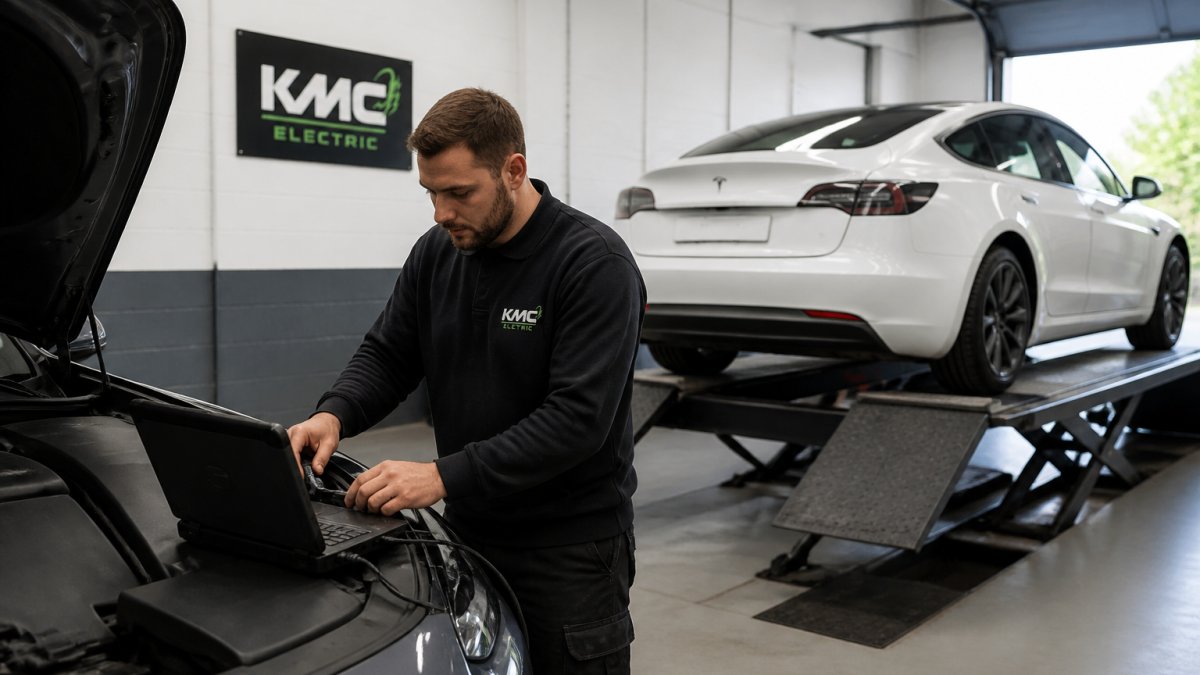
A technician in clean workwear connecting a diagnostic laptop to an electric car in a tidy independent workshop, with the vehicle raised slightly on a ramp in the background
From there, the work splits into three stages:
Stage
What Happens
What You Should Receive
Scan
Fault codes and live data read across all modules
A clear list of codes found
Analysis
Codes matched to symptoms and known model faults
An explanation in plain English
Report
Findings written up with recommended next steps
A document you can keep or share
That written report is the part most workshops skip. It is also the part that protects you, whether you are claiming warranty, negotiating a used-car price or planning a repair.
Electric Car Repair Reviews Kettering: Reading Between the Lines
Electric car repair reviews Kettering owners leave tend to be shorter than they should be, so you have to read for what is missing. A review that names the fault and confirms it stayed fixed is gold. A review that only says "great service, would recommend" is pleasant but uninformative.
Look for patterns across several reviews rather than trusting one. If three people mention the same fault being misdiagnosed elsewhere and fixed here, that is a real signal. If reviews cluster around one technician by name, that tells you who to ask for.
Be wary of reviews that read like marketing copy. Genuine customers mention specifics: a model, a mileage, a warning light, a timescale.
What KMC Electric Offers Northamptonshire EV Owners
KMC Electric provides independent diagnosis, repair and long-term maintenance for Tesla and other electric and hybrid vehicles across Northamptonshire, Leicestershire and the wider Midlands. We work with private owners, used EV buyers and dealership service departments that need technical support on complex fault codes.
Our approach is straightforward. We diagnose before we quote, we explain what we find in plain terms, and we identify potential faults before warranty expiry wherever possible. For out-of-warranty vehicles, we look for practical fixes that extend service life rather than defaulting to the most expensive option.
We also provide independent battery health verification for buying and selling, which gives both sides of a private sale something concrete to work from.
If you are searching for an EV specialist near me in the Kettering or Northampton area, the sensible first step is a conversation about your symptoms before you book anything.
Key TakeawayThe best review signal is specificity. A workshop that documents faults, explains them clearly and follows up is worth more than one with a wall of five-star ratings and no detail.
Frequently Asked Questions
How do I choose an electric car repair shop in Northampton?
Start by checking whether the garage works on high-voltage systems as standard, not as an occasional job. Ask what diagnostic equipment they use, whether they hold EV-specific qualifications, and whether they can produce a written battery health report. Reviews help, but look for ones that mention a specific fault, a clear explanation and a lasting fix rather than a quick turnaround. A specialist such as KMC Electric, with Level 4 Master Technician status in EVs since 2016, will answer these questions directly before you book.
Can an independent specialist repair Tesla and other electric cars?
Yes. Independent EV specialists routinely diagnose and repair Tesla and other electric models, including out-of-warranty work on air suspension, charging faults and battery degradation. The key is whether the garage has the diagnostic software, high-voltage training and insurance to work safely on those systems. Ask how they access fault codes and whether they can verify battery state of health independently. Many owners use an independent specialist for exactly this reason: a clear explanation of the fault and a practical repair route.
What qualifications should an electric vehicle technician have?
Look for EV-specific training rather than general automotive experience alone. In the UK, relevant qualifications include IMI Level 3 and Level 4 awards in electric and hybrid vehicle repair and maintenance, which cover safe work on high-voltage systems. A technician with Level 4 Master Technician status has gone beyond the basics. Ask when the qualification was gained and whether it is kept current, since EV technology and diagnostic tools change quickly.
What should I ask an EV repair shop before booking?
Ask five things: what EV qualifications the technician holds, what diagnostic equipment they use, whether they provide a written battery health report, how they handle warranty work, and what happens if the first diagnosis is wrong. Also ask whether they work with franchised dealerships, since some independent specialists support dealer service departments with complex Tesla fault codes. Clear answers to these questions tell you more than any star rating.
Finding a workshop you trust with a high-voltage vehicle is harder than it should be, and the stakes are higher than a routine service. KMC Electric offers independent Tesla and EV diagnosis, Level 4 Master Technician expertise, and battery health verification you can use for warranty claims or resale. Get started with KMC Electric and give your electric vehicle the specialist attention it deserves.