Tesla Out of Warranty Service: Complete 2026 Guide
Last Updated: July 3, 2026
When your Tesla's warranty expires, repair costs escalate dramatically without proper planning. At KMC Electric, we've tracked thousands of out-of-warranty Tesla repairs, and the patterns are clear: owners who understand their options save significantly on maintenance and repairs. This guide breaks down everything you need to know about tesla out of warranty service, from what coverage expires when to cost-effective repair strategies that extend your vehicle's lifespan.
Once your Basic Vehicle Limited Warranty ends at three years or 100,000 km, you're responsible for every repair that follows. High-voltage battery issues, drive unit failures, and suspension replacements can cost thousands of pounds. But proven strategies exist to reduce these expenses and identify potential faults before they become catastrophic.
Below, we'll show you how to navigate tesla out of warranty service, compare independent repair options versus Tesla Service Centers, and build a maintenance schedule that prevents costly breakdowns.
Understanding Tesla Warranty Coverage and What Expires
Your Tesla's warranty structure is more complex than a single expiration date. Different components have different coverage periods.
The Basic Vehicle Limited Warranty covers the entire vehicle for three years or 100,000 km, including structural components and electrical systems. Once this expires, you're responsible for almost everything except the high-voltage battery and drive unit.
The high-voltage battery carries an 8-year or 160,000 km warranty, as does the drive unit (motor and gearbox assembly). This substantial coverage applies only to manufacturing defects, not wear and tear or lack of maintenance.
Suspension components, the 12V battery, camera systems, wiper hoses, and brake components fall under the Basic Warranty. Once three years pass, these become your financial responsibility. A suspension control arm replacement costs £800 to £1,500 at a Tesla Service Center. A 12V battery replacement runs £400 to £600. Camera calibration after windscreen replacement adds £300 to £500.
Pro TipCheck your vehicle's warranty status through the Tesla app. Tap 'Service' and review your specific coverage dates. Knowing your exact expiration dates lets you plan major maintenance before coverage ends.
Common Tesla Out of Warranty Repairs and Component Failures
Certain components fail more frequently than others once warranty coverage ends. Understanding which parts are most likely to need replacement helps you budget accordingly.
The 12V battery is one of the most common out-of-warranty failures. Unlike traditional cars, Tesla's 12V system powers critical functions including the touchscreen, door locks, and climate control. Most owners experience their first 12V failure between years four and six. Replacement costs £400 to £600 including labour.
Suspension components wear faster than many owners expect. Control arms, ball joints, and sway bar links degrade from road conditions. Model 3 and Model Y vehicles commonly need suspension work around 80,000 to 120,000 km. A single control arm replacement with labour runs £900 to £1,400.
Camera calibration becomes necessary after windscreen replacement or minor front-end damage. Tesla's Autopilot and safety systems depend on precise camera alignment. A recalibration procedure at an independent shop costs £300 to £400, while Tesla Service Centers charge £500 to £700.
Wiper hoses and fluid delivery systems fail gradually from UV exposure and temperature cycling. Replacement costs £150 to £250 with labour at an independent shop.
Watch OutIgnoring suspension wear impacts safety. Worn control arms increase stopping distance and reduce cornering stability. If you notice clunking sounds over bumps or uneven tyre wear, have suspension inspected immediately.
Tesla Extended Service Agreement and Extended Warranty Options
Tesla offers an Extended Service Agreement (ESA) that covers repairs beyond the Basic Warranty period. You must purchase ESA before your Basic Warranty expires.
The ESA extends coverage for an additional four years or 160,000 km, giving you seven years or 260,000 km total coverage on Basic Warranty items. Cost generally ranges from £1,500 to £3,500 for full coverage.
The ESA covers parts and labour for most repairs, excluding wear items like brake pads and wiper blades, accident damage, and battery degradation beyond manufacturer defects.
Many independent warranty providers offer third-party extended warranty plans for Tesla vehicles at lower cost with comparable coverage. The decision depends on your ownership timeline. If you plan to sell within five years, the ESA may not justify the cost. For long-term ownership, extended coverage protects against unexpected major expenses.
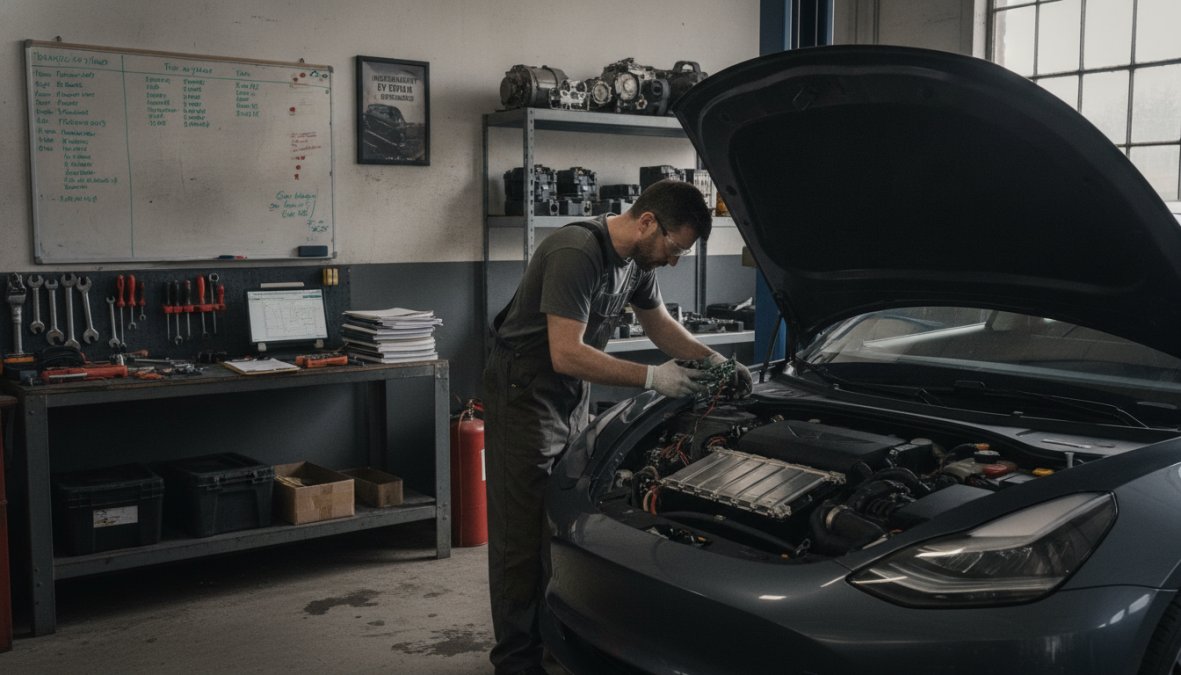
Level 4 Master Technician in professional workshop attire performing diagnostic work on a Tesla with diagnostic equipment visible, modern garage setting with natural light
Preventative Maintenance Schedule for High-Mileage Teslas
Proactive maintenance dramatically reduces the likelihood of catastrophic failures and keeps your Tesla reliable.
Fluid checks should happen every 12 months or 20,000 km. Brake fluid should be flushed and replaced every two years, costing £200 to £350 at an independent shop. Coolant for the drive unit and battery pack should be inspected annually and replaced every four years at £400 to £600. This preventative work prevents drive unit overheating failures exceeding £5,000 to repair.
Brake inspection intervals matter for high-mileage vehicles. Every 40,000 km, have a qualified technician inspect brake pad thickness, rotor condition, and brake fluid quality. Early intervention prevents emergency failures and reduces overall costs.
Battery health monitoring should be routine. Use third-party diagnostic tools like Scan My Tesla to monitor cell voltages and pack health. Independent EV specialists offer battery health reports for £150 to £300, revealing whether degradation is normal or indicates a potential issue.
Software updates are free through the Tesla app and should be initiated regularly. Updates improve efficiency, fix bugs, and sometimes address known component issues.
Key TakeawayThe single most important preventative measure is regular coolant replacement in the drive unit and battery pack. Neglecting this voids your ability to claim drive unit failures under warranty and dramatically increases catastrophic failure risk once warranty expires.
Maintenance Task
Interval
Estimated Cost
Priority
Brake fluid flush
Every 2 years
£200-£350
High
Drive unit coolant replacement
Every 4 years
£400-£600
Critical
Brake inspection
Every 40,000 km
£100-£200
High
Battery health diagnostic
Annually (high-mileage)
£150-£300
Medium
Suspension inspection
Every 20,000 km
£80-£150
High
12V battery test
Every 12 months
£50-£100
Medium
Independent EV Repair vs. Tesla Service Center Costs
The choice between Tesla Service Centers and independent EV specialists significantly impacts your out-of-warranty service expenses.
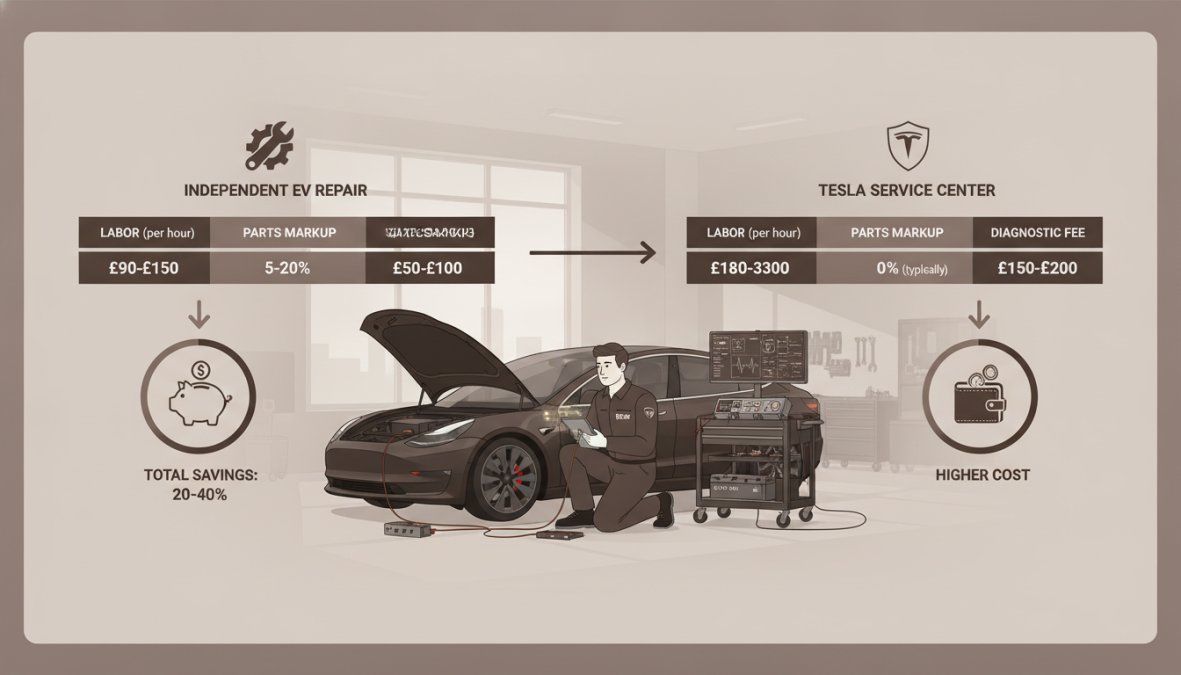
Tesla Service Centers charge premium labour rates of £150 to £200 per hour, compared to £80 to £120 at independent shops. Parts are sourced exclusively from Tesla's supply chain. For a suspension control arm replacement, Tesla charges £1,200 to £1,600 total, while independent shops charge £900 to £1,200. Over the life of an out-of-warranty vehicle, this difference compounds to thousands of pounds.
Tesla Service Centers offer factory diagnostic tools and access to service bulletins addressing known issues. They have direct communication with Tesla engineering for complex electrical problems. However, they frequently have multi-week wait times for appointments.
Independent EV specialists have grown significantly in recent years. Many hold certifications equivalent to Tesla's training. KMC Electric, based in Kettering, Northamptonshire, maintains Level 4 Master Technician status in electric vehicles. Independent shops often diagnose and repair issues faster than Tesla Service Centers.
The trade-off is that independent shops cannot access Tesla's most advanced diagnostic software without purchasing expensive third-party tools, limiting certain calibrations. However, for mechanical repairs, suspension work, and brake service, independent shops deliver identical results at lower cost.
OEM Parts vs. Aftermarket Parts for Out-of-Warranty Work
Once your warranty expires, using aftermarket parts becomes a viable cost-saving strategy. Aftermarket suspension components, brake pads, and wiper hoses cost 30 to 50 percent less than OEM equivalents while maintaining quality standards.
OEM parts carry Tesla's brand guarantee and integrate seamlessly with your vehicle. However, you pay a significant premium. A Tesla-branded suspension control arm costs £600 to £800, while a quality aftermarket equivalent costs £350 to £450.
Aftermarket parts are manufactured by third-party suppliers to the same engineering standards as OEM components. Reputable manufacturers like Lemforder and Meyle produce suspension parts meeting or exceeding original specifications. The main difference is warranty duration; aftermarket parts usually include 12-month coverage.
For electrical components like the 12V battery, OEM is generally preferable. Battery chemistry must match Tesla's specifications exactly. Using an incompatible aftermarket 12V battery can damage the charging system. The £150 to £200 premium for an OEM battery is justified.
Mechanical parts like suspension and brakes are excellent candidates for aftermarket options. Electrical and software-dependent components should use OEM parts to avoid compatibility issues.
Cost-Saving Strategies for Out-of-Pocket Repairs
Strategic planning reduces the financial burden of out-of-warranty service.
Diagnostic fees represent the first hurdle. Tesla Service Centers charge £150 to £300 for comprehensive diagnostics, while independent shops typically charge £100 to £150. Ask whether the shop will credit the diagnostic fee toward repair costs if you proceed with their service. Many independent shops offer this courtesy; Tesla Service Centers typically do not.
Mobile service options from Tesla and independent providers eliminate travel time. Mobile service costs slightly more per hour than shop-based service, but you save time and transportation costs.
Bundling repairs into a single service appointment reduces total labour costs. If your suspension needs work and your 12V battery is aging, schedule both simultaneously. Labour costs are typically charged per hour, so consolidating work reduces total hours billed.
Preventative maintenance before warranty expiration is the most cost-effective strategy. Schedule major work, brake fluid flush, coolant replacement, suspension inspection, in the months before your warranty expires. If issues are identified, you can often claim repairs under the expiring warranty.
Finding Qualified EV Specialists in Your Area
Locating a trustworthy independent EV specialist requires research. Not all mechanics understand electric vehicle systems well enough to diagnose and repair them safely.
Start by verifying certifications. Look for technicians holding Level 4 Master Technician status in electric vehicles or equivalent training from recognized EV programs. KMC Electric's Level 4 status, held since 2016, demonstrates commitment to staying current with evolving EV technology.
Check online reviews specifically mentioning Tesla service. Look for reviews mentioning specific repair types, suspension work, battery diagnostics, coolant replacement, rather than generic praise.
Ask potential shops whether they have diagnostic equipment capable of accessing Tesla's CAN bus and reading diagnostic trouble codes. Equipment like Tesla Toolbox 3 or equivalent third-party diagnostic tools are necessary for complex repairs.
Request references from recent Tesla repairs. A qualified shop should happily provide contact information for customers who've had similar work performed.
Pro TipBefore committing to a major repair, get a second opinion from another independent shop. The £50 to £100 cost of a second diagnostic often prevents expensive unnecessary repairs.
What Not to Do: Common Mistakes After Warranty Expiry
Understanding pitfalls helps you avoid costly errors once your warranty expires.
Ignoring warning lights is the most common mistake. A minor electrical fault costing £200 to diagnose and repair becomes a £2,000 issue if left unaddressed for six months. Address warning lights immediately.
Skipping routine maintenance to save money backfires dramatically. Owners who avoid brake fluid flushes and coolant replacements to save £200 to £400 annually often face drive unit failures costing £5,000 to £8,000. Preventative maintenance always wins financially.
Attempting complex repairs without proper training risks safety and vehicle damage. High-voltage battery work, drive unit service, and suspension repairs require specialized knowledge. Unless you hold appropriate certifications, leave complex work to qualified technicians.
Using unqualified shops to save money often costs more long-term. A shop unfamiliar with Tesla systems may misdiagnose issues or damage components during repair attempts.
Conclusion: Planning Ahead for Long-Term EV Service
Out-of-warranty Tesla service requires strategic planning, but it doesn't have to be financially devastating. Owners who understand their warranty boundaries, maintain vehicles proactively, and choose qualified repair partners manage costs effectively while keeping their vehicles reliable.
The difference between owners who experience financial stress and those who manage costs successfully comes down to preparation. Schedule maintenance before warranty expiration. Research qualified independent shops in your area. Understand which components are most likely to fail. Budget for preventative work rather than emergency repairs.
For owners in Kettering, Northamptonshire, and across the UK seeking guidance on tesla out of warranty service, KMC Electric provides comprehensive diagnostics and repair services with Level 4 Master Technician expertise. With over 25 years of automotive experience and EV qualifications since 2016, KMC Electric identifies potential faults before warranty expiry and delivers cost-effective repairs that extend vehicle service life.
Ready to protect your Tesla's long-term reliability? Contact KMC Electric for a comprehensive out-of-warranty service assessment. Our diagnostic team identifies potential issues before they become expensive, helping you plan maintenance strategically and extend your vehicle's service life with confidence.
References and Further Reading
According to Tesla's official warranty documentation, the Basic Vehicle Limited Warranty covers three years or 100,000 km, with high-voltage battery and drive unit coverage extending to eight years or 160,000 km.
Research from the Society of Motor Manufacturers and Traders on EV maintenance indicates that preventative maintenance reduces unexpected repair costs by up to 40 percent for electric vehicles.
The Federation of British Independent Garages guidance on EV repair standards emphasizes that qualified independent EV specialists should hold recognized certifications demonstrating competency with high-voltage systems and electric drivetrain components.
Frequently Asked Questions
What is typically covered after Tesla warranty expires?
Once your Basic Vehicle Limited Warranty ends (typically 4 years or 50,000 miles), most mechanical and electrical components become your responsibility. The high-voltage battery and drive unit have extended coverage (8 years or 120,000 miles), but once that expires, repairs can be costly. Common out-of-warranty failures include the 12V battery, suspension components, camera calibration, and wiper systems. Independent specialists can diagnose specific issues before they become expensive problems, helping extend your vehicle's service life.
How much does Tesla out of warranty service typically cost?
Costs vary significantly depending on the component. A diagnostic fee at a Tesla Service Center ranges from £100-£200. Common repairs include hand brake motor replacement (around £60 for parts), door handle switches (£38), and pyro fuse components (£39.99). Major repairs like drive unit or high-voltage battery replacement can exceed £3,000-£5,000. Independent EV specialists often charge 30-50% less than official Tesla Service Centers for identical work, making them a cost-effective alternative for out-of-pocket expenses.
Can I take my out-of-warranty Tesla to an independent mechanic?
Yes, you can use independent EV repair specialists once your warranty expires. In fact, many independent shops with EV qualifications and Level 4 Master Technician status offer competitive pricing and practical, real-world fixes. Independent specialists can perform diagnostics, component replacement, and preventative maintenance using OEM or quality aftermarket parts. However, ensure your chosen shop has proven experience with Tesla systems across all models (Model S, Model 3, Model Y, Model X) and can access necessary diagnostic software for accurate troubleshooting.
What preventative maintenance schedule should I follow for a high-mileage Tesla?
High-mileage Teslas benefit from regular monitoring of battery health, brake fluid inspection every 2 years, suspension component checks, and camera calibration verification. Software updates should be applied promptly to maintain system stability. Every 12,000 miles, inspect wiper hoses and 12V battery condition. Annual battery health verification through independent diagnostics can identify potential faults before they become expensive repairs. A structured maintenance schedule extends vehicle longevity and helps you avoid unexpected out-of-warranty repair costs.