Registration Accepted.
Password reset email sent.
Blog >
Tesla Drive Unit Repair Cost: A 2026 Guide Tesla Drive Unit Repair Cost: A 2026 Guide
May 18, 2026 by Tim (KMC Electric)
Table of Contents
Last Updated: May 18, 2026
Tesla Drive Unit Repair Cost: What to Expect in 2026
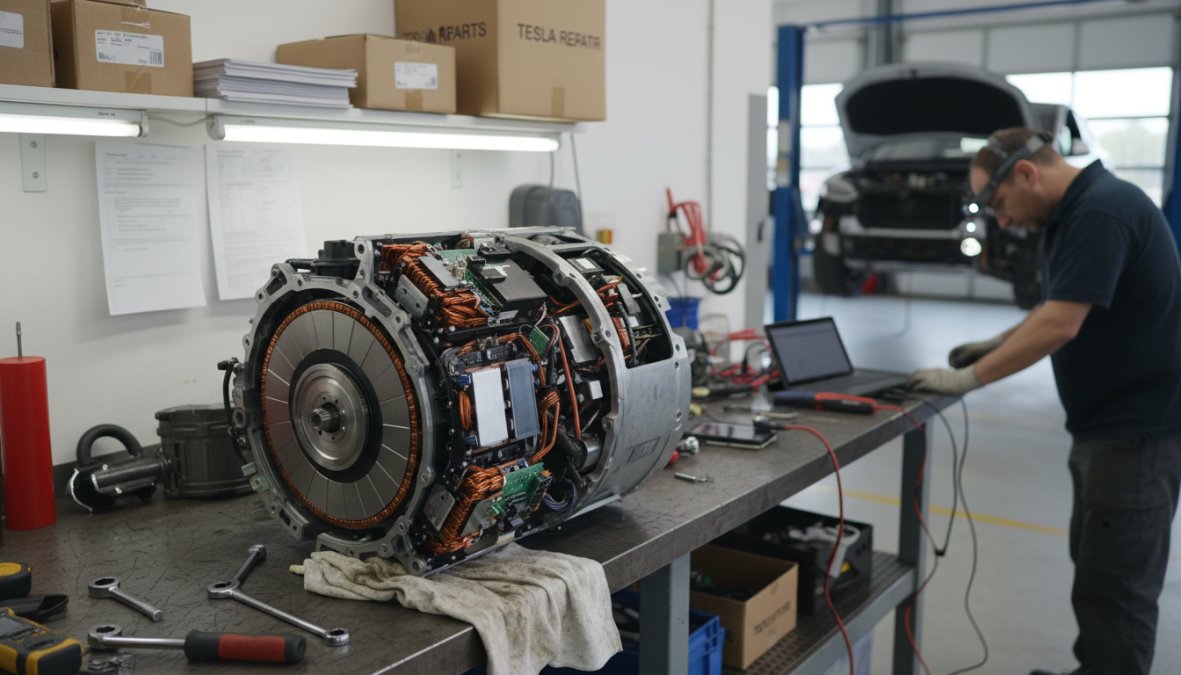
Understanding the tesla drive unit repair cost is one of the most important things any Tesla owner can do before a fault develops. At KMC Electric, our Level 4 Master Technicians have assessed drive unit faults across every Tesla model, and the price range is wider than most owners expect. Costs vary significantly depending on whether the unit is replaced new or remanufactured, whether you are in or out of warranty, and which model you own. Below, we cover exactly what drives those costs, how to spot failure early, and where owners in Kettering and across Northamptonshire can get genuinely cost-effective repairs.
Here is what most guides get wrong: they focus on worst-case replacement figures without explaining that many drive unit issues can be addressed at a fraction of full replacement cost if caught early. The drivetrain on a Tesla is not a single component. It combines the electric motor, single-speed gearbox, inverter, and reduction gear into one integrated assembly. A fault in one area does not automatically mean the entire unit needs replacing.
Cost Breakdown by Repair Scenario
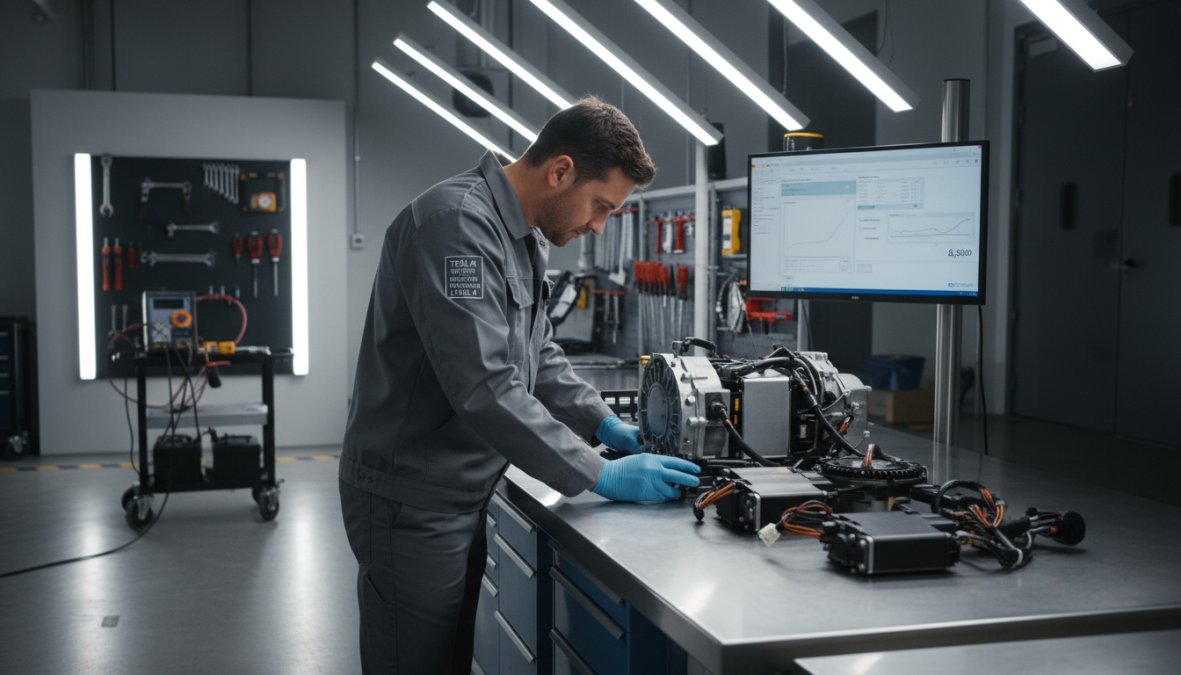
Tesla drive unit repair cost varies by the nature of the fault, not just the model. Here is a practical breakdown of the most common repair scenarios:
Repair Scenario | Estimated Cost (GBP) | Notes |
|---|
Diagnostic fee | £100 - £250 | Required before any repair quote |
Gear oil flush and service | £150 - £300 | Preventative; extends unit life significantly |
Bearing replacement | £400 - £900 | Labour-intensive but avoids full replacement |
Inverter repair or replacement | £800 - £2,000 | Electrical component; skill-dependent |
Remanufactured drive unit (supply and fit) | £1,500 - £3,500 | Model-dependent; see below |
New OEM drive unit (supply and fit) | £4,000 - £8,000+ | Highest cost; typically Tesla Service Center only |
A common mistake is skipping the diagnostic fee to save money upfront. Without a proper diagnosis, there is no way to confirm whether you need a bearing replacement or a full drivetrain swap. The diagnostic fee pays for itself many times over.
Watch OutDo not ignore a grinding noise or whine on acceleration. Owners who delay diagnosis often find that a £600 bearing repair escalates to a £3,000+ drive unit replacement within months. Mechanical failure compounds quickly inside a single-speed gearbox.
Model-Specific Cost Differences: Model 3/Y vs Model S/X
Model 3 and Model Y drive units are generally less expensive to repair than those fitted to the Model S and Model X. The Model 3 rear drive unit, in particular, has become well-supported in the remanufactured parts market, which keeps costs competitive. Model Y shares much of the same drivetrain architecture, so parts availability is relatively strong.
Model S and Model X present a different picture. Earlier Model S units, particularly those produced before 2016, had well-documented issues with rotor seal failure and coolant intrusion. Sourcing parts for these older units is harder, and labour time is higher. Expect drive unit repair costs on a Model S or X to sit at the upper end of the ranges above, with full replacement often exceeding £6,000 when using new OEM components.
The dual-motor variants of any model carry additional complexity. Two drive units means two potential failure points, and labour costs reflect that.
Tesla Drive Unit Failure Symptoms You Should Not Ignore
Tesla drive unit failure symptoms follow a predictable pattern, and recognising them early is the single most effective way to control repair costs. The drivetrain does not usually fail without warning. Most owners report weeks or months of subtle signals before a major fault develops.
The most common symptoms include:
Whine on acceleration: A high-pitched noise that increases with speed points to bearing wear or gearbox friction inside the single-speed gearbox.
Grinding noise at low speed: Often indicates gear oil breakdown or early mechanical failure within the reduction gear.
Vibration through the floor: Can signal an imbalanced rotor or worn motor mounts.
"Vehicle May Not Restart" warning: One of Tesla's most serious drivetrain alerts. This message means the car has detected a fault severe enough to risk a no-start condition.
Loss of power or inconsistent torque delivery: Points to inverter or electrical component issues within the drive unit assembly.
Coolant smell or visible coolant loss: A sign of potential coolant intrusion into the motor, which causes rapid corrosion of internal electrical components.
Any one of these symptoms warrants a diagnostic appointment. Two or more together should be treated as urgent.
Step-by-Step Diagnostic Flowchart
Use this process to assess the severity of a suspected drive unit fault before booking a repair:
Note the symptom precisely. Is it a noise, a warning message, a power loss, or a physical sensation? Document when it occurs (acceleration, deceleration, constant speed, low speed only).
Check for stored fault codes. Use a Tesla-compatible OBD tool or request a vehicle health report from your service provider. Fault codes narrow the fault to a specific subsystem.
Assess the "Vehicle May Not Restart" warning. If this is active, do not drive the vehicle further. Arrange towing to an independent EV shop or Tesla Service Center immediately.
Check coolant level and condition. Milky or discoloured coolant alongside a drivetrain noise is a strong indicator of coolant intrusion into the motor assembly.
Book a specialist diagnostic. A Level 4-qualified EV technician can distinguish between a bearing fault, inverter fault, or full drive unit failure using live data analysis. This step determines whether you face a minor repair or a major replacement.
Pro TipOwners near Kettering can have a full drivetrain diagnostic carried out at KMC Electric without needing to visit a Tesla Service Center. Independent specialists with Level 4 Master Technician status can access the same depth of vehicle data and often provide a faster turnaround.
Tesla Drive Unit Warranty Coverage Explained
Tesla drive unit warranty coverage is one of the most misunderstood aspects of Tesla ownership, and the misunderstanding is almost always expensive. The powertrain warranty covers the drive unit assembly, motor, inverter, gearbox, and associated electrical components, but the duration, mileage cap, and what counts as a covered fault differ meaningfully by model and production year. Getting this wrong means either paying for a repair Tesla should cover, or wasting time pursuing a claim that was never going to succeed.
Current Powertrain Warranty Terms by Model (as of 2026)
Model | Powertrain Warranty Duration | Mileage Cap |
|---|
Model 3 Standard Range | 8 years | 100,000 miles |
Model 3 Long Range / Performance | 8 years | 120,000 miles |
Model Y Standard Range | 8 years | 100,000 miles |
Model Y Long Range / Performance | 8 years | 120,000 miles |
Model S | 8 years | Unlimited mileage |
Model X | 8 years | Unlimited mileage |
The unlimited mileage coverage on Model S and Model X is a significant advantage for high-mileage owners and is frequently overlooked. A Model S owner at 150,000 miles is still within powertrain warranty if the vehicle is under eight years old, a fact that changes the entire repair calculation.
For Model 3 and Model Y, the mileage cap is the binding constraint for most owners. A Long Range Model 3 used as a high-mileage commuter vehicle can exhaust its 120,000-mile limit well before the eight-year mark. Once the mileage cap is hit, the warranty lapses regardless of vehicle age.
According to Tesla's official warranty documentation, the powertrain warranty covers defects in materials or workmanship across the drive unit assembly. Labour costs for warranty repairs are covered at a Tesla Service Center. The key phrase is "defects in materials or workmanship", this is the standard Tesla will apply when assessing a claim, and it matters for how you frame a fault when you report it.
What the Warranty Actually Covers, and What It Does Not
The powertrain warranty covers the drive unit as a system. In practice, this means:
Covered: Rotor seal failure, bearing failure due to manufacturing defect, inverter failure, coolant intrusion resulting from a component defect, premature gear oil degradation caused by a manufacturing fault.
Not covered: Wear-and-tear on components that have exceeded their expected service life, faults caused by using non-approved fluids, physical damage from flooding or off-road use, and faults that developed after a known warning was ignored (Tesla's vehicle logs record fault codes and timestamps, so this is verifiable).
The distinction between a "defect" and "wear" is where most disputed warranty claims fail. A bearing that fails at 40,000 miles is almost certainly a defect. A bearing that fails at 95,000 miles on a vehicle where gear oil was never changed is much harder to argue as a manufacturing fault. Tesla's service team will review vehicle logs, and those logs include fluid service history where applicable.
What Voids Your Powertrain Warranty
Several actions can void or complicate a Tesla powertrain warranty claim:
Using non-approved fluids in the drivetrain, including incorrect gear oil specifications
Physical damage to the drive unit or its cooling system from off-road use or flooding
Modifications to the drivetrain, inverter, or grounding components
Evidence of third-party tampering with sealed drive unit components
Failure to address a known fault after receiving a warning (documented by vehicle logs)
One important nuance: having your Tesla serviced by an independent specialist does not automatically void your warranty in the UK. Under UK consumer rights legislation, owners are entitled to have their vehicles serviced by any competent technician using approved parts and procedures. The key is documentation. Keep records of every service, every part used, and every diagnostic performed. If an independent specialist carries out a gear oil flush using correctly specified fluid and records it properly, that service history supports rather than undermines a future warranty claim.
The single most cost-effective use of the powertrain warranty is a pre-expiry inspection carried out by an independent specialist before the warranty lapses. This is not a Tesla-offered service, it is something owners need to proactively arrange.
The logic is straightforward: Tesla's vehicle logs capture developing faults, and a Level 4-qualified EV technician can read those logs and identify fault codes that point to early-stage drive unit wear. If a developing bearing fault or rotor seal issue is identified while the vehicle is still within warranty, the repair is carried out at Tesla's cost. If the same fault is identified six months after warranty expiry, the owner pays.
For Model 3 and Model Y owners approaching 90,000 to 100,000 miles, or approaching the seven-year mark, a pre-expiry drivetrain inspection is not optional, it is the most financially rational thing they can do.
Pro TipOwners near Kettering can have a full drivetrain diagnostic carried out at KMC Electric without needing to visit a Tesla Service Center. Independent specialists with Level 4 Master Technician status can access the same depth of vehicle data and often provide a faster turnaround. If a covered fault is identified, the findings can be used to support a warranty claim at a Tesla Service Center.
Insurance Coverage: Can You Claim for Drive Unit Failure?
Standard UK comprehensive car insurance does not cover mechanical or electrical failure, including drive unit faults. This catches many Tesla owners off guard, particularly given the cost involved.
The routes to insurance-related coverage are more specific:
Mechanical breakdown insurance (MBI): A separate policy that covers mechanical and electrical faults. Some specialist EV insurers offer MBI as an add-on. Coverage terms vary significantly, and exclusions for wear-and-tear or pre-existing conditions are common. Read the policy wording carefully before assuming a drive unit fault is covered. The critical clauses to check are the definition of "sudden and unforeseen" failure versus "gradual deterioration", a bearing that whines for three months before failing may be classified as gradual deterioration and declined.
Extended warranty products: Third-party extended warranties can cover drivetrain components after the manufacturer warranty expires. Quality varies widely. Policies that explicitly list the drive unit, inverter, and electric motor as covered components offer the strongest protection. Policies that use vague language like "drivetrain" without specifying the inverter or motor controller should be treated with caution, these are the components most likely to generate a large claim, and insurers know it.
GAP insurance: Relevant only if the vehicle is written off, not for repair costs.
Section 75 of the Consumer Credit Act: If the vehicle was purchased on finance and developed a fault within a reasonable period, the finance provider may share liability with the dealer. This is not insurance, but it is a legitimate route for owners who bought a vehicle with an undisclosed pre-existing drivetrain fault. The fault does not need to have been visible at purchase, if it can be shown that the condition was developing at the time of sale, a Section 75 claim has merit.
According to the Association of British Insurers' guidance on EV insurance products, the market for specialist EV breakdown and mechanical failure cover is expanding as EV ownership increases. Owners should review their cover annually rather than assuming their existing policy is adequate.
Watch OutMany standard extended warranty policies exclude "gradual deterioration" or "wear and tear." A drive unit that fails due to bearing wear may be declined under these clauses. Always confirm with the insurer in writing before assuming a claim will succeed. Ask specifically: "Is bearing failure in the drive unit covered if it developed progressively rather than suddenly?" Get the answer in writing.
Remanufactured Tesla Drive Unit Cost vs New: Which Is Worth It?
The remanufactured Tesla drive unit cost is typically between 40% and 60% lower than a new OEM unit, and for the majority of out-of-warranty owners, a quality remanufactured unit is the right choice. This is not a compromise. A properly remanufactured drive unit is rebuilt to OEM specification, with worn components replaced and the assembly tested before fitting.
Option | Typical Cost (GBP) | Warranty | Best For |
|---|
New OEM unit | £4,000 - £8,000+ | Tesla warranty (if in-warranty) | In-warranty vehicles |
Remanufactured unit | £1,500 - £3,500 | Typically 12 months (supplier-dependent) | Out-of-warranty vehicles |
Repaired original unit | £400 - £2,000 | Workshop guarantee | Isolated faults (bearing, seal) |
The case for remanufactured units is strong for Model S and Model 3 owners out of warranty. The remanufacturing process typically addresses the known failure points of each generation, including rotor seal upgrades on early Model S units. According to guidance from the Electric Vehicle Association on remanufactured EV components, remanufactured drivetrain components have become an accepted and technically sound option for EV fleet operators and private owners alike.
Where remanufactured units fall short: if the vehicle is still within its powertrain warranty, fitting a non-OEM unit will complicate future warranty claims. In that scenario, use the Tesla Service Center for the repair.
Key TakeawayFor out-of-warranty Tesla owners, a remanufactured drive unit from a reputable supplier, fitted by a Level 4-qualified independent EV specialist, delivers the best balance of cost and reliability. New OEM units are only worth the premium when the vehicle is in warranty.
Common Causes of Tesla Drive Unit Failure
Understanding why Tesla drive units fail, not just that they fail, is what separates owners who catch a fault at the £400 bearing stage from those who arrive at the £4,000 replacement stage. Each failure mode has a distinct mechanism, a distinct set of early warning signs, and a distinct point at which the damage becomes irreversible. The section below covers each cause at the level of detail that actually changes owner behaviour.
1. Rotor Seal Degradation and Coolant Intrusion (Early Model S, Pre-2016)
This is the most extensively documented Tesla drive unit failure mode, and it remains relevant for any owner of a pre-2016 Model S. The drive unit on these vehicles uses a rotor shaft seal to separate the coolant circuit from the motor internals. When that seal degrades, a process accelerated by thermal cycling, age, and high mileage, coolant migrates into the motor cavity.
The mechanism matters: coolant does not immediately destroy the motor. Instead, it creates a corrosive environment around the copper windings and electrical connections inside the stator. Over weeks to months, this corrosion degrades insulation resistance, causes intermittent electrical faults, and eventually leads to winding failure or inverter damage as the contaminated coolant circulates through the thermal management system.
The early warning signs are subtle: a faint coolant smell from the front or rear of the vehicle (depending on which unit is affected), unexplained coolant level drops with no visible external leak, and intermittent power delivery faults that do not produce a consistent fault code. By the time a "Vehicle May Not Restart" warning appears, the internal damage is typically severe.
Tesla updated the rotor seal specification in later production runs. Remanufactured drive units for pre-2016 Model S vehicles from reputable suppliers incorporate the revised seal design, which is one of the concrete advantages of a quality remanufactured unit over simply resealing an original.
Owner action: Pre-2016 Model S owners should have coolant inspected for contamination at every service interval, not just when a symptom appears. Milky, discoloured, or oil-contaminated coolant is the clearest early indicator.
2. Gear Oil Breakdown and Bearing Wear (All Models, All Years)
This is the most preventable cause of drive unit failure and the one most directly within owner control. The Tesla drivetrain uses a single-speed reduction gearbox that runs in a shared oil bath with the motor bearings. That oil has a finite service life. As it degrades, its viscosity changes, its lubrication film thins, and the additives that protect metal surfaces from direct contact are depleted.
The failure progression follows a consistent pattern:
Oil degradation: Gear oil loses viscosity and lubrication properties, typically accelerated by high operating temperatures from frequent fast charging, sustained high-speed motorway driving, or towing.
Increased bearing friction: As the oil film thins, the motor bearings, which spin at thousands of RPM, begin to experience metal-to-metal contact at the microscopic level. This produces the characteristic high-pitched whine on acceleration that owners often describe as a "jet engine" sound.
Bearing wear particle contamination: As bearing surfaces wear, metallic particles enter the oil. These particles act as an abrasive, accelerating wear on both the bearings and the gear teeth.
Gear tooth damage: Once gear tooth surfaces are compromised, the failure mode shifts from a repairable bearing replacement to a full drive unit replacement. This transition can happen within a few thousand miles once contamination reaches a critical level.
The practical implication: the difference between a £400-£600 bearing service and a £3,000+ drive unit replacement is often a single gear oil change that was skipped. Tesla's official guidance on gear oil service intervals has evolved over the years, and earlier documentation suggested longer intervals than many independent specialists now recommend based on real-world wear patterns.
Recommended intervals for UK owners:
Model 3 and Model Y: Inspect at 30,000 miles; change by 50,000 miles or every four years, whichever comes first
Model S and Model X: Inspect at 25,000 miles given the age profile of most vehicles now in circulation; change if any metallic content or viscosity change is detected
Any vehicle used for regular towing: Reduce interval by approximately 30% due to elevated thermal load
Owner action: Use only correctly specified drivetrain oil. Off-specification fluids, including some general-purpose gear oils marketed as compatible, do not provide the same thermal stability or additive package. The drive train oil available from KMC Electric is correctly specified for Tesla drivetrain use.
3. Inverter Failure from Thermal Stress and Electrical Faults
The inverter is the component that converts DC battery power into the AC current that drives the motor. It is integrated into the drive unit assembly and is exposed to the same thermal environment as the motor and gearbox. Inverter failure is less common than bearing wear but produces a more dramatic and immediate fault, typically a sudden loss of drive power rather than a gradual degradation.
The primary causes of inverter failure are:
Thermal overstress: Repeated deep discharge and fast-charge cycles, particularly in hot ambient conditions, place sustained thermal load on the inverter's power electronics (IGBTs or MOSFETs depending on generation). Over time, thermal cycling causes solder joint fatigue and delamination of internal components.
Coolant contamination: If coolant intrusion reaches the inverter, either from a rotor seal failure or from a degraded inverter cooling plate gasket, the result is typically rapid and catastrophic electrical failure.
Grounding faults: Corroded or loose grounding connections between the drive unit and the vehicle chassis can cause voltage spikes that stress inverter components. This is a less obvious cause that is frequently missed in diagnostics focused only on the drive unit itself.
Inverter faults typically produce fault codes in the vehicle's diagnostic system before a complete failure occurs. Codes related to motor controller temperature, insulation resistance, or phase current imbalance are early indicators. A Level 4-qualified technician reading live data can often identify an inverter under stress before it fails completely, at which point a targeted repair is still possible rather than a full drive unit replacement.
Owner action: Do not dismiss intermittent power reduction events or "reduced power" warnings as software glitches. These are often the inverter's thermal protection system activating, and repeated activation indicates a developing fault.
4. Corrosion from Road Salt and Environmental Exposure (UK-Specific)
This cause is disproportionately relevant for UK owners and is consistently underweighted in guides written for the US market. UK roads are heavily salted from November through March, and that salt finds its way into every external surface of the drivetrain.
The specific failure mechanisms for UK conditions:
External casing corrosion: The drive unit casing is aluminium, which forms a protective oxide layer but is vulnerable to galvanic corrosion where it contacts steel fasteners or brackets. Corroded fasteners make future servicing significantly more difficult and expensive, a straightforward bearing replacement becomes a multi-hour job if seized bolts need to be extracted.
Coolant hose and connector degradation: Salt accelerates degradation of rubber coolant hoses and electrical connector seals on the exterior of the drive unit. A failed connector seal allows moisture ingress that can cause intermittent electrical faults misdiagnosed as drive unit failure.
Underbody accumulation: Vehicles that are not regularly cleaned underneath accumulate salt-laden mud in the drive unit bay. This creates a sustained corrosive environment rather than the intermittent exposure of road driving.
Owner action: Underbody washing at least once monthly through the winter months is not cosmetic maintenance, it is drivetrain protection. Pay specific attention to the drive unit bay and the coolant hose routing. A pressure washer on a low setting is sufficient; high-pressure direct spray at electrical connectors should be avoided.
5. High-Mileage Towing and Sustained Thermal Load
Towing at or near the vehicle's rated capacity places sustained thermal load on the drive unit that exceeds what normal driving produces. The motor runs at higher current draw for extended periods, the inverter operates at elevated temperature, and the gear oil reaches higher sustained temperatures that accelerate degradation.
This is not a reason to avoid towing, Tesla vehicles are rated for towing and the drivetrain is designed to handle it. The issue is maintenance intervals. An owner who tows a caravan regularly and changes gear oil on the standard interval is running degraded oil in a thermally stressed drivetrain. The combination accelerates every wear mechanism described above.
Owner action: If you tow regularly, treat your gear oil interval as approximately 30% shorter than the standard recommendation. If you notice a whine or vibration after a long towing trip that was not present before, book a diagnostic promptly rather than waiting for the next scheduled service.
Key TakeawayThe majority of Tesla drive unit failures are not sudden events, they are the end point of a progression that started with a missed oil change, an ignored noise, or a coolant level that was never checked. Each failure mode has a point at which intervention costs hundreds of pounds. Past that point, it costs thousands. The mechanism is different for each cause, but the pattern is the same: early action is cheap, late action is expensive.
Tesla Service Center vs Independent EV Shop: Which Costs Less?
The honest answer: for out-of-warranty repairs, an independent EV specialist almost always costs less than a Tesla Service Center for equivalent work. The labour rate differential is significant, and independent shops can source remanufactured or third-party components that Tesla's own service network does not offer.
For in-warranty repairs, the Tesla Service Center is the correct choice. Warranty work is covered at no cost, and using an independent shop for a warranty-eligible fault creates unnecessary complications.
The practical picture for most UK owners with vehicles outside warranty is this: a Tesla Service Center will quote for new OEM components at OEM labour rates. An independent specialist with genuine EV qualifications can carry out the same repair using a remanufactured unit at materially lower cost, often with a faster service bay turnaround.
KMC Electric, based in Kettering, Northamptonshire, operates as exactly this kind of independent specialist. With over 25 years of automotive experience and Level 4 Master Technician status in EVs since 2016, the team provides the technical depth of a main dealer network without the associated cost structure.
DIY vs Professional Repair: Is It Feasible?
DIY Tesla drive unit repair is not feasible for the vast majority of owners, and attempting it without specialist equipment carries serious risk.
The drive unit is a high-voltage assembly. Safe removal and handling requires HV isolation procedures, specialist lifting equipment, and calibrated diagnostic tools. Beyond safety, the drive unit contains sealed components that require specialist tooling to access. Attempting to open the unit without the correct equipment will damage it beyond repair.
Where DIY is genuinely viable: consumable maintenance tasks. Gear oil changes on the Model 3 and Model Y are accessible to technically capable owners with the right tools and approved fluids. The drive train oil available from KMC Electric is correctly specified for Tesla drivetrain use, and pairing it with the correct oil filter and oil pump bolts ensures the service is done to specification. Anything beyond fluid maintenance should go to a qualified professional.
Regional Price Variations Across the UK
Tesla drive unit repair costs vary by region, and UK owners should factor this into their decision about where to take their vehicle. London and the South East carry the highest labour rates, with independent specialist labour often running at a premium compared to the Midlands and North.
Kettering and the wider East Midlands region sit in a mid-range bracket for EV specialist labour. For owners in Northamptonshire and surrounding counties, this represents a genuine cost advantage compared to sending a vehicle to a London-based specialist or a Tesla Service Center in a major city. Travelling to a specialist near me in the Midlands rather than defaulting to the nearest Tesla Service Center is worth calculating on a repair of this scale.
Preventative Maintenance to Reduce Tesla Drive Unit Repair Costs
Preventative maintenance is the most cost-effective tool available to Tesla owners, and it is consistently underused. A routine gear oil flush costs a fraction of a bearing replacement, and a bearing replacement costs a fraction of a full drive unit swap. The maintenance hierarchy is clear.
The core preventative maintenance tasks for Tesla drive units are:
Gear oil inspection and flush: Recommended every 30,000 to 50,000 miles on Model 3 and Model Y. Earlier Model S and X units may benefit from more frequent intervals given their age and known wear patterns.
Coolant system inspection: Check for signs of contamination or level loss annually, particularly on older Model S vehicles with known rotor seal history.
Grounding components check: Corroded or loose grounding components can cause intermittent electrical faults that are incorrectly attributed to the drive unit itself.
Drivetrain noise monitoring: A brief check at each service for new noises, vibrations, or changes in acceleration feel. Early detection of whine on acceleration is the single most effective way to catch bearing wear before it progresses.
Pre-warranty-expiry inspection: Before the powertrain warranty expires, a full drivetrain inspection by an independent specialist can identify developing faults that Tesla should repair under warranty at no cost to the owner.
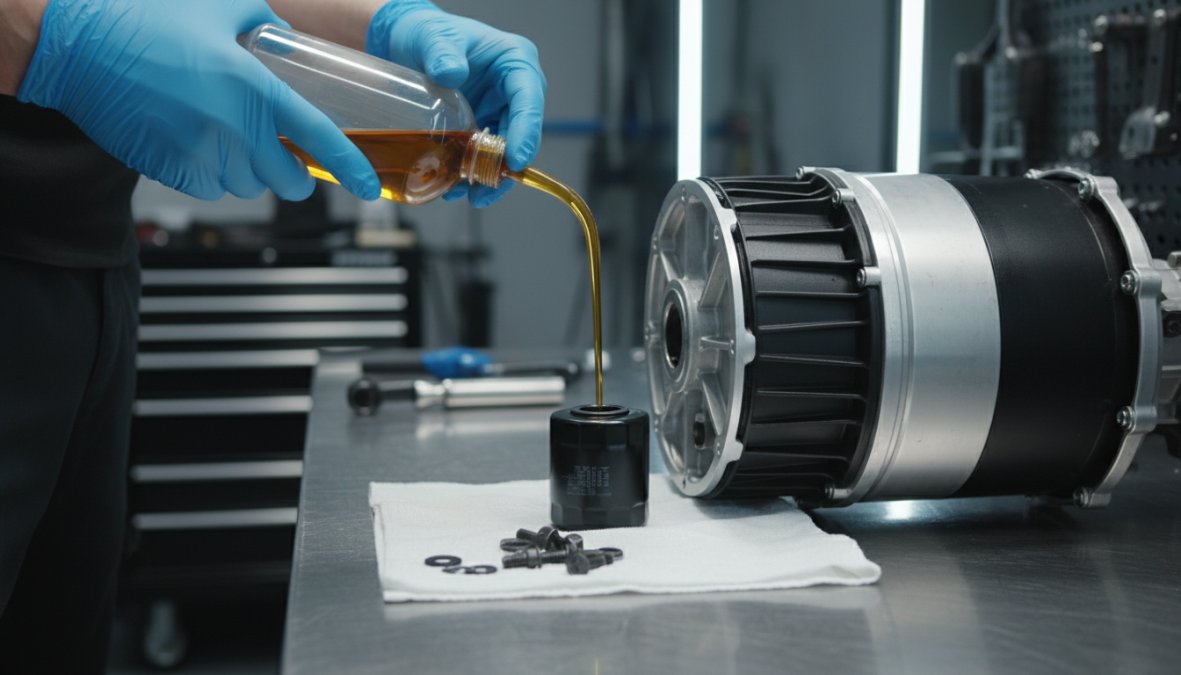
Using the correct specification drivetrain oil matters. Off-spec fluids accelerate wear inside the single-speed gearbox and can void warranty coverage. For Model 3 and Model Y owners carrying out their own fluid maintenance, correctly specified drive train oil and matching components are available directly from KMC Electric.
Insurance Coverage: Can You Claim for Drive Unit Failure?
Standard UK comprehensive car insurance does not cover mechanical or electrical failure, including drive unit faults. This catches many Tesla owners off guard, particularly given the cost involved.
The routes to insurance-related coverage are more specific:
Mechanical breakdown insurance (MBI): A separate policy that covers mechanical and electrical faults. Some specialist EV insurers offer MBI as an add-on. Coverage terms vary significantly, and exclusions for wear-and-tear or pre-existing conditions are common. Read the policy wording carefully before assuming a drive unit fault is covered.
Extended warranty products: Third-party extended warranties can cover drivetrain components after the manufacturer warranty expires. Quality varies widely. Policies that explicitly list the drive unit, inverter, and electric motor as covered components offer the strongest protection.
GAP insurance: Relevant only if the vehicle is written off, not for repair costs.
Section 75 of the Consumer Credit Act: If the vehicle was purchased on finance and developed a fault within a reasonable period, the finance provider may share liability with the dealer. This is not insurance, but it is a legitimate route for owners who bought a vehicle with an undisclosed pre-existing drivetrain fault.
According to the Association of British Insurers' guidance on EV insurance products, the market for specialist EV breakdown and mechanical failure cover is expanding as EV ownership increases. Owners should review their cover annually rather than assuming their existing policy is adequate.
Watch OutMany standard extended warranty policies exclude "gradual deterioration" or "wear and tear." A drive unit that fails due to bearing wear may be declined under these clauses. Always confirm with the insurer in writing before assuming a claim will succeed.
Tesla drive unit faults are expensive when they are not caught early, and the difference between a £300 gear oil service and a £4,000 drivetrain replacement often comes down to how quickly the warning signs are acted on. For Tesla owners in Kettering and across Northamptonshire looking for a cost-effective alternative to main dealer pricing, KMC Electric offers professional diagnosis, repair, and preventative maintenance backed by Level 4 Master Technician status and over 25 years of automotive experience. Book a drivetrain inspection with KMC Electric before a minor fault becomes a major one.
Frequently Asked Questions
How much does it cost to replace a Tesla drive unit?
Tesla drive unit repair cost varies significantly depending on the model and whether you choose a new, remanufactured, or reconditioned unit. Out-of-warranty replacements at a Tesla Service Center can run into several thousand pounds, while an independent EV specialist may offer remanufactured units at a considerably lower price. Model S and Model X units tend to cost more than Model 3 or Model Y equivalents due to component complexity and parts availability.
Are Tesla drive units covered under warranty?
Tesla drive unit warranty coverage falls under the powertrain warranty, which typically covers 8 years or a set mileage limit depending on the model and battery size. If your vehicle is still within this period, Tesla should replace a faulty drive unit at no cost. However, warranty coverage can be affected by factors such as modifications, corrosion from neglect, or damage caused by improper towing. Always check your specific vehicle's warranty documentation before booking a repair.
What are the symptoms of a failing Tesla drive unit?
Common Tesla drive unit failure symptoms include a whine on acceleration, grinding noise during low-speed manoeuvres, vibration through the drivetrain, and in more serious cases a 'Vehicle May Not Restart' warning on the touchscreen. Bearing wear and coolant intrusion are frequent underlying causes. If you notice any of these signs, it is advisable to get a diagnostic inspection promptly, as early intervention can sometimes reduce overall repair costs significantly.
Can a Tesla drive unit be repaired, or does it always need full replacement?
Not every fault requires a full replacement. Depending on the cause, a specialist may be able to address specific issues such as a rotor seal leak, bearing wear, or a gear oil flush to restore performance. A remanufactured Tesla drive unit is also a cost-effective middle ground between a full new unit and a basic repair. An experienced independent EV shop with Level 4 Master Technician status can diagnose whether a targeted repair or a full unit swap is the right approach for your situation.
How long does a Tesla drive unit last?
Tesla drive units are generally designed to last the lifetime of the vehicle under normal conditions, and many owners report well over 100,000 miles without major issues. However, factors such as coolant intrusion, lack of preventative maintenance like gear oil flushes, aggressive driving habits, and corrosion can shorten the service life. Regular inspections by an independent EV specialist can help identify early warning signs before they develop into costly mechanical failure.