Cleaning Tesla vegan leather seats properly starts with the right kit, not the hardest scrubbing. Tesla's synthetic upholstery is a polyurethane-based material, not animal hide, so it behaves differently from traditional leather. Harsh products that work on cowhide can dry it out, break down the surface coating, or leave a sticky film that attracts more dirt.
At KMC Electric, we work on Tesla interiors across Kettering and Northamptonshire every week, and the same mistakes come through the door. Owners reach for household cleaners, then wonder why the seats look patchy a month later.
Gather these before you touch a single seat:
Two soft microfibre cloths (one for cleaning, one for drying)
A soft upholstery brush or a clean make-up brush
A vacuum with a crevice tool
A pH-neutral interior cleaner
A bucket of warm water
A spray bottle
Skip paper towels, abrasive sponges, and anything containing bleach, ammonia, or alcohol. Those strip the protective layer that keeps the material supple.
Watch OutNever use a Magic Eraser or a scouring pad on Tesla seats. It grinds away the top coating and leaves a dull, chalky patch that no conditioner can fix. The damage is permanent.
Step-by-Step: How to Clean Tesla Vegan Leather Seats Properly
The full process takes about 20 to 30 minutes for a standard five-seat cabin. Work one seat at a time, top to bottom, and don't rush the drying stage.
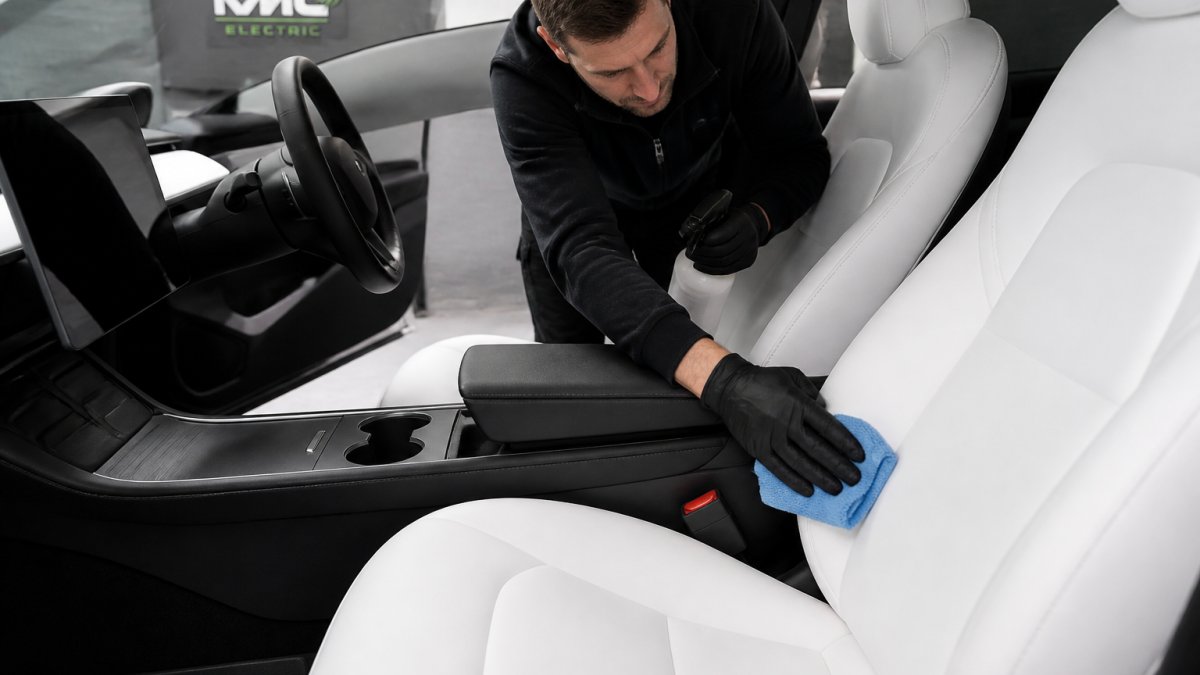
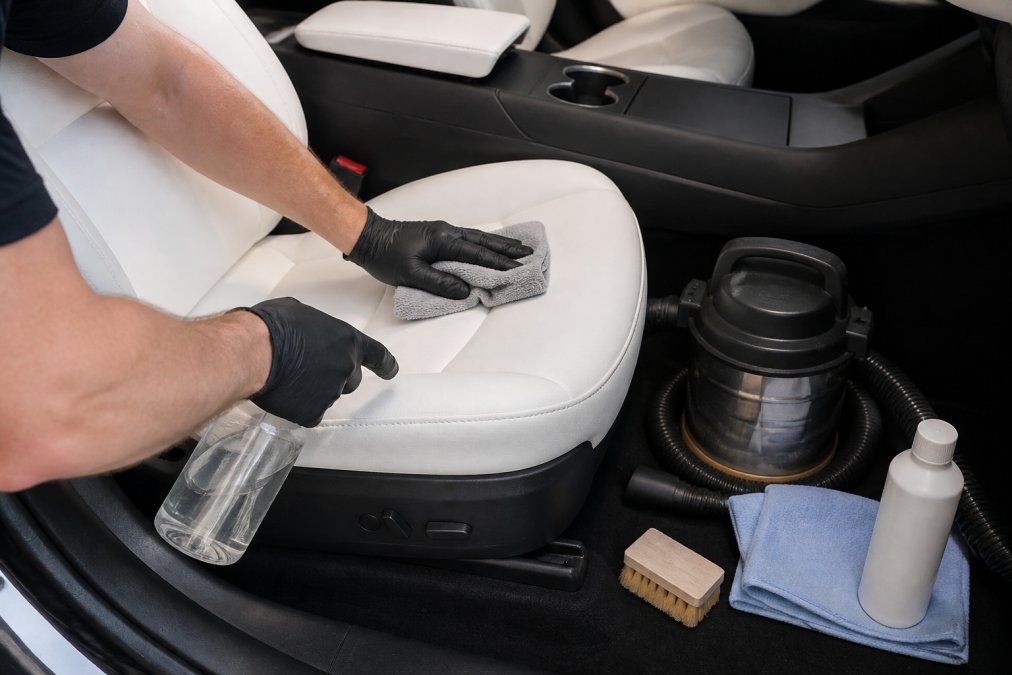
Person using a microfibre cloth to clean white synthetic leather car seats with spray and a small vacuum nearby
Step 1: Vacuum Loose Dirt and Debris
Dirt and grit act like sandpaper once you start wiping. Vacuum first, always.
Use the crevice tool along the seat rails, the gap between the base and backrest, and the stitching channels. Those seams trap crumbs, hair, and road dust that a cloth just pushes around. A soft brush attachment works well on the perforated sections of ventilated seats.
Pay attention to the bolsters. That's where most of the grime hides, because it's where you slide in and out.
Step 2: Wipe Down With a pH-Neutral Cleaner
Spray the cleaner onto your microfibre cloth, not directly onto the seat. Direct spraying pushes liquid into the perforations and the seat heaters underneath.
Wipe in straight lines with light pressure. Let the cleaner do the work. For textured areas, use the soft brush in small circles, then wipe away the lifted dirt with a clean part of the cloth.
Rinse the cloth in warm water as it gets dirty. A dirty cloth just spreads grime back across the surface.
Step 3: Dry and Condition the Surface
Buff the seat dry with your second, clean microfibre cloth. Leaving moisture behind can cause water marks and, over time, weaken the coating.
Tesla's own guidance is to avoid conditioning products on vegan leather. The material doesn't absorb them the way real hide does, so they sit on the surface and attract dust. If you want a little protection, a dedicated synthetic-safe interior dressing applied sparingly is enough. Less is more here.
The Best Cleaner for Tesla Vegan Leather
The best cleaner for Tesla vegan leather is a pH-neutral, water-based interior cleaner with no alcohol, ammonia, or silicone. That's the whole spec. You don't need a specialist product with a premium label.
What to look for on the bottle:
pH neutral (around 7)
Water-based formula
Free from alcohol, ammonia, and bleach
Safe for synthetic upholstery
No silicone or heavy gloss additives
What to avoid entirely: leather conditioners, saddle soap, all-purpose kitchen sprays, and anything designed for real hide. These are formulated for porous animal leather and do the wrong job on a sealed synthetic surface.
A mild solution of warm water and a drop of pH-neutral soap works fine for routine cleaning. Save the stronger stuff for stains.
How to Remove Stains From White Tesla Seats
White Tesla seats show everything, but they clean up better than most owners expect. The key is speed. The longer a stain sits, the more it bonds to the coating.
Match the method to the stain:
Stain Type
Method
Watch Out For
Coffee or tea
pH-neutral cleaner, blot, repeat
Don't rub, it spreads
Denim dye transfer
Diluted pH-neutral cleaner, soft brush
May need two or three passes
Sunscreen
Warm water first, then cleaner
Sets fast in heat
Ink
Small amount of isopropyl on a cloth
Test a hidden area first
Grease
pH-neutral cleaner, gentle agitation
Avoid hot water
For dye transfer from dark jeans, work in small sections and be patient. Aggressive scrubbing on white material leaves visible wear marks that stand out more than the original stain.
Pro TipBlot stains from the outside in, not across the middle. Working inward stops the stain spreading into clean material. It's the single biggest difference between a seat that comes up clean and one that ends up with a grey halo.
Tesla Seat Cleaning Frequency: How Often Is Enough?
Tesla seat cleaning frequency depends on use, not the calendar. A weekly wipe-down is overkill for most owners. A monthly clean suits the average daily driver.
Every three months: Deeper clean, including bolsters and stitching
After any spill: Immediately, no waiting
If you have kids, dogs, or regularly eat in the car, move everything up a gear. If the car sits in a garage most of the week, you can stretch it out.
Hot weather matters too. UV exposure through the windows dries out the surface faster, so summer months call for more attention, not less.
Preventing Vegan Leather Cracking and Wear
Preventing vegan leather cracking comes down to two things: keeping the surface clean and keeping it out of harsh sun. The material is tough, but it isn't indestructible.
Practical habits that make a real difference:
Park in shade or use a windscreen sunshade in summer
Wipe up spills straight away
Avoid sharp objects in back pockets
Don't slide across the bolsters when getting in
Keep pets on a seat cover, not the bare upholstery
Skip harsh chemicals, always
A common mistake is over-cleaning with strong products. Owners think more effort equals better results. In practice, frequent gentle cleaning beats occasional aggressive cleaning every time.
If you notice early signs of wear, such as a slight sheen change or fine surface lines on the bolsters, get it looked at. Small issues caught early stay small. This is the same principle behind the pre-warranty checks we run at KMC Electric for Tesla owners in Kettering and across Northamptonshire. Catching a problem early is almost always cheaper than fixing it later.
Key TakeawayThe two habits that protect Tesla vegan leather most are shade and speed: park out of direct sun, and deal with spills the moment they happen. Everything else is secondary.
Common Mistakes to Avoid
Most seat damage we see isn't from age. It's from cleaning. Here are the mistakes that come up again and again.
Using leather conditioner. Vegan leather is sealed. Conditioner can't soak in, so it sits on top, grabs dust, and creates a greasy shine.
Spraying cleaner directly on the seat. Liquid pools in the perforations and can reach the seat heating elements. Always spray the cloth.
Scrubbing hard on stains. Pressure doesn't lift stains faster. It just wears the coating. Let the cleaner sit for a few seconds and blot.
Using household multi-surface sprays. These often contain alcohol or ammonia, which dry out the material and dull the finish over time.
Ignoring the seams. Dirt builds up in the stitching and slowly works into the surface. Vacuum them properly.
Cleaning in direct sunlight. The cleaner dries before you can wipe it off, leaving streaks. Work in shade or on a cool surface.
If you're unsure whether a product is safe, test it on a small hidden area first, such as under the seat or on the back of the headrest. It takes ten seconds and saves a lot of regret.
Tesla vegan leather holds up well when you treat it with the right products and a bit of patience. The real challenge is knowing when a mark is just surface dirt and when it signals something deeper, like wear in the coating or an issue under the seat. That's where a trained eye helps.
Frequently Asked Questions
Can I use standard leather cleaners on Tesla vegan leather?
No. Tesla's vegan leather is a polyurethane-based synthetic material, not animal hide, so traditional leather cleaners and conditioners are formulated for a different surface. Solvent-based or oil-rich leather products can leave a greasy residue or degrade the finish over time. Stick to a pH-neutral, water-based cleaner designed for synthetic upholstery, applied with a soft microfibre cloth, then wipe dry.
How do I remove denim dye transfer from white Tesla seats?
Denim dye transfer is one of the most common issues on white Tesla vegan leather. Act quickly: blot the area with a damp microfibre cloth and a pH-neutral cleaner, working from the outside of the mark inwards to avoid spreading it. For stubborn transfer, a diluted solution of warm water and a small amount of mild soap usually lifts it. Avoid scrubbing hard, which can abrade the surface coating.
How often should I clean my Tesla seats to prevent wear?
A light wipe-down every two to four weeks keeps most Tesla vegan leather in good condition, with a deeper clean every three months. If you carry passengers, pets, or children regularly, clean weekly. In summer, when UV exposure and sweat are higher, increase the frequency. Regular cleaning removes the oils and grit that cause premature cracking and discolouration.
What products should I avoid when cleaning Tesla vegan leather?
Avoid alcohol-based cleaners, ammonia, bleach, abrasive pads, and any product containing petroleum distillates. These can strip the protective coating, cause the surface to dry out, and accelerate cracking. Also skip silicone-based dressings, which attract dust and leave a slippery finish. If you are unsure about a product, test it on a hidden area first.