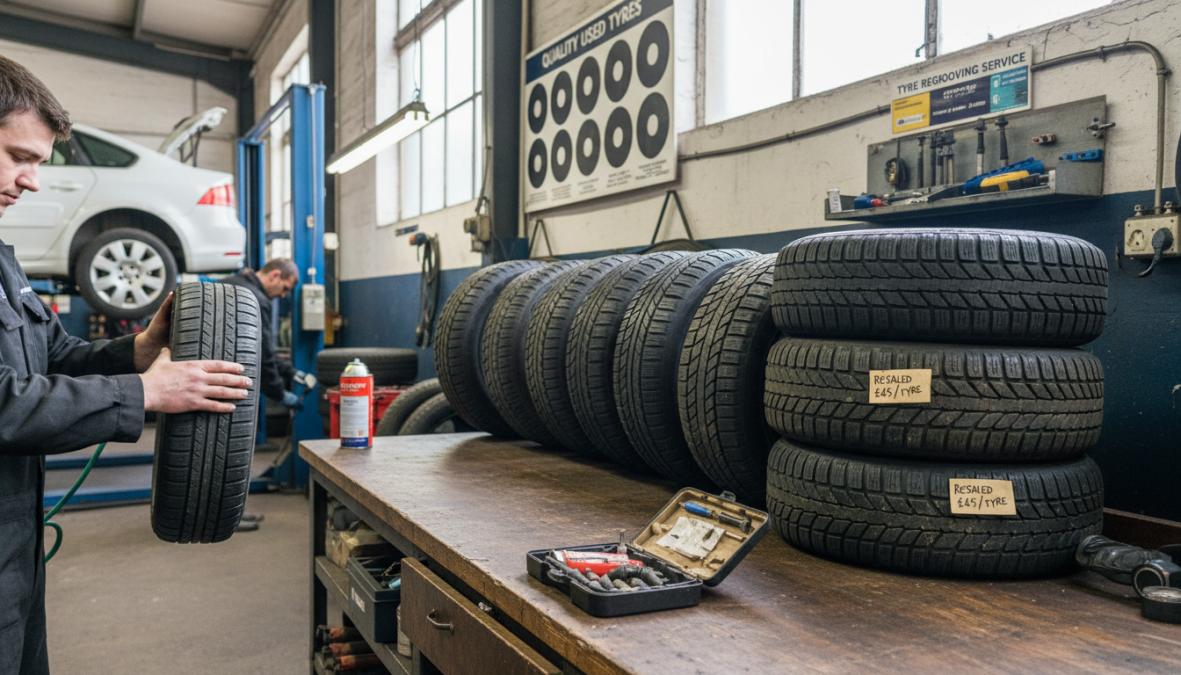
Tyre bills have a habit of arriving at the worst possible moment. Alternatives to expensive tyre replacement exist for almost every common scenario, and knowing which option fits your situation can save you a significant amount of money without compromising your safety. This guide from KMC Electric, an independent automotive specialist based in Kettering, Northamptonshire, walks through every credible option available to UK drivers in 2026. Below, we cover everything from DIY plug kits and emergency sealants to run-flat technology and budget tyre brands, so you can make an informed decision before handing over your card at a tyre shop.
Here is what most guides get wrong: they treat "replace or repair" as a binary choice decided at the counter, under pressure, with a mechanic waiting. The reality is that the decision should be made before you ever get a puncture, based on your vehicle type, typical mileage, and risk tolerance. The sections below give you the framework to do exactly that.
Why Alternatives to Expensive Tyre Replacement Are Worth Knowing
Tyre replacement is one of the most common unexpected costs in automotive maintenance, and it is rarely cheap. A single premium tyre for a modern saloon or SUV can run well into three figures when you factor in fitting, balancing, and disposal. Multiply that by four and you are looking at a bill that rivals some service costs.
The good news is that many situations that feel like full replacements are actually straightforward repairs. A nail in the central tread area, for example, is almost always repairable by a professional garage at a fraction of the cost. The problem is that drivers often lack the knowledge to push back when a tyre shop recommends full replacement.
Understanding your options also matters for electric vehicle owners specifically. EVs are typically heavier than equivalent petrol vehicles, which accelerates tyre wear. Many Tesla models and other EVs use specific tyre compounds rated for the additional load, which makes replacements more expensive than average. At KMC Electric, we see this regularly with Tesla owners in Kettering and across Northamptonshire who are surprised by how quickly tyres wear on performance EV variants.
The core principle here is simple: a repairable tyre that is professionally repaired is just as safe as a new one, provided the damage falls within accepted repair limits. The alternatives to expensive tyre replacement covered in this guide are not workarounds or compromises. They are legitimate, widely used solutions that the automotive industry itself endorses.
Tyre Repair Kits vs. Replacement: Which Is Right for You?
Most drivers reach for a tyre repair kit only after they have already got a flat on the roadside. That is the wrong time to be reading the instructions.
A tyre repair kit is a tool for tread-area punctures on tubeless tyres, typically caused by nails, screws, or small road debris. The kit cannot address sidewall damage, large gashes, or any damage that has compromised the tyre's structural integrity. Get that distinction clear before anything else.
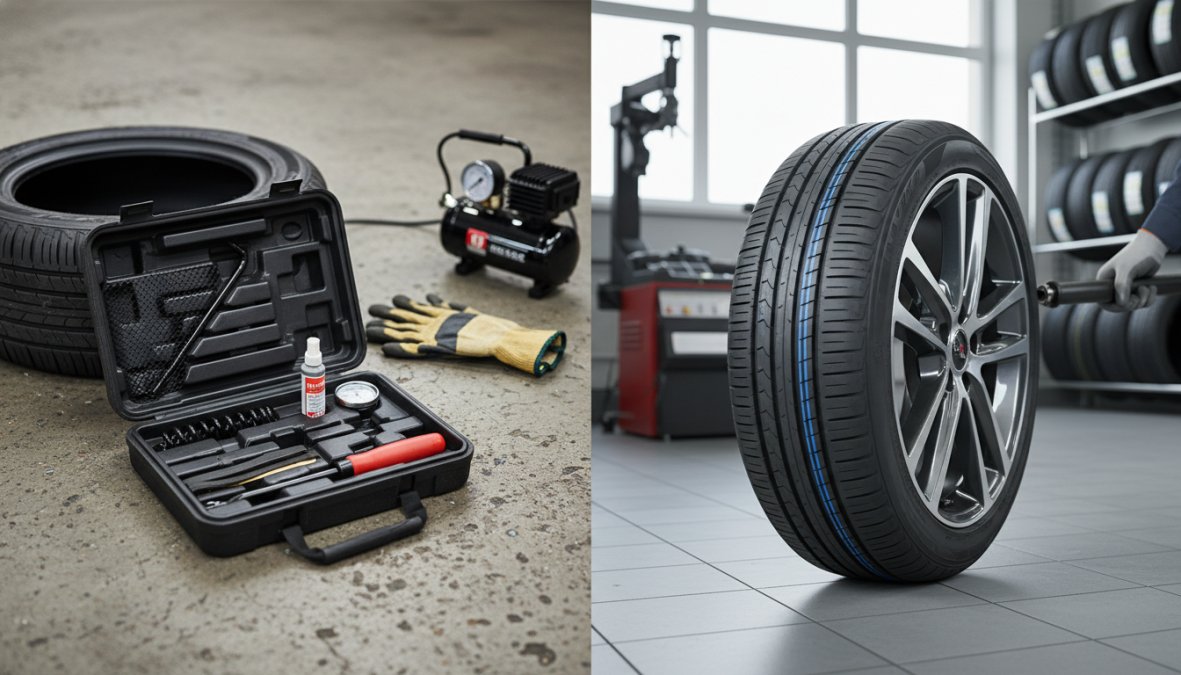
Side-by-side comparison of Close for alternatives to expensive tyre replacement
Two main categories exist:
Plug kits: Insert a rubber plug directly into the puncture hole from the outside. Fast and effective for roadside emergencies. Examples include the Rhino USA 86-Piece Tire Repair Kit, which includes 60 self-vulcanising plugs and solid steel T-handle tools built for proper use.
Sealant kits: Inject liquid sealant through the valve stem to seal small punctures from the inside. Products like Slime Flat Tire Puncture Repair Sealant handle punctures up to 6mm in diameter and are genuinely useful for getting you to a garage safely.
Option
Best For
Repair Limit
Permanence
Plug kit
Tread punctures, roadside
Up to 6mm
Semi-permanent
Sealant
Slow leaks, small holes
Up to 6mm
Temporary only
Professional patch-plug
Tread punctures
Up to 6mm
Permanent
Replacement
Sidewall, large damage
N/A
Permanent
The honest answer on permanence: a plug alone is not considered a permanent repair by most tyre safety standards. A professional plug-patch combination, applied from the inside after removing the tyre from the wheel, is the only repair method accepted as fully permanent by the British Standards Institution tyre repair guidelines.
DIY Tyre Plugging Techniques: Step-by-Step
DIY tyre plugging is straightforward if you follow the correct sequence. Skipping steps is where people get into trouble.
What you need: A tyre plug kit, tyre pressure monitoring system (TPMS) awareness, a portable air compressor, and a valve core tool.
Steps:
Locate the puncture and leave the object in place until you are ready to plug (it is partially sealing the hole).
Use the reaming tool from your kit to clean and roughen the puncture channel with a back-and-forth motion.
Thread a self-vulcanising plug through the insertion needle, leaving equal lengths on each side.
Push the needle and plug firmly into the hole until only about 6mm of plug remains visible.
Pull the needle out sharply in one motion, leaving the plug seated in the tyre.
Trim the excess plug flush with the tyre surface.
Re-inflate to the correct tyre pressure using your air compressor and check the TPMS reading.
Drive to a professional garage as soon as possible for a permanent plug-patch repair.
Watch OutNever use a DIY plug as a final solution on a motorway-speed vehicle. Plugs can work loose under sustained high-speed driving. Get a professional plug-patch repair within 24 to 48 hours.
Tyre Sealant as an Emergency Fix
Tyre sealant is a genuine emergency tool, not a long-term solution. Products like Slime and TireJect inject through the valve stem and coat the inner tyre surface, sealing punctures as the tyre rotates. The process takes under five minutes and requires no mechanical skill.
The limitation is significant: sealant can interfere with TPMS sensors and makes subsequent professional repairs more difficult. Always tell the technician that sealant has been used. Most garages will clean the tyre interior before applying a permanent patch, but sealant residue complicates that process and can add to the repair cost.
Tyre Puncture Repair Cost: What to Expect at a Professional Garage
Professional puncture repair is the most cost-effective alternative to tyre replacement for eligible damage. Tyre puncture repair cost at a UK garage typically ranges from £10 to £30 for a standard plug-patch repair, depending on location and whether balancing is included.
That figure compares favourably with even the cheapest budget tyre replacement, which rarely comes in under £50 fitted. For premium or EV-specific tyres, the saving is far more dramatic.
Key TakeawayA professional plug-patch repair on an eligible tyre costs a fraction of replacement and meets the same safety standards. Always get a professional assessment before agreeing to replacement.
National Chain Price Comparison: Where to Get the Best Deal
Price varies considerably between providers. Here is a realistic comparison based on typical 2026 UK market rates:
Provider
Typical Repair Cost
Balancing Included
Walk-in Available
Independent garage
£10-£20
Sometimes
Yes
National chain (e.g., Kwik Fit)
£20-£30
Often
Yes
Mobile tyre fitter
£25-£40
Yes
Yes (call-out)
Superstore auto centre
£10-£20
Varies
Yes
Independent garages in Kettering and surrounding Northamptonshire towns frequently offer the most competitive rates. The trade-off is that national chains provide consistent service standards and often include tyre balancing as part of the repair, which protects against uneven wear after the fix.
According to Which? consumer guidance on tyre repair costs, always ask whether balancing is included and whether the technician will inspect the tyre interior before confirming it is repairable.
Are Part-Worn Tyres Safe? The Honest Answer
Part-worn tyres are legal to sell and buy in the UK, but the regulatory framework around them is weak enough that the burden of safety falls almost entirely on the buyer. Understanding exactly what the law requires, and what it does not, is the only way to make a genuinely informed decision.
What the Law Actually Requires
Under the Motor Vehicle Tyres (Safety) Regulations 1994, a part-worn tyre sold in the UK must meet all of the following before it can legally change hands:
The original tread pattern must be visible across the full breadth of the tread and around the entire circumference
Tread depth must be at least 2mm across the central three-quarters of the tread width and around the full circumference (higher than the 1.6mm legal minimum for use, because the seller must account for fitting losses)
The tyre must be free from cuts longer than 25mm or deeper than the ply
No internal or external lump, bulge, or tear must be present
The tyre must be permanently and legibly marked with the word 'PART-WORN' in letters at least 4mm high
In practice, enforcement of these requirements is inconsistent. Research carried out by TyreSafe across multiple years of mystery-shopping exercises has found that a significant proportion of part-worn tyres on sale in the UK fail at least one of these criteria, with internal damage being the most common issue because it is invisible without dismounting and inspecting the tyre from the inside. No seller is legally required to carry out that internal inspection before sale.
How to Inspect a Part-Worn Tyre Before Buying
If you are considering a part-worn tyre, the following checks are the minimum due diligence. Do them before handing over any money:
Check the PART-WORN marking. If it is absent, the tyre is being sold illegally. Walk away.
Measure tread depth yourself. Use a tread depth gauge, not a visual estimate. Measure at three points across the tread width and at four points around the circumference. Any reading below 3mm means the tyre will reach the legal minimum quickly, factor that into the real cost.
Inspect the sidewall under bright light. Run your hand across both sidewalls feeling for bulges, cracks, or repairs. Any bulge is a structural failure and the tyre is unsafe regardless of tread depth.
Check the DOT date code. The last four digits of the DOT code on the sidewall give the week and year of manufacture (e.g., 2319 = 23rd week of 2019). Most tyre manufacturers recommend replacement at six years regardless of tread depth; the UK Highway Code advises consideration of replacement at ten years maximum. A part-worn tyre that is already five or six years old has a very short remaining safe service life.
Ask to see the tyre dismounted. A reputable seller will allow you to inspect the inner liner for repairs, patches, or impact damage. If they refuse, treat that as a red flag.
The Real Cost-Per-Mile Calculation
The financial case for part-worn tyres looks attractive at the point of purchase and deteriorates quickly when you run the numbers over actual service life. This is the TCO comparison most guides skip.
Consider a common scenario: a 205/55 R16 tyre for a family hatchback.
Option
Purchase Price (fitted)
Usable Tread Depth
Approx. Miles to Legal Limit
Cost Per 1,000 Miles
Part-worn (4mm tread)
£30-£45
2.4mm above legal limit
8,000-12,000
£2.50-£5.60
Budget new (Nexen, Sailun)
£55-£75
7.5-8mm above legal limit
25,000-35,000
£1.60-£3.00
Mid-range new (Falken, Kumho)
£75-£100
7.5-8mm
30,000-40,000
£1.90-£3.30
The part-worn tyre's lower sticker price rarely survives contact with a cost-per-mile calculation. You are buying a fraction of the tread life for a price that often represents more than half the cost of a new budget tyre, and you are accepting unknown internal history in exchange for that apparent saving.
When Part-Worn Tyres Are a Legitimate Choice
There is one scenario where sourcing a used tyre from a reputable, inspected source makes genuine practical sense: all-wheel-drive and four-wheel-drive vehicles where tyre diameter matching is critical.
Many AWD systems, including those used on popular SUVs and some EV platforms, are sensitive to tread depth differentials between tyres on the same axle or across all four corners. Fitting one new tyre when the other three have 4mm of remaining tread can create a diameter mismatch that stresses the centre differential or AWD coupling. In this specific case, sourcing a part-worn tyre with a matching tread depth from a supplier who will dismount and internally inspect the tyre before sale is a defensible approach.
Outside that scenario, for drivers covering regular motorway miles in Northamptonshire and the wider East Midlands, the risk-adjusted cost of a part-worn tyre does not hold up against a new budget-tier tyre from a brand with independently verified wet-weather performance data.
Watch OutNever fit a part-worn tyre without checking the DOT date code. A tyre that looks fine visually but is more than six years old may have degraded rubber compounds that reduce wet-grip performance significantly, a risk that no amount of tread depth compensates for.
Key TakeawayPart-worn tyres are a false economy for most drivers. The cost-per-mile calculation almost always favours a new budget-tier tyre, and the absence of any internal inspection requirement means you are accepting unknown structural risk. The exception is AWD tread-matching, and even then, only buy from a seller who will inspect the tyre internally before sale.
Run-Flat Tyres and Self-Sealing Tyres: Pros, Cons, and Real Costs
Run-flat and self-sealing tyres are marketed as the premium solution to roadside tyre emergencies, and in the right context they deliver on that promise. In the wrong context, or when the replacement and repair economics are misunderstood, they become one of the more expensive tyre decisions a driver can make. This section covers the mechanics, the real costs, and the repair rules that most guides omit entirely.
How Run-Flat Tyres Actually Work
Run-flat tyres use one of two structural approaches:
Self-supporting run-flats (SSR): The most common type. The sidewall contains a reinforced rubber insert, typically 15-20mm thick, that bears the vehicle's weight when air pressure is lost. The insert does not inflate; it is a solid structural component. This is why run-flat tyres have a noticeably stiffer ride even when fully inflated: the sidewall cannot flex as freely as a standard tyre.
Support ring systems: A hard ring fitted to the wheel rim supports the tyre from the inside after pressure loss. Less common on passenger vehicles, more frequently seen on military and specialist applications.
Both types require a functioning Tyre Pressure Monitoring System (TPMS) as a legal and practical necessity. Because the reinforced sidewall masks the handling change you would normally feel from a deflating tyre, TPMS is the only reliable way to detect pressure loss. Driving a run-flat without a working TPMS is genuinely dangerous, you may not notice you are running flat until you have exceeded the safe operating window.
The Repair-Eligibility Problem: What Happens After You Run Flat
This is the detail most buyers are not told at the point of purchase, and it has significant cost implications.
A run-flat tyre that has been driven on while deflated, even within the manufacturer's stated distance and speed limits, is in most cases not eligible for repair and must be replaced. The reason is structural: the reinforced sidewall undergoes stress and micro-deformation during deflated running that is not visible on the surface but compromises the tyre's integrity. There is no reliable way to inspect for this damage without destructive testing.
The practical consequence: every puncture on a run-flat tyre is likely to result in a full replacement, not a £15-£25 repair. At typical UK retail prices, run-flat replacements for common sizes run from £120 to over £250 per tyre fitted. For a driver who experiences two or three punctures over a tyre's service life, the cumulative replacement cost is substantially higher than it would be on a standard tyre with professional repairs.
The exceptions are narrow: if a run-flat tyre sustains a small tread-area puncture and the driver notices the TPMS warning immediately and does not drive on the deflated tyre at all, pulling over and calling for roadside assistance rather than driving to a garage, some manufacturers and tyre technicians will assess it for repair eligibility. This is the exception, not the rule, and the assessment must be made by a qualified technician after dismounting the tyre.
Self-Sealing Tyres: How the Technology Works and Where It Fails
Self-sealing tyres take a fundamentally different approach. Rather than supporting the vehicle after pressure loss, they attempt to prevent pressure loss from occurring in the first place.
The mechanism: a layer of viscous polymer sealant, typically 3-5mm thick, is bonded to the inner liner of the tyre during manufacture. When a sharp object penetrates the tread, the sealant flows into the puncture channel and cures around the object (or the hole left after the object exits), forming a seal that prevents air loss. The process is passive and continuous, it requires no driver action and produces no TPMS warning in most cases because pressure is maintained.
What self-sealing tyres handle well:
Nail and screw punctures in the central tread area
Punctures up to approximately 5mm in diameter (varies by manufacturer and tyre construction)
Slow-leak scenarios where the driver might not notice pressure loss until significant underinflation has occurred
What self-sealing tyres cannot address:
Sidewall damage of any kind
Punctures larger than the sealant layer's design limit
Damage from kerb strikes or impact that causes structural deformation
Valve stem failures
The sealant layer adds weight, typically 3-5kg per tyre depending on size, which has a measurable effect on rolling resistance and, for EV drivers, on range. The effect is modest but worth factoring into the total cost calculation for high-mileage EV users.
Cost Comparison: Run-Flat vs. Self-Sealing vs. Standard + Repair
The long-term cost picture looks different depending on how many punctures a driver typically experiences and how they respond to them.
Tyre Type
Typical Fitted Price (mid-size)
Repair Eligible After Puncture?
Effective Cost Per Puncture Event
Standard tyre
£60-£120
Yes (tread area, ≤6mm)
£15-£30 (repair)
Run-flat tyre
£120-£250
Rarely (only if not driven flat)
£120-£250 (replacement likely)
Self-sealing tyre
£90-£160
Yes (if sealant did not fully seal)
£15-£30 (repair) or £0 (sealed automatically)
Standard + sealant kit
£60-£120 + £15-£25 kit
Yes (after sealant removal)
£15-£30 (repair, sealant complicates process)
For most drivers, self-sealing tyres offer the best balance of convenience and long-term cost: the premium over standard tyres is narrowing as the technology matures, punctures in the eligible size range are handled automatically, and the tyre remains repair-eligible for damage the sealant cannot address.
Run-flat tyres make the strongest case for drivers who regularly travel routes where roadside assistance response times are long, who do not carry a spare, and who prioritise the ability to continue driving over the cost of replacement. For urban and suburban drivers in areas with good roadside coverage, the run-flat premium rarely pays back.
EV-Specific Considerations
Electric vehicles add two complications to this decision that do not apply to petrol or diesel equivalents.
First, many EVs, including several Tesla models and a number of premium European EVs, are supplied from the factory with run-flat tyres and no spare wheel provision. The vehicle's boot floor, suspension geometry, and load ratings may be optimised for run-flat tyre dimensions. Switching to standard tyres on these vehicles is not always straightforward: some manufacturers specify that only run-flat or OEM-approved tyre types should be fitted, and deviating from that specification can affect the vehicle's handling characteristics and, in some cases, the validity of certain warranty provisions. Always check the vehicle handbook and, if in doubt, consult a technician with EV-specific experience before changing tyre type.
Second, EV tyre wear rates are typically higher than equivalent petrol vehicles due to the additional kerb weight and the high instantaneous torque available from electric motors. This accelerates the replacement cycle for all tyre types, which makes the per-replacement cost of run-flat tyres a more significant factor over the vehicle's ownership period.
Pro TipIf your EV came with run-flat tyres as standard, check whether the manufacturer specifies run-flat-only replacement. Fitting standard tyres on a vehicle designed for run-flats can affect handling characteristics and may void certain warranty provisions. If you want to switch to self-sealing tyres as a cost-saving measure, confirm with the manufacturer or a qualified EV technician that the self-sealing tyre's load index and speed rating match the OEM specification exactly.
Key TakeawayRun-flat tyres solve the roadside emergency problem but create a replacement cost problem: most puncture events on a run-flat result in full replacement rather than a £15-£30 repair. Self-sealing tyres offer a better long-term cost profile for most drivers while retaining repair eligibility. For EV owners, always verify OEM tyre type requirements before switching technology.
How to Tell If Tyres Need Replacing vs. Repairing
Tyre replacement is necessary in four clear situations: sidewall damage, tread depth below the legal 1.6mm minimum, damage within 25mm of the tyre's shoulder, or any puncture larger than 6mm in diameter. Everything else is potentially repairable.
A quick self-assessment checklist before visiting a garage:
Is the damage in the central tread area (not the sidewall or shoulder)?
Is the puncture object smaller than 6mm in diameter?
Is the tyre still holding some pressure (not run completely flat)?
Is the tyre free from visible bulges, cracks, or sidewall damage?
Is the remaining tread depth above 2mm (giving repair value)?
If you can tick all five boxes, repair is almost certainly viable.
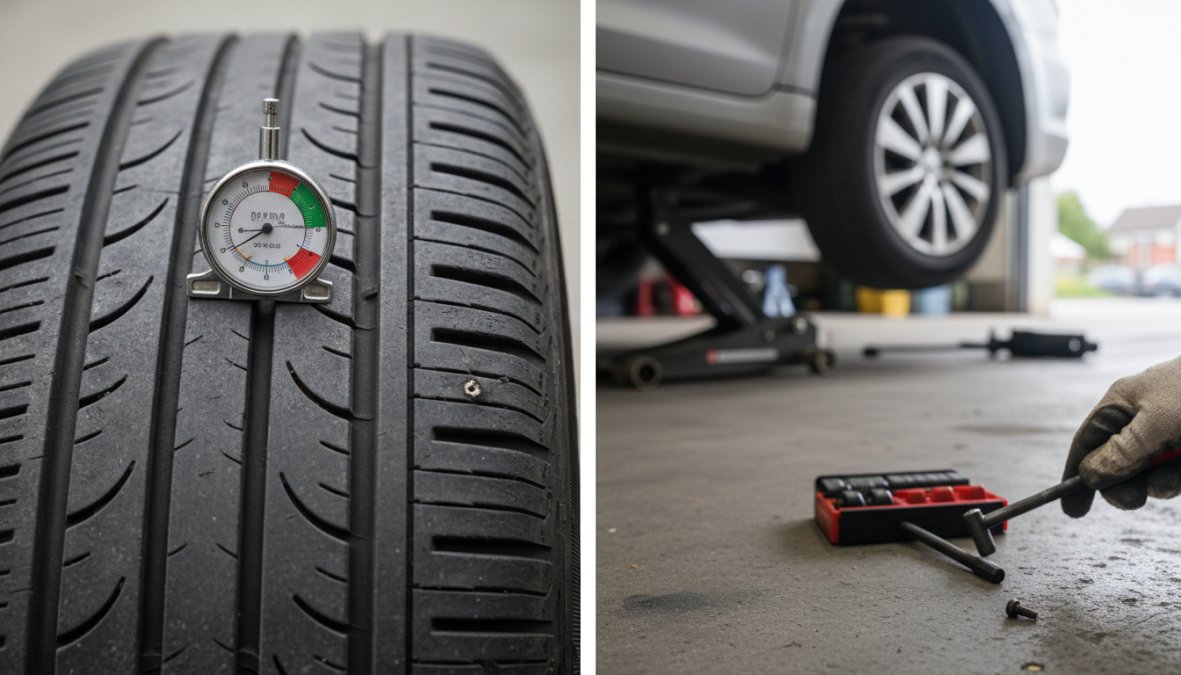
Side-by-side comparison of car and tyre and tread concepts for alternatives to expensive tyre replacement
Legal and Safety Limits of Tyre Plugs You Need to Know
Tyre plugs are governed by clear industry standards in the UK. According to British Tyre Manufacturers' Association repair guidelines, a plug-only repair is not considered a permanent repair method. Only a combination plug-patch repair, applied from inside the tyre after dismounting, meets the standard for permanent repair.
The legal and safety limits are specific:
Repairs are only permitted in the crown area of the tyre (central tread zone)
No repair is permitted within 25mm of the shoulder
Maximum repairable puncture diameter is 6mm
Tyres must not be repaired more than twice in the same area
Run-flat tyres that have been driven on while deflated are generally not repairable
Violating these limits does not just risk a fine. A tyre repaired outside these parameters can fail suddenly at motorway speeds, with consequences that go well beyond the cost of a new tyre.
Long-Term Cost-Benefit: Alternatives to Expensive Tyre Replacement Compared
The financial case for exploring alternatives to expensive tyre replacement becomes clearest when you map out the full-lifecycle costs rather than just the upfront price.
Consider a driver covering 15,000 miles per year on a mid-size family car. Over three years, they might face two or three punctures. If each one results in a full tyre replacement at £80-£150 fitted, the cumulative cost is significant. If each eligible puncture is professionally repaired for £15-£25, the saving over the same period is substantial.
The long-term cost comparison across main options:
Option
Upfront Cost
Lifespan
Total Cost Over 3 Years
Professional repair
£15-£30
Full tyre life
Lowest
Budget tyre (new)
£45-£70 fitted
20,000-30,000 miles
Moderate
Part-worn tyre
£20-£40 fitted
Variable, often short
Unpredictable
Premium tyre
£100-£200 fitted
30,000-50,000 miles
High upfront, good value
Run-flat tyre
£120-£250 fitted
20,000-30,000 miles
High
The data supports a clear hierarchy: repair when eligible, replace with a budget-to-mid-range tyre when not, and treat premium or run-flat tyres as a long-term investment rather than a default choice.
Warranty Implications of DIY Tyre Repairs
This is the part most guides skip entirely. DIY tyre repairs can affect your vehicle warranty in ways that are not immediately obvious.
If you use a tyre sealant and subsequently experience a TPMS fault, the manufacturer may argue that the sealant caused the sensor damage. Sealant residue is corrosive to some sensor housings, and the cost of a TPMS sensor replacement can easily exceed the cost of a professional tyre repair.
More significantly, if you fit a non-approved tyre type to a vehicle with specific tyre requirements (common on EVs and vehicles with active safety systems), and that change contributes to a handling or safety incident, your insurance and warranty cover may be affected.
The safest approach: always use a professional for permanent repairs, keep receipts, and check your vehicle handbook before fitting any non-OEM-specified tyre type.
Affordable Tyre Brands and Budget Options Worth Considering
Budget tyres have improved substantially in quality over the past decade. Several brands now offer tyres that perform credibly in independent tests while costing significantly less than premium equivalents.
Brands worth considering in the UK market include Nexen, Falken, Kumho, and Sailun. These occupy the mid-budget tier and consistently perform well in wet-weather braking tests, which is the most safety-critical metric for UK driving conditions. According to Tyre Reviews independent tyre testing, the performance gap between mid-budget and premium tyres has narrowed considerably in recent years, particularly in the sub-50mph speed range most relevant to urban and suburban driving.
For EV owners, the calculus is slightly different. EV-specific tyre compounds are designed to handle higher torque loads and reduce road noise (which is more prominent without engine sound masking). Fitting a non-EV-rated budget tyre to a Tesla or hybrid vehicle can result in faster wear and a noisier cabin, which erodes the perceived saving quickly.
If you are based in Kettering or Northamptonshire and need guidance on which tyre specification suits your specific vehicle, the team at KMC Electric can advise as part of a broader vehicle health assessment.
The challenge for most drivers is not finding alternatives to expensive tyre replacement. It is knowing which alternative is appropriate for their specific damage, vehicle type, and driving pattern. KMC Electric, based in Kettering with over 25 years of automotive experience and Level 4 Master Technician status in electric vehicles, provides exactly that kind of practical, vehicle-specific guidance. Whether you need a tyre assessment, TPMS diagnosis, or a broader health check on your EV or hybrid, contact KMC Electric for a cost-effective, independent assessment that puts your vehicle's long-term performance first.
Frequently Asked Questions
Is it safe to repair a tyre instead of replacing it?
Repairing a tyre is safe when the puncture is in the central three-quarters of the tread, is no larger than 6mm in diameter, and the tyre has no sidewall damage or structural compromise. A professional plug-patch combination repair is the industry-recommended method. However, if the tyre has been run flat, shows visible sidewall damage, or has tread below the legal 1.6mm minimum, repair is not a safe alternative to replacement.
What are the signs that a tyre must be replaced rather than repaired?
Key signs that indicate you need a replacement rather than a repair include: tread depth below 1.6mm (the UK legal minimum), visible sidewall bulges or cracks, punctures larger than 6mm, damage near or on the sidewall, or if the tyre has been driven on while flat. Checking tyre tread depth regularly using a gauge or the 20p coin test is a simple part of routine automotive maintenance that can prevent dangerous tyre failure.
How much does a tyre puncture repair typically cost compared to a full replacement?
A professional tyre puncture repair at a garage or national chain typically costs between £10 and £30 in the UK, making it one of the most cost-effective alternatives to expensive tyre replacement. By contrast, a new budget tyre can cost £50–£80 fitted, while mid-range and premium tyres run considerably higher. Where a repair is safely possible, it can save you £40–£150 or more per tyre, making it well worth having a professional assess the damage first.
Are part-worn tyres a genuinely safe alternative to buying new?
Part-worn tyres can be legal and safe if they meet UK regulations: at least 2mm of tread depth remaining, no internal damage, and clearly marked as 'part-worn.' However, quality is highly inconsistent, and many part-worn tyres sold in the UK fail basic safety checks. They offer a lower upfront cost but shorter remaining life, meaning the cost-per-mile saving is often smaller than it appears. If considering part-worns, always buy from a reputable supplier who inspects and certifies each tyre.
Can I use a DIY tyre repair kit as a permanent fix?
Most DIY tyre repair kits and sealants are designed as temporary emergency measures to get you safely to a garage, not as permanent solutions. A tyre plug alone, without an internal patch, does not meet UK or industry safety standards for a permanent repair. Tyre sealants can also interfere with your tyre pressure monitoring system (TPMS). Always follow up any emergency roadside repair with a professional inspection and a proper plug-patch repair or replacement as soon as possible.
Do DIY tyre repairs affect my vehicle's warranty or road hazard warranty?
Yes, DIY tyre repairs can void a road hazard warranty or a manufacturer's tyre warranty. Many warranties specify that only professional installation and repair methods are covered. Using sealants in particular can void warranties and damage TPMS sensors. If your vehicle or tyres are under any form of warranty, it is advisable to consult a professional garage before attempting any self-repair, to avoid inadvertently losing coverage that could be worth significantly more than the repair cost.