Why EV Battery Life Matters for Northampton Drivers
Battery health is the single biggest factor in what your electric car is worth and how far it will take you. For drivers in Northampton, Kettering and across Northamptonshire, the daily pattern is short trips, stop-start town traffic and a charge at home. That routine is kinder to a battery than long motorway runs, but only if you manage it well.
EV battery degradation is the gradual loss of usable capacity over time. Every lithium-ion pack loses some range each year, and how you charge, park and drive decides how fast that happens.
This guide from KMC Electric covers seven practical ways to extend EV battery life, from charging habits to independent health checks. KMC Electric has worked on Tesla and hybrid systems for years, and the patterns are consistent. Most premature degradation KMC Electric sees is avoidable.
Key TakeawayThe two biggest levers are charging routine and temperature. Get those right and you slow degradation more than any single product or app can.
Method 1: Master the Best Charging Habits for Electric Cars
The best charging habits for electric cars keep the battery between roughly 20% and 80% for everyday use. Frequent full charges and deep discharges both put stress on the cells.
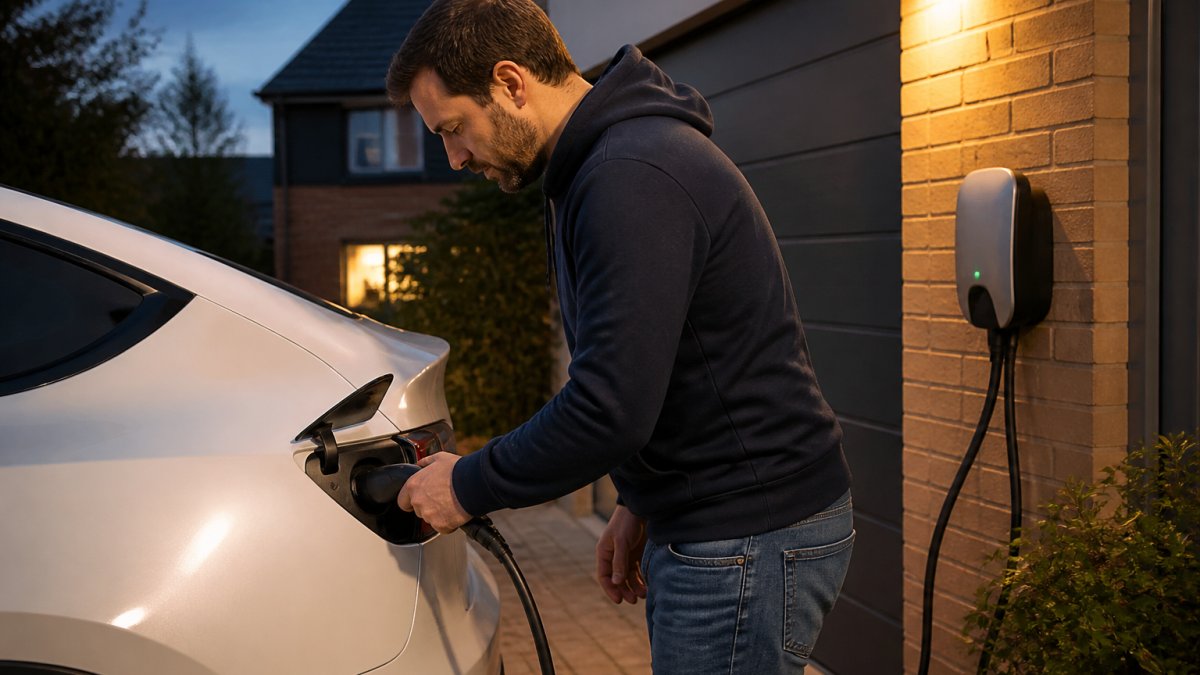
A UK homeowner plugging a Type 2 charging cable into an electric car on a residential driveway in the evening, with a home wallbox charger mounted on the garage wall
A few rules keep a pack healthy:
Charge to 80% for daily driving, not 100%
Only fill to 100% before a long trip
Avoid running below 10% regularly
Use a home wallbox rather than a three-pin plug for routine charging
Method 2: Keep Your EV Out of Extreme Temperatures
Heat is the biggest enemy of a lithium-ion pack, and cold simply reduces the range you can use on a given day. Parking in a garage or shaded spot protects the battery from the worst of the summer sun.
Northamptonshire winters are mild, so cold is rarely a long-term problem. But a car left outside in a hard frost will show a temporary range drop. That is normal and it recovers as the pack warms.
Preconditioning helps. Warming the cabin while still plugged in uses mains power instead of the battery. It also brings the cells to a good working temperature before you set off.
Park in shade or a garage in summer
Precondition in winter while plugged in
Avoid leaving a fully charged car in direct sun for days
Don't rapid charge a very cold or very hot pack
Method 3: Follow These EV Battery Health Tips for Daily Driving
Smooth driving adds range and reduces strain on the cells. Hard acceleration and late braking pull more current and generate more heat.
These EV battery health tips are simple to build into your routine:
Accelerate gently and brake early
Use regenerative braking where you can
Avoid carrying unnecessary weight
Keep tyres at the correct pressure
Plan routes to avoid needless rapid charging
Regenerative braking recovers energy that would otherwise be lost as heat. It is one of the quiet advantages of electric driving, and it rewards a calm style. A light right foot genuinely matters more on an EV than on a petrol car.
Pro TipCheck your tyre pressures monthly. Under-inflated tyres add rolling resistance, which drains range and makes the battery work harder on every trip.
Method 4: Watch for EV Battery Degradation Symptoms Early
EV battery degradation symptoms rarely appear overnight. They build up slowly, which is why owners often miss them until the range loss is obvious.
Watch for these signs:
A steady drop in range on the same journeys
The car charging to a lower percentage than before
Longer charge times at the same charger
The battery gauge falling faster in the top half
Warning messages or reduced power output
A small range drop each year is normal. A sudden or steep fall is not, and it deserves a proper look. Catching a problem early usually means a cheaper fix than waiting for a fault to develop.
If you notice two or more of these signs together, book a diagnosis rather than guessing. An independent check gives you facts, not theories.
Method 5: Book Regular EV Battery Diagnosis and Repair Checks in Kettering
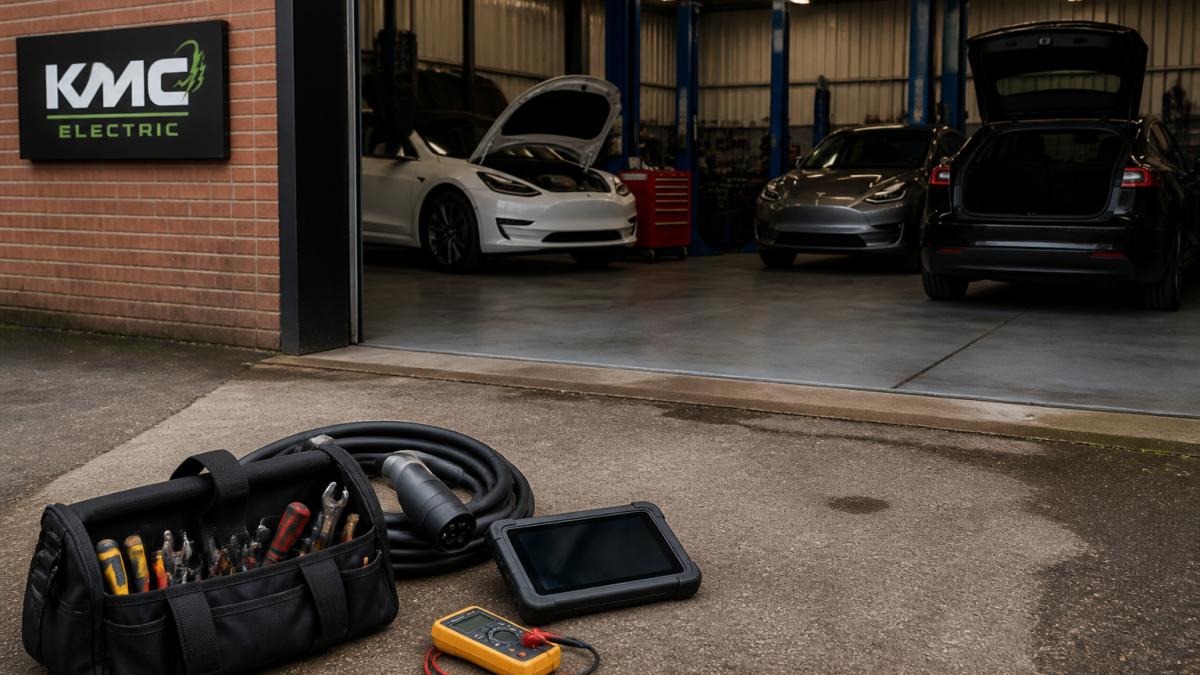
Regular EV battery diagnosis and repair checks catch problems before they become expensive. At KMC Electric in Kettering, we test battery state of health and trace faults across Tesla and hybrid systems.
As a Level 4 Master Technician specialist with EV qualifications since 2016, KMC Electric reads the data the car produces and explains what it means in plain terms. That matters when a fault code looks serious but is actually a sensor issue, or the reverse.
A diagnosis is not the same as a repair bill. It tells you what is actually wrong, so you can decide what to do next. Many of the faults KMC Electric sees are practical, real-world fixes rather than full pack replacements.
For drivers searching for an independent EV specialist near me, KMC Electric covers Kettering, Northampton and the wider Northamptonshire area. KMC Electric also supports dealerships that need help with complex fault codes.
Method 6: Manage Software Updates and Charging Schedules
Software updates often change how your car manages charging, range estimates and thermal control. Skipping them can leave you on older battery logic.
Set a charging schedule rather than plugging in at random. A schedule lets you charge overnight when power is cheaper and the pack is cooler. It also avoids leaving the battery sitting at a high charge for hours.
Install updates when the car prompts you
Set a departure time if your car supports it
Charge overnight rather than in the heat of the day
Review your charge limit after major updates
Manufacturers sometimes adjust the usable buffer or the recommended daily charge level through updates. If your range estimate shifts after an update, that is usually the software, not a failing pack. A quick scan confirms which it is.
Method 7: Get a Battery Health Check Before Buying or Selling
An independent battery health check is the single most useful thing you can do before buying or selling a used EV. It replaces guesswork with a real state-of-health figure.
If you are looking at a used Model 3 or Model S, a check tells you how much capacity the pack has actually lost. That protects you from paying full price for a car with a tired battery. It also gives you a fair basis to negotiate.
For sellers, a verified report builds trust with buyers and can justify your asking price. KMC Electric provides independent battery state-of-health verification for exactly this reason.
Situation
What to check
Why it matters
Buying a used EV
State of health and charge history
Confirms real range and value
Selling an EV
Independent verification report
Builds buyer confidence
Warranty ending soon
Full diagnostic scan
Spots faults before cover ends
Range dropping fast
Cell balance and fault codes
Identifies the cause early
Watch OutBuying a used EV without a battery check is the most expensive mistake KMC Electric sees. A pack that looks fine on a short test drive can hide significant capacity loss.
Frequently Asked Questions
Is it better to charge an electric car to 80%?
For most daily driving, yes. Lithium-ion packs age fastest when held at very high or very low states of charge, so keeping the battery between roughly 20% and 80% reduces stress on the cells. Charge to 100% only when you need the full range for a long trip, and avoid leaving the car parked at 100% for days. If your car has an LFP battery, the manufacturer may instead recommend a regular full charge to help the battery management system calibrate.
Does rapid charging damage an EV battery?
Occasional rapid charging is fine and will not ruin a healthy pack. The issue is frequency and heat: repeated DC rapid charges, especially back to back or in hot weather, raise cell temperatures and speed up degradation. For everyday use, AC charging at home or at a workplace charger is gentler. Save rapid chargers for longer journeys, and if you rely on them often, ask a specialist to check your battery health so you can spot any trend early.
How do I know if my EV battery is losing capacity?
Common signs include a shorter real-world range on the same journeys, longer charging times, a higher percentage drop overnight when parked, and the car limiting power or regen when the pack is cold or heavily depleted. These are typical EV battery degradation symptoms, but they can also point to a faulty module, sensor or charging issue rather than the whole pack failing. A proper diagnostic read of cell voltages and state of health separates the two.
Can an EV battery be repaired if its performance declines?
Often yes. A full pack replacement is not always the answer: in many cases the fault sits in one module, a wiring loom, a coolant leak or the battery management system. Independent specialists can test individual cells and modules, then repair or replace only what has failed. That approach usually costs far less than a complete pack, which is why an early diagnosis is worth booking as soon as you notice performance dropping.
EV batteries age, but they do not have to age fast. Charging to 80%, parking smart, driving smoothly and catching faults early will keep your range healthy for years. KMC Electric offers independent Tesla and EV diagnosis, battery health checks and long-term maintenance across Kettering and Northamptonshire, backed by over 25 years in the trade and Level 4 Master Technician status. Get started with KMC Electric and protect the range and value of your electric car.