Registration Accepted.
Password reset email sent.
Tesla Model 3 & Model Y DI_a178, DI_a200, DI_a222 & DI_a223 Fault Repair
Tesla Model 3 & Model Y Traction Control, Stability Control and Steering Angle Faults
DI_a124, DI_a178, DI_a200, DI_a222 & DI_a223 Tesla Fault Diagnosis and Repair
Contents
A Tesla Model 3 or Model Y displaying multiple warnings for traction control, stability control, cruise control and steering angle can initially look like a complicated electronic problem.
However, these alerts don't necessarily mean that several electronic components have failed.
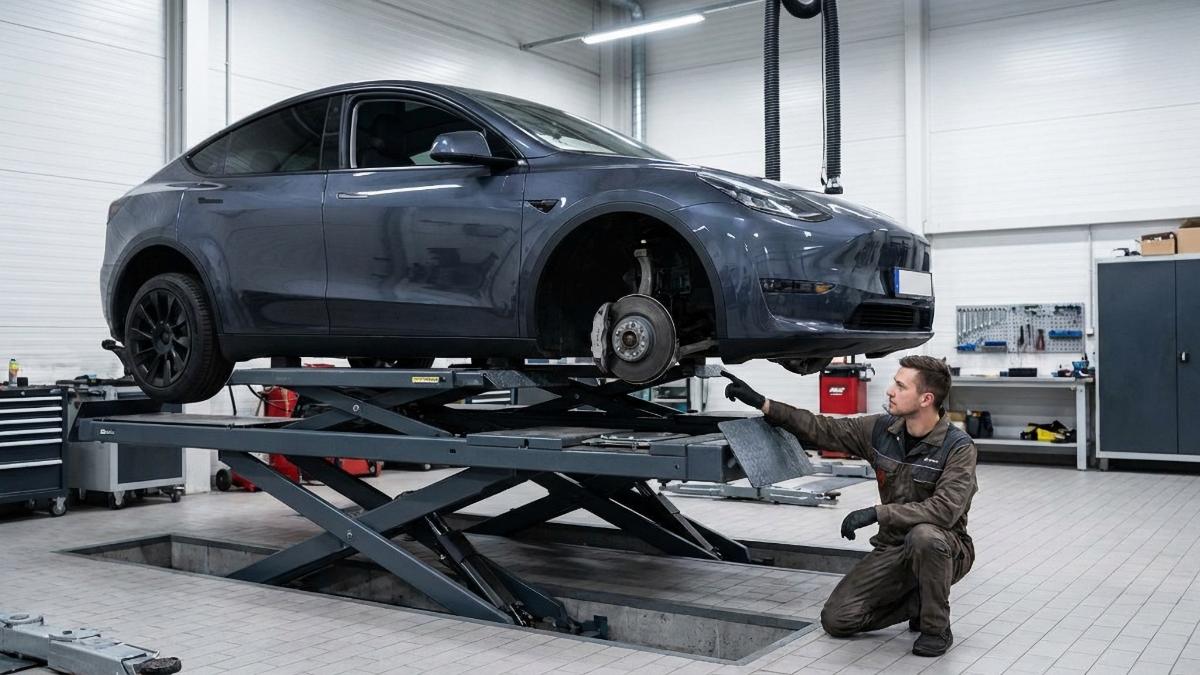
We recently repaired a 2021 Tesla Model 3 displaying multiple DI alerts. Our diagnosis identified worn suspension arms and incorrect wheel geometry as the underlying problem.
After replacing the worn suspension arms, carrying out a full wheel alignment and completing a steering angle offset reset, the faults were resolved.
The Tesla Model Y can also display these same alerts, so if you own either a Model 3 or Model Y and are experiencing similar warnings, the steering, suspension and alignment should form part of the diagnostic process.
Tesla Fault Codes & Symptoms
The Model 3 in this case was displaying the following alerts:
DI_a124_cruiseFault
The vehicle had detected a fault affecting the availability or operation of the cruise control system.
DI_a178_steeringAngleOffsetFault
The vehicle had detected that the steering angle offset was outside its expected parameters.
DI_a200_vdcModelBasedPlausibility
The Vehicle Dynamics Control system had detected an implausible relationship between the information it was receiving and the expected behaviour of the vehicle.
DI_a222_vdcDisabled
Vehicle Dynamics Control / stability control had been disabled.
DI_a223_tractionControlDisabled
The vehicle's traction control system had also been disabled.
Owners may therefore experience several warnings appearing together, including messages relating to:
- Traction control
- Stability control
- Cruise control
- Steering angle
- Vehicle Dynamics Control (VDC)
- Driver assistance systems
When several alerts appear simultaneously, it can make the fault look considerably more serious than the underlying problem actually is.
What Can Cause These Tesla Faults?
Tesla's stability and traction systems use information from multiple parts of the vehicle to determine what the car is actually doing.
This includes information such as:
- Steering angle
- Individual wheel speeds
- Vehicle direction
- Yaw
- Acceleration
- Wheel alignment and vehicle geometry
These values need to agree with each other.
For example, if the steering angle indicates that the vehicle should be travelling in a particular direction but the movement of the vehicle doesn't correspond with that information, the control systems can recognise the data as implausible.
Possible causes therefore include:
- Worn suspension arms
- Worn suspension bushes
- Incorrect wheel alignment
- Steering wheel offset
- Previous suspension repairs
- Accident or kerb damage
- Incorrect steering angle calibration
- Wheel-speed related issues
- Steering angle signal faults
This is why proper diagnosis is important before replacing electronic components.
Our 2021 Tesla Model 3 Case Study
The vehicle we repaired was a 2021 Tesla Model 3.
It arrived with:
DI_a124_cruiseFault
DI_a178_steeringAngleOffsetFault
DI_a200_vdcModelBasedPlausibility
DI_a222_vdcDisabled
DI_a223_tractionControlDisabled
Rather than treating each warning as a separate failure, we looked for a common cause that could explain why several vehicle dynamics systems were being disabled at the same time.
Our inspection identified worn suspension arms.
The wear was affecting the vehicle's suspension geometry and alignment, contributing to a mismatch between the steering angle information and the actual behaviour of the vehicle.
The Repair
1. Worn Suspension Arms Replaced
The worn suspension arms were replaced first.
This is important because there is little value carrying out an accurate wheel alignment or steering calibration while excessive movement remains within the suspension.
2. Full Wheel Alignment
Once the suspension was mechanically correct, we carried out a full wheel alignment.
Wheel alignment on a Tesla isn't simply about preventing uneven tyre wear.
The electronic stability systems rely on the physical direction of the vehicle corresponding correctly with information such as steering angle and wheel speed.
Correct mechanical geometry therefore needs to be established before attempting to correct an electronic steering-angle offset.
3. Steering Angle Offset Reset
Once the suspension and wheel alignment were correct, we carried out the required steering angle offset reset/calibration.
The vehicle was then tested to confirm that the systems were operating correctly.
Repair Result
Following the repair:
✓ Worn suspension arms replaced
✓ Wheel alignment corrected
✓ Steering angle offset reset
✓ Traction control restored
✓ Vehicle Dynamics Control restored
✓ Cruise control fault resolved
✓ Warning alerts resolved
✓ Vehicle road tested
Most importantly, we corrected the underlying mechanical cause rather than simply clearing the alerts.
Why Can Suspension Wear Cause Electronic Faults?
Modern Tesla vehicles are heavily dependent on different control systems agreeing about what the vehicle is doing.
Imagine the steering angle reports that the wheels are pointing straight ahead, but because of worn suspension components or incorrect alignment, the vehicle's actual direction of travel doesn't correspond with what the control system expects.
The vehicle can recognise that discrepancy.
This can result in a plausibility fault, which can then cause dependent systems such as stability control, traction control and cruise control to be disabled.
That means one mechanical problem can potentially generate several apparently unrelated electronic warnings.
Tesla DI_a178 Steering Angle Offset Fault
If your Tesla Model 3 or Model Y displays:
DI_a178_steeringAngleOffsetFault
don't automatically assume the steering angle sensor itself has failed.
The cause may be related to:
- Suspension wear
- Incorrect wheel alignment
- Steering geometry
- Previous suspension work
- Steering angle calibration
- Steering system faults
The mechanical condition of the vehicle should be established before parts are replaced unnecessarily.
Tesla DI_a200 VDC Model Based Plausibility Fault
The DI_a200_vdcModelBasedPlausibility alert indicates that the vehicle has identified an inconsistency within the information being used by the Vehicle Dynamics Control system.
When this appears alongside:
DI_a178_steeringAngleOffsetFault
DI_a222_vdcDisabled
and
DI_a223_tractionControlDisabled
we recommend investigating the vehicle as a complete system rather than treating every alert as an individual failure.
Suspension condition, wheel alignment, steering angle and vehicle dynamics data should all be considered.
Model 3 & Model Y Suspension Wear
Suspension wear is something we regularly inspect on both the Tesla Model 3 and Tesla Model Y.
Depending on the component affected, owners may notice:
- Knocking or clunking
- Uneven tyre wear
- Steering wheel no longer sitting straight
- Poor wheel alignment
- Vehicle pulling to one side
- Reduced steering precision
- Traction or stability control warnings
However, suspension wear isn't always accompanied by an obvious noise.
Electronic warnings may sometimes be one of the reasons the vehicle initially comes into the workshop.
Have You Got These Tesla Fault Codes?
If your Tesla Model 3 or Model Y is displaying any combination of:
DI_a124_cruiseFault
DI_a178_steeringAngleOffsetFault
DI_a200_vdcModelBasedPlausibility
DI_a222_vdcDisabled
DI_a223_tractionControlDisabled
we can investigate the underlying cause.
Multiple alerts don't necessarily mean multiple components have failed.
As our 2021 Model 3 case demonstrated, a combination of worn suspension components, incorrect wheel alignment and steering angle offset can result in several electronic systems reporting faults simultaneously.
Tesla Model 3 & Model Y Diagnostics at KMC Electric
At KMC Electric, we specialise in Tesla and electric vehicle diagnostics and repair.
One of the advantages of bringing this type of problem to us is that we can investigate both the mechanical and electronic sides of the vehicle.
We can:
- Diagnose Tesla fault codes and alerts
- Inspect suspension and steering components
- Replace worn suspension parts
- Carry out four-wheel alignment
- Carry out steering angle offset resets and calibration
- Road test and verify the completed repair
This allows us to identify and repair the underlying problem rather than simply clearing fault codes.
KMC Electric – Independent Tesla & EV Specialists
Kettering, Northamptonshire
Telephone: 01536 410142
Email: [email protected]
Website: www.kmcelectric.co.uk