When your Tesla's factory warranty expires, the financial landscape shifts dramatically. Many owners discover that tesla out of warranty repairs can become a significant expense without proper planning. At KMC Electric, we've worked with hundreds of Tesla owners navigating this transition, and informed decisions made before warranty expiry save thousands in unnecessary costs. This guide breaks down what happens when your coverage ends, which issues matter most, and how to approach repairs strategically.
A Tesla without warranty protection requires a different maintenance philosophy. You're no longer covered by Tesla's goodwill gestures or extended service agreements. Independent specialists like KMC Electric have become essential resources for owners seeking transparent diagnostics, realistic pricing, and practical solutions that main dealers simply can't match on cost or accessibility.
Understanding Tesla Out of Warranty Repairs
Once your Tesla's factory warranty expires, typically at three years or 100,000 miles, whichever comes first, you enter a new phase. Tesla out of warranty repairs fall into two categories: routine maintenance that should have been addressed during the warranty period, and genuine component failures that emerge after coverage ends.
The distinction matters because it changes your approach entirely. According to research from automotive maintenance industry standards, owners who maintain detailed service records and address minor issues proactively spend 30-40% less on repairs over five years compared to reactive maintenance approaches.
Independent specialists have seen a clear pattern: owners who understand their vehicle's specific weak points avoid the most expensive failures. A battery health verification performed at warranty expiry costs around £150-200 and can reveal degradation patterns that inform buying or selling decisions.
Pro TipRequest a [comprehensive battery health report](/blog/how-to-check-tesla-battery-health) before your warranty expires. This document becomes invaluable when selling your Tesla and helps you plan for potential future costs. Many independent specialists offer this service for under £200 and provide detailed degradation forecasts.
What Happens When Your Tesla Warranty Expires
The moment your warranty period ends, Tesla's responsibility for repairs ceases. You lose access to Tesla's fixed-price service menu, warranty-covered replacements, and the company's liability for manufacturing defects. Warranty expiry doesn't mean your Tesla suddenly becomes unreliable, it means you're now responsible for identifying and funding repairs.
In Kettering, owners have discovered that independent specialists provide something main dealers cannot: transparent communication about what actually needs repair versus what's merely recommended. A main dealer might suggest replacing components as preventative maintenance. An independent specialist will diagnose the actual condition, verify whether replacement is necessary now or can wait, and present realistic options.
The cost structure also shifts. Tesla's service pricing is standardised across all locations and tends toward the premium end. Independent specialists in your local area can often provide the same repair at 40-60% lower cost, particularly for common issues like brake system work, door handle repairs, and climate control diagnostics.
Watch OutNever ignore warning lights or system alerts after warranty expiry, even if the vehicle seems to be functioning normally. Battery management, thermal systems, and brake components degrade gradually, and catching problems early prevents catastrophic failures that cost thousands to repair.
Why Independent Specialists Matter for Out-of-Warranty Vehicles
Independent Tesla specialists have become essential for post-warranty owners because they combine deep technical knowledge with cost transparency. Main dealers operate under different incentive structures and benefit from selling new parts and positioning routine maintenance as urgent.
With over 25 years of automotive experience and Level 4 Master Technician status in electric vehicles since 2016, specialist garages have built their reputation on honest diagnostics and cost-effective solutions. This matters enormously for out-of-warranty vehicles where you're making every repair decision with your own money.
Tesla systems are fundamentally different from traditional combustion engines. Battery management, thermal regulation, regenerative braking, and integrated software architecture require specialists who understand electric vehicle architecture specifically. Research from electric vehicle maintenance studies indicates that owners who use specialists trained specifically in their vehicle platform experience 25-35% fewer repeat repairs and significantly higher satisfaction with diagnostic accuracy.
Independent specialists also provide diagnostic transparency. You receive detailed reports explaining what's wrong, why it matters, what happens if you ignore it, and what your realistic options are. For out-of-warranty owners, this transparency is invaluable.
Common Tesla Maintenance Issues After Warranty
Battery degradation is the single most common concern for post-warranty Tesla owners. Tesla batteries degrade gradually, typically 2-3% per year under normal use conditions. After five years, you might see 10-15% capacity loss, which is normal and expected.
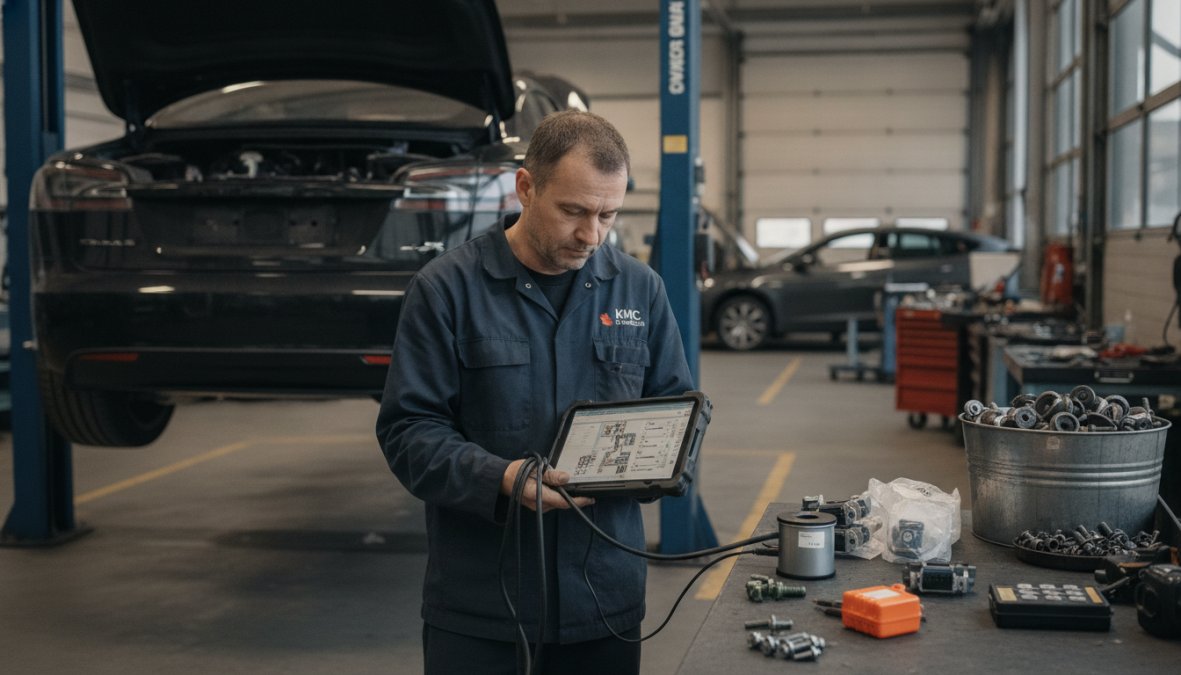
Experienced automotive technician performing diagnostic checks on a Tesla vehicle in a well-equipped workshop, with diagnostic equipment visible
Independent battery health verification involves measuring actual capacity, examining thermal management history, and comparing degradation rates against manufacturer benchmarks. This £150-200 diagnostic often prevents unnecessary worry or reveals problems requiring attention. Many owners considering selling their Tesla find this verification essential for establishing realistic pricing.
Brake system issues emerge frequently in post-warranty Teslas, particularly the hand brake motor. Tesla's regenerative braking system means traditional brake friction is minimal during normal driving, but the hand brake motor, a separate electric component, can fail after 60,000-80,000 miles. Symptoms include difficulty engaging the parking brake or complete brake system alerts. The hand brake motor repair typically costs £60-120 for the component, plus labour.
Door handle and climate control components represent another common post-warranty failure category. Tesla's exterior door handles use electric motors that can fail after extended use. Climate control systems, particularly cabin air filtration and vent motors, degrade gradually and often require component replacement.
The key insight: none of these issues are catastrophic if addressed promptly. Delayed diagnosis and repair often transforms a £200-500 problem into a £1,500-3,000 failure. Independent specialists recommend annual health checks for vehicles over five years old. These checks typically cost £100-150 and often identify emerging issues before they become expensive.
Key TakeawayThe most expensive post-warranty repairs result from delayed diagnosis, not from the repairs themselves. A £150 diagnostic that catches a brake system issue early prevents a £2,000 emergency repair later.
Tesla Extended Warranty Cost and Coverage Options
Extended warranty programmes exist, but they're rarely cost-effective for out-of-warranty owners. Tesla's extended warranty coverage typically costs £3,000-5,000 for additional years of coverage. For most owners, this represents poor value because it covers only manufacturer defects, not wear-and-tear items like brakes, filters, or motors.
Main dealer extended warranty programmes generally exclude wear items, consumables, and components damaged by user neglect. The fine print matters enormously. Most extended warranties exclude battery degradation under a certain threshold, which is precisely what most owners worry about.
For most out-of-warranty owners, self-insuring through regular maintenance and diagnostic checks proves more cost-effective than extended warranty premiums. Setting aside £100-150 monthly for potential repairs creates a repair fund that covers most common issues without the claims hassle or coverage gaps.
The exception: if you're purchasing a used Tesla with unknown service history, a limited third-party warranty for the first 12 months provides peace of mind while you establish maintenance patterns and identify hidden issues. After that initial period, specialist diagnostics and planned maintenance typically offer better value.
Independent Tesla Repair Shops vs Main Dealers
Cost savings with independent specialists are substantial. For common repairs, brake work, door handle replacement, climate system diagnostics, independent garages typically charge 40-60% less than main dealers. A brake system diagnostic that costs £150 at an independent specialist might cost £300-400 at a main dealer.
These differences reflect operational structure. Main dealers carry higher overhead, maintain Tesla-specific training requirements, and operate under manufacturer service agreements. Independent specialists operate with lower overhead and greater flexibility in pricing.
Diagnostic transparency represents another crucial difference. Main dealers provide service recommendations based on their systems. Independent specialists explain what's failing, why it matters, what happens if you ignore it, and what your realistic repair options are, including whether waiting is safe.
The specialisation advantage matters for complex diagnostics. Independent specialists have seen hundreds of real-world Teslas with actual failures. This practical experience often leads to faster, more accurate diagnostics because specialists recognise patterns that main dealers might miss.
Best ForIndependent specialists are ideal for owners seeking cost transparency, practical diagnostics, and honest advice about repair urgency. Main dealers are necessary when warranty coverage applies or when you need manufacturer-specific components unavailable elsewhere.
Preventative Maintenance to Extend Your Tesla's Life
Regular system checks before warranty expiry represent the most cost-effective approach to extending vehicle life. These checks should include battery health verification, thermal system performance, brake system condition, door handle functionality, and climate control operation. Each check takes 30-45 minutes and costs £80-120, yet often reveals issues that would cost thousands to repair if left unaddressed.
Identifying potential faults early means catching degradation before it becomes critical. Battery thermal management systems show warning signs long before catastrophic failure. A failing thermal system caught early might require a £500-800 repair; the same system failing catastrophically could cost £3,000-5,000.
Brake system monitoring is similarly important. Tesla's regenerative braking means traditional friction brakes see minimal use, but the hand brake motor and brake fluid circulation require periodic checks. Identifying motor wear before complete failure prevents emergency repairs.
Climate control systems degrade gradually. Annual climate system checks, including cabin air filter inspection and vent motor testing, cost £60-100 and often reveal issues before they affect comfort. Early intervention prevents the need for complete system replacement.
The maintenance pattern that works best: quarterly visual inspections for obvious issues, annual comprehensive diagnostics at a specialist, and immediate attention to any warning indicators. This proactive approach typically costs £400-600 annually but prevents emergency repairs costing £2,000-5,000 or more.
Maintenance Task
Frequency
Typical Cost
Prevents
Battery health verification
Annually
£150-200
Unexpected degradation surprises
Brake system diagnostic
Annually
£80-120
Hand brake motor failure
Thermal system check
Annually
£100-150
Battery overheating, thermal failures
Climate control inspection
Annually
£60-100
Complete system failure
Door handle functionality test
Annually
£40-60
Stuck doors, emergency access issues
Planning for Tesla Out of Warranty Repairs: A Practical Approach
Budget expectations for post-warranty Teslas typically range from £800-1,500 annually for preventative maintenance and minor repairs. Vehicles with emerging problems might require £2,000-3,000 in the first year after warranty expiry while issues are identified and addressed.
The practical approach involves three phases. First, establish baseline health through comprehensive diagnostics costing £200-300. This reveals your vehicle's actual condition and identifies emerging issues. Second, address any identified problems immediately; delaying repairs typically increases costs by 50-100%. Third, implement preventative maintenance based on your vehicle's specific needs.
When to seek specialist diagnosis versus dealer service depends on the repair type. Routine maintenance, filter replacement, and fluid checks can be handled by any competent independent garage. Electrical diagnostics, battery health verification, and high-voltage system work require EV-specific expertise. Safety-critical repairs should be handled by specialists with Tesla experience.
The decision framework is straightforward: if the repair involves electrical systems, battery management, thermal regulation, or high-voltage components, consult an independent Tesla specialist. If it's routine maintenance or wear-item replacement, your local independent garage can likely handle it. If uncertain, get a specialist diagnostic first, it typically costs £100-150 and clarifies whether main dealer expertise is necessary.
Kettering owners have found that establishing a relationship with a trusted independent specialist before warranty expiry provides significant advantages. The specialist understands your vehicle's history and can make informed recommendations about what matters most for your specific situation.
Conclusion
Tesla out of warranty repairs require a fundamentally different approach than warranty-covered service. The shift from manufacturer responsibility to owner responsibility demands informed decision-making, honest diagnostics, and access to specialists who understand Tesla systems deeply. Rather than viewing warranty expiry as a crisis point, treat it as an opportunity to establish preventative maintenance patterns that extend your vehicle's life and minimise unexpected costs.
KMC Electric specialises in precisely this transition. With Level 4 Master Technician status in electric vehicles and over 25 years of automotive experience, the team provides independent battery health verification, transparent diagnostics, and cost-effective repairs that extend vehicle service life. Get in touch to schedule a comprehensive health check and establish a maintenance plan that keeps your Tesla running reliably for years after warranty expiry.
Frequently Asked Questions
What are the most common out-of-warranty repairs for Tesla vehicles?
Battery degradation, brake system failures (particularly hand brake motors), door handle malfunctions, and climate control component failures are among the most frequent issues Tesla owners face after warranty expiry. Early identification through professional diagnosis can prevent costly emergency repairs. Independent Tesla specialists can verify battery health and identify developing faults before they become serious problems, helping extend your vehicle's service life significantly.
How much does Tesla extended warranty cost, and is it worth the investment?
Extended warranty costs vary depending on coverage duration and model, but independent specialists often provide cost-effective alternatives to main dealer programmes. Rather than purchasing generic extended warranties, many owners benefit from regular maintenance checks with specialist technicians who can identify potential issues early. This preventative approach often proves more economical than paying for unexpected repairs or expensive warranty plans.
Can independent Tesla repair shops handle out-of-warranty repairs safely?
Yes. Certified independent Tesla repair specialists with Level 4 Master Technician status in electric vehicles possess the technical expertise and diagnostic equipment to perform safe, reliable repairs on out-of-warranty Teslas. These specialists often provide more transparent diagnostics and practical, real-world solutions than main dealers, whilst maintaining safety standards and using quality components. They're particularly valuable for identifying battery health issues and performing cost-effective repairs that extend vehicle lifespan.
What should I do before my Tesla warranty expires?
Schedule a comprehensive diagnostic assessment with an independent specialist to identify any developing faults whilst you still have warranty coverage options. Get independent battery health verification to establish a baseline. Review your vehicle's service history and address any outstanding recalls or known issues. This proactive approach helps you understand your vehicle's true condition and plan financially for post-warranty maintenance, potentially saving thousands in emergency repairs later.